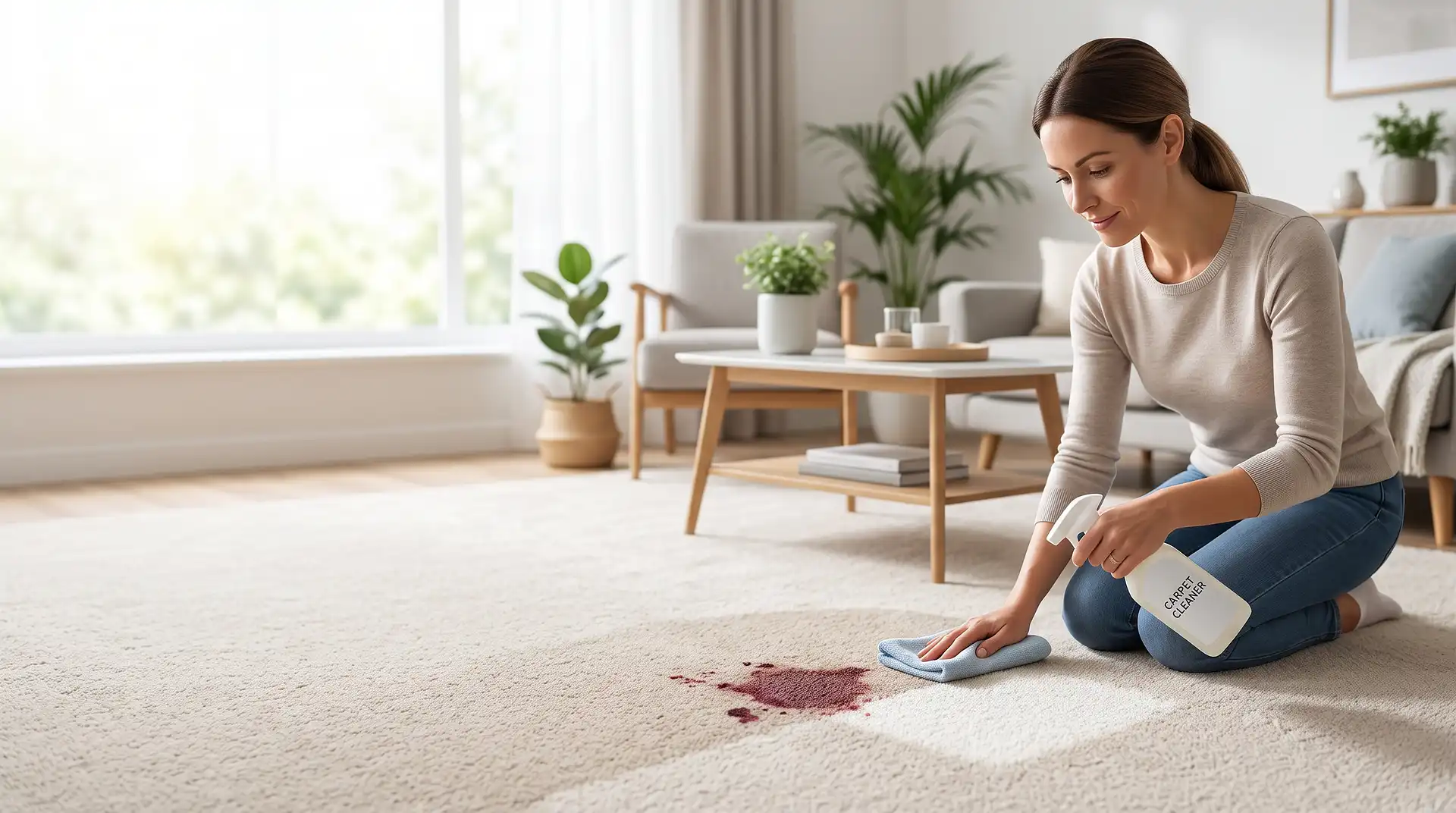
How to Remove Marks From Carpet
11 August 2026
How to Remove Marks From Carpet (By Type)
Not every carpet mark responds to the same treatment, and using the wrong method on the wrong stain is a genuinely common way to make something worse rather than better. Heat sets protein-based stains like blood permanently. Water spreads oil-based marks rather than lifting them. Rubbing pushes almost anything deeper into the pile. The single most useful thing you can do before reaching for any product is correctly identify what you're actually dealing with, since that determines everything about how to approach it.
The Two Rules That Apply to Almost Every Mark
Blot, don't rub. Rubbing spreads a mark outward and pushes it deeper into the carpet fibres. Press a clean cloth down onto the mark and lift straight up, working from the outside of the stain inward, repeating with a fresh section of cloth each time.
Test any product on a hidden patch first. Somewhere inconspicuous, inside a cupboard, under furniture, before treating the visible mark. This applies to shop-bought stain removers and homemade solutions alike, since carpet fibre reactions genuinely vary by material.
Mud and Dirt
Let it dry completely first, this sounds counterintuitive but wet mud smears, while dry mud breaks apart and lifts out cleanly. Once dry, vacuum thoroughly, then treat any remaining trace with a mix of washing-up liquid and warm water, blotted rather than rubbed.
Red Wine
Blot immediately to lift as much liquid as possible before it sets. Cover with salt or baking soda, which absorbs remaining liquid, then vacuum once dry. For any residual colour, a solution of one part white vinegar to two parts water, blotted in and rinsed with cold water, generally lifts what remains. Never use hot water on wine, heat can set the tannins permanently into the fibres.
Coffee and Tea
Blot immediately, then treat with a mix of one tablespoon of washing-up liquid, one tablespoon of white vinegar, and two cups of warm water, applied to a cloth and blotted into the stain rather than poured directly onto the carpet. Rinse with a cloth dampened in cold water and blot dry.
Grease and Oil
Cover the mark with an absorbent powder, baking soda or cornflour, and leave for at least fifteen minutes, longer for a set-in stain, to draw the grease out before vacuuming away. Follow with a small amount of washing-up liquid, specifically formulated to break down grease, worked in gently and blotted. Never use hot water on a fresh grease stain, heat can set the oil into the fibres rather than helping lift it.
Ink
Test first on a hidden patch, ink treatment varies by carpet fibre and ink type. For most cases, isopropyl alcohol applied to a cloth and blotted, working from the outside of the mark inward, lifts fresh ink effectively. Never scrub, this spreads ink across a wider area rather than removing it.
Blood
Cold water only, always. Heat cooks the proteins in blood and sets the stain permanently, which is the single most important thing to know about this specific mark. Blot with cold water repeatedly, then treat any remaining trace with a mix of cold water and a small amount of washing-up liquid, blotted rather than rubbed.
Chewing Gum
Freeze it first. Hold an ice cube in a bag against the gum until it hardens, then carefully scrape it away with a blunt knife or the edge of a spoon, working from the outer edge inward. Any residue left behind can be treated with a small amount of white spirit on a cloth, tested on a hidden patch first, or a specific gum-removal product.
Candle Wax
Let it harden fully rather than trying to remove it while soft. Once solid, gently scrape away as much as possible with a blunt tool. For remaining wax embedded in the fibres, place a clean brown paper bag or plain paper towel over the area and run a warm iron over it briefly, the heat melts the wax and the paper absorbs it. Move the paper frequently to avoid transferring wax back into a different section of carpet.
Nail Varnish
This one has a genuine complication worth knowing about specifically: acetone-based remover, effective on the polish itself, can melt or damage certain synthetic carpet fibres, particularly acrylic. If you're dealing with this specific mark, our related guide covers how to remove nail varnish from carpet safely by fibre type, including the hidden-patch test that matters more here than for almost any other mark type, worth checking before applying any solvent-based remover to a visible area.
General Scuff and Traffic Marks
For general dirt and traffic wear rather than a specific spill, vacuum thoroughly first, then treat with a carpet-specific cleaning solution and a soft brush, working in the direction of the pile rather than against it. Rinse with a cloth dampened in clean water and blot dry.
Common Mistakes and What to Do Instead
Mistake: rubbing instead of blotting. This is the single most common mistake across every mark type covered here. Rubbing spreads the stain and pushes it deeper into the pile. Always blot, working from the outside of the mark inward.
Mistake: using hot water on protein or tannin-based stains. Blood, wine, and similar marks can be set permanently by heat. Cold water is essential for these specific types, even though hot water feels like it should work harder.
Mistake: skipping the hidden-patch test. Carpet fibre reactions to cleaning products, particularly solvents, genuinely vary. A product safe on one carpet can damage another, testing first avoids finding this out on a visible section.
Mistake: trying to remove chewing gum or wax while soft. Both smear and spread when still pliable. Freezing gum and letting wax fully harden first makes removal considerably cleaner.
Mistake: applying too much product at once. Excess liquid can soak through to the underlay, and residue left behind attracts dirt faster once dry. Use products sparingly, in the amount needed to treat the specific mark, and rinse thoroughly afterward.
Mistake: giving up after one attempt on an old, set-in mark. Established stains often need repeated treatment cycles rather than a single pass, particularly with baking soda-based absorption methods for grease and oil.
When to Call a Professional Instead
DIY treatment handles the great majority of fresh, common marks well. It's worth calling a professional carpet cleaner for old, deeply set stains that resist repeated DIY treatment, marks on delicate or natural fibre carpets like wool where the wrong product carries real risk, large areas affected rather than an isolated mark, or if you're simply not confident identifying what a specific mark actually is before choosing a treatment method.
What It Costs in the UK
DIY materials for most of the marks above cost very little, items like baking soda, white vinegar, and washing-up liquid are things most households already have, and a dedicated stain remover, where one is genuinely needed, typically costs £5 to £12 per bottle.
According to InstantCost.co.uk's 2026 UK carpet cleaning pricing data, professional treatment is generally priced by room size or as a whole-house job, useful if marks are widespread rather than isolated, or if a specific stain has resisted DIY treatment. A single small room typically costs £35 to £55, and a single large room £55 to £90. Stairs and landing typically cost £40 to £70. A whole 3-bed house, all carpets, typically costs £140 to £240. Deep-pile or shag carpets may carry a 10 to 20% surcharge on top of standard pricing, since they take longer to brush through and dry properly.
Item or Service | Typical UK Cost (2026) |
|---|---|
Household staples (baking soda, vinegar, washing-up liquid) | Usually already owned |
Dedicated stain remover | £5 to £12 per bottle |
Professional clean, single small room | £35 to £55 |
Professional clean, single large room | £55 to £90 |
Professional clean, stairs and landing | £40 to £70 |
Professional clean, whole 3-bed house | £140 to £240 |
Deep-pile/shag carpet surcharge | 10 to 20% |
These figures are based on InstantCost.co.uk's 2026 UK carpet cleaning pricing data and vary by region, carpet condition, and provider. Get three quotes and be cautious of anything priced unusually low, under roughly £20 per room, which often signals corners being cut on method or an unreliable final price.
Staying Safe
Ventilate the room when using any stronger cleaning product, particularly white spirit or isopropyl alcohol for gum or ink residue, and never mix different cleaning products together, some combinations can produce harmful fumes. Keep children and pets away from any treated area until it's fully dry and any solvent smell has cleared.
Store all cleaning products in their original labelled containers, out of reach of children, and dispose of any solvent-soaked cloths properly rather than leaving them in a pile, since some pose a fire risk while drying.
Product-specific safety data and fibre compatibility vary by manufacturer and carpet material, so check the label and test on a hidden patch before treating any visible mark.
FAQ
What's the golden rule for removing any carpet mark? Blot, don't rub. Rubbing spreads the mark and pushes it deeper into the fibres, while blotting from the outside inward lifts it out. This applies to almost every mark type.
Why shouldn't I use hot water on a wine or blood stain? Heat can set protein and tannin-based stains permanently into the carpet fibres. Cold water is essential for these specific mark types, even though hot water might seem like it would work better.
How do I remove chewing gum from carpet? Freeze it first with an ice cube in a bag, then scrape away once hardened. Trying to remove gum while it's still soft smears it further into the fibres.
Is it safe to use any stain remover on my carpet? Not automatically, always test on a hidden patch first. This matters especially for solvent-based products, which can damage certain synthetic fibres even though they work well on others.
How do I get candle wax out of carpet? Let it harden completely, scrape away the excess, then place paper over the remaining wax and run a warm iron over it briefly, the heat melts the wax and the paper absorbs it.
How much does professional carpet cleaning cost for stain removal? A single small room typically costs £35 to £55, and a whole 3-bed house £140 to £240, according to 2026 UK data, with deep-pile carpets carrying a possible 10 to 20% surcharge.