How to Get Damp Smell Out of Carpet
14 September 2026
How to Get Damp Smell Out of Carpet
A damp, musty smell in carpet almost always means moisture has reached the underlay or subfloor beneath, not just the visible carpet surface, which is why surface cleaning and air fresheners rarely fix it for more than a few days. Finding where the moisture is actually coming from, a previous spill that wasn't fully dried, rising damp from the floor below, or condensation in a poorly ventilated room, matters more than any specific cleaning product, since treating the smell without addressing the moisture source means it will simply return.
The smell itself is caused by mould and bacteria growing in damp conditions within the carpet fibres, underlay, or even the subfloor itself. This is why a carpet that looks completely clean and dry on the surface can still smell strongly musty, since the actual moisture and growth are often happening in the layer you can't see.
Step 1: Identify the Moisture Source
Before treating anything, work out where the dampness is actually coming from. Common causes include a spill or leak that wasn't fully dried at the time, condensation building up in a poorly ventilated room, rising damp affecting a ground floor room, or a leak from plumbing, a radiator, or an appliance that's gone unnoticed for some time.
Lift a corner of the carpet if possible to check the underlay and subfloor directly. A visibly damp, discoloured, or mouldy underlay confirms the problem has gone beyond the carpet surface and needs more than a surface treatment to resolve.
Step 2: Address the Underlying Moisture Problem
If the smell is caused by ongoing dampness, condensation, a slow leak, or rising damp, treating the carpet alone will never fully resolve it, since fresh moisture will simply recreate the same conditions. Improve ventilation in a condensation-affected room, fix any leak causing ongoing dampness, or address rising damp through appropriate damp-proofing work before or alongside treating the carpet itself.
Step 3: Deep Clean the Carpet
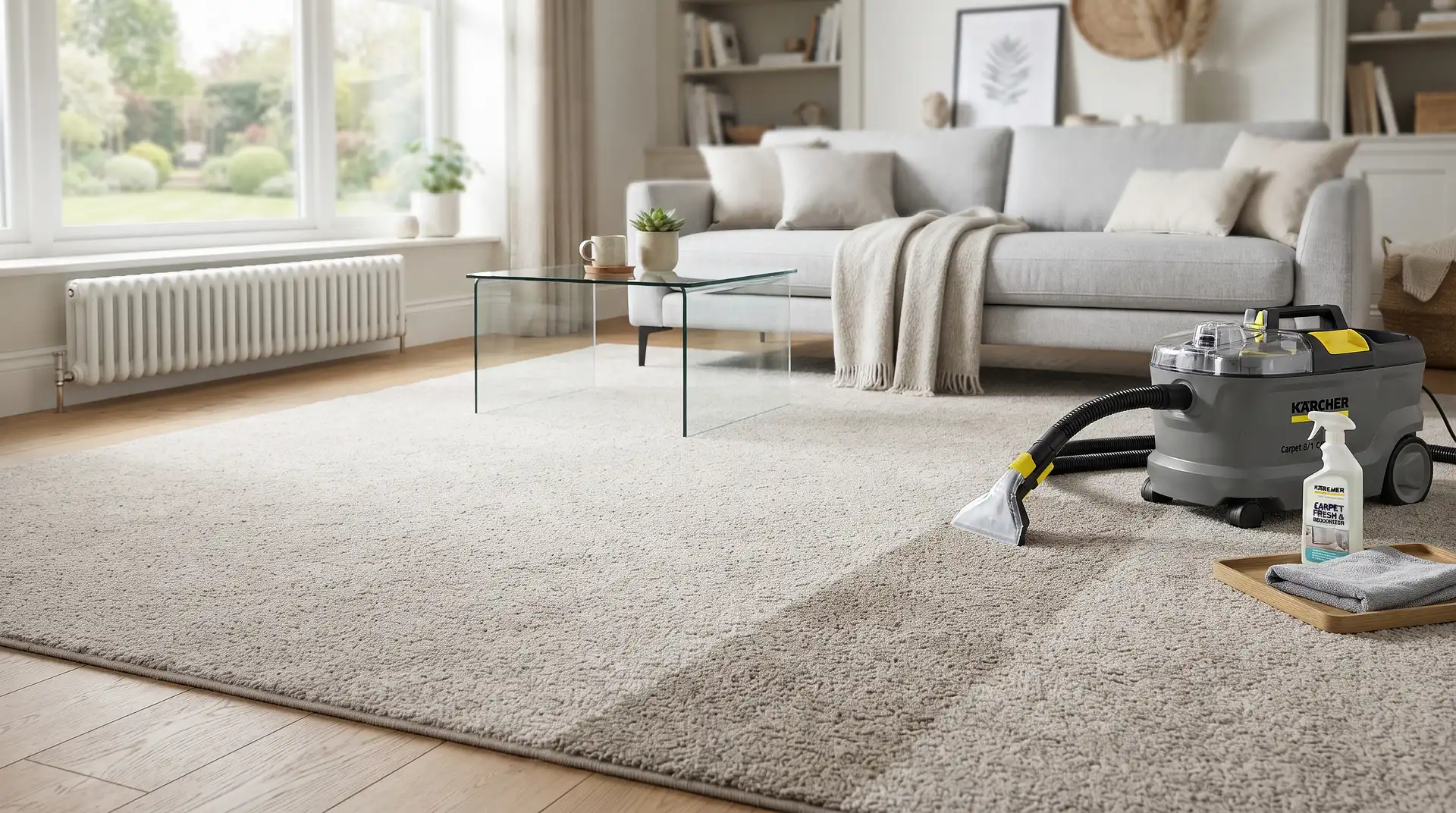
Once the moisture source is addressed, a proper deep clean using hot-water extraction, either your own equipment or a professional service, removes far more moisture and residue than surface cleaning alone. This method injects hot water and cleaning solution into the carpet then extracts it immediately, pulling out embedded dirt and residue that contributes to musty smells alongside any actual mould present.
Step 4: Treat with Bicarbonate of Soda
For a carpet that's been properly dried and cleaned but still holds a faint musty smell, a generous, even application of bicarbonate of soda left to sit for several hours, ideally overnight, before thorough vacuuming helps absorb remaining odour from the fibres. This works well as a finishing step after proper cleaning, though it won't resolve a genuine underlying moisture or mould problem on its own.
Step 5: Ensure the Carpet Dries Completely
A carpet that's been cleaned but doesn't fully dry within a reasonable time, generally within 24 hours with good airflow, risks the exact same musty smell returning as new mould growth establishes in the still-damp underlay. Use fans, open windows, and where necessary a dehumidifier to speed drying, particularly in a room with limited natural ventilation.
A Note on Checking the Underlay and Subfloor
If lifting the carpet reveals significantly damaged, mouldy, or saturated underlay, replacing that section rather than attempting to clean and dry it in place is usually the more effective and genuinely more hygienic solution. Underlay that's absorbed significant moisture over an extended period often can't be fully restored through drying and cleaning alone, and a mould-affected subfloor beneath it needs treating in its own right before new underlay or carpet goes back down.
A Note on Distinguishing a Fresh Damp Smell From a Long-Standing One
A smell that's appeared suddenly, following an obvious spill or a leak you're aware of, is usually more straightforward to resolve since the moisture source is identified and likely already stopped. A long-standing, gradually worsening musty smell with no obvious single cause more often points to an ongoing issue, condensation, a hidden slow leak, or rising damp, that needs identifying and properly fixing rather than assuming a thorough clean alone will resolve it.
When to Call a Professional
If lifting the carpet reveals significant mould on the underlay or subfloor, if the smell persists despite a proper clean and thorough drying, or if you suspect rising damp or a hidden leak, bring in a professional. A carpet cleaning specialist can assess whether the carpet and underlay are salvageable, while a damp specialist or plumber can identify and fix the actual moisture source if it isn't a simple, already-resolved spill.
Use InstantCost's carpet cleaning cost calculator to see what a professional deep clean would cost for your property. If the damp issue is linked to bathroom condensation specifically how to get rid of mould in the bathroom for good covers addressing that root cause directly.
Common Mistakes and What to Do Instead
Mistake: Treating the smell without finding the moisture source. Air fresheners, sprays, and even bicarbonate of soda only mask or partially address a musty smell if the underlying dampness hasn't been resolved. Identify and fix the actual moisture cause before expecting any treatment to hold.
Mistake: Not checking underneath the carpet at all. A carpet that looks and feels dry on the surface can have a genuinely damp, mouldy underlay beneath it. Lift a corner where possible to properly assess the situation before deciding on a treatment approach.
Mistake: Using too much water during DIY cleaning. Oversaturating a carpet during cleaning, particularly with a DIY hire machine that doesn't extract as thoroughly as professional equipment, can introduce more moisture than it removes if drying isn't managed properly afterwards. Ensure thorough extraction and strong airflow for drying regardless of which cleaning method you use.
Mistake: Ignoring poor ventilation as an ongoing cause. A room with consistently poor airflow, particularly a ground floor room or one prone to condensation, will keep recreating damp conditions even after a successful clean. Improve ventilation, using trickle vents, extractor fans, or simply more regular window opening, alongside any carpet treatment.
Mistake: Assuming carpet is always salvageable. Underlay and, in severe cases, the carpet itself that's absorbed significant moisture over an extended period sometimes can't be fully restored through cleaning and drying alone. Be realistic about when replacement is the more sensible and hygienic option compared with repeated treatment attempts.
Mistake: Not addressing mould on the subfloor before relaying carpet. If mould has reached the subfloor itself, laying new carpet and underlay over it without treating the subfloor first simply traps the problem under a fresh surface. Treat any subfloor mould properly before reinstalling flooring.
What It Costs in the UK
Item or Service | Typical UK Cost (2026) |
|---|---|
Bicarbonate of soda | £1–£2 |
DIY carpet cleaner hire, per day | £25–£40 |
DIY carpet cleaning chemicals | £15–£25 |
Professional hot-water extraction, single room | £35–£55 |
Whole 3-bed house professional clean | £140–£240 |
Underlay replacement, per room | £80–£200 |
Damp specialist assessment | £100–£250 |
Figures based on InstantCost.co.uk's 2026 UK carpet cleaning pricing data and vary by region, room size, and the extent of any underlay or subfloor work needed.
Staying Safe
Wear gloves and, if handling visibly mouldy underlay or carpet, a properly rated dust mask, since disturbing established mould can release spores that affect respiratory health, particularly for anyone with asthma or other respiratory sensitivities. Ventilate the room well while working and while the carpet is drying.
If mould has spread significantly across the underlay or subfloor, consider whether the affected household members, particularly anyone with respiratory conditions, should avoid the room until the issue is properly treated, since prolonged exposure to established mould and damp conditions can affect health over time.
General UK housing health guidance recognises damp and mould as a genuine health hazard, particularly for respiratory conditions. If damp or mould is extensive or persistent despite treatment, and you're a tenant, this may fall under your landlord's repair responsibilities. Check current guidance if you're unsure of your position.
Frequently Asked Questions
Why does my carpet smell musty even though it looks clean? This usually means moisture and any resulting mould or bacterial growth has reached the underlay or subfloor beneath the visible carpet surface, which a surface-level clean or vacuum won't address on its own.
Can I get rid of damp smell without replacing the carpet? Often yes, provided the moisture source is identified and fixed, and the carpet and underlay haven't been saturated for an extended period. A proper deep clean followed by thorough drying resolves many cases without needing replacement.
Does bicarbonate of soda actually remove damp smell from carpet? It helps absorb residual odour from carpet fibres once the carpet is properly clean and dry, but it won't resolve an ongoing moisture problem on its own. Treat it as a finishing step rather than a complete solution.
How long does it take for a damp carpet to fully dry? With good airflow, fans, and ideally a dehumidifier in a poorly ventilated room, a professionally cleaned carpet typically dries within 24 hours. Carpet left to dry with poor airflow can take considerably longer and risks new mould developing during that extended damp period.
Is a musty carpet smell a health risk? Persistent damp and any resulting mould growth can affect respiratory health over time, particularly for those with asthma or other sensitivities. Addressing the smell's underlying cause is worth prioritising rather than simply masking it.
When should I replace carpet and underlay rather than trying to clean it? If underlay is significantly saturated, mouldy, or has been damp for an extended period, or if the smell persists despite thorough cleaning and drying, replacement is often more effective and hygienic than continuing to treat carpet that's unlikely to fully recover.