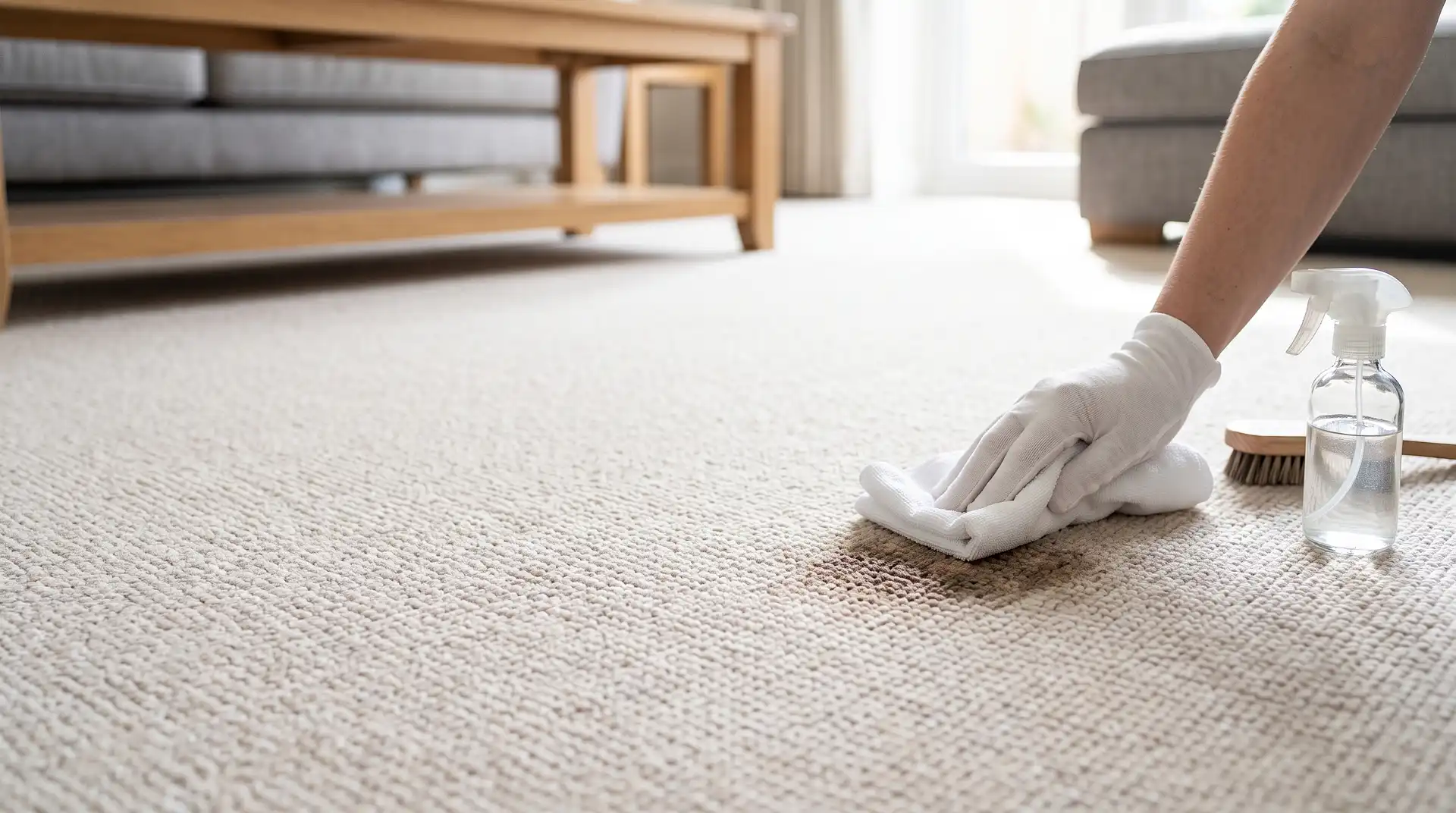
How to Get Oil Out of Carpet
24 August 2026
How to Get Oil Out of Carpet
Oil stains on carpet are a different problem from most other spills, and standard carpet cleaning products make them worse rather than better. Oil repels water. A water-based cleaner applied directly to an oil stain spreads the oil sideways into clean fibres rather than lifting it, which is how a small spill becomes a wide stain that is considerably harder to remove.
The correct approach is absorbent-first, then degreaser, then rinse. The absorbent draws the oil out of the fibre before any liquid is introduced. The degreaser breaks the oil's bond with the fibre. The rinse removes both. Skipping the first step and going straight to a spray is the most common reason oil stains become permanent.
Dry Oil Versus Wet Oil: The First Decision
Oil that has just spilled is wet and still mobile in the fibre. Oil that has been there for hours or days has begun to bond with the fibre and oxidise, which makes it progressively harder to remove and eventually changes its chemistry enough that standard degreasers have reduced effectiveness.
A fresh spill caught within the first 30 minutes has the best removal odds by a significant margin. The method below is most effective on wet oil. For oil that has been in the carpet for more than a day, the process is the same but every step requires longer dwell time and more passes.
Cooking Oil, Grease, and Food Fat
These are the most common carpet oil stains in a domestic setting and the most reliably removable.
Step 1: Absorb before you touch it. Cover the spill generously with an absorbent powder: bicarbonate of soda, cornflour, or unscented talcum powder all work. Pour enough to cover the spill completely with a layer at least 5 mm deep. Do not press it in. Leave it to sit for a minimum of 15 minutes, ideally 30. The powder draws oil out of the fibre by capillary action. The longer you leave it, the more oil it pulls.
Step 2: Vacuum the powder. Vacuum carefully, using a nozzle attachment rather than a brush head that scatters the powder. The powder should have taken on a yellow or translucent appearance from the oil it has absorbed. If it still looks white and dry, add more and wait longer.
Step 3: Apply a degreaser. Washing-up liquid is the most readily available effective degreaser for cooking oil. Apply a small amount undiluted directly to the remaining stain. Do not rub. Press and blot with a clean white cloth, working from the outer edge inward. The surfactants in washing-up liquid break the oil's bond with the fibre.
Step 4: Rinse thoroughly. This is the step most people cut short, and it is why oil stain treatments leave a grey shadow that attracts dirt. Washing-up liquid residue left in the carpet fibre is sticky and collects airborne particles, producing a patch that looks dirtier than the surrounding carpet within weeks. Blot with a cloth dampened with cold water, repeat three or four times using a clean section of cloth each time, until no suds appear on the cloth.
Step 5: Dry under weight. Lay dry kitchen roll or a folded white towel over the treated area, press a flat weight on top, and leave for several hours. This draws remaining moisture and any residual oil up into the absorbent layer rather than letting it settle back into the fibre base.
Step 6: Vacuum once dry. Vacuum to lift the pile back to its original height.
Motor Oil and Lubricating Grease
Motor oil and mechanical grease are heavier, darker, and more deeply bonded to fibres than cooking oil. They also contain additives and contaminants that complicate removal. The absorbent-first approach still applies, but the degreaser needs to be stronger.
Use a proprietary dry-cleaning solvent, a citrus-based degreaser, or a specialist carpet degreaser rather than washing-up liquid. Apply to a cloth first, not directly to the carpet, since these products can affect carpet dye if pooled on the surface.
Work in small passes: apply, press and blot, move to a clean cloth section, repeat. Motor oil stains rarely come out in one pass. Four to six passes with a fresh cloth section each time is normal on a fresh stain. Dried motor oil may need the degreaser left to dwell for five minutes per pass rather than immediate blotting.
After the degreaser passes, rinse with cold water blotting as above to remove residue. Motor oil that has been in carpet for more than 48 hours is significantly harder to fully remove and professional treatment may be the realistic option for a complete result.
Baby Oil and Mineral Oil
Baby oil and mineral oil are lighter than cooking oil and penetrate carpet fibres quickly. The absorbent powder approach works well, but the dwell time matters more than for heavier oils: mineral oil spreads laterally in the fibre and a 30-minute powder dwell is the minimum.
After vacuuming the powder, isopropyl alcohol on a cloth is effective on mineral oil residue and evaporates completely without leaving a rinse-stage residue problem. Work in blotting passes with a clean cloth section each time.
A Note on Carpet Fibre and Product Safety
Wool carpet needs gentler treatment than synthetic. Strong degreasers, particularly those containing solvents, can strip dye from wool and should not be applied to wool or wool-blend carpet without a patch test on a hidden area first. For wool, stick to washing-up liquid diluted 1:4 with water, with careful rinsing.
For any carpet, patch test on an inconspicuous area before applying any new product. Press a white cloth against the treated area after 30 seconds and check for colour transfer. If dye lifts onto the cloth, stop and call a professional before attempting further treatment.
Synthetic carpets -- nylon, polyester, polypropylene -- are more tolerant of degreasers and most commercial carpet cleaning products. Polypropylene in particular is oleophilic, meaning it actually attracts and holds oil more readily than other synthetics, so oil stains on polypropylene carpet are common and require full dwell time and thorough rinsing to prevent the grey shadow problem.
When to Call a Professional
Call a professional if the stain covers more than a hand-sized area, if it is motor oil or heavy grease that has been in the carpet for more than 24 hours, if three or more cleaning attempts have left a shadow residue that is not responding to rinsing, or if the carpet is wool or a delicate fibre and a patch test showed dye transfer.
Be direct with the cleaner about what the stain is, how long it has been there, and what products have already been applied. Layered chemistry from multiple DIY attempts changes what the professional can safely use, and withholding that information limits what is achievable.
According to InstantCost.co.uk's 2026 UK carpet cleaning pricing data, a single stain treatment typically costs £10 to £25. If the oil stain is one of several issues and the carpet needs a broader clean, a small room runs £35 to £55, a large room £55 to £90, and a full three-bedroom house £140 to £240. Deep-pile and shag carpets carry a 10 to 20% surcharge. For a full 2026 UK breakdown by room size, carpet type, and region before booking, the InstantCost carpet cleaning cost has a calculator to check whether a quote is competitive for your area before committing.
Oil is one of several stain types where the chemistry of the product matters as much as the method. Our related guide on what makes a good carpet stain remover covers why protein stains, tannin stains, and oil-based stains each need a fundamentally different product class, and why a general-purpose carpet cleaner applied to an oil stain typically makes it harder to remove rather than easier.
Common Mistakes and What to Do Instead
Mistake: applying water or a water-based cleaner directly to fresh oil. Water spreads oil sideways into clean fibres. Always absorb first with a dry powder before introducing any liquid.
Mistake: rubbing the stain. Rubbing drives oil deeper into the fibre and spreads it laterally. Blot only, pressing straight down and lifting cleanly.
Mistake: skipping the rinse stage. Washing-up liquid and most degreasers left in the fibre attract dirt and produce a patch that looks dirtier than the surrounding carpet within weeks. Rinse with three to four cold water blotting passes until no suds appear on the cloth.
Mistake: treating a large oil spill from the centre outward. Working outward from the centre spreads the stain. Always start at the outer edge and work inward to contain it.
Mistake: using a strong solvent degreaser on wool without a patch test. Solvent-based degreasers can strip dye from wool carpet permanently. Patch test first, and use diluted washing-up liquid on wool as the safer default.
Mistake: applying degreaser directly to the carpet rather than to a cloth. Pooled liquid on carpet can affect dye and soaks into the backing. Apply product to a cloth, then press the cloth to the stain.
Mistake: treating the stain once and assuming it is done. Oil stains rarely come out in a single pass. Four to six passes with fresh cloth sections is normal. The treatment is not failing if colour keeps transferring -- it is working.
What It Costs in the UK
Item or service | Typical UK cost (2026) |
|---|---|
Bicarbonate of soda or cornflour | Under £2 |
Washing-up liquid | Under £2 |
Isopropyl alcohol | £4 to £10 |
Citrus-based degreaser | £5 to £12 |
Proprietary dry-cleaning solvent | £6 to £15 |
Professional per-stain treatment | £10 to £25 |
Professional clean, small room | £35 to £55 |
Professional clean, large room | £55 to £90 |
Professional clean, 3-bed house | £140 to £240 |
Deep-pile or shag surcharge | 10 to 20% |
Figures based on InstantCost.co.uk's 2026 UK carpet cleaning pricing data and vary by region, carpet type, and provider.
Staying Safe
Dry-cleaning solvents and citrus-based degreasers are flammable and produce vapour that should not be inhaled in a confined space. Ventilate the room before and during use: open two openings for cross-flow, not just a single window.
Keep these products away from naked flames, candles, and any ignition source. Solvent-soaked cloths should air dry outdoors before going in the bin, never directly into a lined kitchen bin.
Wear nitrile gloves when handling degreasers and solvents, particularly for motor oil treatment, since many motor oil additives are harmful on prolonged skin contact.
Keep children and pets out of the room during treatment and until the carpet is fully dry. Product residues on damp carpet are a contact hazard for animals and crawling infants who are at floor level.
If a child swallows any cleaning product, call 111 for advice or 999 if they are drowsy, struggling to breathe, or unresponsive. Do not induce vomiting.
Store all cleaning solvents in their original labelled containers, locked away or out of reach of children. Never decant into unlabelled bottles or drinks containers. Dispose of unused solvent product according to local authority hazardous waste guidance, not via the household bin or drain.
FAQ
What draws oil out of carpet? An absorbent powder applied before any liquid: bicarbonate of soda, cornflour, or unscented talcum powder. Cover the spill generously, leave for at least 15 to 30 minutes to draw oil from the fibre by capillary action, then vacuum before applying any cleaning product.
Does washing-up liquid remove oil from carpet? Yes, for cooking oil and food grease. Washing-up liquid is a surfactant that breaks oil's bond with carpet fibre. Apply a small amount undiluted after the absorbent stage, blot rather than rub, and rinse thoroughly with cold water blotting passes to remove all residue.
How do you get dried oil out of carpet? The same method as fresh oil but with longer dwell times at each stage. Apply absorbent powder and leave for at least an hour. Apply degreaser and leave for five minutes per pass rather than blotting immediately. Expect more passes and accept that complete removal of dried oil is harder than fresh.
Can motor oil be removed from carpet? Often yes if treated within 24 hours, using a proprietary dry-cleaning solvent or citrus-based degreaser rather than washing-up liquid. Motor oil dried for more than 48 hours is significantly harder to fully remove and may need professional treatment.
Why does my carpet look worse after cleaning an oil stain? Most likely the degreaser was not fully rinsed out. Surfactant residue in carpet fibre is sticky and collects airborne dirt, producing a grey shadow that looks dirtier than the surrounding carpet. Re-blot the area with cold water passes until no suds appear on the cloth, then dry under weight.
How much does professional oil stain removal cost? A single stain treatment typically costs £10 to £25 in the UK. If the carpet needs a broader clean at the same time, a small room runs £35 to £55, based on InstantCost's 2026 UK pricing data.