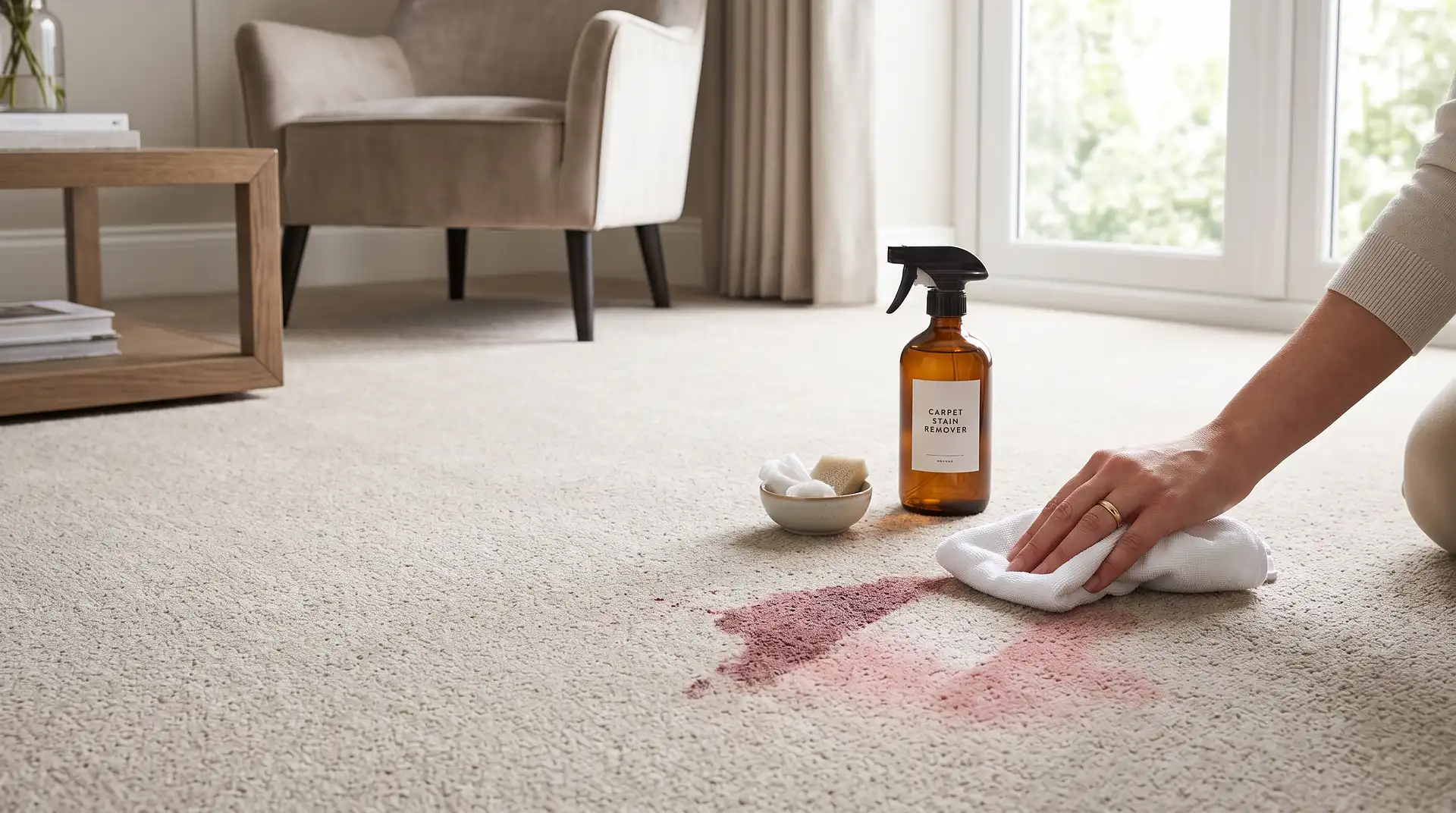
How to Get Red Wine Out of Carpet
29 August 2026
How to Get Red Wine Out of Carpet
Red wine comes out of carpet reliably when treated within the first 30 minutes, and with more effort when it has dried. The key is understanding what red wine actually is in staining terms: it is primarily a tannin stain with added pigment from grape skin anthocyanins. Tannin stains need a specific type of cleaner to break them down, and the commonly recommended fixes of salt, sparkling water, or white wine are either ineffective or at best delay the correct treatment.
The two things that matter most in the first few minutes are removing as much liquid as possible before it sets into the fibre, and not using hot water, which accelerates dye binding and makes the stain significantly harder to remove.
Fresh Red Wine: Act Within 30 Minutes
Step 1: Blot immediately. Press a clean white cloth or thick layer of kitchen roll firmly onto the spill and hold it there for several seconds rather than dabbing repeatedly. The pressure drives the cloth into contact with the liquid in the fibre. Lift cleanly and repeat with a fresh section of cloth, working from the outer edge of the spill inward. Do not rub rubbing spreads the stain sideways and drives it toward the backing.
Step 2: Dilute with cold water. Once you have lifted as much wine as possible by blotting, pour a small amount of cold water directly onto the stain. This dilutes the remaining wine and makes subsequent blotting more effective. Blot again with fresh cloth until no more colour transfers. Use cold water only warm or hot water opens the carpet fibre and accelerates tannin bonding.
Step 3: Apply a tannin stain remover. This is the step most home remedies skip. Wine contains tannins, and tannin stains need an acidic or enzyme-based cleaner to break the tannin-fibre bond. Products containing citric acid, white wine vinegar diluted to roughly 1:3 with water, or commercial carpet tannin removers all work on the same principle. Apply to the stain, leave for three to five minutes, then blot with a fresh cloth.
Step 4: Rinse and dry. Blot with a cloth dampened with cold water to remove the cleaning product residue, then press dry towels or kitchen roll over the area and weight them down to draw remaining moisture out of the pile. Cleaning product left in the fibre attracts dirt and produces a grey patch within weeks.
Dried Red Wine: A Different Problem
A dried red wine stain has had the water evaporate, leaving the tannin and pigment concentrated and partially bonded to the fibre. The approach is the same but every step needs longer dwell time.
Rehydrate the stain first. Apply cold water to the dried stain and allow it to soak for five to ten minutes. This softens the dried residue and makes subsequent treatment more effective. Blot up the excess water before applying any cleaning product.
Apply the tannin remover with extended dwell time. Allow 10 to 15 minutes rather than three to five. The dried tannin needs more contact time with the cleaning agent to break the bond. Blot and check the cloth for colour transfer after the dwell time. If significant colour is lifting, repeat the application.
For stubborn dried stains, add an oxidising step. Once the tannin cleaner has removed as much colour as possible, a diluted hydrogen peroxide solution (3% concentration) can address any remaining pink or purple shadow by oxidising the remaining pigment. This works on light-coloured synthetic carpets but can bleach darker carpets and should not be used on wool. Always patch test before applying to the main stain.
Fibre Type: What Changes for Wool
Wool carpet is more sensitive to chemical treatment than nylon, polyester, or polypropylene. Three specific cautions apply.
Avoid alkaline cleaners on wool. Alkaline products damage the protein structure of wool fibres and cause permanent yellowing. This rules out bicarbonate of soda, ammonia-based cleaners, and some general-purpose carpet shampoos that are alkaline in formulation.
Test white wine vinegar carefully on wool before using. Diluted white vinegar is mildly acidic and generally safe for wool in short contact times, but some wool dyes are sensitive to acidity and can shift in colour. Always patch test on a hidden area first.
Do not use hydrogen peroxide on wool. The oxidising action that removes colour from pigment residue also strips dye from wool fibres. Even at 3% concentration, hydrogen peroxide used on wool risks permanent lightening of the carpet colour.
For wool, the safest sequence is: blot, cold water dilution and blotting, diluted white wine vinegar or a pH-neutral specialist wool carpet cleaner, thorough cold water rinse and blotting. Call a professional for any dried wine stain on a wool carpet that has not responded to this approach.
Products That Do Not Work
Salt. Salting a red wine spill is one of the most persistent carpet cleaning myths. Salt has mild osmotic properties that can draw some liquid out of a spill, but it does not break tannin bonds, it leaves a salt residue in the carpet that attracts moisture, and the time spent salting is time better spent blotting with cloth and applying proper treatment.
Sparkling water. The carbonation in sparkling water does not chemically interact with wine tannins in any useful way. Plain cold water does the same job more simply.
White wine. Pouring white wine on a red wine stain dilutes it marginally but also adds more liquid and its own compounds to the carpet. It is not an effective treatment and delays the correct approach.
Hot water. Heat accelerates the bonding of tannins and anthocyanins to carpet fibres. Using warm or hot water at any stage of red wine treatment makes the stain harder to remove, not easier.
Washing-up liquid as a first step. Washing-up liquid is a surfactant designed for oil-based residues. It is not the right chemistry for a tannin stain and can interfere with subsequent tannin-specific treatments by coating the fibre.
When to Call a Professional
Call a professional if the stain covers more than a dinner plate-sized area, if it has been in the carpet for more than 48 hours without treatment, if the carpet is wool or a delicate fibre and multiple products have already been applied, or if the stain remains visibly coloured after three or more treatment passes.
Be specific with the professional about what has already been applied. Different residues in the carpet change what products the cleaner can safely use, and a professional who does not know that salt, white wine, and sparkling water have all been tried before they arrived is at a disadvantage.
According to InstantCost.co.uk's 2026 UK carpet cleaning pricing data, a single stain treatment runs £10 to £25. If the carpet needs broader attention alongside the wine stain, a small room costs £35 to £55, a large room £55 to £90, and a full three-bedroom house £140 to £240. The InstantCost carpet cleaning cost guide has a 2026 UK price calculator you can filter by room size, carpet type, and region before booking anyone.
Red wine is a tannin stain, and the same tannin chemistry applies to tea, coffee, and fruit juice spills on carpet. Our related guide on what makes a good carpet stain remover covers why tannin, protein, and oil-based stains each need a different class of product, which is the underlying principle behind every carpet stain you will encounter, not just wine.
Common Mistakes and What to Do Instead
Mistake: rubbing the stain. Rubbing spreads wine sideways into clean fibres and pushes it toward the carpet backing. Press and lift cleanly with fresh cloth sections on every pass.
Mistake: using hot or warm water. Hot water accelerates tannin bonding to carpet fibre. Cold water only at every stage of the process.
Mistake: applying salt and leaving it. Salt does not remove tannins. It costs time that is better spent blotting and applying effective treatment.
Mistake: not rinsing out the cleaning product. Tannin remover and other cleaning products left in the pile attract dirt and produce a visible grey patch at the stain location within days.
Mistake: using hydrogen peroxide on dark or wool carpet. Hydrogen peroxide at 3% bleaches carpet dye as well as wine pigment. Use only on light-coloured synthetic carpet and always patch test first.
Mistake: not patch testing on wool carpet. Some wool dyes react to acidic treatments including diluted vinegar. A patch test on an inconspicuous area before applying any product to wool is the only reliable way to check for dye sensitivity.
Mistake: treating a large dried stain at home after multiple failed attempts. Three or more failed products applied to the same area create layered residue that makes a professional's job harder and limits what they can safely use. Stop at three attempts and call a cleaner.
What It Costs in the UK
Item | Typical UK cost (2026) |
|---|---|
White wine vinegar | Under £2 |
Commercial tannin carpet remover | £4 to £12 |
Hydrogen peroxide 3% (for residual pigment) | £3 to £8 |
Specialist wool carpet cleaner | £8 to £18 |
Professional per-stain treatment | £10 to £25 |
Professional clean, small room | £35 to £55 |
Professional clean, large room | £55 to £90 |
Professional clean, 3-bed house | £140 to £240 |
Figures based on InstantCost.co.uk's 2026 UK carpet cleaning pricing data and vary by region, carpet type, and provider.
Staying Safe
The products used for red wine stain removal are generally low-hazard household chemicals. Hydrogen peroxide at 3% concentration is a mild oxidiser and causes eye irritation on direct contact. Wear gloves when handling it and keep it away from the eyes.
Diluted white wine vinegar is mild enough for barefoot contact once rinsed, but keep children away from the treated area until the carpet is fully dry to avoid contact with any cleaning product residue.
Do not mix hydrogen peroxide with any product containing ammonia or bleach. The combination produces irritating fumes.
If a child swallows any carpet cleaning product, call 111 for advice, or 999 if they are drowsy, struggling to breathe, or unresponsive.
UK carpet manufacturers generally recommend testing any cleaning product on a hidden area before treating a visible stain. Fibre content and dye stability vary between manufacturers and ranges. Always patch test, and check the carpet's care label or original documentation for specific cleaning recommendations before applying any product.
FAQ
What is the best way to get red wine out of carpet? Blot immediately with a white cloth to remove as much liquid as possible, then dilute with cold water and blot again. Apply a tannin-specific cleaner such as diluted white wine vinegar or a commercial tannin remover, leave for three to five minutes, then rinse with cold water and blot dry. Act within 30 minutes for the best result.
Does salt help remove red wine from carpet? No. Salt does not break the tannin-fibre bond that causes wine to stain carpet. It has a mild liquid-drawing effect but performs no better than blotting with cloth and wastes time better spent on effective treatment.
Can you get dried red wine out of carpet? Yes, though it requires more effort than a fresh stain. Rehydrate the dried stain with cold water, allow it to soak for five to ten minutes, then apply a tannin remover with an extended dwell time of 10 to 15 minutes. A diluted 3% hydrogen peroxide solution can address any remaining colour on light synthetic carpet.
Does white wine remove red wine stains from carpet? No. White wine dilutes the red wine marginally but adds its own compounds to the carpet and delays proper treatment. Plain cold water is more effective and does not leave additional residue.
Is hydrogen peroxide safe for red wine stains on carpet? On light-coloured synthetic carpet, 3% hydrogen peroxide is effective for removing residual pigment after tannin treatment. It must not be used on wool, dark-coloured, or patterned carpet where it risks bleaching the dye. Always patch test before applying to any carpet.
How much does professional red wine stain removal cost? A single stain treatment from a professional carpet cleaner costs £10 to £25 in 2026. If the carpet needs a broader clean at the same time, a small room runs £35 to £55.