How to Get Rid of Moss on a Driveway
12 September 2026
How to Get Rid of Moss on a Driveway
Moss on a driveway is removed with a combination of manual scraping or brushing to lift the bulk of the growth, followed by a moss killer treatment to deal with spores and roots left behind, with the exact method varying depending on your driveway material. Block paving, with its network of joints, holds moss very differently from a smooth tarmac or resin surface, which is why a single generic approach often clears the visible moss but leaves the underlying problem to return within a season.
Moss thrives in damp, shaded conditions, which is why it's almost always worst on north-facing driveways, under overhanging trees, or on sections with poor drainage where water sits rather than running off quickly. Treating the moss without addressing why it's establishing there in the first place usually means repeating the same job every year.
Removing Moss from Block Paving
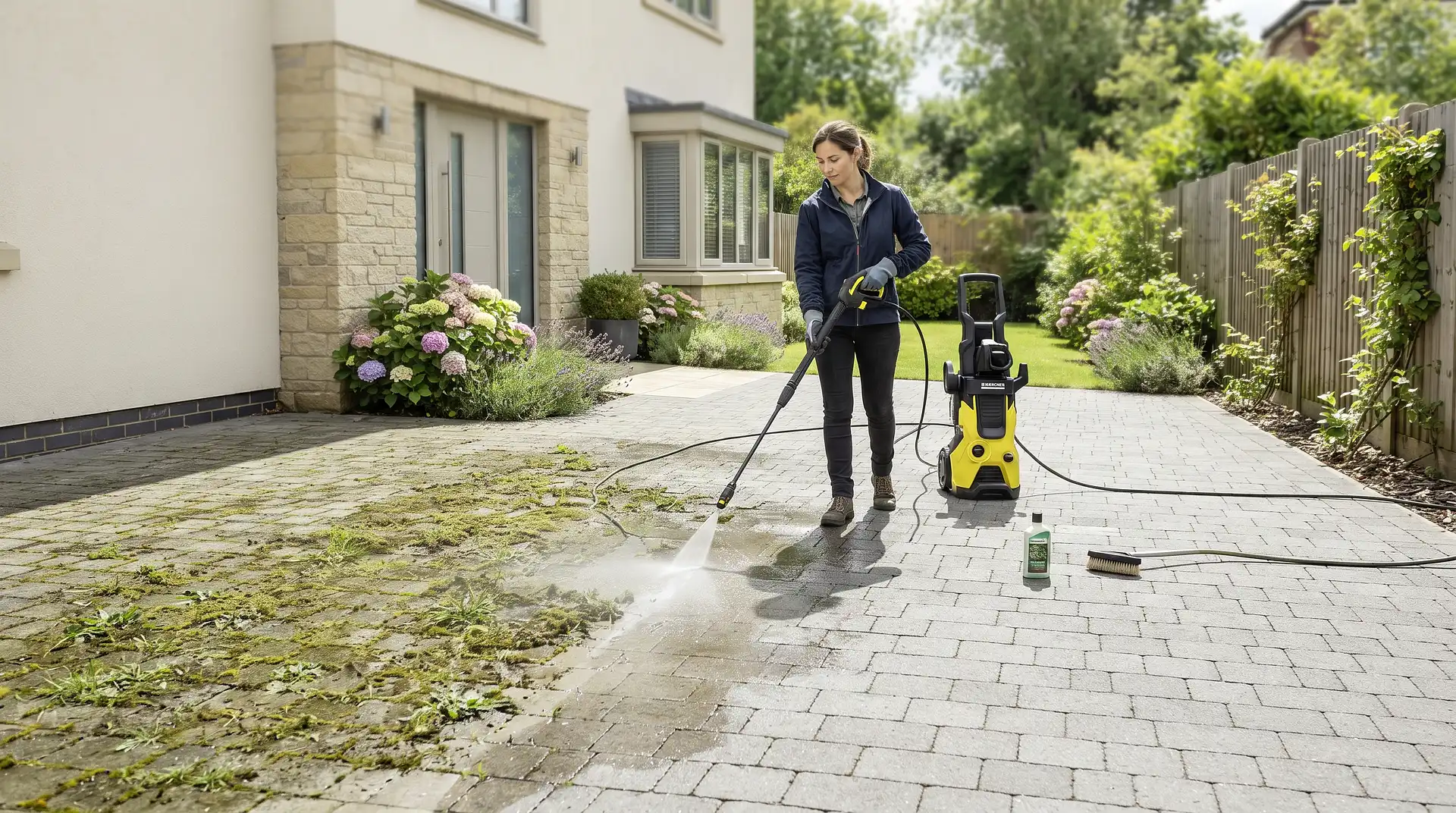
Moss on block paving typically establishes in the joints between blocks first, since the sand or jointing compound there retains moisture longer than the block surface itself. Use a stiff wire brush or a specific block paving scraping tool to work along the joints, physically removing moss growth, before sweeping away the debris.
Once the joints are clear, apply a moss killer treatment across the whole surface, following the product's instructions for dilution and application, then leave it for the stated contact time before rinsing. Once the moss is fully cleared and the surface is dry, re-sand the joints with fresh kiln-dried sand to replace what's been disturbed and to help prevent new moss establishing as quickly.
Removing Moss from Tarmac and Asphalt
Tarmac's smoother surface means moss tends to spread across patches rather than concentrating in joints, often starting at the edges where the surface meets a border, wall, or lawn. A stiff broom combined with a moss killer treatment usually clears tarmac effectively, since there are no joints trapping deeply embedded growth the way block paving does.
Avoid using a pressure washer at very high pressure directly on older or already cracking tarmac, since this can force water into existing cracks and accelerate surface breakdown. A lower pressure setting, or simply a hose and stiff brush combined with chemical treatment, is usually sufficient and considerably safer for the surface's long-term condition.
Removing Moss from Resin Bound Driveways
Resin bound surfaces are generally more resistant to moss establishing deeply, since the surface is less porous than gravel or block paving joints, but moss and algae can still form a surface layer, particularly in shaded or damp areas. A soft brush and a resin-safe cleaning product, checked against the specific installer's maintenance guidance, is the safest approach, since overly aggressive scrubbing or an unsuitable chemical can affect the resin's appearance or bonding over time.
Removing Moss from Concrete and Natural Stone
Concrete and natural stone driveways, particularly Indian sandstone, can develop moss both on the surface and within any surface texture or slight porosity in the stone itself. A stiff brush combined with a moss killer suitable for the specific stone type clears most growth, though very porous stone sometimes needs a specialist stone-safe treatment to avoid discolouration from a standard chemical moss killer.
Removing Moss from Gravel Driveways
Moss on gravel typically indicates the permeable membrane underneath has become compromised, or that organic debris has built up in the gravel over time, giving moss and weeds something to establish in. Raking the affected area, removing any moss along with the gravel it's growing in, and topping up with fresh, matching gravel usually resolves visible moss, though checking the membrane condition underneath is worth doing if moss keeps returning to the same spot.
A Note on Chemical Moss Killers and Timing
Most moss killers work best applied during damp but not actively rainy conditions, since moisture helps the treatment penetrate the moss while heavy rain immediately afterward can wash it away before it's had time to work. Autumn and early spring, when moss growth is most active but weather isn't at its wettest extreme, are generally the most effective times to treat a driveway.
A Note on Why Moss Keeps Coming Back
Persistent moss almost always points to a specific underlying cause: overhanging trees creating shade and dropping organic debris, poor drainage causing water to pool, or a north-facing aspect that simply doesn't dry out as quickly as a sunnier position. Trimming back overhanging branches, improving drainage where water visibly pools, and treating affected areas proactively before moss becomes established each year all reduce how often the full removal process needs repeating.
When to Call a Professional
For a driveway with extensive moss coverage, particularly if combined with staining, algae, or a surface that seems to be deteriorating, a professional exterior cleaning company can treat the whole area efficiently with commercial-grade equipment and products suited specifically to your driveway material. This is also worth considering if you suspect drainage issues are contributing to the problem, since a professional can advise on whether additional drainage work would meaningfully reduce future moss growth.
Use InstantCost's house exterior cleaning cost calculator to see what professional driveway cleaning would cost in your area. If oil staining is also a problem on your driveway alongside moss, how do you remove oil stains from a driveway covers treating that separately.
Common Mistakes and What to Do Instead
Mistake: Using the same method on every driveway material. Block paving joints, tarmac, resin, and stone all respond differently to scraping, brushing, and chemical treatment. Match your method to your specific driveway material rather than applying a single generic approach.
Mistake: Pressure washing at high pressure on damaged or older surfaces. This can force water into cracks in tarmac or concrete, or disturb jointing sand on block paving, causing more damage than the moss itself. Use a lower pressure setting or hand brushing combined with chemical treatment on vulnerable surfaces.
Mistake: Skipping re-sanding block paving joints after treatment. Empty joints left after moss removal are quickly recolonised, since bare joints hold moisture and organic debris just as readily as moss-filled ones. Always re-sand with fresh kiln-dried sand once joints are clear and dry.
Mistake: Treating moss without addressing shade or drainage causes. A driveway that stays damp and shaded will regrow moss quickly regardless of how thoroughly it was cleared. Address overhanging branches or standing water issues alongside the treatment itself.
Mistake: Applying moss killer just before heavy rain. Rain washing away treatment before it's had time to work wastes both product and effort. Check the forecast and apply during a reasonably dry spell for the stated contact time.
Mistake: Using a standard chemical moss killer on porous natural stone without checking suitability. Some stone types can discolour with certain chemical treatments. Check the product is specifically suitable for your stone type before applying it broadly.
What It Costs in the UK
Item or Service | Typical UK Cost (2026) |
|---|---|
Moss killer, standard bottle | £8–£18 |
Stiff wire brush or scraping tool | £5–£15 |
Kiln-dried jointing sand (block paving) | £8–£15 per bag |
Professional driveway clean and moss treatment | £150–£400 |
Full exterior soft wash (driveway, walls, paths) | £200–£600 |
Drainage improvement (soakaway addition) | £850 |
Figures based on InstantCost.co.uk's 2026 UK house exterior cleaning pricing data and vary by region, driveway size, and material.
Staying Safe
Wear gloves and eye protection when applying chemical moss treatments, and keep pets and children off the treated area until it's fully dry and any product has been rinsed away according to the instructions. Store moss killer securely, away from children, in the same way as any other household chemical.
Be cautious of slippery surfaces during and after treatment, since moss itself and wet, treated surfaces both present a genuine slip risk, particularly on a sloped driveway. Avoid working alone on a wet, sloped driveway where a fall risk is higher, and consider working in dry, non-slip footwear throughout.
General UK garden and driveway chemical safety guidance recommends following product label instructions closely, avoiding application near drains where runoff could enter watercourses, and keeping treated areas clear of children and pets until fully dry.
Frequently Asked Questions
Why does moss keep coming back on my driveway every year? Persistent moss usually points to an underlying cause, most commonly shade from overhanging trees, poor drainage causing standing water, or a north-facing aspect that stays damp longer than sunnier areas. Treating the moss without addressing these factors means it's likely to return.
Is it safe to pressure wash moss off a driveway? It depends on the material and its condition. Pressure washing works well on sound block paving and concrete but can damage older, cracking tarmac or disturb jointing sand if used at high pressure. A lower setting or hand brushing combined with chemical treatment is often safer.
What time of year is best for treating driveway moss? Autumn and early spring are generally most effective, since moss is actively growing but the weather isn't at its wettest extreme, giving treatment time to work before being washed away by heavy rain.
Can I make my own moss killer at home? Some people use diluted white vinegar or a mild bleach solution, though these are generally less effective and longer-lasting than a purpose-made moss killer, and bleach solutions need particular care around plants, pets, and nearby drains.
Does moss actually damage my driveway, or is it just cosmetic? Beyond appearance, moss can hold moisture against the surface, which contributes to frost damage in cracks during winter, and on block paving it can gradually loosen jointing sand, making the surface less stable over time.
How do I stop moss coming back after treatment? Trim back overhanging branches to reduce shade, address any areas where water visibly pools after rain, and consider a preventative moss treatment applied once or twice a year in persistently affected spots before growth becomes established again.