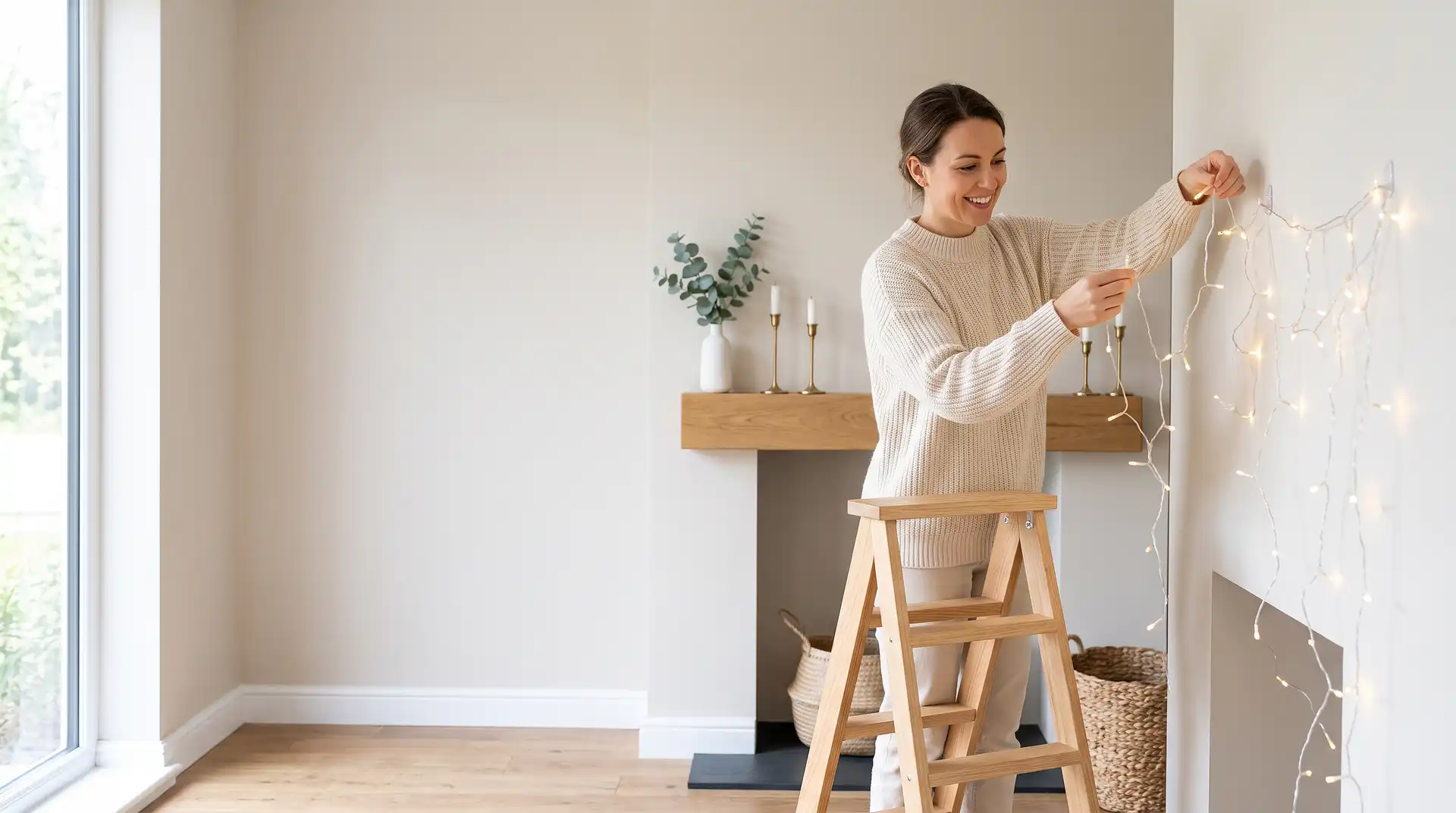
How to Hang Christmas Lights Inside the House
11 September 2026
How to Hang Christmas Lights Inside the House
Hanging Christmas lights indoors comes down to choosing the right fixing method for each surface, adhesive clips or hooks for walls and window frames, cable ties or clips for staircase railings, and careful cable routing that keeps plugs away from water and doesn't overload a single socket. The temptation is to reach for whatever's nearest, drawing pins, nails, or tape stretched too tight, and these are exactly the choices that damage paintwork, pull plaster, or leave lights sagging within a day of putting them up.
Getting the electrical side right matters just as much as the visual result. Multiple sets of lights daisy-chained together, or several decorations sharing one extension lead, is one of the more common causes of an overloaded circuit or a tripped fuse during the exact week you want everything working reliably.
Fixing Lights to Windows
Adhesive clips designed specifically for Christmas lights, widely available in UK shops each winter, grip the window frame or glass without leaving residue when removed properly, unlike tape, which can leave a sticky mark or peel paint from a wooden frame. Space clips evenly along the frame's edge, roughly every 20 to 30cm, to support the weight of the light string evenly rather than concentrating strain on just two or three points.
For lights outlining the glass itself rather than just the frame, use clips rated for glass specifically, since general-purpose adhesive strength varies and a clip not designed for a smooth glass surface can fail under the weight of a longer light run.
Fixing Lights to Staircases and Bannisters
Cable ties or purpose-made light clips wrapped around a staircase bannister or spindles hold securely without marking the wood, and they're easy to remove cleanly in January. Wind lights along the handrail or spiral them around individual spindles depending on the look you're after, checking periodically that ties haven't been pulled too tight, which can create visible dents in the wire insulation over time.
Avoid nailing or stapling directly into a bannister or staircase, since this causes permanent damage to a feature that's often original to the property and expensive to repair or replace.
Fixing Lights Around Doorways and Mantelpieces
Adhesive hooks rated for the weight of your specific light string work well around door frames and on mantelpieces, holding securely without the need to drill or nail into woodwork. Always check the hook's stated weight rating against the actual weight of the lights you're hanging, particularly for battery-powered or heavier decorative light strings, since an underrated hook will fail under load.
For a mantelpiece, draping lights along the top edge and letting them hang slightly at intervals often looks more natural than pinning every section flat, and this approach also reduces the number of fixing points needed.
A Note on Cable Routing and Trip Hazards
Plan the route from each light string back to its power source before fixing anything in place, checking the cable won't cross a walkway, stairs, or a doorway where it could become a trip hazard. Where a cable must cross a floor area, use a cable cover or route it along a skirting board edge rather than leaving it loose across an open space.
A Note on Combining Multiple Light Sets
Check the manufacturer's guidance on how many light sets can be safely connected end to end, since daisy-chaining beyond the stated limit increases the current running through the first set's cable beyond what it's rated for, creating a genuine fire risk. If you're covering a large area, use separate sockets or a properly rated extension lead with multiple sets plugged in independently rather than chaining beyond the manufacturer's recommended limit.
When to Call a Professional
If you're planning a significant permanent installation, such as dedicated low-voltage wiring for a feature staircase or window display used every year, an electrician can install a proper, hardwired solution that avoids the annual hassle of extension leads and adhesive clips entirely. This is also worth considering if your home's existing sockets and circuits are already heavily used elsewhere during winter, when heating and other seasonal appliances add to overall electrical demand.
Use InstantCost's electrician cost calculator to see what additional socket points or a dedicated circuit would cost if you're considering a more permanent solution. If you're decorating a tree as well as the rest of the house, how to put Christmas lights on a tree covers getting an even, professional-looking result there too.
Common Mistakes and What to Do Instead
Mistake: Using nails, pins, or staples on walls and woodwork. These leave permanent holes and marks that need filling and repainting once the decorations come down. Use adhesive clips or hooks rated for the surface and weight involved instead.
Mistake: Daisy-chaining more light sets than the manufacturer allows. Exceeding the stated connection limit overloads the cable in the first set and creates a genuine fire risk. Check the packaging or instructions for the maximum number of sets that can be safely connected.
Mistake: Running cables across walkways without protection. A loose cable across a floor is a trip hazard, particularly in a home with children, older relatives visiting, or reduced visibility once the main lights are dimmed for evening ambience. Route cables along edges or use a cable cover where crossing is unavoidable.
Mistake: Plugging too many decorations into a single extension lead. Overloading one socket or extension lead with multiple light sets and other decorations increases the risk of a tripped circuit or, in a worst case, overheating. Spread decorations across multiple sockets where possible and check the extension lead's total rated capacity.
Mistake: Leaving lights on unattended overnight or when away from home. Even LED lights, which run cooler than older incandescent sets, carry some risk if left unattended for extended periods. Use a timer plug to switch lights off automatically rather than relying on remembering to do it manually every night.
Mistake: Not checking older light sets for damaged cables before reusing them. Christmas lights stored for a year can develop cracked insulation or loose connections. Inspect cables and plugs for damage each year before putting decorations back up, and replace any set showing wear.
What It Costs in the UK
Item or Service | Typical UK Cost (2026) |
|---|---|
Adhesive light clips (pack) | £3–£8 |
LED light string (indoor use) | £8–£25 |
Timer plug | £6–£15 |
Extension lead, rated for multiple decorations | £10–£20 |
Electrician, additional socket install | £90–£150 |
Electrician, dedicated low-voltage feature wiring | £200–£500 |
Figures based on InstantCost.co.uk's 2026 UK electrician pricing data and vary by region, provider, and installation scope.
Staying Safe
Only use lights, clips, and extensions specifically rated for indoor use, and check that any light set has a valid British or European safety mark before buying, particularly for cheaper sets bought from less established retailers. Never use outdoor-rated lights assuming they're automatically safe indoors, or vice versa, since the two are built to different standards.
Keep decorations and cables away from radiators, open fires, and other heat sources, since prolonged heat exposure can degrade cable insulation even in lights not directly touching a heat source. Turn off and unplug lights before leaving the house for an extended period or going to bed, or use a timer plug set to switch off automatically.
General UK electrical safety guidance recommends checking decorative lighting for damage annually before use, avoiding overloaded sockets and extension leads, and never leaving decorative lighting unattended for extended periods. Look for the BS or CE safety mark on any lighting product before purchase.
Frequently Asked Questions
How many Christmas light sets can I safely connect together? This varies by product, so always check the specific manufacturer's instructions, but many standard indoor LED sets allow two to three sets to be safely daisy-chained. Exceeding this limit risks overloading the cable in the first set.
Can I use outdoor Christmas lights indoors? Generally yes, since outdoor-rated lights meet at least the same safety standard as indoor ones, but check the product's specific rating, as some outdoor sets are bulkier or brighter than ideal for a typical indoor setting.
What's the best way to hang lights without damaging paint? Adhesive clips and hooks specifically designed for Christmas lights are formulated to hold securely without pulling paint away when removed correctly, as long as they're taken off gently rather than yanked, and the wall is clean and dry when applied.
Should I use a timer for indoor Christmas lights? Yes, a timer plug is a sensible safety measure, ensuring lights switch off automatically overnight or when you're not home, rather than relying on remembering to turn them off manually every time.
Are LED Christmas lights safer than traditional incandescent ones? LED lights run considerably cooler than incandescent bulbs, reducing fire risk and making them generally the safer and more energy-efficient choice for indoor decorating, particularly for lights left on for extended periods each evening.
How do I stop cables looking messy when hanging lights indoors? Plan the cable route before fixing lights in place, using cable clips or ties to keep the cable neatly against a wall, frame, or skirting board edge rather than letting it hang loose, and choose light sets with the plug positioned conveniently close to your nearest socket.