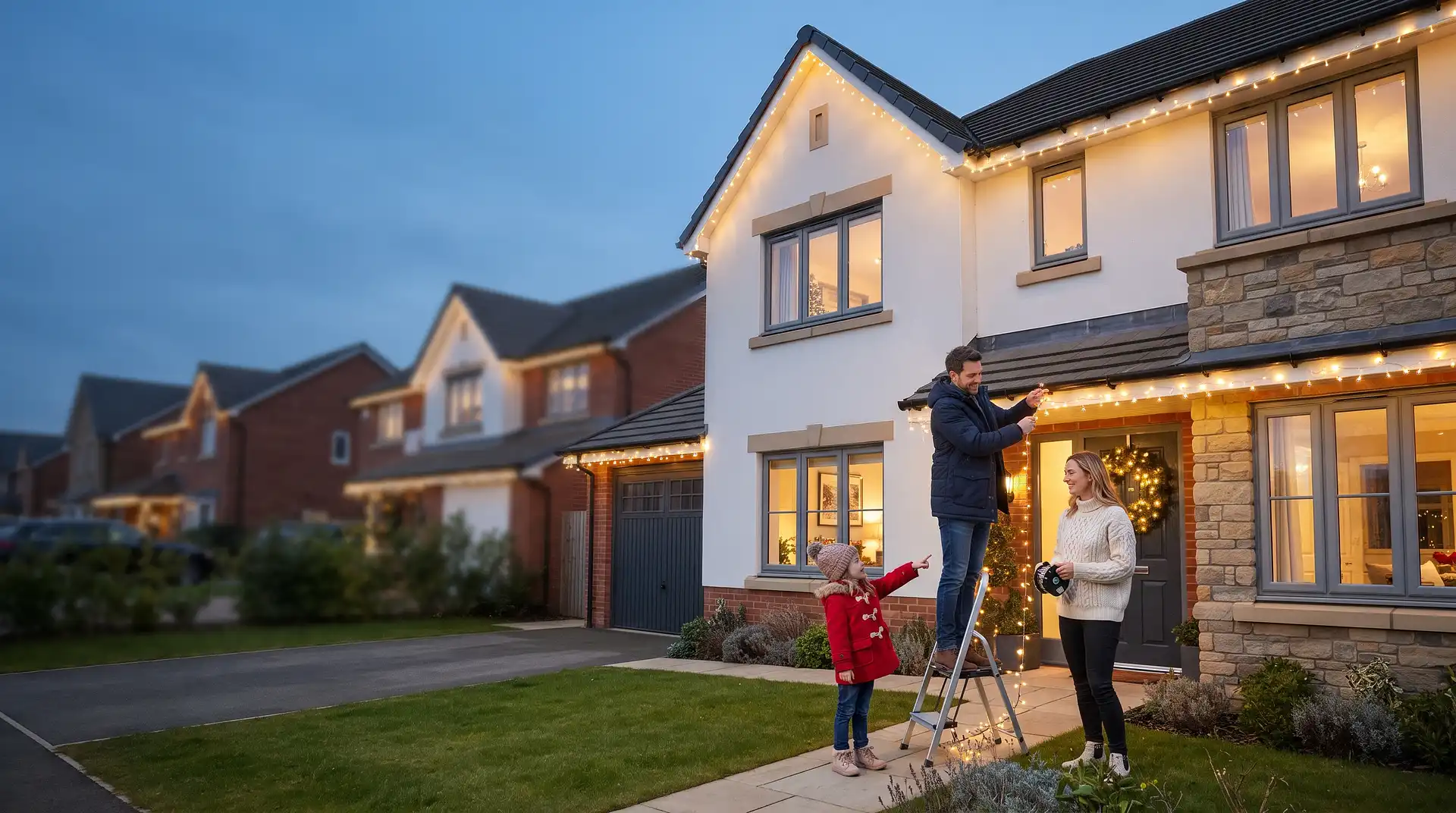
How to Hang Christmas Lights on the House
16 September 2026
How to Hang Christmas Lights on the House
Hanging Christmas lights on the outside of a house means using clips specifically designed for guttering, roof tiles, or fascia boards, running an RCD-protected outdoor extension lead from an appropriate socket, and only using lights and connectors genuinely rated for outdoor use. This is a meaningfully different job from decorating indoors, since weather exposure and the combination of electricity and height introduce real risks that a purely indoor light display doesn't carry.
The RCD protection point matters more than almost anything else here. Even outdoor-rated lights and connectors can develop a fault over a wet, cold few weeks outside, and an RCD (residual current device) cuts power immediately if a fault develops, which is the single most important safety measure for any outdoor electrical decoration.
Choosing the Right Fixing Method for Each Surface
Gutters
Purpose-made gutter hooks clip over the edge of the guttering without damaging it or requiring any drilling, and they're specifically designed to hold the weight of a typical light string safely. Space hooks evenly along the run, generally every 20 to 30cm, to distribute the light string's weight rather than concentrating strain at just two or three points.
Roof Tiles and Fascia
Clips designed specifically for roof tiles or fascia boards grip onto the tile edge or fascia without penetrating the surface, avoiding the water ingress risk that drilling or nailing would create. Never nail or screw directly into roof tiles or fascia boards to fix lights, since this creates a genuine risk of water getting into the roof structure through the resulting hole.
Bushes, Shrubs, and Outdoor Trees
Wrapping lights around outdoor greenery is generally the most straightforward part of an exterior display, since there's no roof or gutter fixing involved. Use cable ties or specific outdoor light clips to secure the string loosely enough that plant growth and wind movement don't put constant strain on any single point.
Step 1: Plan the Full Layout Before Fixing Anything
Walk around the house and decide the complete route lights will take before starting, including where the power source will be and how the cable will travel from each section back to it. This avoids fixing lights in one area only to realise the cable can't reach a socket without crossing a path or entrance awkwardly.
Step 2: Confirm RCD Protection
Check whether your outdoor socket already has RCD protection built in, common on sockets specifically installed for outdoor use, or use a plug-in RCD adapter between the extension lead and the socket if it doesn't. This single device is what protects you if a connection develops a fault during wet weather.
Step 3: Use Only Outdoor-Rated Equipment
Every light string, extension lead, and connector used outside must carry an appropriate outdoor or all-weather rating, typically shown as an IP rating on the packaging. Indoor-only lights or extension leads used outside are not weatherproofed against rain and damp, and using them this way is a genuine electrical hazard, not just a technicality.
Step 4: Fix Lights Using the Appropriate Clips
Working section by section, fix lights using the clip type suited to each specific surface, gutter hooks for guttering, tile or fascia clips for the roofline, and cable ties for greenery. Avoid pulling any section of the light string taut between fixing points, since outdoor cables contract slightly in cold weather, and a string fixed too tightly can be pulled and strained further once temperatures drop.
Step 5: Route and Protect Cables
Route the cable from the lights to the power source keeping it off the ground where possible, using cable clips along a wall or fence rather than leaving it lying across a path, driveway, or lawn where it could be a trip hazard or get damaged by foot traffic or a lawnmower. Where a cable must cross a path, use a cable cover rated for outdoor and pedestrian use.
Step 6: Connect All Joints Properly
Any point where cables connect together outdoors needs a genuinely weatherproof connection, either a purpose-made outdoor connector box or a properly rated weatherproof plug and socket combination. Never leave a standard indoor-style connection exposed outside, even briefly, since moisture ingress at a joint is one of the more common causes of an outdoor lighting fault.
A Note on Timer Plugs for Outdoor Use
An outdoor-rated timer plug lets you set lights to switch on and off automatically without needing to go outside in the cold each evening, and it also means lights aren't left running unattended overnight. Confirm the timer itself carries an appropriate outdoor or weatherproof rating if it's positioned outside rather than at an indoor socket feeding an outdoor extension lead.
A Note on Working at Height
Fixing lights to guttering or roofline areas often means working from a ladder, and ladder-related falls are a genuine, common cause of injury during exactly this kind of seasonal decorating task. Never overreach from a ladder to fix a clip slightly out of comfortable reach, reposition the ladder instead, and avoid working alone at height where possible, particularly in cold, potentially icy conditions.
When to Call a Professional
For a larger or more elaborate exterior display, particularly one involving a two-storey roofline, an electrician or a professional Christmas lighting installation service can handle both the access and the electrical connections safely, and some homeowners have permanent low-voltage exterior lighting circuits professionally installed specifically to avoid the annual hassle and risk of ladder-based decorating.
Use InstantCost's electrician cost calculator to see what a dedicated outdoor socket or permanent exterior lighting circuit would cost if you're decorating the house exterior every year. If you're also decorating indoors, how to hang Christmas lights inside the house covers the indoor side of the job.
Common Mistakes and What to Do Instead
Mistake: Using indoor-only lights or extension leads outside. Indoor equipment isn't weatherproofed and using it outdoors is a genuine electrical hazard, not just against manufacturer guidance. Always check for an outdoor or all-weather rating before using anything outside.
Mistake: Skipping RCD protection. Without an RCD, a developing fault in wet conditions can go undetected until it becomes dangerous. Use a socket with built-in RCD protection or a plug-in RCD adapter for any outdoor electrical decoration.
Mistake: Drilling or nailing into roof tiles or fascia to fix lights. This creates a genuine water ingress risk into the roof structure. Use purpose-made non-penetrating clips designed specifically for tiles, fascia, or guttering instead.
Mistake: Leaving cable connections exposed to weather. Any joint between cables outdoors needs a properly rated weatherproof connector. A standard indoor-style connection left exposed outside is a common cause of faults developing over the display's lifetime.
Mistake: Overreaching from a ladder while fixing lights. This is a common cause of falls during exactly this kind of seasonal task. Reposition the ladder rather than stretching to reach a fixing point.
Mistake: Running cables across paths or driveways without protection. An unprotected cable is both a trip hazard and vulnerable to damage from foot traffic or vehicles. Route cables along walls or fences with clips, and use a proper outdoor cable cover where crossing a path is unavoidable.
What It Costs in the UK
Item or Service | Typical UK Cost (2026) |
|---|---|
Outdoor gutter/roofline clips (pack) | £5–£12 |
Outdoor-rated LED light string | £12–£35 |
Outdoor extension lead (rated) | £15–£30 |
Plug-in RCD adapter | £10–£20 |
Outdoor-rated timer plug | £12–£25 |
Electrician, outdoor socket install | £90–£150 |
Electrician, permanent low-voltage exterior lighting circuit | £300–£700 |
Figures based on InstantCost.co.uk's 2026 UK electrician pricing data and vary by region, provider, and installation scope.
Staying Safe
Only use lights, extension leads, connectors, and timers explicitly rated for outdoor use, checking the IP rating on packaging before buying anything for this job. Always use RCD protection, either a socket with it built in or a plug-in adapter, since this is the single measure most likely to prevent a developing fault from becoming dangerous.
Take ladder safety seriously: use a ladder in good condition on firm, level ground, have someone else aware you're working at height, and avoid the job entirely in icy, wet, or high wind conditions where footing and stability are compromised. Never work alone at height if you can avoid it, particularly in winter conditions.
General UK electrical safety guidance strongly recommends RCD protection for any outdoor electrical use, and working-at-height guidance from the Health and Safety Executive applies to domestic ladder use as well as professional work. Avoid ladder work in poor weather conditions and never overreach from a ladder.
Frequently Asked Questions
Can I use indoor Christmas lights outside if I'm careful? No. Indoor lights and extension leads aren't weatherproofed against rain and damp, and using them outdoors is a genuine electrical hazard regardless of how carefully they're positioned. Always use equipment specifically rated for outdoor use.
Do I need an RCD for outdoor Christmas lights? Yes, this is one of the most important safety measures for outdoor electrical decorations. Use a socket with built-in RCD protection or a plug-in RCD adapter between your extension lead and the power source.
Is it safe to fix Christmas lights to my gutters? Yes, using purpose-made gutter hooks or clips designed specifically for this purpose. Avoid drilling or nailing directly into guttering, roof tiles, or fascia boards, since this can create water ingress problems.
How do I stop outdoor Christmas lights getting damaged by rain? Use only genuinely outdoor-rated lights, extension leads, and connectors, and ensure any cable joints use proper weatherproof connectors rather than standard indoor-style connections left exposed to weather.
Should I take outdoor Christmas lights down if it's very windy or icy? It's worth checking your display periodically during severe weather, since high winds can strain fixing points and ice can affect ladder safety if you need to make any adjustments. Consider a temporary safety switch-off during genuinely severe conditions if you're concerned.
Can I leave outdoor Christmas lights on overnight? It's generally better to use a timer to switch them off overnight rather than leaving them running unattended for extended periods, both for energy use and as a general precaution against an undetected developing fault.