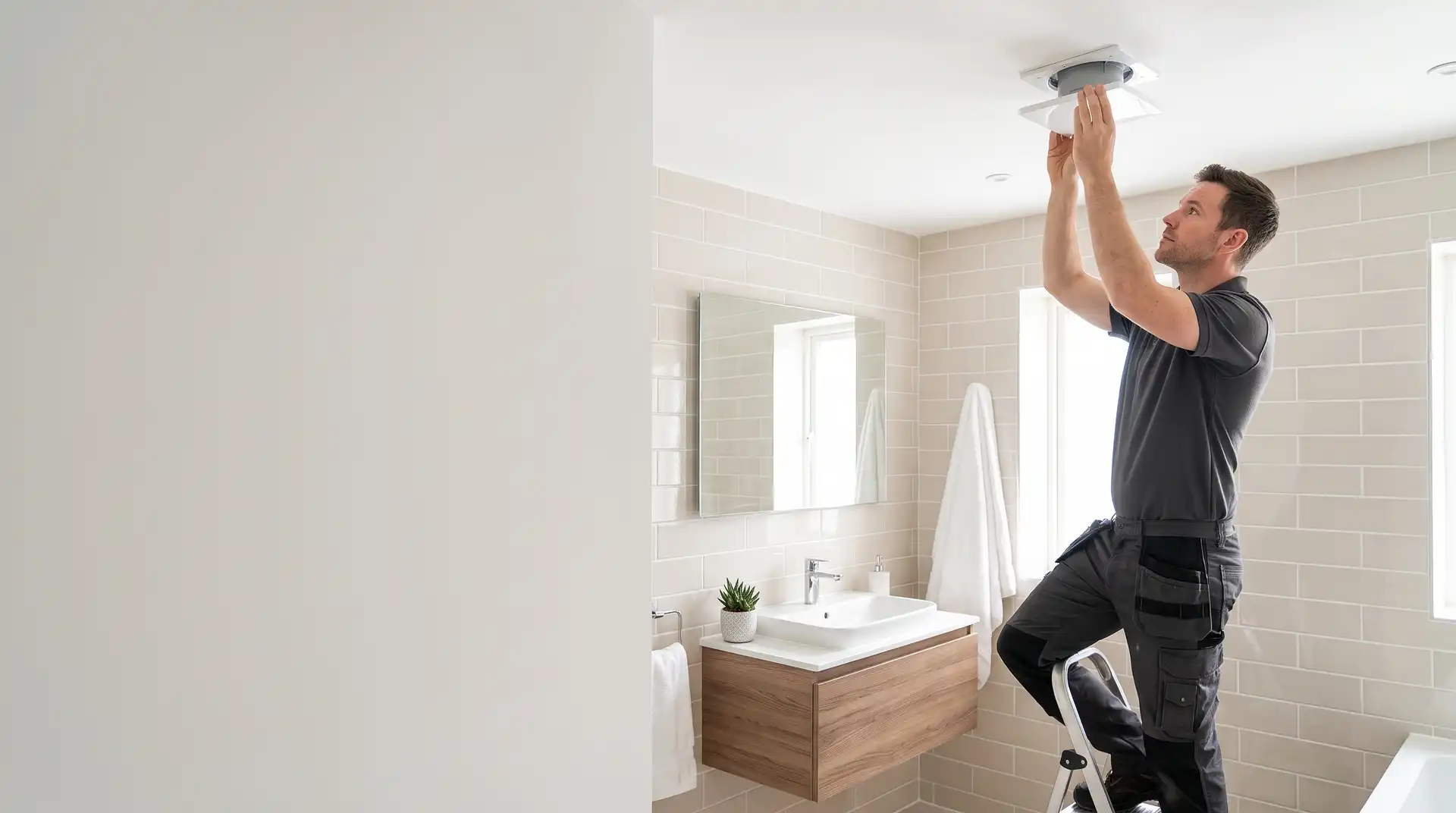
How to Install a Bathroom Extractor Fan
10 September 2026
How to Install a Bathroom Extractor Fan
Installing a bathroom extractor fan means choosing the correct fan type and IP rating for its zone, cutting a hole in the wall or ceiling, running ducting to the outside, wiring the fan to a suitable power supply, and getting the work certified, since bathroom electrical work counts as a notifiable special location under UK Building Regulations. This is genuinely one of the bathroom electrical jobs where the wiring itself is often the easier part, and getting the zone rating and ducting route right is what actually determines whether the fan does its job properly for years to come.
Before buying anything, work out exactly where the fan will sit relative to the bath or shower, since this single decision determines which IP-rated fan you're legally allowed to install in that specific position.
Understanding Bathroom Zones and IP Ratings
UK bathroom electrical regulations divide the room into zones based on distance from water sources, and each zone requires a minimum level of water protection, expressed as an IP rating, for any electrical fitting installed there.
Zone | Location | Minimum IP Rating |
|---|---|---|
Zone 0 | Inside the bath or shower itself | IPX7 |
Zone 1 | Directly above the bath or shower, up to 2.25m | IPX4 (IPX5 if using a jet spray to clean) |
Zone 2 | 0.6m beyond the edge of the bath or shower | IPX4 |
Outside zones | Elsewhere in the bathroom | Standard fittings generally acceptable |
Most bathroom extractor fans are rated at least IPX4, making them suitable for Zone 1 and Zone 2 installation, but always check the specific fan's rating against its intended position before buying, since ratings do vary between models.
Choosing the Right Fan Type
Axial (wall or window) fans mount directly on an external wall and expel air straight outside through a short duct run, making them the simplest installation where an external wall is close by. Ceiling-mounted fans sit in the ceiling void and duct air through the loft to an external wall or roof vent, better suited to internal bathrooms without direct external wall access. Inline fans mount within the ducting itself, away from the bathroom, and are typically used where noise needs to be minimised or where several rooms are ventilated from one central fan.
Step 1: Plan the Ducting Route
Before cutting anything, plan the shortest, straightest possible route from the fan's position to an external wall, vent, or roof outlet. Every bend in ducting reduces airflow efficiency, so a route with two or three gentle bends performs considerably better than one with several sharp turns, even over a similar overall distance.
Step 2: Isolate the Circuit
Turn off power at the consumer unit for the circuit you'll be working on, and confirm it's dead using a proper voltage tester before touching any wiring. Bathroom circuits often share wiring with adjacent rooms, so test carefully rather than assuming a single switch fully isolates everything nearby.
Step 3: Cut the Fan Opening
Mark and cut the opening for the fan body, following the manufacturer's template exactly, whether you're cutting into a ceiling, an internal wall for ducting through to an external wall, or directly into an external wall for an axial fan. Take care around joists and any existing pipework or cabling that might run through the area you're cutting into.
Step 4: Fit the Fan Body and Ducting
Secure the fan body into the opening according to the manufacturer's fitting instructions, then connect the ducting, sealing joints properly to prevent air leakage along the run. Fit an external vent cover or grille at the point the ducting exits the building, which should include a flap or louvre to prevent draughts and pests entering when the fan isn't running.
Step 5: Wire the Fan
Connect the fan according to its wiring diagram, typically taking live, neutral and earth from a suitable supply, either linked to the bathroom light switch for a fan that runs whenever the light is on, or to a separate switch or pull cord depending on the model and your preference. Many modern fans include a built-in timer or humidity sensor, which needs a permanent live connection alongside the switched live from the light circuit, so check the specific wiring diagram for your model rather than assuming a generic two-wire connection is sufficient.
Step 6: Test and Certify
Restore power and test the fan runs correctly, extracts air effectively at the outside vent, and that any timer or humidity sensor function is operating as expected. Since this is notifiable work in a special location, arrange for a Part P registered electrician to inspect and certify the installation if you're not registered yourself, or use one from the outset to carry out the wiring connection.
A Note on Fan Speed and Extraction Rate
UK Building Regulations Approved Document F sets minimum extraction rates for bathroom fans, typically at least 15 litres per second for a standard bathroom, higher for an en-suite with a shower or a room without a window. Check the fan's rated extraction performance against your bathroom's size before buying, since an undersized fan will run constantly without effectively clearing moisture, leading to condensation and mould problems the installation was meant to solve.
A Note on Timer and Humidity Sensor Settings
A timer-equipped fan typically continues running for a set period after the light is switched off, allowing it to clear residual moisture after someone leaves the bathroom. A humidity-sensing fan instead activates automatically once moisture levels rise above a set threshold, regardless of the light switch. Setting the timer duration or humidity threshold correctly during installation avoids a fan that either switches off too early, leaving moisture behind, or runs excessively, which is both noisy and wastes electricity.
When to Call a Professional
Bathroom electrical work is legally notifiable under Part P of the Building Regulations, covering special locations including bathrooms, so unless you're a competent person registered with a scheme such as NICEIC or NAPIT, this work should be carried out or at minimum certified by a registered electrician. Beyond the legal requirement, correctly routing ducting through a loft space, cutting into an external wall cleanly, and getting the wiring right first time are all things a qualified electrician handles considerably faster and more reliably than most DIYers managing this job for the first time.
Use InstantCost's electrician cost calculator to see what a professional installation would cost in your area. If your bathroom already has a persistent damp or mould problem you're hoping the new fan will resolve, how to get rid of mould in the bathroom for good covers addressing the existing issue alongside improving ventilation.
Common Mistakes and What to Do Instead
Mistake: Installing a fan with the wrong IP rating for its zone. A fan rated for outside the zones fitted directly above a shower is both a safety hazard and non-compliant. Always check the fan's IP rating against its intended zone before buying.
Mistake: Choosing the longest, most convenient ducting route rather than the shortest. Every extra metre and every additional bend reduces extraction efficiency. Plan the shortest, straightest practical route from the fan to the outside.
Mistake: Undersizing the fan for the room. A fan rated below the minimum extraction rate for your bathroom's size will run constantly without properly clearing moisture. Check the required extraction rate against Approved Document F before choosing a model.
Mistake: Not sealing ducting joints properly. Air leaking out along the duct run before reaching the outside vent reduces the fan's real-world effectiveness considerably compared with its rated performance. Seal every joint with proper ducting tape or clips as specified by the manufacturer.
Mistake: Skipping Part P notification. Bathroom electrical work is legally notifiable, and unregistered work not properly certified can cause problems if you later sell the property or make an insurance claim. Use a registered electrician or arrange third-party certification.
Mistake: Not fitting a proper external vent cover. A duct outlet without a proper louvred cover lets draughts and pests into the ducting when the fan isn't running. Always fit the correct external vent as part of the installation.
What It Costs in the UK
Bathroom extractor fan installation isn't currently broken out as its own standalone line item, so figures below combine typical electrician hourly rates with materials pricing for this specific job.
Item or Service | Typical UK Cost (2026) |
|---|---|
Basic axial extractor fan, DIY parts | £15–£40 |
Fan with timer or humidity sensor, DIY parts | £30–£70 |
Ducting and external vent kit | £15–£35 |
Electrician supply and fit, straightforward job | £150–£280 |
Electrician supply and fit, ceiling fan with loft ducting | £250–£400 |
Part P certification (often included in electrician's quote) | Usually included |
EICR safety inspection (if checking wider bathroom electrics) | £150–£350 |
Figures based on InstantCost.co.uk's 2026 UK electrician pricing data and vary by region, fan type, and ducting complexity.
Staying Safe
Always isolate the correct circuit at the consumer unit and confirm it's dead with a voltage tester before starting any wiring work, and be aware that bathroom circuits sometimes share supply with lighting in adjacent rooms, so test carefully rather than assuming. Only fittings with the correct IP rating for their specific zone should ever be installed in a bathroom, since water and electricity together are a genuine and serious safety risk.
If you're not confident with the electrical connection stage specifically, even if you're comfortable cutting the opening and fitting the ducting yourself, arrange for a qualified electrician to complete and certify the wiring, since bathroom electrical faults carry a higher risk than similar faults in a dry room elsewhere in the house.
Part P of the Building Regulations classifies bathrooms as a special location requiring notification for new electrical work, including extractor fan installations involving new wiring. Verify current requirements with your local Building Control department or use a Part P registered electrician such as NICEIC or NAPIT.
Frequently Asked Questions
Do I need an electrician to fit a bathroom extractor fan? Bathroom electrical work is notifiable under Part P of the Building Regulations, so while a competent DIYer can handle the physical fitting and ducting, the wiring connection should be carried out or certified by a registered electrician unless you're registered with a competent person scheme yourself.
What extraction rate do I need for my bathroom fan? UK Building Regulations Approved Document F typically requires at least 15 litres per second for a standard bathroom, with higher rates for en-suites with a shower or bathrooms without a window. Check your specific room against current guidance before choosing a fan.
Can I connect the fan to the light switch? Yes, many bathroom fans are wired to run alongside the light switch, sometimes with an additional timer that keeps the fan running for a set period after the light is switched off to continue clearing moisture.
What's the difference between a timer and a humidity sensor fan? A timer fan runs for a set period after being triggered by the light switch, while a humidity sensor fan activates automatically whenever moisture levels rise above a set threshold, regardless of whether the light is on.
Can I install a ceiling extractor fan if I don't have loft access above the bathroom? It's considerably harder without loft access, since the ducting typically needs to run through the loft space to reach an external wall or roof vent. An axial wall-mounted fan on an external wall is usually a more practical choice without loft access.
How long does it take to install a bathroom extractor fan? A straightforward axial fan installation on an external wall typically takes two to four hours including cutting the opening, fitting ducting, and wiring. A ceiling fan with loft ducting to a distant external wall can take considerably longer depending on the route.