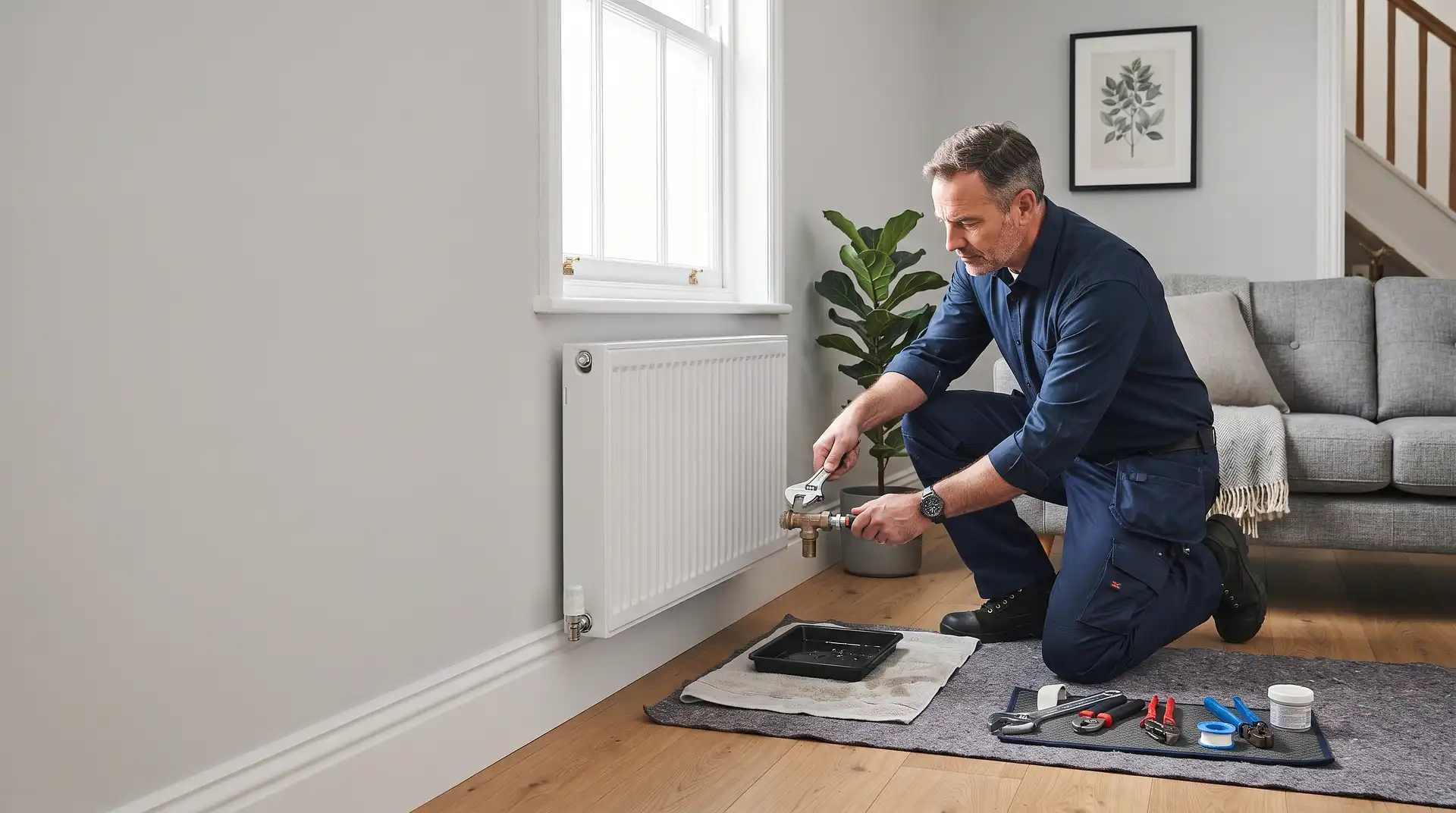
How to Isolate a Radiator
16 September 2026
How to Isolate a Radiator
Isolating a radiator means closing both of its valves, the thermostatic (TRV) side and the lockshield side, to stop hot water flowing through it while leaving the rest of the heating system running normally. This is a genuinely different task from removing or draining a radiator, since isolation on its own doesn't involve any water leaving the system at all, it simply cuts that one radiator out of the circuit temporarily or, if you choose, for an extended period.
People isolate a radiator for reasons that don't always lead to removal: shutting off heat to a spare room you don't use through winter, isolating a radiator you suspect is leaking before deciding on a repair, or cutting off one radiator to troubleshoot whether it's affecting pressure or circulation elsewhere in the system. Knowing how to do this properly, and how to confirm it's actually worked, is a genuinely useful, low-risk skill separate from any bigger job.
Step 1: Identify Both Valves
Every radiator has two valves, one on each side. The TRV, usually with a numbered dial or a digital head, controls flow based on the room's temperature. The lockshield, typically with a plastic cap covering a square-socket adjuster, is normally left in a fixed position set when the system was originally balanced. Both need to be closed to fully isolate the radiator, closing just one leaves the other side still allowing some flow through.
Step 2: Close the TRV
Turn the TRV fully clockwise, or if it's a digital model, use its control to select the lowest setting or an explicit off function if one exists. Some digital TRVs need a specific button sequence to fully close rather than just turning a dial, so check your specific model if a simple twist doesn't seem to be working.
Step 3: Close the Lockshield
Remove the plastic cap covering the lockshield valve, and using a spanner or the specific key for your valve type, turn the internal adjuster fully clockwise to close it. Take note of how many turns it takes to close from its current position, since this tells you exactly how far to reopen it later to restore the system's original balance rather than guessing.
Step 4: Confirm Isolation Has Worked
Wait for the heating system to complete a full cycle, then feel the radiator. A properly isolated radiator should stay cold, or only very slightly warm from ambient room heat, while the rest of the house heats normally. If the radiator is still getting warm despite both valves appearing closed, one of the valves likely isn't fully closing, which points to a worn or seized valve needing attention.
A Note on Seized Valves
Valves that haven't been operated in a long time, particularly lockshields, which are often left untouched for years once a system is balanced, can seize partially or fully. Never force a stuck valve with excessive pressure, since this risks snapping the spindle or cracking the valve body, turning a simple isolation into an emergency drain of the whole system. If a valve won't turn with reasonable hand pressure using the correct tool, stop and consider calling a plumber rather than continuing to force it.
A Note on Long-Term Isolation
If you're isolating a radiator for an extended period, a spare room kept unheated through winter, for example, it's worth checking on it periodically rather than assuming it's fine indefinitely. A fully isolated radiator sitting cold in an otherwise heated house can occasionally contribute to a cold spot that affects condensation risk in that specific room, so balancing energy saving against the room's ventilation and damp risk is worth considering for anything beyond a short-term isolation.
A Note on Isolating for Troubleshooting
If you suspect a specific radiator is causing a pressure drop, a leak, or an imbalance affecting heating elsewhere in the house, isolating it temporarily lets you observe whether the wider system behaves differently with that radiator cut out of the circuit. This is a useful, low-risk diagnostic step before committing to a bigger job like removing the radiator entirely to inspect it more closely.
When to Call a Professional
If a valve is seized and won't isolate properly even with reasonable effort, or if you suspect the radiator needs isolating because of an active leak that's more than a minor drip, a plumber can assess and resolve the underlying issue rather than leaving a radiator permanently isolated as a workaround. Isolation is a genuinely simple task when both valves work properly, but it's not a substitute for actually fixing whatever prompted you to isolate the radiator in the first place.
Use InstantCost's heating system cost calculator to see what a valve repair or replacement would cost if isolation reveals a problem needing attention. If isolating the radiator is the first step toward removing it entirely, how to remove a radiator without flooding your floor covers the next stage of that process.
Common Mistakes and What to Do Instead
Mistake: Closing only one valve and assuming the radiator is isolated. Closing just the TRV or just the lockshield still allows some flow through the open side. Always close both valves fully to genuinely isolate a radiator.
Mistake: Forcing a seized valve with excessive pressure. This risks snapping the spindle or cracking the valve body, turning a simple isolation into an emergency full system drain. Stop and call a plumber if a valve won't turn with reasonable hand pressure.
Mistake: Not counting turns when closing the lockshield. Without knowing how many turns you closed it from, restoring the system's original balance later becomes guesswork rather than an accurate reversal. Count and note the turns as you close it.
Mistake: Assuming isolation stops all heat loss from the radiator. A radiator with both valves closed will still radiate a small amount of residual heat from water trapped inside it, and won't be perfectly cold. Don't be alarmed by very slight warmth immediately after isolating.
Mistake: Leaving a radiator isolated long-term without considering condensation risk. An unheated room in an otherwise warm house can be more prone to condensation and damp, particularly in winter. Weigh energy savings against this risk for any isolation lasting more than a few weeks.
Mistake: Not checking whether isolation actually worked. Assuming both valves are closed without confirming the radiator stays cold through a heating cycle can mean you're not actually isolated at all. Always check after the next heating cycle that the radiator has genuinely stopped heating up.
What It Costs in the UK
Item or Service | Typical UK Cost (2026) |
|---|---|
DIY isolation | £0 (no parts needed) |
Plumber call-out to isolate/inspect a valve | £80–£150 |
Seized valve replacement (TRV or lockshield) | £60–£150 fitted |
Leak investigation | £100–£250 |
Radiator removal (if isolation reveals a bigger issue) | £80–£180 |
Figures based on InstantCost.co.uk's 2026 UK heating system pricing data and vary by region and provider.
Staying Safe
Allow the heating system to cool before working closely with valves if you're concerned about heat, though isolation itself doesn't require draining water and carries less risk than removal or repair work. Use the correct tool, a proper radiator key or spanner, rather than improvising with pliers or an ill-fitting tool, which increases the risk of rounding off the valve or slipping and causing injury.
Keep children away from the immediate area while you're working with valve tools, and if a valve does show signs of a leak once you're working with it, be prepared to fully close both valves quickly and have a towel or container ready in case of a small amount of water escaping.
General UK home heating safety guidance recommends using the correct tools for valve adjustment and avoiding excessive force on any valve that resists normal operation, since this can lead to a sudden failure and unexpected water release.
Frequently Asked Questions
Do I need to drain the radiator to isolate it? No. Isolating a radiator by closing both valves doesn't require draining any water from the system. Draining is only necessary if you're planning to remove the radiator or disconnect it from the pipework entirely.
Will isolating one radiator affect the rest of my heating system? Generally no, for a single radiator in a normally balanced system. The rest of the system continues operating normally, though isolating several radiators at once can occasionally affect overall system pressure and circulation.
How do I know if my radiator valves are fully closed? Check the radiator after the heating has run through a full cycle. A properly isolated radiator should stay cold or only very slightly warm, while the rest of the house heats normally.
What if I can't turn the lockshield valve? A lockshield left untouched for years can seize. Don't force it, if it won't move with reasonable pressure using the correct tool, call a plumber rather than risk damaging the valve or spindle.
Is it bad to leave a radiator isolated for a long time? It's generally fine for energy saving purposes, but consider the room's ventilation and condensation risk if leaving a radiator off for an extended period, particularly through a cold, damp winter.
Can isolating a radiator help me find a leak? Yes, isolating a suspected radiator and observing whether a pressure drop stops occurring elsewhere in the system is a useful diagnostic step, though a Gas Safe or plumbing professional should confirm and fix the actual cause of any genuine leak found.