How to Turn On Radiator Heat
5 August 2026
How to Turn On Radiator Heat
Getting radiator heat working properly usually means checking three separate things in the right order, the room thermostat, the boiler's own timer or programmer, and the radiator's individual valves, since any one of these being in the wrong position stops heat reaching a room even if everything else is set correctly. Most "my radiators won't heat up" situations turn out to be one of these three, checked in sequence, rather than a genuine fault needing an engineer.
Step 1: Check the Room Thermostat
Your central heating system's main thermostat, usually a dial or digital display on a wall somewhere in the house, needs to be set above the room's current temperature for the heating to actually fire up and start circulating hot water to the radiators. If the thermostat reads a lower target than the room already is, the system correctly assumes heating isn't needed and stays off, this is one of the most common reasons someone thinks their heating "isn't working" when it's actually working exactly as instructed.
Step 2: Check the Boiler's Timer or Programmer
Most UK homes have a separate timer or programmer controlling when the heating is allowed to run at all, regardless of what the thermostat is set to. If this is set to an "off" period, or a schedule that doesn't cover the current time, the heating won't fire up even with the thermostat calling for warmth. Check that the programmer is set to "on" or "auto" with a schedule that includes the current time, or switch it to manual "on" temporarily if you just want heat right now without worrying about the schedule.
Step 3: Check Individual Radiator Valves
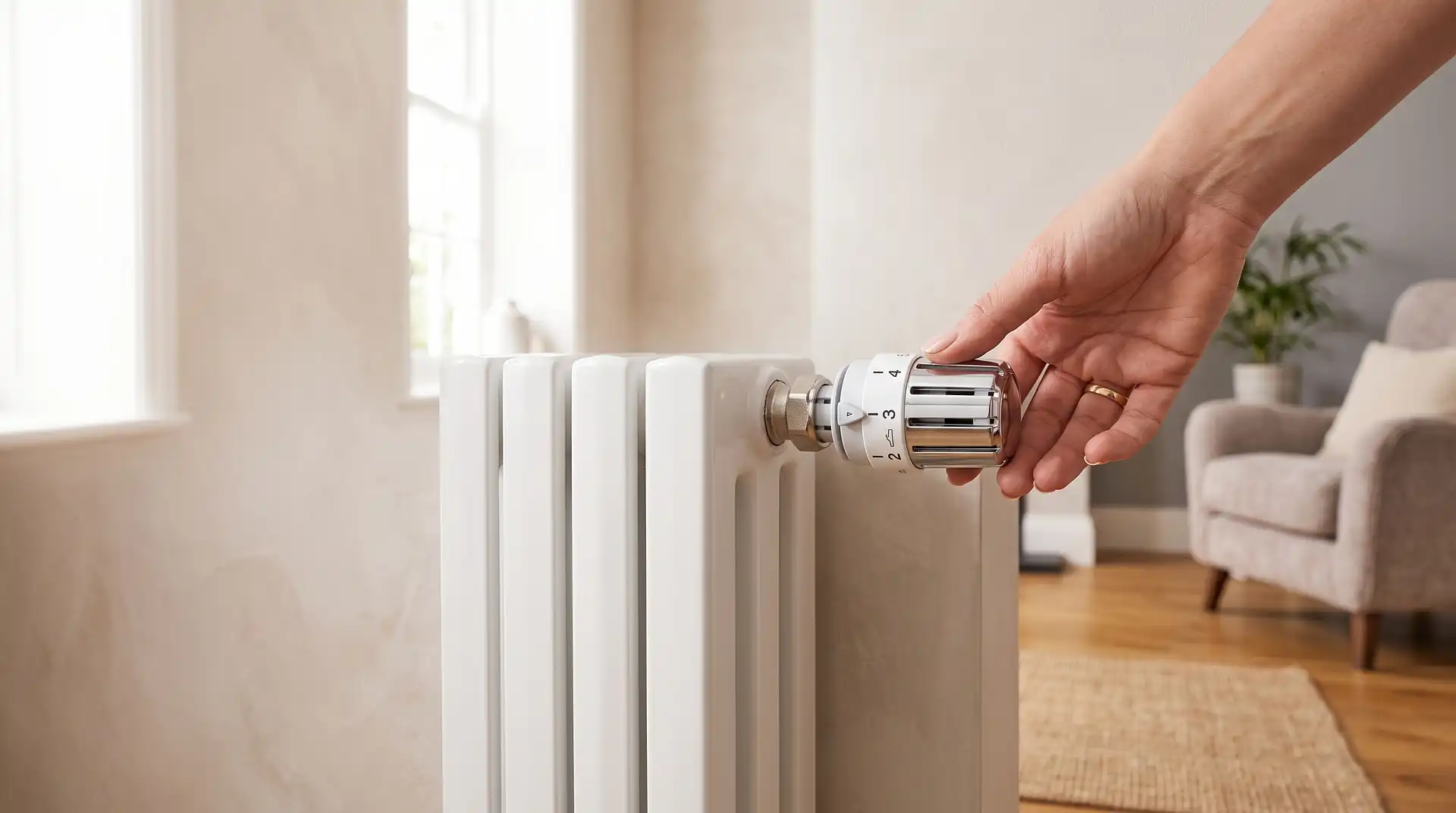
Each radiator has its own control valve, often a thermostatic radiator valve (TRV) with a numbered dial, which needs to be turned up rather than left at its lowest or "off" setting for that specific radiator to heat, even if the boiler and central thermostat are both working correctly. If you, or someone else, previously turned a radiator down or off in a room you weren't using, it stays cool until that valve is turned back up, regardless of what's happening elsewhere in the heating system.
Step 4: Check the Lockshield Valve Hasn't Been Fully Closed
Alongside the TRV, every radiator has a second valve, the lockshield, usually under a plastic cap at the opposite end, used for balancing the system rather than everyday adjustment. If a radiator has been fully isolated for maintenance, redecorating, or removal at some point and the lockshield wasn't reopened afterward, that radiator stays cold regardless of the TRV setting, since it's genuinely disconnected from the system's water flow. If you've recently had work done on a specific radiator, this is worth checking before assuming a bigger fault.
If You've Checked All Three and Still Have No Heat
Check the boiler itself for a fault code or error display. Most modern boilers show a code or light pattern when something's wrong, low pressure being one of the most common causes, and this is worth checking before assuming the problem lies elsewhere in the system.
Check the boiler's pressure gauge. Low pressure can prevent a boiler from firing up at all. Most systems should read 1 to 2 bar when cold, and a reading below this range is a strong sign the system needs topping up via the filling loop before heating will work properly again.
Bleed the radiators if some are heating unevenly. Cold patches, particularly cold at the top with warmth lower down, generally indicate trapped air rather than a boiler fault, and bleeding resolves this in most cases without needing anything else checked.
Check whether only some radiators are affected, or the whole system. If every radiator in the house is cold, that points toward the boiler, thermostat, or timer. If only one or two specific radiators are cold while others work fine, that points toward those individual radiators' valves rather than a system-wide issue.
A Quick Word on Radiators You've Deliberately Turned Off
If a specific radiator was intentionally switched off, in a spare room or rarely used space, for instance, and you're now trying to bring it back into use, both the TRV and, if it was fully isolated, the lockshield need to be reopened, not just one or the other. Our related guide on the InstantCost blog covers how to switch off a radiator properly , including the distinction between turning a TRV down and fully isolating both valves, worth checking if you're not sure which method was used originally, since it affects exactly what needs reversing now.
Common Mistakes and What to Do Instead
Mistake: assuming a cold radiator means a boiler fault. Individual radiator valves, both the TRV and lockshield, are a far more common cause of one or two specific radiators staying cold than an actual boiler issue. Check the radiator's own valves before assuming anything bigger is wrong.
Mistake: not checking the timer or programmer separately from the thermostat. These are two different controls doing two different jobs, a correctly set thermostat still won't produce heat if the programmer's schedule doesn't currently allow the heating to run at all.
Mistake: turning the thermostat up repeatedly without checking if it's actually below room temperature already. If the room is already warmer than the thermostat's target, turning it up further doesn't make heat come on any faster, the system needs the target set genuinely above current room temperature to trigger.
Mistake: ignoring a fault code on the boiler display. These codes exist specifically to point toward the actual cause, low pressure, a lockout, a specific component fault, and checking your boiler's manual for what a displayed code means is often faster than guessing at the cause.
Mistake: bleeding radiators without checking pressure afterward. Bleeding releases some system water and can lower pressure, particularly across several radiators in one session. Check the gauge once you're done and top up if needed before assuming the job's finished.
What It Costs in the UK
Checking and adjusting the thermostat, timer, and radiator valves costs nothing and resolves the majority of "heat won't come on" situations without needing anything further. Bleeding a radiator, if trapped air is the cause, costs little beyond a bleed key, typically £3 to £10 if you don't already own one, or nothing at all if you're improvising with a suitable household tool.
If none of this resolves the issue and a genuine fault is suspected, according to InstantCost.co.uk's 2026 UK pricing data, fault diagnosis and repair typically costs £90 to £280, with the first hour usually included in that figure. If the boiler simply needs its regular annual service rather than an active fault repair, that typically costs £75 to £130, with independent Gas Safe engineers generally at the lower end of that range and national brands at the higher end. If the boiler itself is old enough and the fault serious enough that replacement makes more sense than repair, a budget combi boiler like-for-like swap typically costs £1,800 to £2,400.
Situation | Typical UK Cost (2026) |
|---|---|
DIY checks (thermostat, timer, valves) | Free |
Radiator bleed key, if needed | £3 to £10 |
Fault diagnosis and repair (first hour included) | £90 to £280 |
Annual boiler service | £75 to £130 |
New combi boiler, budget (like-for-like) | £1,800 to £2,400 |
These are UK market estimates based on InstantCost.co.uk's 2026 pricing data and vary by provider and region. Working through the thermostat, timer, and valve checks above costs nothing and resolves most cases before any professional call-out is needed.
Staying Safe
If you're checking the boiler itself for a fault code or display, don't attempt to open the casing or investigate internal components yourself, this is Gas Safe engineer territory regardless of how confident you feel with the external controls. If you smell gas at any point during this process, don't investigate further, turn off the gas supply at the meter if it's safe to do so, ventilate the area, and contact the National Gas Emergency Service immediately.
If children are in the home, keep them away from the boiler and any tools you're using to check radiator valves, and ensure any bleed key or spanner is put away once you've finished.
Boiler fault codes and display systems vary by manufacturer, so check your specific boiler's manual for what a displayed code or light pattern means before assuming the cause.
FAQ
Why won't my radiators turn on even though the boiler seems to be working? Check the room thermostat is set above current room temperature, the timer or programmer is scheduled to allow heating at the current time, and individual radiator valves haven't been turned down or fully isolated.
Why is only one radiator cold while the rest of the house is warm? This usually points to that specific radiator's TRV or lockshield valve rather than a system-wide fault, check both are open rather than assuming a bigger problem across the whole heating system.
What should I check first if my heating won't come on at all? Start with the room thermostat, confirm it's set above the current room temperature, then check the boiler's timer or programmer is scheduled to allow heating right now, before assuming anything else is wrong.
Does bleeding a radiator help if it's not heating up? Yes, if the radiator is cold at the top and warm at the bottom, that's a classic sign of trapped air, and bleeding it usually resolves this without needing anything else checked or repaired.
How much does it cost to get a boiler fault causing no heat diagnosed? Typically £90 to £280 according to 2026 UK pricing data, with the first hour usually included, though it's worth working through the free checks above first, since many cases resolve without needing a professional visit at all.
What does it mean if my boiler shows a fault code and won't produce heat? Check your specific boiler's manual for what that code means, low pressure is one of the most common causes and can often be resolved yourself via the filling loop before assuming a professional repair is needed.