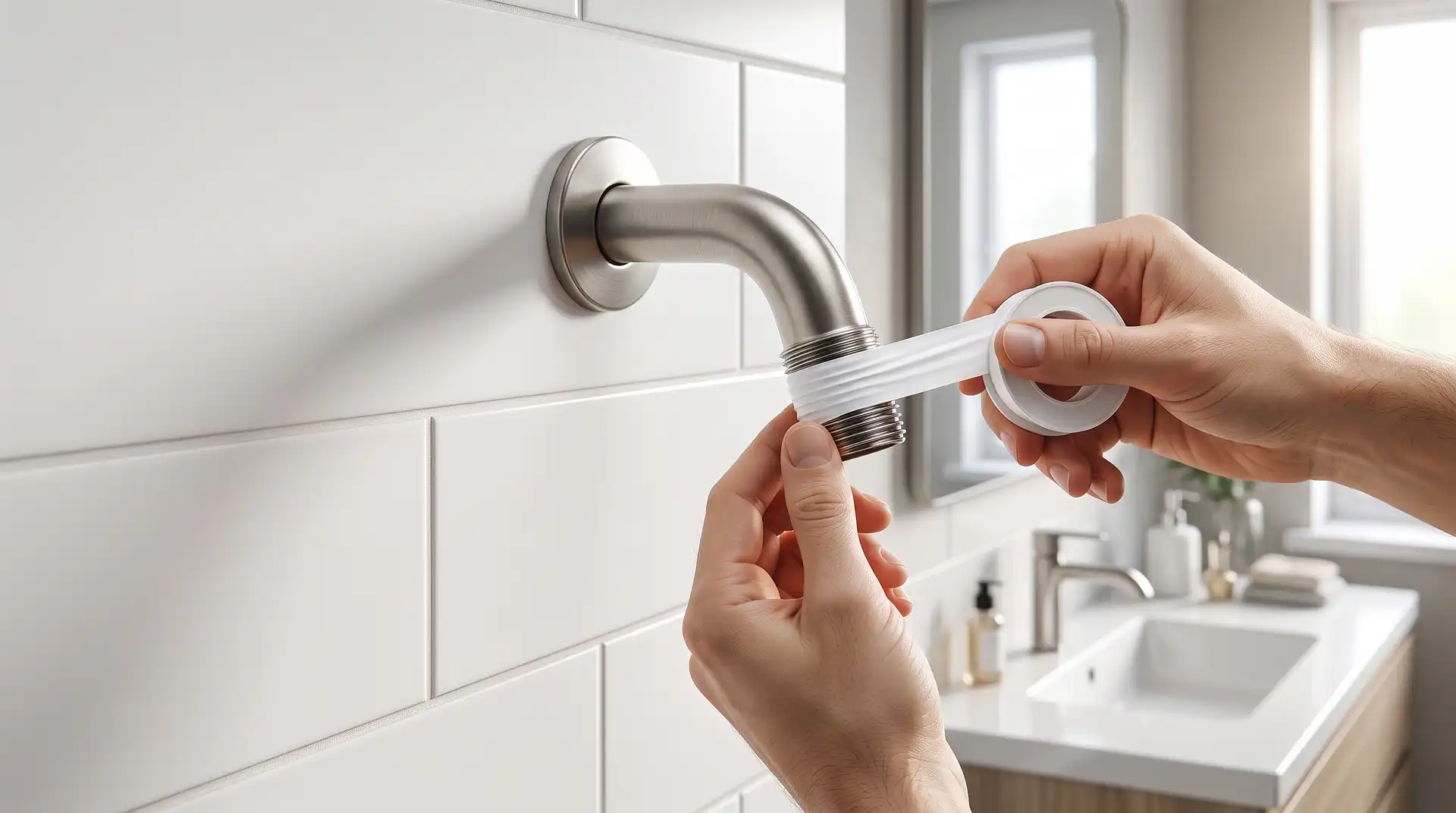
Plumbers Tape - How to Apply It Correctly
3 August 2026
Plumbers Tape: How to Apply It Correctly, First Time
PTFE tape, the thin white tape most people call plumbers tape, has exactly one rule that determines whether it works: it has to wrap in the same direction the fitting tightens. Get that one detail wrong and everything else about the application, how many wraps, how taut, how clean the threads are, stops mattering, because the act of screwing the joint together simply unwinds the tape instead of compressing it into the threads. This is why a joint that's clearly been taped can still leak, and why the fix usually isn't more tape, it's the right direction.
What the Tape Is Actually Doing
PTFE tape isn't glue and it isn't a gap-filler in the way people sometimes assume. It works by compressing into the microscopic grooves of a screwed thread as the joint is tightened, creating a seal purely through that compression. Nothing about the tape itself is sticky or bonding, which is exactly why direction and tension matter so much more here than with almost any other DIY sealing product.
What You Need
PTFE thread seal tape, sold in small rolls at any hardware shop. Standard tape is usually white, for general water fittings. Gas-rated tape is thicker and typically yellow, and the two aren't interchangeable.
A clean, dry fitting, with any old tape residue or previous sealant fully removed before you start.
Step 1: Work Out Which Way the Fitting Tightens
Look at the fitting and work out which direction it screws in. The overwhelming majority of standard plumbing fittings use a right-hand thread, meaning they tighten clockwise when you're looking at the threaded end. This single check is the most important thing you'll do in the whole process, since the tape needs to wrap the same way the fitting turns, so tightening winds it in rather than unwinding it.
Step 2: Start Just Back From the End
Hold the fitting with the thread facing you and begin wrapping the tape roughly one thread back from the very end, rather than right at the tip. This small gap helps stop tiny fragments of tape breaking off and ending up inside the pipe once everything's assembled.
Step 3: Wrap Clockwise, Pulled Taut
Wrap the tape in the same clockwise direction the fitting tightens, pulling it reasonably taut as you go so it beds into the thread grooves rather than sitting loosely across the top of them. Overlap each pass by around half the tape's width as you move along the thread toward the fitting's body.
Step 4: Use the Right Number of Wraps
Two to three wraps is the standard for most household water fittings. Gas fittings, using the correct gas-rated tape, typically need slightly more, often three to four. Larger diameter threads generally need a wrap or two more than a small fitting, simply to fully cover the greater thread surface. If you're genuinely unsure, err toward one extra wrap rather than one too few, since under-taping causes far more leaks than a small amount of extra tape ever does.
Step 5: Press It Into the Threads
Once wrapped, run your fingers gently over the tape to press it down into the thread grooves. This small step helps it sit properly before assembly and reduces the chance of it bunching or tearing as the fitting goes together.
Step 6: Assemble by Hand First, Then Tighten
Screw the fitting together by hand initially, checking it's starting straight rather than cross-threaded, then finish with a spanner to a firm, snug fit. Stop once it feels properly seated, overtightening doesn't improve the seal and can damage the tape or, on some fittings, the material itself.
Common Mistakes and What to Do Instead
Mistake: wrapping against the tightening direction. This is the cause behind most "I taped it and it's still leaking" situations. The tape simply unwinds as the joint is tightened instead of compressing. Always check and match the fitting's tightening direction before you start.
Mistake: too few wraps, or wrapping too loosely. A single loose wrap frequently isn't enough to seal the thread gaps properly. Aim for two to three snug wraps as a baseline, more for larger or gas fittings.
Mistake: mixing up white and yellow tape. Standard white tape is for water fittings. Gas connections need the thicker, gas-rated tape, usually yellow, and this distinction is a genuine safety matter, not just a preference.
Mistake: taping over old tape or leftover sealant residue. This creates an uneven surface that won't seal reliably. Strip the thread back to bare, clean metal before applying fresh tape.
Mistake: overtightening in an attempt to stop a leak. Beyond a firm, snug fit, more torque doesn't improve the seal and risks damaging the tape or cracking the fitting. If it's still leaking once properly seated, the tape isn't the problem anymore.
When Tape Isn't the Actual Fix
PTFE tape only works on standard threaded fittings, and it won't resolve a cracked fitting, worn or damaged threads, or a compression joint, which seals through an entirely different mechanism and doesn't use tape at all. If a joint still leaks after you've correctly reapplied tape, checking direction, wrap count, and tension, that's a strong sign the issue is the fitting itself rather than anything tape-related, and it's the point to stop retrying and take a closer look at what you're actually sealing.
Tape and a snake solve two completely different problems, and it's worth being clear on which one you're actually dealing with before reaching for either. Tape seals a threaded joint that's letting water past the connection itself. A blocked or slow-draining pipe further down the line is a different issue entirely, and no amount of tape at a fitting will clear it. If what's actually going on is a slow drain rather than a leaking joint, our related guide on the InstantCost blog covers how to use a plumber's snake without damaging your pipes , worth a read if force, not a seal, is the real problem you're trying to solve.
What It Costs in the UK
PTFE tape itself is genuinely one of the cheapest effective fixes in home plumbing, a standard roll typically costs £1 to £4 and covers a large number of household fittings. Gas-rated tape is similarly priced, usually £2 to £5 per roll.
According to InstantCost.co.uk's 2026 UK plumbing pricing data, if a leak persists after correctly reapplying tape and needs a plumber's attention, standard UK rates run £40 to £80 an hour, with most plumbers setting a one-hour minimum charge for a call-out. Day rates typically run £250 to £450 outside London and £400 to £600 inside the M25. If the fitting itself needs replacing, a tap repair or replacement including parts typically costs £80 to £180, and it's genuinely worth checking whether this is the underlying issue before assuming a leaking joint just needs re-taping again and again.
Item or Service | Typical UK Cost (2026) |
|---|---|
PTFE tape, standard (white) | £1 to £4 per roll |
PTFE tape, gas-rated (yellow) | £2 to £5 per roll |
Plumber hourly rate | £40 to £80 |
Plumber day rate, outside London | £250 to £450 |
Plumber day rate, inside M25 | £400 to £600 |
Tap repair/replacement, incl. parts | £80 to £180 |
These are UK market estimates and vary by provider and region. Reapplying tape correctly, checking direction, wrap count, and tension, resolves the large majority of threaded joint leaks, so it's worth the few minutes it takes before assuming a fitting needs professional attention.
Staying Safe
Always use gas-rated tape specifically for gas fittings, never standard water-fitting tape, this is a genuine safety requirement rather than a preference. Any work on gas pipework or appliances must be carried out by a Gas Safe registered engineer, not attempted as DIY, regardless of how confident you feel with general plumbing tasks. Water fittings are a different matter and reasonable for most people to handle themselves.
Once a joint is assembled, run it under normal water pressure and check closely, including underneath, where a slow drip is easy to miss. Keep any tools and loose fittings tidied away while working, particularly if children are in the home.
Fitting types and thread standards can vary, so check your specific manufacturer's guidance if anything looks non-standard, and always use a Gas Safe registered engineer for any gas-related work.
FAQ
Which direction do I wrap plumbers tape? Clockwise, matching the direction the fitting tightens, which is a right-hand thread on almost all standard fittings. Wrapping the opposite way causes the tape to unwind rather than compress as you tighten the joint.
How many wraps of tape does a fitting need? Two to three for most household water fittings, slightly more, often three to four, for gas fittings using the correct gas-rated tape.
Why is my joint still leaking even though I taped it? The most likely cause is wrapping in the wrong direction. Other common causes are too few wraps, tape applied too loosely, or a damaged or worn fitting that tape alone can't fix.
Can I use the same tape for water and gas fittings? No. Standard white PTFE tape is for water fittings only. Gas connections need thicker, gas-rated tape, usually yellow, and this distinction matters for safety, not just performance.
Do I need to remove old tape before applying new tape? Yes. Old tape or sealant residue left on the thread creates an uneven surface that won't seal properly. Clean the thread back to bare metal before wrapping fresh tape.
How much does it cost if I need a plumber to fix a persistent leak? Standard UK rates run £40 to £80 an hour with a one-hour minimum typical, or £80 to £180 for a straightforward tap repair or replacement if that turns out to be the actual cause.