How Do You Pay for Electric Car Charging
28 August 2026
How Do You Pay for Electric Car Charging in the UK?
Public electric car chargers in the UK are paid for by app, RFID card, contactless bank card, or subscription, depending on which charging network you are using. There is no single universal payment method across all UK public chargers, which is one of the more frustrating aspects of public charging for new electric vehicle owners.
The good news is that most major UK charging networks now accept contactless payment by bank card or smartphone at the charger itself, which works as a fallback even without a network-specific app or membership card. This was not the case until relatively recently and has made ad-hoc public charging considerably more accessible.
The Four Main Payment Methods
Network apps are the primary payment method on most major UK charging networks. You download the app for the relevant network (Osprey, Pod Point, bp pulse, Gridserve, Osprey, Believ, or others), create an account, add a payment card, and use the app to start and stop charging sessions. The app shows real-time availability, session cost, and kWh delivered. Most also allow you to set a charging limit or a departure time.
The drawback is straightforward: you need a different app for each network. A driver who regularly uses three different networks needs three apps. Several aggregator apps such as Zap-Map, Bonnet, and Electroverse allow you to pay across multiple networks from a single app, which reduces the fragmentation considerably.
RFID cards are contactless smart cards linked to a network account, tapped against the charger to start a session. Some networks issue them free with account registration, others charge a small fee. RFID cards work without a mobile signal, which matters in rural areas or underground car parks where app connectivity can be unreliable. They are the most reliable fallback when a phone battery is low or signal is poor.
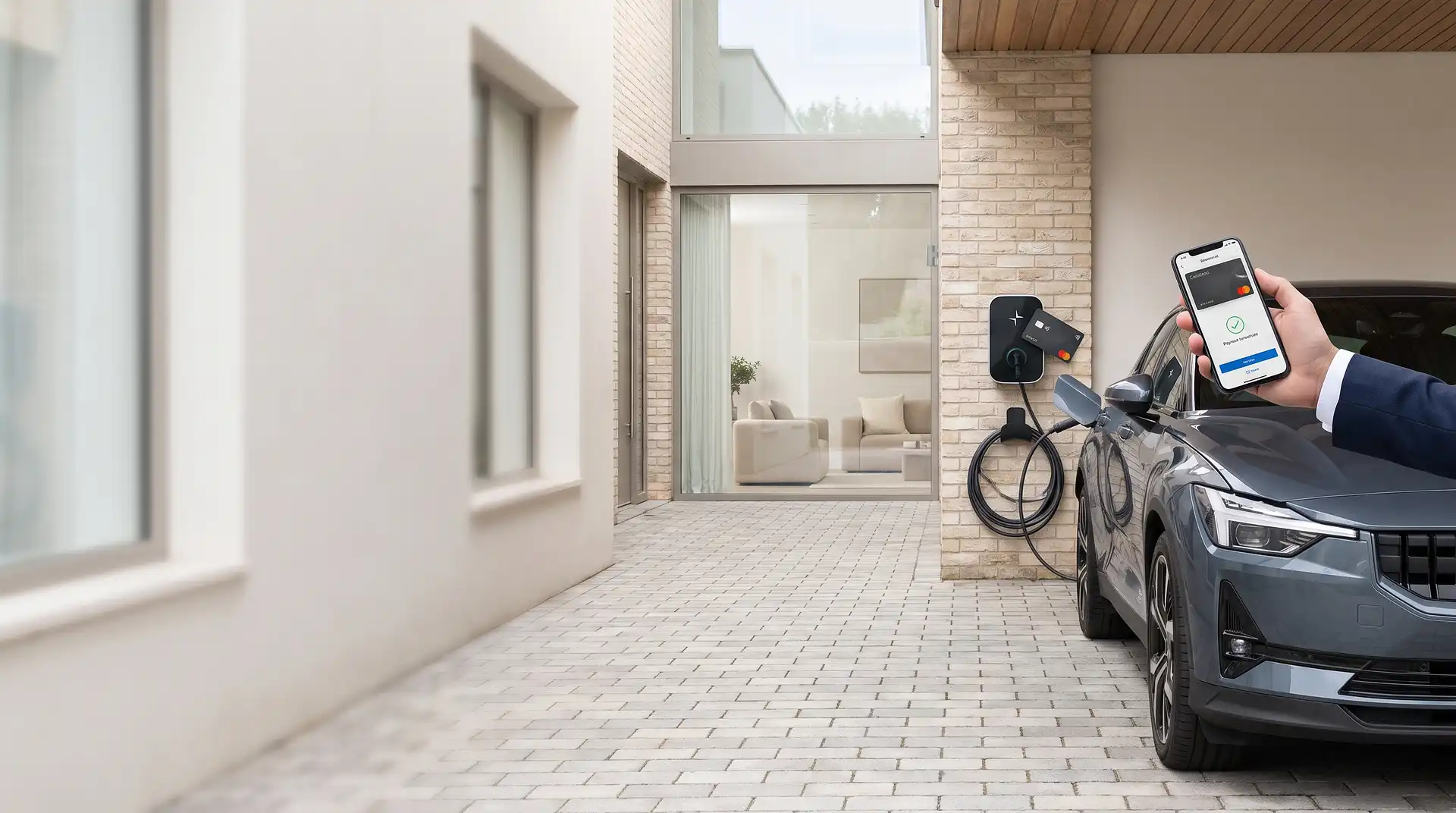
Contactless bank card or smartphone payment is now available on the majority of rapid and ultra-rapid chargers in the UK following an Ofgem requirement that came into force for new installations. Tap your bank card or phone against the payment terminal on the charger unit itself. No app, no account, no pre-registration required. The rate charged is typically higher than the app or subscription rate on the same network, but the convenience is significant for occasional or unfamiliar chargers.
Subscriptions offer reduced per-kWh rates in exchange for a monthly membership fee. Pod Point, Osprey, and several others offer subscription tiers. These make financial sense for drivers who regularly use a particular network's chargers. For occasional public charging users, the monthly fee often outweighs the rate saving.
Which Networks Use Which Payment Methods
Network | App | RFID card | Contactless | Subscription |
|---|---|---|---|---|
Pod Point | Yes | Yes | On most units | Yes (Pod Point Plus) |
bp pulse | Yes | Yes | On most units | Yes |
Gridserve | Yes | Yes | Yes | No |
Osprey | Yes | Yes | Yes | Yes |
Believ | Yes | Yes | On newer units | No |
Yes | Yes | Some units | No | |
GeniePoint | Yes | Yes | Some units | No |
Tesla Supercharger | App / in-car | No | No | Via Tesla account |
Payment method availability varies by charger age and location. Always check before travelling to a specific charger.
How Public Charging Payment Works in Practice
At a rapid or ultra-rapid charger, the process is: plug in the cable, select your payment method (tap card, open app, or tap RFID card), confirm the session starts, charge the vehicle, and unplug. Payment is taken after the session ends based on the kWh delivered or the time connected, depending on the network's billing model.
At slower AC chargers, the process is similar but session times are longer. Some slow chargers in car parks and on-street charge by time (per hour) rather than by energy delivered, which makes them expensive to use for a long top-up if the vehicle's onboard charger is slower than the charger's maximum output.
Billing models in the UK vary:
Per kWh: You pay for exactly the energy delivered. The fairest model for the driver and now the Ofgem-preferred approach for new rapid chargers.
Per minute: Common on older networks. The rate varies between slow, fast, and rapid speeds and you pay for connection time regardless of how efficiently the vehicle is accepting charge. A vehicle with a slower onboard AC charger costs more per kWh on a time-based tariff than one with a faster charger accepting the same total energy.
Per session: A flat fee per charging session regardless of energy delivered or time. Common on some free or subsidised workplace chargers.
Roaming: Paying Across Multiple Networks With One Account
Roaming agreements between networks allow drivers to use one account or card to access multiple networks. The Electroverse card and app, the Bonnet app, and the Zap-Pay feature within Zap-Map all aggregate access to several UK and European networks under a single payment account.
Roaming rates are typically marginally higher than the native network rate, but the convenience of a single payment method across dozens of networks is significant for drivers who travel widely. Several aggregators also show real-time availability and pricing across networks, which helps with journey planning.
The ABRP (A Better Route Planner) app integrates with some aggregator accounts to automatically route charging stops and pre-select compatible chargers along a route, which is particularly useful on longer journeys where multiple charging stops are needed.
Motorway Service Charging
Motorway service station rapid and ultra-rapid chargers in the UK are predominantly operated by Gridserve and a smaller number by bp pulse and others. These chargers almost universally accept contactless payment without requiring an app or pre-registration, which suits motorway users who may be unfamiliar with a particular network.
Motorway charging rates in 2026 are typically the highest available on the UK public network, running from 75 to 85 pence per kWh at Gridserve Electric Forecourts and similar sites. A driver adding 100 miles of range at a motorway charger pays significantly more than the same range added at home on an off-peak tariff, but the time cost of the alternative typically makes it the right choice on a long trip.
Workplace and Destination Charging
Workplace chargers and destination chargers (hotels, supermarkets, leisure centres) often operate on different models. Many workplace chargers are free to employees, paid for by the employer. Supermarket chargers from Pod Point, ChargePlace Scotland, or similar are sometimes free with a minimum spend or free entirely as a customer benefit.
When destination charging is not free, it is typically paid via the host network's app or by RFID card. Contactless payment at slower destination chargers is less universally available than at rapid chargers.
What to Do When a Charger Payment System Fails
Charger payment failures are more common than they should be, and knowing what to do avoids being stranded mid-journey. The most frequent causes are poor mobile signal preventing app connection, a card reader fault, or a firmware issue with the charger unit.
Steps to take when payment fails:
Try a different payment method on the same unit if available. If the app fails, try the RFID card or contactless.
Call the network's helpline, which is displayed on every charger unit. Most networks have 24-hour support lines and can remotely activate a charger or issue a credit session.
If the charger is physically faulty, report it through the network app or helpline and move to an alternative charger if available nearby. Zap-Map shows real-time availability and user-reported faults.
Take a photograph of the charger unit ID number (displayed on every unit) before leaving. This is the reference number needed for any complaint or reimbursement claim.
The Zap-Map community reporting feature allows drivers to flag a broken or payment-failed charger in real time, which alerts other drivers planning to use the same location.
For home EV charging, payment is simply the electricity cost added to your household electricity bill, at whatever rate your tariff charges. Dedicated EV tariffs from Octopus Energy (Intelligent Octopus), OVO, and others offer off-peak overnight rates of 7 to 15 pence per kWh compared with standard rates around 27 pence, which makes home charging dramatically cheaper than public charging for regular use. If you charge primarily at home and use public chargers only occasionally, a home charger installed by a registered electrician is the single most cost-effective change available to an EV owner. The InstantCost EV charger installation cost guide covers 2026 UK installation prices by cable run length, charger speed, and region, so you can understand the full cost before getting quotes.
For everything about charging at home, including how to set up scheduled charging, which EV tariffs save the most, and how a smart charger interacts with time-of-use pricing, our related guide on how to charge an electric car at home covers the full picture of home charging setup and running costs.
Common Mistakes and What to Do Instead
Mistake: assuming all public chargers accept contactless payment. Contactless is mandatory on new rapid chargers but many older units only accept apps or RFID cards. Check the network's website or Zap-Map before relying on contactless at a specific charger.
Mistake: using only one network's app. A single-network approach leaves you without payment options when that network's chargers are busy or unavailable. Register with an aggregator such as Electroverse or Bonnet as a fallback.
Mistake: not having the helpline number saved. Each charger displays its network helpline, but having it saved in your phone before you need it saves time at a cold motorway service in January.
Mistake: comparing public charging costs to petrol without accounting for home charging. The comparison that matters for most EV owners is the 90 percent of charging done at home on an off-peak tariff versus the 10 percent done at public rapid chargers. The average across both is far lower than the motorway rapid rate suggests.
Mistake: using a time-based tariff charger with a vehicle that has a slow onboard AC charger. A vehicle with a 7kW onboard AC charger at a 22kW AC charger on a per-minute tariff costs the same per minute as a vehicle using all 22kW, but receives far less energy. Per-kWh billing is always preferable for AC charging.
Mistake: not registering for the Smart Export Guarantee if using home solar alongside home charging. A home solar installation paired with a smart EV charger and SEG registration means the solar generation can be used to charge the vehicle, and any surplus exported receives payment.
What It Costs to Charge in the UK
Location and method | Typical cost per kWh (2026) |
|---|---|
Home, standard tariff | 27p |
Home, off-peak EV tariff (overnight) | 7p to 15p |
Workplace (free) | 0p |
Supermarket / destination (free) | 0p |
Public AC charger, app rate | 45p to 65p |
Public rapid charger, app rate | 65p to 80p |
Motorway ultra-rapid, contactless | 75p to 85p |
Aggregator roaming rate | 70p to 85p |
Rates correct for major UK networks as of August 2026. Rates change frequently. Check the specific network before charging.
Staying Safe
Public EV chargers are weatherproof and designed for outdoor use in UK conditions. The charge point connector and cable are safe to handle in rain. Do not attempt to open or inspect the internal components of a charger unit under any circumstances.
If a charger appears physically damaged, do not attempt to use it. Report the damage through the network app or helpline and use a different unit.
The cable between the charger and the vehicle carries high-voltage DC or AC current during a session. Do not disconnect the cable while a session is active without first stopping the session through the app or charger interface. Most vehicles and chargers lock the cable during charging to prevent accidental disconnection; use the app or the vehicle's charging stop button to release it correctly.
Keep children away from the charger connection area while plugging in and unplugging. The connector end of the cable, while safe during normal operation, should be handled carefully and stored correctly in the charger holster after use to prevent contamination of the charging contacts.
The Consumer Rights Act 2015 applies to EV charging services. If a charger fails to deliver the service paid for, you are entitled to a refund. Contact the network operator first. If unresolved, escalate to the Energy Ombudsman for regulated charging services. The Electric Vehicle Energy Taskforce published guidance on public charging consumer protections that remains current as of 2026.
FAQ
How do you pay for electric car charging at public chargers in the UK? UK public chargers accept payment by network-specific app, RFID membership card, contactless bank card, or subscription account depending on the network operator. Contactless payment is now mandatory on new rapid chargers but not on all older units. Having both an aggregator app and a contactless bank card covers most situations.
Do you need an app to use public EV chargers? Not always. Most rapid and ultra-rapid chargers now accept contactless bank card payment without requiring an app. Slower AC chargers and older units are more likely to require an app or RFID card. Carrying an aggregator card such as Electroverse removes the need for multiple network apps.
How much does it cost to charge an electric car at a public rapid charger? Public rapid chargers in the UK cost 65 to 85 pence per kWh in 2026 depending on the network and payment method. Motorway ultra-rapid chargers typically charge 75 to 85p per kWh by contactless. App-based or subscription rates are usually a few pence per kWh lower than pay-as-you-go contactless.
Is home charging cheaper than public charging? Significantly cheaper. Home charging on a standard tariff costs around 27p per kWh. An off-peak overnight EV tariff reduces this to 7 to 15p per kWh. Public rapid chargers cost 65 to 85p per kWh. For regular charging, home installation is the most cost-effective option by a wide margin.
What do you do if a public charger payment fails? Try an alternative payment method on the same unit first. If that fails, call the network helpline number displayed on the charger unit. Most networks can remotely activate a session or issue a credit. Record the charger unit ID before leaving to support any reimbursement claim.
Can you use one card to pay across all UK charging networks? Not a single card covering all networks, but aggregator cards and apps such as Electroverse and Bonnet cover a significant number of major UK networks from one account. Tesla Superchargers remain accessible only through the Tesla app and account.