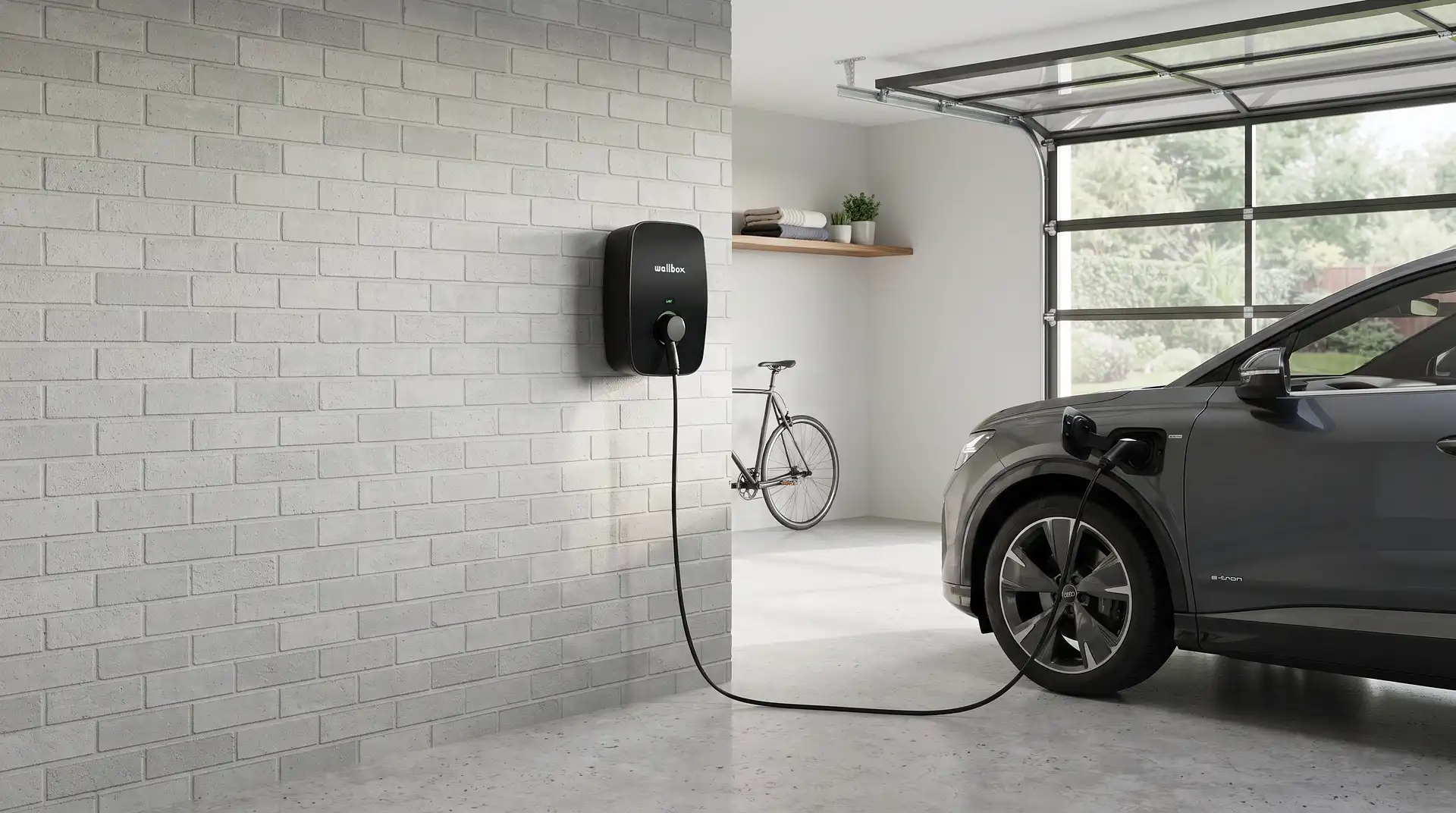
How Long Does a 7kW Charger Take to Charge an Electric Car
12 September 2026
How Long Does a 7kW Charger Take to Charge an Electric Car?
A 7kW home charger adds roughly 30 miles of range per hour, which means a full charge from empty typically takes 6 to 12 hours depending on your car's battery size, with most popular UK electric cars falling somewhere in that range. In practice, very few people charge from completely empty, since most EV owners plug in overnight with the battery already partly charged, making the real, day-to-day charging time considerably shorter than the full-charge figure most guides quote.
The maths behind this is straightforward once you know your car's battery capacity in kWh: divide the battery size by 7 to get the rough number of hours for a full charge from empty, then adjust down based on how much charge is already in the battery when you plug in.
Charging Time by Battery Size
Battery Size | Full Charge (0–100%) on 7kW | Typical Range Added |
|---|---|---|
40 kWh (small EV) | 5.5–6 hours | Roughly 150–160 miles |
60 kWh (mid-size EV) | 8–8.5 hours | Roughly 200–230 miles |
77 kWh (large EV) | 11 hours | Roughly 260–300 miles |
100 kWh (premium/large SUV) | 14–14.5 hours | Roughly 300–350 miles |
These figures assume the car can actually accept the full 7kW throughout the charge, which most modern EVs can on AC home charging, though a small number of older or budget models are limited to a slightly lower onboard charging rate.
Why You Rarely Need a Full Charge Overnight
Most UK EV drivers plug in with the battery at 20 to 40 percent rather than fully empty, since a typical day's driving uses only a fraction of a full battery's range. Charging a 60kWh battery from 30 to 80 percent, a common overnight top-up, takes roughly 4 to 4.5 hours on a 7kW charger, comfortably fitting an overnight charging window even starting late in the evening.
This is why the "how long does it take" question matters less in daily practice than it first appears. A car plugged in for eight hours overnight on a 7kW charger will very rarely fail to have enough charge for the next day's driving, even starting from a moderate charge level.
What Can Slow a Charge Below the Theoretical Rate
Cold Weather
Battery chemistry is less efficient at very low temperatures, and some EVs actively reduce charging speed in cold conditions to protect the battery, meaning a charge on a frosty January night can genuinely take longer than the same charge on a mild evening.
Your Car's Onboard Charger Limit
While most modern EVs can accept a full 7kW on AC charging, a small number of models, particularly some older or entry-level EVs, have an onboard charger limited to a lower rate, such as 3.6kW or 4.6kW, meaning they won't actually charge any faster even when connected to a 7kW charger.
Charging From Very Low or Very High Percentages
Charging speed on any charger, including 7kW home units, can taper slightly as the battery approaches very high percentages, similar to the tapering seen on rapid chargers but far less pronounced at typical home charging speeds. This effect is usually minor enough not to significantly change practical charging time estimates for AC home charging.
A Note on 7kW vs Faster Home Chargers
A small number of homes with a three-phase electricity supply can install a 22kW charger, but most UK homes only have a single-phase supply, which caps home charging at 7kW regardless of the charger unit's own rated capacity. Since 7kW already comfortably covers a full overnight charge for virtually any daily driving pattern, upgrading to a faster home charger rarely provides a meaningful practical benefit for most UK households even where three-phase power is available.
When to Call a Professional
Installing a 7kW home charger requires a qualified, certified electrician, since this work is notifiable under Part P of the Building Regulations and involves a dedicated circuit from your consumer unit. This isn't something to attempt yourself, regardless of your general DIY confidence with other electrical tasks.
Use InstantCost's EV charger installation cost calculator to see what a 7kW home charger installation would cost for your property. If you're still deciding on charger type and setup before installation, how to charge an electric car at home covers choosing a charger and getting set up from day one.
Common Mistakes and What to Do Instead
Mistake: Assuming every EV charges at the full 7kW rate. A small number of models have a lower onboard charging limit regardless of the home charger's rated speed. Check your specific car's onboard AC charging rate before assuming a 7kW charger will always deliver its full rated speed.
Mistake: Panicking about charging from empty rather than typical daily use. Full-charge-from-empty figures look intimidating, but almost nobody actually charges from a completely flat battery. Base your expectations on a realistic overnight top-up from 20 to 40 percent rather than the full-charge worst case.
Mistake: Not accounting for cold weather charging times. A charge that comfortably fits an overnight window in summer might run slightly longer in winter due to reduced charging efficiency in cold conditions. Build in a little extra time during particularly cold spells if you're charging on a tight schedule.
Mistake: Assuming a faster home charger will meaningfully speed things up. Most UK homes are capped at 7kW by their single-phase supply regardless of the charger unit installed, and even where 22kW is available via three-phase power, the practical benefit for typical overnight charging is minimal. Confirm your actual supply type before assuming a faster charger changes your charging time.
Mistake: Not checking your car manufacturer's guidance on charging to 100% regularly. Some manufacturers recommend routinely charging to 80 or 90 percent rather than 100 percent to preserve long-term battery health, which also slightly shortens your typical charging session. Check your specific car's guidance on this.
Mistake: Timing charging around expensive daytime electricity rates. Many EV owners miss out on cheaper overnight electricity tariffs by charging whenever convenient rather than scheduling charging for off-peak hours. Check whether your electricity supplier offers an EV-specific tariff with cheaper overnight rates.
What It Costs in the UK
Item or Service | Typical UK Cost (2026) |
|---|---|
7kW home charger, standard install (cable run under 10m) | £900–£1,400 |
7kW home charger, long cable run (over 15m) | £1,200–£1,800 |
Consumer unit upgrade (if needed) | £450–£900 |
Off-peak EV electricity tariff, per kWh (typical) | £0.07–£0.12 |
Standard rate electricity, per kWh (for comparison) | £0.25–£0.30 |
Full charge cost, 60kWh battery, off-peak rate | Roughly £4.20–£7.20 |
Figures based on InstantCost.co.uk's 2026 UK EV charger installation pricing data and vary by region, cable run length, and electricity tariff.
Staying Safe
Only use a properly installed, certified 7kW home charging unit rather than relying on a standard three-pin plug for regular charging, since a standard socket isn't designed for the sustained current draw of EV charging and carries a genuine fire risk over repeated extended use. A dedicated charger installed by a qualified electrician includes proper circuit protection specifically rated for this purpose.
Keep the charging cable routed safely away from walkways where it could become a trip hazard, and inspect the cable and connector periodically for any visible damage, particularly if the charger is used outdoors and exposed to weather over time.
Part P of the Building Regulations requires EV charger installations to be carried out by a qualified, registered electrician and properly certified. Verify any installer's Part P registration before booking.
Frequently Asked Questions
How many miles per hour does a 7kW charger add? A 7kW home charger typically adds around 30 miles of range per hour, though this varies slightly depending on the specific car's efficiency and driving conditions.
How long does it take to fully charge a Tesla Model 3 on a 7kW charger? A Tesla Model 3 with a roughly 60kWh usable battery takes approximately 8 to 8.5 hours for a full charge from empty on a 7kW charger, though most owners charge from a partial level overnight rather than from fully flat.
Is 7kW enough for daily EV charging? Yes, for the vast majority of UK drivers. An 8-hour overnight charge on a 7kW charger comfortably covers typical daily mileage, even starting from a moderate rather than empty battery level.
Does cold weather really slow down home EV charging? Yes, to some degree. Battery charging efficiency drops slightly in very cold conditions, and some EVs deliberately reduce charging speed to protect the battery in low temperatures, meaning winter charges can take a bit longer than the same charge in milder weather.
Should I upgrade to a 22kW charger for faster home charging? For most UK homes, no. Most properties only have a single-phase electricity supply, which caps charging at 7kW regardless of the charger's rated speed, and even where three-phase power is available, the practical benefit over 7kW for typical overnight charging is minimal.
Why is my car charging slower than 7kW even on a 7kW charger? This usually means your specific car's onboard AC charger has a lower rated limit than the home charger itself, which affects a small number of older or entry-level EV models. Check your car's manufacturer specifications for its actual maximum AC charging rate.