How to Clean a Concrete Driveway
16 October 2026
How to Clean a Concrete Driveway
To clean a concrete driveway, remove loose dirt first, apply a suitable non-acidic cleaner, scrub the surface and rinse it thoroughly. A pressure washer can remove heavy grime, moss and algae, but use it carefully because excessive pressure or a close nozzle can pit older concrete and leave visible cleaning marks.
Quick answer: Sweep the driveway, pre-wet the concrete, apply a concrete-safe detergent, scrub with a stiff outdoor brush and rinse from the highest point downwards. Treat oil stains separately and test every chemical or pressure-washing setting on a small hidden area first.
What should you check before cleaning a concrete driveway?
Inspect the surface before applying water or chemicals. Look for cracks, loose aggregate, damaged edges, flaking sealer, weeds and areas where water pools.
Identify whether the driveway is plain poured concrete, patterned or stamped concrete, painted concrete or sealed concrete. A decorative finish may require a gentler product than an unsealed slab.
Check where the dirty water will run. Do not allow detergent, oil residue or moss treatment to flow into a pond, watercourse or neighbouring property.
What tools and products do you need?
Outdoor broom or stiff-bristled brush
Bucket and garden hose
Concrete-safe, non-acidic detergent
Plastic scraper for chewing gum or stuck debris
Pressure washer with a suitable flat or patio-cleaning attachment
Rubber gloves, eye protection and non-slip footwear
Absorbent material for fresh oil spills
Suitable moss or algae treatment, if required
Do not use strong acids, brick acid or aggressive descalers without checking the product guidance. Acid can etch concrete, damage nearby metalwork and harm plants. Never mix cleaning chemicals.
How do you clean a concrete driveway step by step?
1. Choose a dry, mild day
Work when rain is unlikely during the product’s contact time. Avoid very hot concrete because detergent can dry before it has lifted the dirt.
2. Clear the driveway
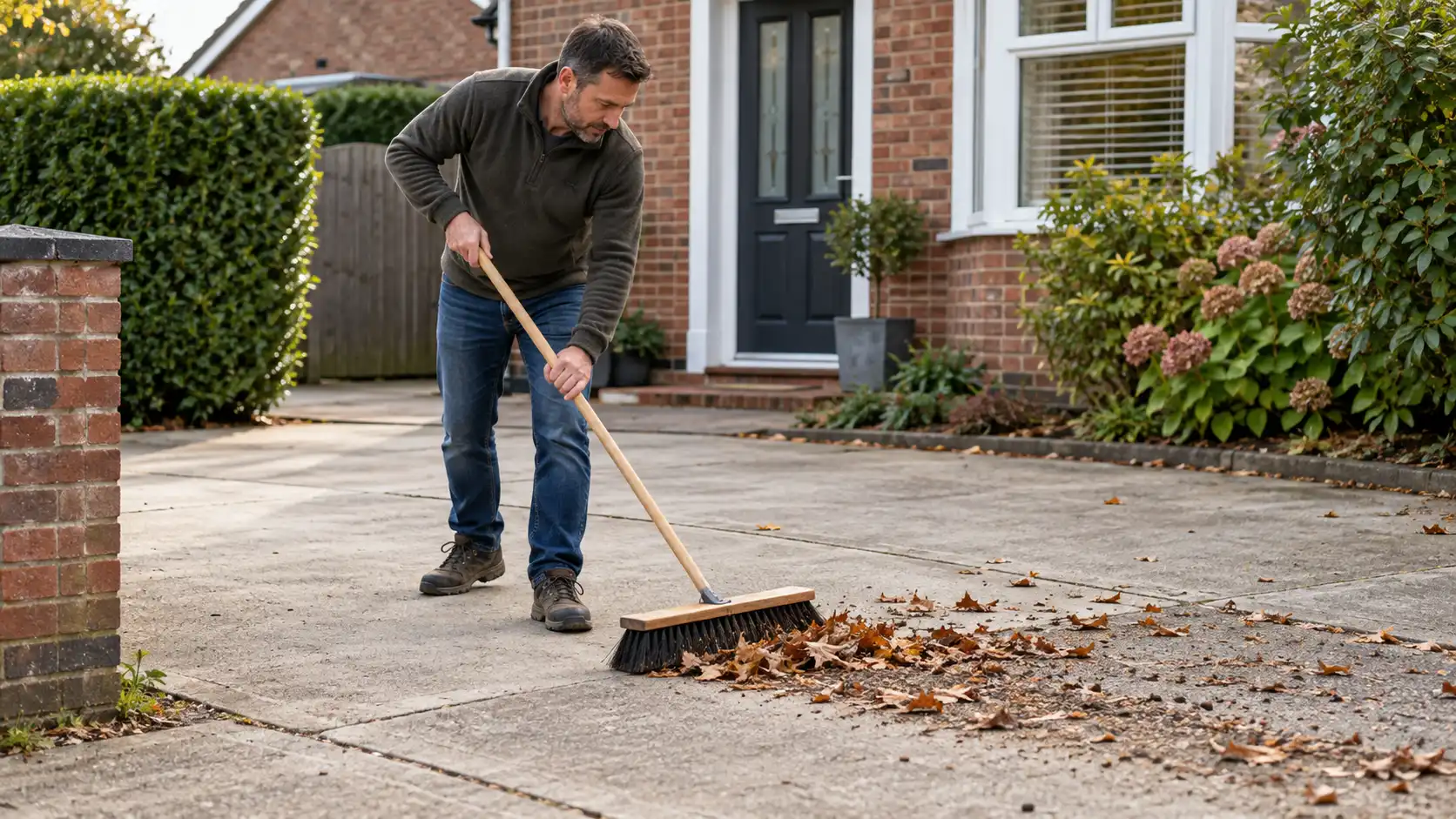
Move vehicles, bins, plant pots and furniture. Sweep away leaves, loose soil, stones and surface grit so they do not become projectiles during pressure washing.
3. Remove weeds and loose moss
Scrape or brush out weeds from cracks and edges. Collect the material rather than washing it into a drain, where it can contribute to blockages.
4. Pre-wet the concrete
Use a hose to wet the surface lightly. This helps distribute the cleaning solution more evenly and reduces rapid absorption into dry concrete.
5. Apply a suitable cleaner
Follow the manufacturer’s dilution instructions. Apply the solution in manageable sections, beginning at the highest point of the driveway.
6. Scrub the surface
Use a stiff outdoor brush to work the detergent into dirty areas. Spend more time on vehicle tracks, shaded sections and edges where algae often accumulates.
7. Allow the product to work
Keep the surface damp for the stated contact time. Do not leave cleaning solution to dry on the concrete.
8. Rinse thoroughly
Rinse with a hose or pressure washer, directing the water away from the house and towards a suitable drainage area. Continue until no foam or residue remains.
9. Let the driveway dry
Allow the concrete to dry fully before replacing vehicles or applying a sealer. Damp patches can make a surface appear uneven even after it has been cleaned.
How do you pressure wash a concrete driveway safely?
Pressure washing is useful for heavy dirt, algae and embedded grime, but start with the lowest effective setting.
Read the pressure-washer instructions before connecting the hose.
Check the plug, cable and extension arrangement for damage.
Use a wide fan or patio-cleaning attachment where possible.
Test on a small inconspicuous area.
Keep the nozzle moving rather than holding it in one spot.
Keep a consistent distance and angle from the surface.
Work in overlapping strips from the highest point downwards.
Rinse nearby walls, doors and plants if they receive dirty spray.
A rotary patio cleaner can reduce striping compared with a narrow pencil jet. Avoid directing a concentrated nozzle at cracks, joints, damaged edges or the same spot for too long.
Read Electrical Safety First’s pressure-washer advice before using an outdoor electrical appliance.
How do you remove moss and algae from concrete?
Brush away loose moss first. Apply a product specifically labelled for concrete and outdoor algae, then follow its dilution, dwell-time and rinsing instructions.
For light green growth, detergent and mechanical brushing may be enough. Heavier growth may need a repeat treatment after the surface has dried. Improve sunlight and drainage where possible because persistent shade and standing water encourage regrowth.
Do not assume that a stronger chemical is better. Test the product on a small area and protect lawns, borders, pets and children from the treatment.
How do you remove oil stains from a concrete driveway?
Fresh oil
Cover the spill with an absorbent material such as cat litter or an appropriate commercial absorbent. Leave it for the recommended time, sweep it up and dispose of it responsibly. Do not hose fresh oil into a surface drain.
Older oil stains
Use a concrete-safe degreaser or poultice product. Work it into the stain, allow it to dwell and rinse thoroughly. Several applications may be needed because oil can penetrate porous concrete.
Do not use petrol, white spirit or other flammable solvents on the driveway. They create fire and vapour risks and can spread the stain.
How do you clean a concrete driveway without a pressure washer?
Sweep the surface, wet it with a hose, apply a suitable detergent and scrub with a stiff brush. Work in small sections and rinse each section thoroughly before moving on.
This method takes longer but gives you more control around walls, drains, flowerbeds and fragile decorative finishes.
What concrete-driveway cleaning mistakes should you avoid?
Mistake | Why it causes problems |
|---|---|
Using a narrow jet too close to the concrete | It can etch, pit or mark the surface. |
Leaving detergent to dry | It can leave streaks or a sticky residue. |
Cleaning only the visible stain | The surrounding area may remain noticeably darker or lighter. |
Using acid without checking compatibility | It can damage concrete, metalwork, plants and nearby surfaces. |
Washing oil into a drain | It can pollute drainage systems and create blockages. |
Pressure washing damaged concrete | Loose aggregate and cracked areas can deteriorate further. |
Should you seal a concrete driveway after cleaning?
Sealing can reduce water and oil absorption, but the surface must be clean, dry and structurally sound first. Choose a product suitable for the concrete finish and follow the coverage, curing and weather instructions.
Sealer will not repair cracks, replace missing aggregate or solve standing water. Repair those problems before sealing.
When should you book professional driveway cleaning?
Professional cleaning is useful when the driveway is large, heavily stained, badly affected by moss or difficult to rinse safely. It is also sensible for decorative concrete, old surfaces with loose aggregate or driveways next to delicate walls and planting.
Ask the contractor what equipment and chemicals they will use, how they will protect drainage and whether sealing is included separately. For wider exterior-cleaning estimates, use the InstantCost exterior cleaning calculator.
Need help with a heavily soiled driveway?
Compare current exterior-cleaning options before arranging a professional visit.
Check exterior cleaning options
Frequently asked questions
What is the best way to clean a concrete driveway?
Sweep first, apply a concrete-safe non-acidic detergent, scrub with a stiff brush and rinse thoroughly. Use pressure washing only when the surface is sound and test the setting first.
Can you pressure wash a concrete driveway?
Yes, but use a wide spray or patio attachment, keep the nozzle moving and avoid damaged areas. Excessive pressure can mark older or weak concrete.
How do you remove black stains from concrete?
Black staining may be algae, mildew, oil or general dirt. Identify the cause, test a suitable cleaner on a small area and rinse thoroughly. Organic growth may need repeat treatment.
How do you remove green algae from concrete?
Brush away loose growth, apply a concrete-safe algae treatment and allow it to work for the stated time. Rinse carefully and improve drainage or sunlight to slow regrowth.
Can bleach be used on a concrete driveway?
Only use a product if its label specifically permits the application and explains the correct dilution. Never mix bleach with other cleaners, acids or ammonia.
How do you clean an oil stain from concrete?
Absorb fresh oil first, then use a concrete-safe degreaser or poultice product. Old stains may need several treatments and may not disappear completely.
Will pressure washing remove moss permanently?
No. Pressure washing removes visible growth, but shaded, damp conditions can cause moss and algae to return. Improve drainage and use a suitable follow-up treatment.
How often should a concrete driveway be cleaned?
Light sweeping and spot cleaning should be done as needed. A deeper clean is usually required when dirt, algae, moss or oil becomes visible, rather than on a fixed schedule.
Planning wider exterior cleaning?
Review the InstantCost guide before arranging driveway, patio or wall cleaning.