How Does a System Boiler Work
24 October 2026
How Does a System Boiler Work?
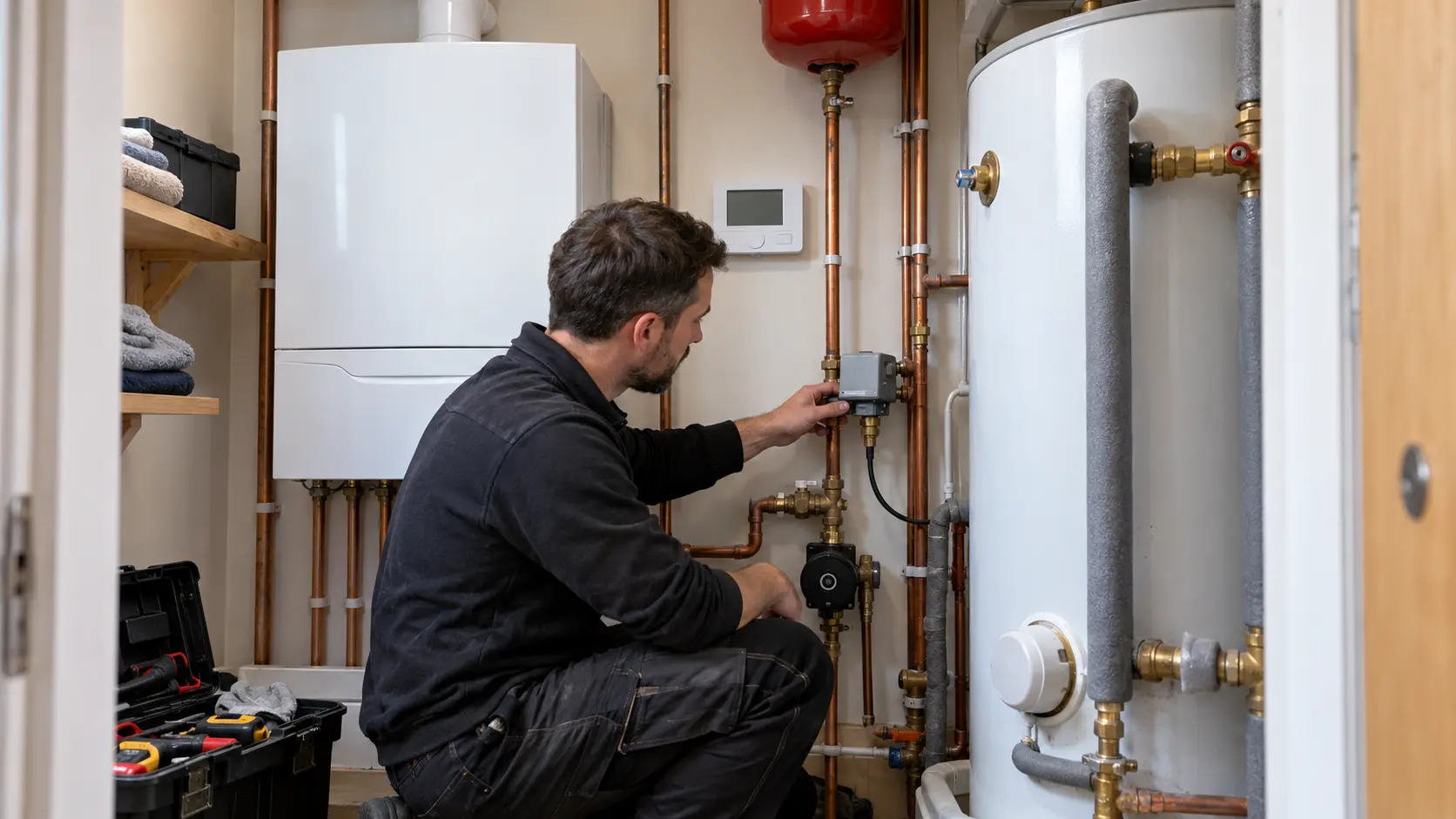
A system boiler heats water for your radiators and for a separate hot water cylinder. A pump moves heated primary water around the system. Motorised valves direct it towards the radiators, the cylinder or both, depending on what your controls request. The stored water is then available for taps, baths and showers.
Quick answer: A system boiler does not produce tap water instantly like a combi boiler. It heats water that circulates through the central heating and through a coil inside a separate cylinder. The coil transfers heat to the stored domestic water without the two supplies mixing.
What Is a System Boiler?
A system boiler is a type of central heating boiler designed to work with a hot water storage cylinder. It supplies heat to the radiators while also heating the water stored for your taps and showers.
Unlike a traditional regular boiler, a modern system boiler usually contains important heating components such as the circulation pump and expansion vessel inside its casing. This can reduce the amount of separate equipment needed around the property.
Most modern installations use a sealed, pressurised heating circuit. They do not normally require the small feed and expansion tank found in the loft of many older regular-boiler systems. However, the exact arrangement depends on the cylinder and existing plumbing.
How Does a System Boiler Work Step by Step?
1. A thermostat or programmer requests heat
The process begins when the room thermostat detects that the home is too cold, or when the hot water controls detect that the cylinder needs reheating. A programmer or smart control can determine when heating and hot water are available.
2. The boiler heats the primary water
The boiler fires and heats water inside the sealed primary circuit. This is the water that travels around the heating system. It is not the same water that comes from your hot taps.
3. The pump circulates the heated water
The boiler's circulation pump moves the hot primary water through the pipework. Depending on the controls, motorised valves direct the flow towards the radiators, the hot water cylinder or both.
4. The radiators release heat into the rooms
When central heating is requested, hot water passes through the radiators. The radiators warm the surrounding air before the cooler water returns to the boiler to be heated again.
5. A coil heats the stored domestic water
When the cylinder needs heat, primary water passes through a metal coil inside it. Heat moves through the coil wall and into the stored domestic water.
The primary water remains inside the coil, so it does not mix with the clean water used for washing, bathing and showering. This separation is an important part of how the system works.
6. The controls stop the boiler when demand is satisfied
A room thermostat controls the heating temperature, while a cylinder thermostat monitors the stored hot water. Once the required temperature is reached, the relevant control tells the boiler and valve to stop supplying heat.
A useful way to understand the system: the boiler creates heat, the pump moves it, the valves decide where it goes, and the cylinder stores the hot water you use later.
What Components Does a System Boiler Need?
Component | What it does | Where it is normally found |
|---|---|---|
System boiler | Heats the primary water used by the radiators and cylinder coil | Kitchen, utility room, garage or airing cupboard |
Circulation pump | Moves primary water around the heating circuit | Usually inside a modern system boiler |
Expansion vessel | Allows heated water to expand without causing excessive pressure | Usually inside the boiler, although larger systems may have an additional vessel |
Hot water cylinder | Stores heated domestic water for taps, baths and showers | Airing cupboard, utility room or another suitable internal space |
Cylinder coil | Transfers heat from the boiler circuit to the stored water | Inside the hot water cylinder |
Motorised valve | Directs heated water towards the radiators or cylinder | Near the cylinder or heating pipework |
Thermostats and programmer | Control room temperature, cylinder temperature and operating times | On the wall, cylinder and heating control system |
How Does the Hot Water Cylinder Work?
The cylinder stores a set volume of heated water. When you open a hot tap, stored water leaves the cylinder and is replaced by cold water ready for the next heating cycle.
An unvented cylinder is supplied directly from the mains. It can provide strong flow to several outlets when the incoming water supply is suitable. A vented cylinder is normally supplied by a cold water storage tank, so not every system boiler installation is completely tank-free.
The cylinder does not create pressure. The available flow at showers and taps depends on the cylinder arrangement, incoming mains performance, pipe sizes and how many outlets are being used.
What happens when the hot water runs out?
If the household uses the stored water faster than the boiler can replace it, the hot supply will gradually cool. You then have to wait while the boiler reheats the cylinder. The recovery time depends on the cylinder size, boiler output, coil performance and temperature setting.
This is why choosing the correct cylinder capacity matters. A cylinder that is too small may run out during busy periods. One that is much larger than necessary takes up more room and stores more water than the household regularly needs.
Can a System Boiler Run Heating and Hot Water Together?
Many systems can heat the radiators and cylinder during the same programmed period. However, the precise behaviour depends on the controls and pipework arrangement.
Some installations use separate two-port valves, while others use a three-port valve. Certain modern controls give hot water priority, temporarily directing the boiler's output to the cylinder so it reheats faster.
This means it is not always correct to assume that the boiler sends equal heat to the radiators and cylinder at the same time.
Who Is a System Boiler Best For?
A system boiler can be a practical choice for:
Homes with two or more bathrooms
Families that use several hot water outlets close together
Properties that already have a suitable hot water cylinder
Homes where a combi boiler may not meet peak hot water demand
Households that want an immersion heater as a possible backup
Properties where future renewable heating options are being considered
It may be less suitable for a small flat with limited storage space or a household that uses little hot water. The cylinder requires a dedicated location and loses a small amount of heat even when well insulated.
Is a System Boiler Right for Your Home?
Compare system boiler installation estimates using your property, region and job requirements.
Estimate System Boiler Installation Cost
System Boiler vs Combi Boiler vs Regular Boiler
Boiler type | Hot water arrangement | Loft tank normally needed? | Commonly suited to |
|---|---|---|---|
System boiler | Stores water in a separate cylinder | No, for a typical sealed installation | Homes with greater or simultaneous hot water demand |
Combi boiler | Heats tap water on demand without a cylinder | No | Smaller homes with limited storage space |
Regular boiler | Uses a cylinder and normally a cold water storage tank | Usually yes | Older heating systems and properties with traditional pipework |
A system boiler is not automatically better than a combi. A combi avoids standing heat loss and does not need cylinder space, while a correctly sized system boiler can supply stored water to several outlets. The best option depends on the property and how its occupants use hot water.
Does a System Boiler Provide Good Water Pressure?
A system boiler is often paired with an unvented cylinder, which can deliver hot water at mains pressure. However, fitting this equipment cannot correct a weak incoming mains supply.
Before recommending an unvented cylinder, an installer should assess the incoming static pressure and flow rate. Flow rate is especially important because two showers running together may require a substantial volume of water, even when the pressure reading appears acceptable.
This pre-installation flow test is often overlooked in basic explanations. It can make the difference between a system that works well on paper and one that performs well in everyday use.
How Does Pressure Work in a System Boiler?
Most system boilers operate as a sealed circuit. The pressure gauge shows the pressure within the primary heating system, not the pressure coming from the hot taps.
Water expands when it becomes hot. The expansion vessel contains a flexible diaphragm and an air or gas charge that absorbs this increase in volume. If the vessel loses its charge or develops a fault, the pressure may rise sharply when the heating is on and fall again as it cools.
Use the normal pressure range stated in the boiler manual rather than relying on one figure for every model. If the pressure repeatedly falls, rises towards the red zone or causes water to discharge outside, arrange a professional diagnosis. Repeatedly adding or removing water does not repair the underlying fault.
For general homeowner guidance, read how to increase boiler pressure. Do not remove the boiler casing or operate unidentified valves.
How Efficient Is a System Boiler?
Modern system boilers are normally condensing boilers. They recover heat from the flue gases that older boilers would release outside. They work most efficiently when the return water is cool enough for this condensation process to take place.
Suitable controls, balanced radiators and sensible flow-temperature settings can help the system run efficiently. The cylinder should also have effective insulation because stored water gradually loses heat.
A system boiler is not always cheaper to run than a combi boiler. Household demand, boiler settings, cylinder insulation, control strategy and the condition of the heating system all affect energy use.
How Much Does a System Boiler Cost to Install?
InstantCost's UK boiler calculator and pricing guide showed an estimated system boiler installation range of £2,300 to £3,800 supplied and fitted when checked on 24 October 2026. This is a guide rather than a fixed quotation.
The estimate includes a typical boiler and parts allowance, labour, VAT, Gas Safe certification and Building Regulations notification. The final price can change because of:
The boiler output and brand
Whether a new cylinder is required
The cylinder capacity and specification
Changes to the boiler or cylinder position
Gas pipe, flue or condensate alterations
The condition of the radiators and existing pipework
System cleaning and water treatment requirements
Heating controls and motorised valves
Regional labour rates and property access
A typical system boiler installation takes around one to two days, although replacing an existing unit in the same position may be simpler. Read how long it takes to install a new boiler for a comparison of straight swaps, conversions and relocations.
What Problems Can Occur with a System Boiler?
The radiators work but there is no hot water
This can point to a cylinder thermostat, programmer or motorised-valve problem. The boiler may be producing heat but the primary water may not be reaching the cylinder coil correctly.
There is hot water but the radiators remain cold
Check the heating schedule and room thermostat first. If these are requesting heat, a stuck motorised valve, circulation problem or control fault may need professional testing.
The hot water runs out too quickly
The cylinder may be undersized, its thermostat may be set incorrectly, or the cylinder may not be reheating fully. High simultaneous demand can also empty a correctly working cylinder.
The boiler pressure keeps falling
Possible causes include a leaking radiator valve, a pipework leak, a pressure-relief-valve problem or an expansion-vessel fault. Regular pressure loss needs diagnosis rather than repeated topping up.
The boiler works but the cylinder reheats slowly
A poor control setting, restricted circulation, scaled cylinder coil or incorrectly balanced system can slow recovery. The cause should be checked before assuming that the boiler itself is too small.
System Boiler Safety
Do not remove the boiler casing, alter gas components or attempt to repair combustion, flue or safety controls. Gas boiler installation, servicing and repairs must be completed by an appropriately qualified Gas Safe registered engineer.
Check the engineer's photo ID and confirm that the card lists the correct work category. The Health and Safety Executive explains how to check whether an engineer is Gas Safe registered.
An unvented hot water cylinder contains important pressure and temperature safety devices. Do not cap a discharge pipe, operate safety valves unnecessarily or attempt repairs without the required competence.
Frequently Asked Questions
Does a system boiler need a hot water tank?
It needs a hot water cylinder, but a typical sealed system does not need the small feed and expansion tank used by a traditional regular boiler. Some older or vented arrangements may still include a cold water storage tank.
Does a system boiler give instant hot water?
Hot water can reach a nearby tap quickly when the cylinder already contains heated water. However, the boiler does not heat tap water instantly on demand. Once the stored supply is depleted, the cylinder needs time to reheat.
Can a system boiler run two showers at once?
It often can when the boiler, cylinder, pipework and incoming water supply are correctly sized. Performance depends on the available flow rate and shower requirements, so this should be measured before installation.
Does a system boiler need a loft tank?
A modern sealed system boiler installation normally operates without a loft feed tank. However, the type of hot water cylinder and the property's existing plumbing determine whether any cold water storage is retained.
Can a system boiler work with an immersion heater?
Many compatible cylinders contain an electric immersion heater. This can heat the stored water independently of the boiler, providing useful backup, although electricity may cost more per unit of heat than gas.
Can I use the heating without heating the cylinder?
Usually, yes. Correctly configured controls allow heating-only, hot-water-only or combined schedules. The available modes depend on the programmer, thermostats and motorised-valve arrangement.
Is a system boiler suitable for a small home?
It can work in a small home, but a combi may be more practical where hot water demand is modest and storage space is limited. A heating professional should assess demand rather than choosing a boiler solely from the number of bedrooms.
Can a system boiler work with solar thermal or a heat pump later?
A suitable cylinder can accept heat from more than one source, but not every cylinder is designed for solar thermal or a heat pump. Heat pumps usually require a larger, correctly specified coil, so future plans should be discussed before buying a cylinder.
Should You Choose a System Boiler?
A system boiler can be a strong choice when a household needs stored hot water for several outlets. Its main advantages are greater simultaneous hot water capacity, no usual need for a small loft feed tank and fewer external heating components than a regular boiler.
The trade-offs are the space required for a cylinder, finite stored capacity and some standing heat loss. Before deciding, ask an installer to calculate the property's heat loss, measure the incoming water flow and review peak hot water demand. These checks are more reliable than selecting a boiler by property size alone.
Compare a System Boiler with Other Options
Use InstantCost to adjust the estimate for your region, installation type and common extras, then request written quotes for the complete job.