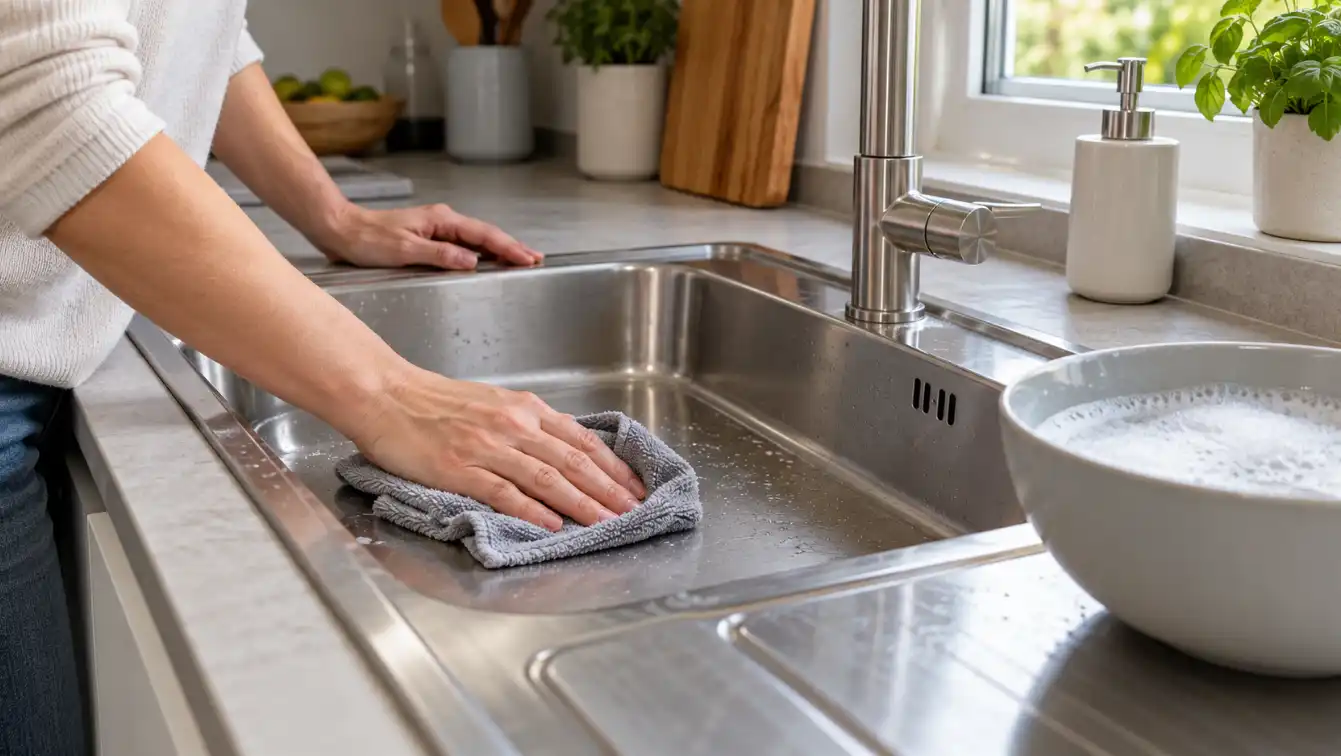
How to Clean a Stainless Steel Kitchen Sink
9 October 2026
How to Clean a Stainless Steel Kitchen Sink
To clean a stainless steel kitchen sink, remove food debris, wash it with warm water and mild washing-up liquid, treat marks with a non-scratch cleaner and dry the surface with a soft cloth. Always wipe in the direction of the brushed grain and avoid bleach, wire wool and harsh scouring pads.
Regular drying is the step many people skip. It prevents hard-water spots, dull films and new limescale from forming after the sink has been cleaned.
Quick answer: Clear the sink, rinse away grit, wash with warm soapy water, treat limescale or stains separately, rinse thoroughly and dry with a microfibre cloth. Finish by wiping with the steel grain rather than in circles.
What You Need
Warm water
Mild washing-up liquid
Soft microfibre cloths
Non-scratch sponge
Soft toothbrush for the drain and tap base
Bicarbonate of soda for light marks
Manufacturer-approved stainless steel cleaner for stubborn deposits
Dry tea towel or microfibre cloth
Check the sink manufacturer’s care instructions before using any specialist product. PVD-coloured or textured sinks may need different products from ordinary brushed stainless steel.
How to Clean a Stainless Steel Sink Step by Step
1. Empty and rinse the sink
Remove dishes, food scraps, cleaning bottles and sink accessories. Rinse away grit before wiping because trapped particles can scratch the surface.
2. Wash with warm soapy water
Add a small amount of washing-up liquid to warm water. Use a soft cloth or non-scratch sponge and clean the bowl, drainer, tap base, edges and overflow.
3. Follow the grain
Stainless steel has a brushed grain that may be difficult to see until light catches it. Wipe in the same direction as the grain. Circular scrubbing can create visible swirl marks.
4. Clean the drain and plug
Use a soft toothbrush to remove food residue and grease around the waste fitting. Wash the plug or strainer separately so dirt is not pushed back into the drain.
5. Rinse away soap
Use clean water to remove detergent. Soap residue can leave a dull film and attract more dirt.
6. Dry the entire surface
Dry the bowl, drainer, tap base and edges with a clean microfibre cloth. Do not leave water to evaporate naturally if your area has hard water, because minerals can form spots and limescale.
How to Remove Limescale from a Stainless Steel Sink
Limescale appears as white, chalky or cloudy marks, especially around the tap, drainer and back edge of the sink. Use a limescale product approved for stainless steel and follow its contact-time instructions.
For a light deposit, a cloth dampened with a suitable mild acidic solution may help, but rinse the sink thoroughly afterwards. Never leave acidic products on stainless steel for longer than the label allows.
Do not use toilet cleaner, brick acid or strong descaler on a kitchen sink. These products can damage the finish and may leave corrosive residue where food and utensils are handled.
How to Remove Tea and Coffee Stains
Tea, coffee and food residue can leave brown marks around the drain and bowl. Wash the area first, then apply a small amount of bicarbonate of soda mixed with water to form a soft paste.
Rub gently with a non-scratch sponge in the direction of the grain. Rinse thoroughly and dry. Do not use a metal scourer to remove a stain because it can create permanent scratches.
How to Remove Rust-Coloured Marks
Stainless steel does not normally rust through in ordinary kitchen use, but rust-coloured marks can appear when iron particles from steel wool, old pans or metal containers sit on the surface.
Use a stainless steel cleaner designed for rust marks and follow its instructions. Remove the source of the contamination and rinse the sink well. Never use steel wool to remove rust because it can leave more iron particles behind.
How to Make a Stainless Steel Sink Shine
After cleaning and drying, buff the surface with a clean microfibre cloth following the grain. A small amount of manufacturer-approved stainless steel polish can improve the finish, but it is optional.
Do not use cooking oil, furniture polish or wax. These products can leave a greasy film that attracts dirt and may transfer to plates, cups and food-preparation items.
How to Clean the Tap Base and Overflow
Dirt often collects where the tap meets the sink. Use a soft toothbrush with warm soapy water, then wipe the area dry.
If the sink has an overflow opening, clean around it and gently brush accessible residue. Do not push objects deep into the overflow pipe because they may become trapped.
What Not to Use on Stainless Steel
Avoid | Why it can cause damage |
|---|---|
Chlorine bleach | Can cause discolouration and corrosion if left on the metal |
Wire wool or Brillo-type pads | Scratches the finish and may leave iron particles |
Harsh scouring powder | Can create dull patches and visible abrasion |
Toilet or oven cleaner | May contain chemicals unsuitable for food-contact surfaces |
Strong acids | Can etch or stain the steel |
Leaving wet cloths or metal tins in the bowl | Can encourage staining and water marks |
How Often Should You Clean a Stainless Steel Sink?
Rinse and wipe the sink after daily use. Wash it with mild soapy water every day or every few days, depending on how heavily it is used. Treat limescale and deep marks when they appear rather than waiting for a thick deposit to build up.
Drying the sink after cleaning is more effective than using a stronger product less often.
Planning a wider kitchen clean?
Compare current UK prices for domestic, deep and specialist cleaning services before booking help.
Stainless Steel Sink Cleaning Safety
Rinse the sink thoroughly after using any cleaning product, especially if you wash food, dishes or utensils in it. Wear gloves if the product label recommends them and keep chemicals away from children and pets.
Never mix bleach with vinegar, descaler, ammonia or another cleaning product. Follow the product label and keep chemicals in their original containers.
For detailed stainless steel cleaning methods, see the British Stainless Steel Association cleaning guidance. For product-specific care, follow the instructions from your sink manufacturer, such as the Reginox maintenance guidance.
Common Mistakes
Leaving water to dry on the sink
Wiping across the grain
Using steel wool to remove marks
Leaving bleach or descaler on the surface
Scrubbing grit into the bowl
Using cooking oil as a polish
Ignoring limescale around the tap and drain
Frequently Asked Questions
What is the best thing to clean a stainless steel kitchen sink with?
Warm water, mild washing-up liquid and a soft microfibre cloth are suitable for routine cleaning. Use a manufacturer-approved stainless steel cleaner for stubborn limescale or stains.
Can I use bicarbonate of soda on a stainless steel sink?
Yes, a soft paste of bicarbonate of soda and water can help with light marks. Rub gently with the grain, rinse thoroughly and avoid abrasive scrubbing.
Can I use vinegar to clean stainless steel?
Some manufacturers allow diluted vinegar for mineral deposits, but it must not be left on the surface. Check your sink instructions, use it sparingly and rinse immediately.
How do I remove white water marks?
Use a suitable limescale treatment, rinse it off within the stated time and dry the sink. Regular drying prevents new water marks.
Why does my stainless steel sink look scratched?
Metal scourers, abrasive powders, grit and circular scrubbing can scratch the brushed finish. Minor marks may blend over time, but deep scratches usually cannot be cleaned away.
How do I stop my stainless steel sink from going dull?
Wash away soap and food residue, rinse the bowl and dry it after use. Wipe with the grain and avoid bleach, steel wool and heavy abrasive products.
Want help with a full kitchen clean?
Use InstantCost to estimate cleaning costs for your property and request local quotes if the kitchen needs more than sink maintenance.