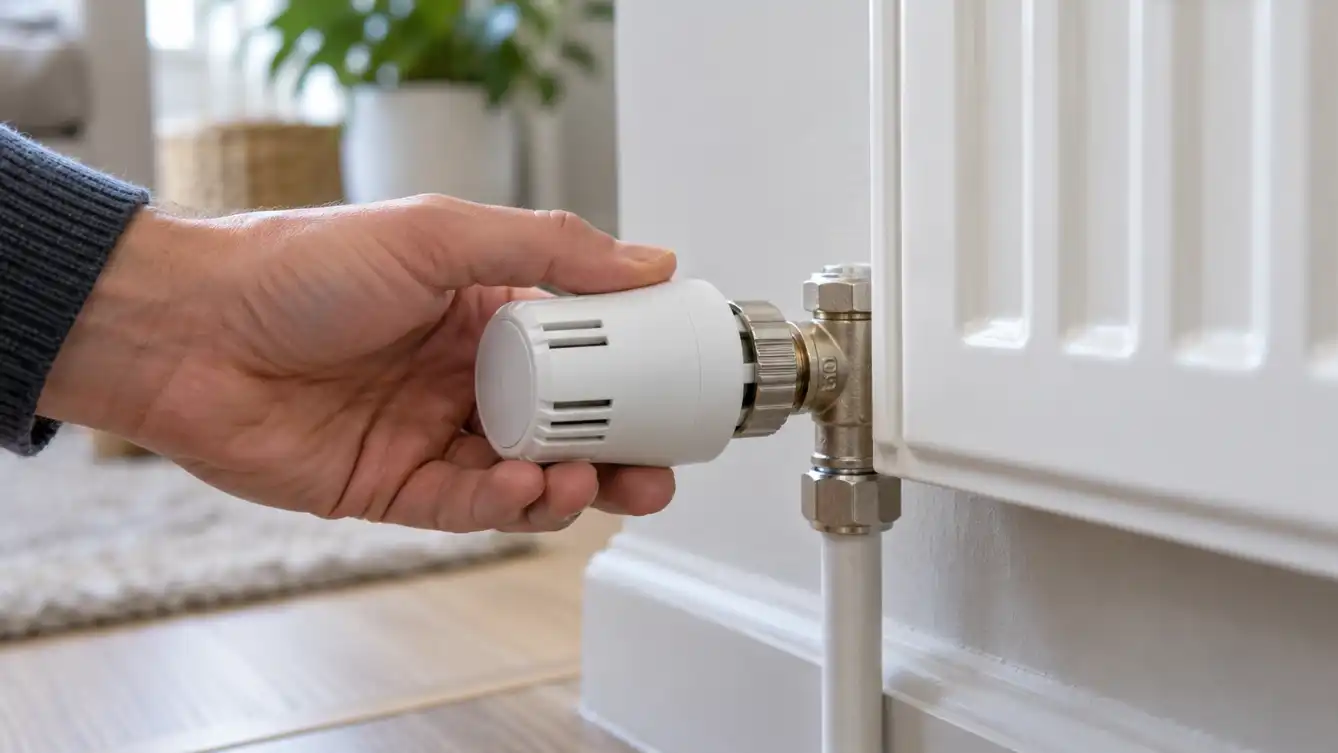
How to Fit a Thermostatic Radiator Valve
10 October 2026
How to Fit a Thermostatic Radiator Valve
Fitting a thermostatic radiator valve depends on whether you are replacing only the control head or the complete valve body. Replacing a removable TRV head is usually a simple job. Replacing the valve body involves draining or isolating the heating system, disconnecting pipework and checking for leaks, so it is often better suited to a heating professional.
A TRV senses the air temperature around the radiator and restricts hot-water flow when the room reaches the selected setting. It does not directly control the boiler.
Quick answer: If the valve body is already fitted, set the new TRV head to its fully open position, align it with the valve pin and secure it according to the manufacturer’s instructions. To replace the complete valve, turn off and cool the heating system, drain the radiator or system safely, remove the old valve, fit the correct directional valve, refill, bleed and check for leaks.
TRV Head or Complete Valve Body?
Job | What it involves | DIY difficulty |
|---|---|---|
Replace TRV head | Remove the old control head and fit a compatible replacement | Usually straightforward |
Replace complete TRV | Drain or isolate water, disconnect pipework and fit a new valve body | Moderate to advanced |
Convert manual valve to TRV | Remove a manual valve and install a directional thermostatic valve | Usually best for a heating professional |
Fit a smart TRV head | Install the head, batteries and app or hub settings | Simple if the valve body is compatible |
If you only need a new control head, do not loosen the compression fittings or radiator tail. Water enters the job when the complete valve body is removed.
What You Need
Compatible thermostatic radiator valve or replacement head
Adjustable spanner and suitable grips
Bucket and old towels
Radiator bleed key
PTFE tape or jointing material if approved for the fitting
Replacement olives, washers or adaptors if required
Pipe cutter and drain hose for a full valve-body replacement
Gloves and eye protection
Check whether the new valve is angled or straight, whether it fits 15mm pipework and whether it is designed for the radiator’s flow direction. Measure before buying.
How to Fit a Replacement TRV Head
1. Identify the existing valve
Check the valve brand, thread or retaining ring and the shape of the small metal pin beneath the head. A universal head may not fit every valve body.
2. Turn the heating off
Switch off the heating and allow the radiator to cool. You normally do not need to drain the system for a head-only replacement.
3. Set the old head to maximum
Turn the existing head to its highest setting if it still moves. This relieves pressure on the valve mechanism and makes removal easier.
4. Remove the old head
Release the retaining ring, clip or screw according to the manufacturer’s instructions. Do not pull the valve pin out of the valve body.
5. Check the pin
Press the small pin gently with a blunt object. It should move a few millimetres and spring back. If it is stuck, do not force it or spray an unknown lubricant into the valve.
6. Fit the new head
Set the new TRV head to its fully open position, commonly marked 5. Align it with the valve pin and secure the retaining ring or clip.
7. Test the settings
Turn the heating on and adjust the head gradually. The radiator should warm when the room is cool and reduce heat output as the room reaches the selected temperature.
How to Replace the Complete Thermostatic Radiator Valve
Replacing the body is different from changing the head. The pipework must be isolated and the radiator or heating circuit may need draining. If you are not confident identifying the flow pipe, draining the system or reconnecting compression fittings, use a heating engineer.
1. Check the new valve direction
Many TRV bodies show an arrow for water flow. Fit the valve so the arrow follows the direction of flow. A reverse-flow valve may become noisy or regulate the radiator poorly.
2. Turn off and cool the heating
Switch off the boiler and heating controls. Wait until the radiator and pipework are cool before loosening any connection.
3. Close the opposite lockshield valve
Count and record how many turns it takes to close the lockshield valve. This gives you a starting point for restoring the previous balance.
4. Isolate or drain the radiator
Use the correct drain point and hose arrangement for the system. Place towels and a container below the valve. Never assume closing the TRV alone stops water entering the radiator.
5. Remove the old valve
Loosen the valve connections carefully. Support the radiator and pipework so you do not twist a pipe inside the wall or floor.
6. Fit the new valve and adaptor
Install the correct radiator tail, valve body, olive and compression nut. Use only the sealing method approved for the fitting. Do not bury a leak under excessive PTFE tape.
7. Refill and vent the system
Close the drain point, refill the heating system to the manufacturer’s pressure range and bleed the radiator. On a sealed system, repressurising may be necessary.
8. Check every joint
Turn the heating on gradually and inspect the valve while the system warms. Dry tissue around the connections can reveal a slow leak.
9. Reopen and balance the lockshield
Return the lockshield to its recorded position, then adjust the system if the radiator heats too quickly or too slowly compared with the others.
Where Should a TRV Be Fitted?
The thermostatic head should sense room air rather than heat from the radiator, curtains or a nearby pipe. A horizontal orientation is often preferred where space allows, although the manufacturer’s instructions take priority.
Do not cover the TRV with curtains or furniture. Trapping warm air around the sensor can make it think the whole room is warmer than it really is.
How Do TRV Settings Work?
Setting | Typical purpose |
|---|---|
0 or frost protection | Prevents the radiator operating normally, while frost protection may still operate |
1 | Cool background temperature |
2 | Low-use room or hallway |
3 | Common comfortable living-space setting |
4 to 5 | Warmer room or maximum demand |
The numbers are settings, not exact temperatures. A TRV does not heat a room faster when turned to 5. It allows the radiator to continue operating until the room reaches a higher target.
Common Fitting Mistakes
Replacing a full valve when only the head is faulty
Buying the wrong thread, pipe size or valve orientation
Fitting a directional TRV against the flow arrow
Trying to remove the valve without cooling and draining safely
Twisting the pipework while loosening the valve
Forgetting to bleed the radiator after refilling
Covering the sensor with curtains or furniture
Failing to check for slow leaks after the heating warms
When to Call a Heating Engineer
Use a professional if the valve body needs replacing, the pipework is old or corroded, the radiator cannot be isolated, the heating system pressure is unknown or the valve is on a shared or unusual system.
Use a Gas Safe registered engineer for any work that involves the boiler or gas appliance. A TRV is a water-side heating component, but incorrect work can still cause leaks, pressure loss and damage to the heating system.
Need a TRV fitted professionally?
Compare current UK heating and plumbing prices for radiator valve replacement and related work.
Check Heating and Plumbing Costs
How Much Does It Cost to Fit a Thermostatic Radiator Valve?
InstantCost’s current UK heating data places a thermostatic radiator valve replacement at approximately £70 to £140 per radiator fitted. A head-only replacement is usually cheaper because the heating system does not need draining.
Indicative UK TRV installation prices in 2026 | |
Job | Typical price |
|---|---|
Replacement TRV head | Usually lower-cost labour plus the head |
Complete TRV replacement | £70 to £140 per radiator fitted |
Manual valve converted to TRV | £70 to £140 or more, depending on pipework |
System draining and refill | May be included or charged separately |
Radiator balancing or wider repairs | Quoted according to system condition |
Access, seized fittings, damaged pipework, system type and regional labour rates can change the final price. Ask whether the quote includes draining, refill, bleeding, replacement adaptors and disposal.
For a property-specific estimate, use the InstantCost plumbing cost calculator.
TRV Safety Guidance
Allow the radiator and pipework to cool before loosening a fitting. Heating water can be hot enough to cause serious burns. Wear gloves, protect flooring and keep a bucket ready.
Never remove a valve from a pressurised or hot system. If water will not stop flowing, close the system controls and arrange professional help rather than forcing the fitting.
Read the Energy Saving Trust guidance on heating controls for information about how TRVs control individual room temperatures.
Frequently Asked Questions
Can I fit a thermostatic radiator valve myself?
You can usually replace a compatible removable TRV head yourself. Replacing the complete valve body requires isolation, draining, pipework work and leak testing, so professional installation is safer unless you have suitable heating experience.
Do I need to drain the radiator to replace a TRV head?
No. A head-only replacement normally does not require draining. The system must usually be isolated and drained when the valve body and water connections are removed.
Which side of a radiator should the TRV go on?
The TRV is commonly fitted on the flow side, while the lockshield is fitted on the return side. Follow the valve arrow and the heating system design rather than assuming every radiator is piped identically.
What setting should a TRV be on?
Setting 3 is often a comfortable starting point for a living room, while bedrooms and hallways may need lower settings. Adjust the valve according to the room temperature and use.
Why is my radiator still cold after fitting a TRV?
The valve pin may be stuck, the valve may be fitted against the flow direction, the system may need bleeding or balancing, or there may be a circulation problem. Check the simple causes before changing the valve again.
How much does a plumber charge to fit a TRV?
A complete TRV replacement commonly costs around £70 to £140 per radiator fitted in the UK. Seized valves, pipework changes, draining and balancing can increase the total.
Want a written radiator valve quote?
Describe the radiator, valve type and access details to compare local heating professional prices.