How to Unblock a Toilet Without a Plumber
14 October 2026
To unblock a toilet without a plumber: stop flushing, remove some water if the bowl is too full, then use a toilet flange plunger with a tight seal over the outlet. Pump firmly and steadily until the water drains. If the blockage remains after several attempts, or other fixtures are backing up, the problem may be further down the drain and professional help is safer.
Quick answer: The safest DIY method is a toilet flange plunger. Use short, controlled pushes rather than violent force. Never mix chemical drain cleaners, pour boiling water into the pan or push a coat hanger into the toilet.
What should you do first when a toilet is blocked?
Do not flush again. A second flush can make the bowl overflow and spread contaminated water across the floor.
Close the toilet lid and keep children and pets away.
Turn the isolation valve clockwise if the cistern is still filling.
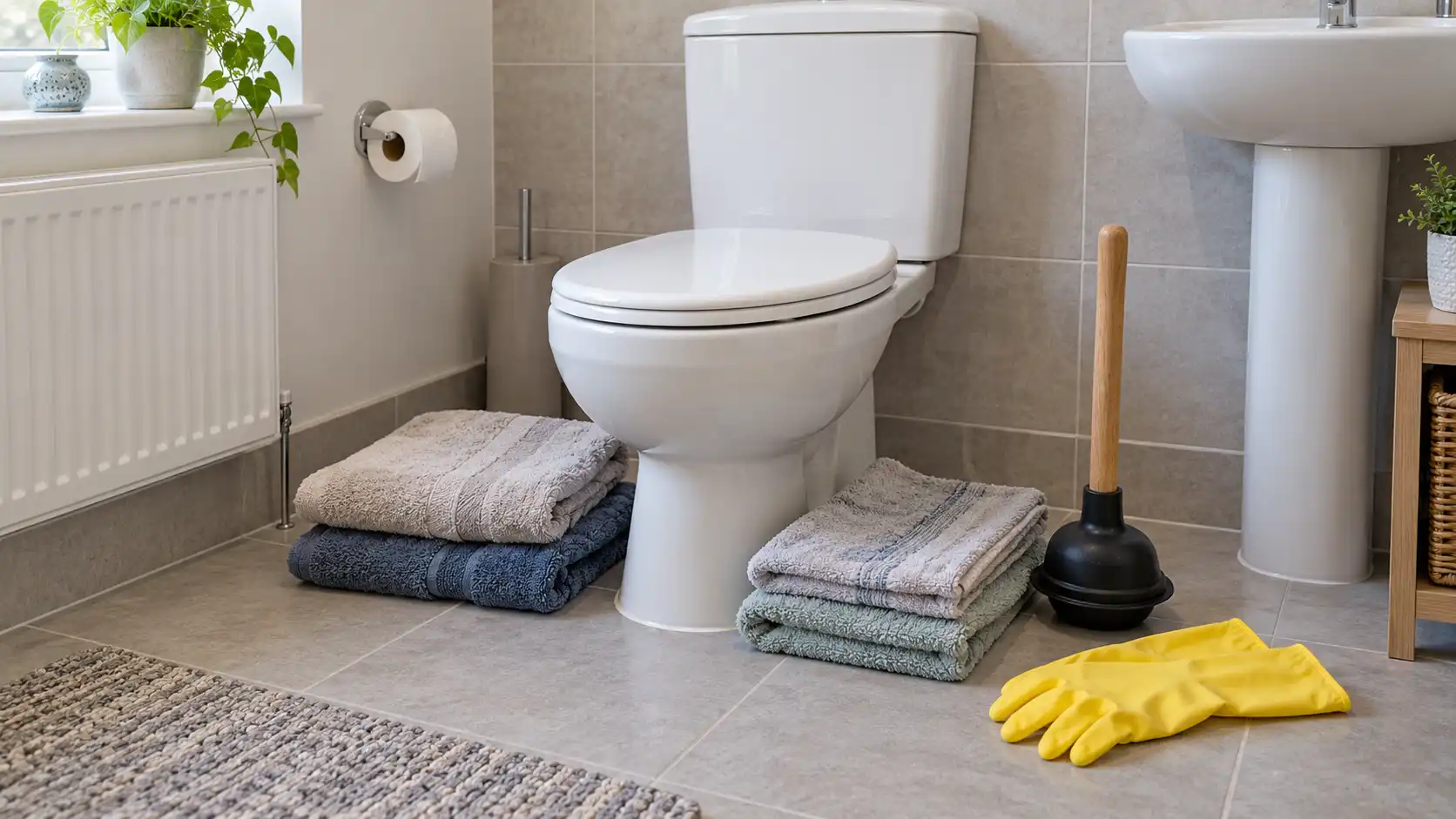
Put old towels or plastic sheeting around the base of the toilet.
Put on rubber gloves and eye protection.
Wait for the water level to fall before using a plunger.
If the water is close to the rim, remove some with a disposable container and place it in a sealed bucket. Do not use a household vacuum cleaner to remove toilet water.
What do you need to unblock a toilet?
Toilet flange plunger
Rubber gloves
Eye protection
Old towels or waterproof floor covering
Bucket and disposable container
Washing-up liquid
Toilet auger, if a plunger does not clear the blockage
A flange plunger has an extended rubber lip that fits inside the toilet outlet. A flat sink plunger often cannot make a reliable seal on a toilet pan.
How to unblock a toilet with a plunger
1. Let the water level settle
Wait for the bowl to drain naturally. If it is still too full, remove enough water to leave the plunger cup covered but prevent splashing.
2. Position the flange
Place the rubber flange directly over the toilet outlet. Tilt it slightly as you lower it so that trapped air escapes and the cup fills with water.
3. Pump steadily
Start with several gentle pushes to protect the seal, then use firm strokes for around 15 to 20 seconds. Keep the plunger vertical and avoid lifting it completely away from the outlet between strokes.
4. Check the drain
Pull the plunger upwards slowly. If the water begins to drain, wait until the bowl is nearly empty. Add a small jug of water to test the flow rather than flushing immediately.
5. Repeat if necessary
Try two or three cycles. If the water level does not change, stop forcing the plunger. Repeated aggressive pumping can damage seals or cause dirty water to splash around the bathroom.
What other safe methods can you try?
Washing-up liquid and warm water
Add a small amount of washing-up liquid to the bowl and leave it for 10 to 15 minutes. Then add warm tap water from a low height. The detergent may lubricate a soft paper blockage, but it will not dissolve a solid object.
Use warm water only. Boiling water can crack ceramic, damage seals and create a serious scalding hazard.
Use a toilet auger
A toilet auger, sometimes called a closet auger, is designed to pass through the pan trap without scratching the ceramic. Feed it gently, turn the handle and withdraw it slowly. Follow the tool instructions and stop if you meet a hard obstruction.
Safety warning: Never combine bleach, toilet cleaner, caustic soda or chemical drain unblocker. Mixing products can create dangerous fumes or cause chemical burns. Read the product label and follow the safety information. The UK Health and Safety Executive chemical safety guidance explains why household chemicals must be handled carefully.
Which toilet-unblocking methods should you avoid?
Method | Why to avoid it |
|---|---|
Boiling water | It can crack the ceramic pan or damage seals. |
Chemical drain cleaner | It may not clear a toilet blockage and can leave corrosive liquid in the bowl. |
Wire coat hanger | It can scratch the pan, damage the trap or push the blockage deeper. |
Repeated flushing | It can overflow the toilet and spread contaminated water. |
High-pressure hose | It can damage seals and force water into hidden areas. |
How do you unblock a toilet blocked with paper?
Toilet paper is usually a soft blockage and often responds to a flange plunger. Let the water settle, use controlled plunging and test the outlet with a small amount of water. Do not add more paper to “push it through” because this can compact the blockage.
What if a child has flushed an object down the toilet?
Do not keep plunging if you suspect a toy, wipe packet, sanitary product or other solid object is trapped. Plunging can lodge it more firmly in the trap. A plumber can use an auger or remove the pan if necessary.
When should you call a plumber?
Contact a plumber if:
The plunger does not clear the blockage after two or three careful attempts.
The toilet blocks again shortly after being cleared.
Water rises in the bath, shower or sink when the toilet is flushed.
Several drains are slow or backing up at the same time.
You hear gurgling from other fixtures.
You suspect a solid object is stuck.
There is sewage on the floor or a leak around the toilet base.
You live in a flat or rented property and the shared drain may be affected.
These signs can indicate a blockage in the soil pipe or shared drain rather than a simple obstruction in the toilet trap.
Still dealing with a blocked toilet?
Compare current UK plumbing prices before contacting a local professional. The estimate can help you understand likely labour and call-out costs.
What does professional toilet unblocking cost?
InstantCost’s 2026 UK plumbing data places a typical drain-unblocking visit at around £100 to £250. The final price depends on access, time of day, location and whether the blockage is inside the toilet, in the soil pipe or in a shared drain.
Possible charge | Typical UK guide |
|---|---|
Standard plumber hourly rate | £40 to £80 per hour |
Toilet or drain unblocking | £100 to £250 |
Emergency or out-of-hours visit | Often higher than daytime rates |
Toilet replacement if damaged | £180 to £350 for a like-for-like installation |
Ask whether the quote includes the call-out, labour, drain rods, auger use, waste disposal and VAT. For related guidance, see how plumbers unblock toilets and how much an emergency plumber costs.
How can you prevent a toilet blockage?
Flush only toilet paper and human waste.
Put wipes, cotton buds, nappies and sanitary products in the bin.
Use less paper if the toilet has a weak flush.
Repair slow flushing, leaks and repeated gurgling early.
Keep the toilet brush and plunger accessible.
Do not pour cooking fat, paint or chemicals into the toilet.
Frequently asked questions
Can I unblock a toilet without a plunger?
Try washing-up liquid followed by warm tap water if the blockage is likely to be soft paper. If this does not work, a toilet flange plunger or toilet auger is more effective and safer than improvised metal tools.
Does pouring hot water unblock a toilet?
Warm water may help lubricate a paper blockage, but boiling water should never be used. It can crack the ceramic pan and damage seals.
Will bleach unblock a toilet?
No. Bleach is a disinfectant, not a reliable toilet unblocker. Never mix bleach with toilet cleaner, acids or other drain chemicals because dangerous fumes may be produced.
How many times should I plunge a blocked toilet?
Use two or three controlled plunging cycles, each lasting around 15 to 20 seconds. Stop if the water level does not change or if you suspect a solid object.
Is a blocked toilet an emergency?
It becomes urgent when the bowl is overflowing, sewage is leaking, several fixtures are backing up or the blockage affects a shared drain. Stop using the toilet and arrange professional help.
Need a plumber for a stubborn blockage?
Use InstantCost’s UK plumbing calculator to review likely costs before arranging a visit.