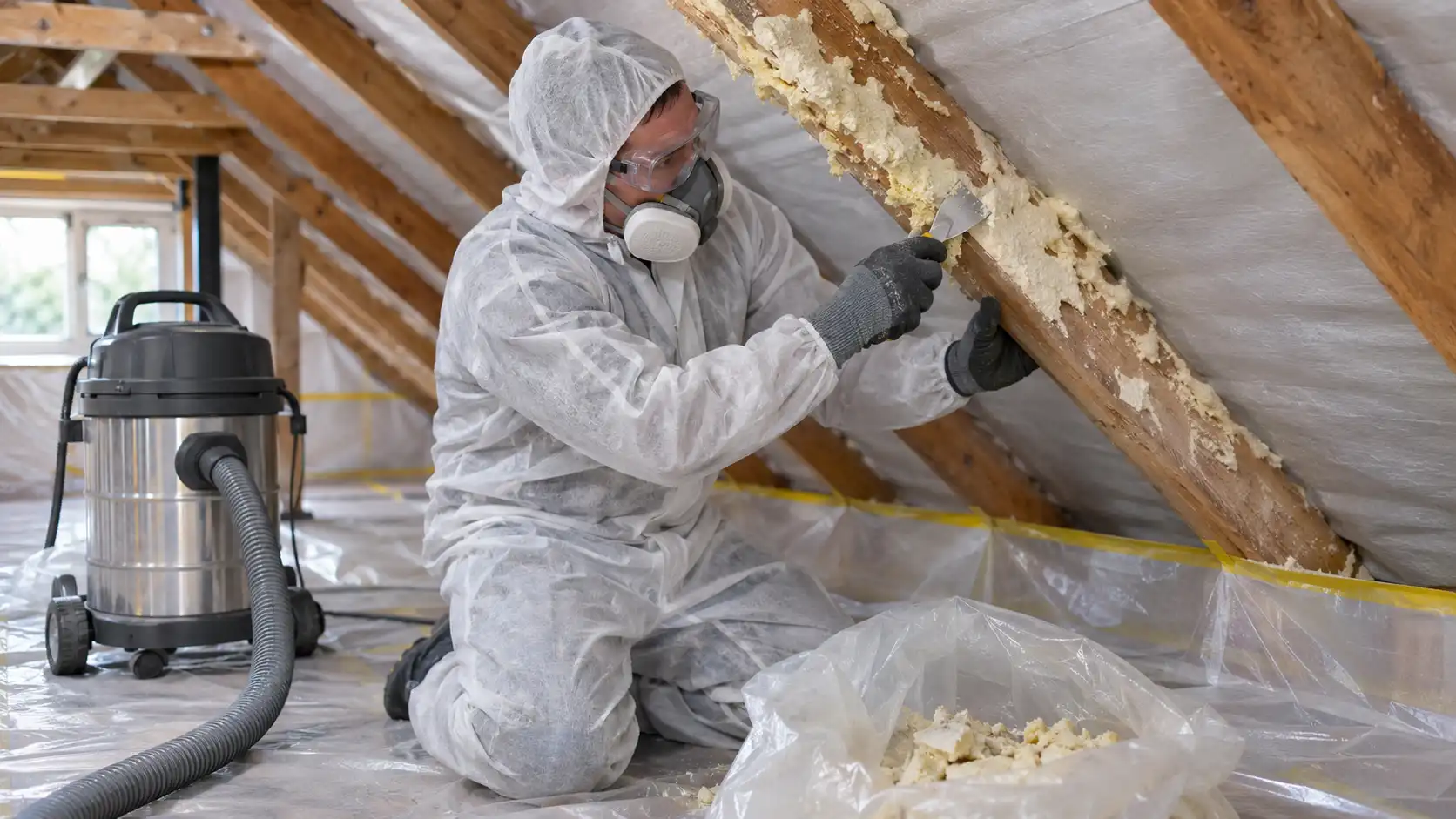
Spray Foam Insulation Removal UK
4 November 2026
Spray foam in a roof does not automatically prevent a UK mortgage, remortgage or equity release. Lenders set their own rules, and some will consider a property if they receive the installation records or an acceptable specialist report. Others may require an invasive inspection or remediation. Before paying for removal, ask your lender what evidence it needs and arrange an independent survey from someone experienced in spray foam roofs.
The concern is that foam can cover roof timbers and make leaks, damp or timber decay harder to see. Removal may help a lender or surveyor assess the roof, but it does not guarantee that a lender will approve the application. The foam type, installation records, roof condition and the lender’s criteria all matter.
Why can spray foam affect a mortgage?
Spray foam is applied to the underside of roof coverings or rafters. Depending on the material and installation, it can bond to roof timbers, felt or other surfaces. When the timber is covered, a surveyor may not be able to inspect it fully or check for moisture damage and defects.
This can create uncertainty about the roof’s condition, future repair costs and the property’s value as security for a loan. It does not mean every spray foam installation has caused damage. It means the lender may want stronger evidence before deciding whether to lend.
Open-cell foam is generally softer and less dense than closed-cell foam. Closed-cell foam is more rigid and can be more strongly bonded to the surfaces beneath it. These differences can affect inspection and removal, but foam type alone does not determine whether a lender will accept the property.
Do UK mortgage lenders reject all homes with spray foam?
No. Lender policies differ, and they can change. Some lenders may consider a property if the owner provides installation paperwork, a suitable survey or other evidence. Others can decline at first or request further inspection. Even a lender that accepts spray foam in one case may reach a different decision on another property.
RICS guidance is for surveyors assessing a property; it is not a single mortgage rule that all lenders must follow. A lender makes its own decision using its valuation and lending criteria. The government’s current guidance says many mortgage providers are open to lending on properties with spray foam, subject to their individual requirements. It also warns that removing the foam does not guarantee a lender will lend.
For an example of how specific a policy can be, Nationwide’s published criteria say that its valuer will initially decline a property with foam in the rafters, frame or underfloor, but it may reconsider when specified installation evidence or an invasive survey report is provided. This is Nationwide’s policy, not a rule that applies to every lender.
Could spray foam block a remortgage or equity release?
It can cause a problem if the new lender’s valuer cannot confirm the roof’s condition or the lender’s criteria are not met. The same issue can arise when you apply for a further advance, lifetime mortgage or equity release because the provider still needs to assess the property and its value.
If you already have a mortgage, your current lender’s past acceptance does not mean a different lender will accept the property later. A new application can trigger a fresh valuation and a new review of the foam.
If a lender has raised the issue, ask for its requirements in writing before arranging work. Confirm whether it wants the foam removed, specific installation records, an invasive survey, a timber condition report or another form of evidence. This can prevent you paying for work that does not meet that lender’s requirements.
What should you do before arranging removal?
Ask the lender or broker for its criteria. Request the exact documents or remedial work it will consider. Do this before accepting a removal quote.
Find the original installation paperwork. Look for the installer’s details, product information, suitability survey, condensation risk assessment, certification and transferable warranty. If the installation was part of a government scheme, check the installer and scheme paperwork too.
Arrange an independent assessment. Use a surveyor experienced in spray foam roofs and ask them to follow the relevant inspection protocol. The government recommends using a specialist surveyor and says the Property Care Association has a specialist finder.
Ask whether removal is actually recommended. Depending on the inspection, the advice may be further evidence, remedial work, removal or roof replacement. Do not assume removal is the only answer.
Get the lender to confirm what it will accept after the work. Ask whether it needs a post-removal report, photographs, timber readings or a separate structural assessment.
You can read the official GOV.UK guidance on spray foam, removal and lending before deciding what to do.
How is spray foam removed from a roof?
The contractor should inspect the roof space and establish the foam type, coverage, access, roof construction and the condition of visible timbers. They should explain the proposed method, the areas to be cleared, how dust and waste will be controlled and how the roof will be checked afterwards.
Removal often involves cutting or lifting away the bulk foam, then carefully working on material bonded to rafters or other surfaces. The right method depends on the foam and the roof. A contractor should not promise that every surface can be restored to a perfect, untouched finish before inspecting the installation.
Manual removal and scraping
Manual tools can be used to cut, peel or scrape foam from the roof structure. This approach gives the worker control over the work area, but it takes time, especially when closed-cell foam is firmly bonded. Poor technique or unsuitable power tools can damage timber, felt, wiring or roof coverings.
Dry ice blasting
Dry ice blasting uses pellets of solid carbon dioxide propelled at a surface. A specialist may consider it for some stubborn foam or residue, but it is not a universal replacement for removing the main bulk of the material. Its suitability depends on the foam, the substrate, the roof condition and the operator’s equipment and method.
Blasting can affect the surface underneath the foam. It can also dislodge already loose roof materials or create condensation that needs to dry. Ask the contractor to explain why the method suits your roof, how they will protect the tiles or membrane and whether they will test a small area first.
What affects spray foam removal cost in the UK?
There is no reliable single price for every UK roof. Spray foam removal cost depends on the size of the roof area, the type and thickness of foam, how strongly it is bonded, loft access, the roof’s condition and the amount of waste to remove. Dry ice equipment, difficult access or work at roof level may also affect the quote.
Costs can rise if the work uncovers damaged felt, loose tiles, wet or decayed timbers, or other repairs. Replacement insulation, boarding, independent inspection and structural repairs may be separate items, so check whether they are included.
InstantCost does not currently list a spray foam removal service or a dedicated removal cost calculator. Rather than give you an unsupported headline figure, use written, itemised quotes based on an inspection. Ask each contractor to separate:
Foam removal and the areas included.
Dust protection, clean-up and waste disposal.
Any removal or completion paperwork and photographs.
Inspection of exposed timbers and whether it is independent.
Repairs to rafters, felt, battens or roof coverings.
Replacement insulation, boarding and ventilation work.
VAT, payment stages and what happens if hidden damage is found.
Do not compare quotes using only a price per square metre. One quote may cover removal and waste disposal, while another may exclude the report, timber repairs or replacement insulation. Make sure each contractor has priced the same scope.
What paperwork should you get after removal?
Ask the removal contractor for a written completion record that identifies the property, the work date, the areas treated, the removal method, any limitations and the waste disposal arrangements. Request before-and-after photographs that show the roof timbers and relevant roof surfaces.
There is no single contractor document that guarantees mortgage approval. A paper called a “removal certificate” may simply be the contractor’s own record. It does not automatically prove that removal was complete, that the timber is structurally sound or that the lender will accept the result.
Where the lender needs reassurance about the roof, ask whether it requires an independent post-removal inspection. A suitable report may record the visible timber condition, signs of moisture or decay, inspection limitations and any areas needing repair. If structural damage is suspected, a suitably qualified structural engineer may need to assess it. Ask the lender which professional and report format it will accept before commissioning the work.
Should you install mineral wool after removal?
Removing foam from the roof slopes can leave the roof space with less insulation than before. A common alternative is mineral wool at ceiling level, but the correct solution depends on how the loft is used, the roof design, ventilation and insulation already present.
Ask the installer to explain where the replacement insulation will go, how ventilation will be maintained and whether the new arrangement is compatible with the roof. If you need storage, discuss raised boarding so it does not compress the insulation. Keep the product details, installation records and photographs with your property paperwork.
For related advice, see our guide to improving comfort in a poorly insulated house and check the home energy grants available in 2026. Grant eligibility and scheme rules vary, so verify the current details before arranging work.
Planning other home improvements?
Explore the home services and cost tools currently available through InstantCost.
Browse InstantCost services
How to choose a spray foam removal contractor
Ask for the contractor’s relevant experience, public liability insurance, a written method statement and references for similar roof types. Request an itemised quotation based on an inspection, not just a phone estimate. Confirm how the contractor will protect the property, control dust, dispose of waste and record the work.
Be cautious if a company cold-calls, claims every spray foam roof is dangerous, guarantees mortgage approval or pressures you to sign immediately. The government has warned that unsolicited sales and removal calls have increased. Get an independent assessment and speak to your lender before committing.
Frequently asked questions
Will removing spray foam guarantee that I can get a mortgage?
No. Removal may make the roof easier to inspect, but the lender still decides based on its criteria, valuation and the evidence provided. Ask the lender what it needs before removal and what report it will accept afterwards.
Do lenders reject open-cell and closed-cell spray foam equally?
There is no single rule across all lenders. Foam type can affect how the roof is assessed and how difficult removal may be, but the lender’s policy and the quality of the installation evidence also matter.
Is dry ice blasting safer than scraping?
Not in every roof. Dry ice blasting may be suitable for some surfaces or residues, while manual methods may suit other installations. Both methods need to be matched to the foam, substrate and roof condition by an experienced contractor.
Is a spray foam removal certificate an official document?
Do not assume it is. A contractor may provide a completion certificate or statement, but that document does not automatically provide independent timber sign-off or lender approval. Ask the lender which evidence it requires.
Should I remove spray foam before speaking to a surveyor?
No. Get advice from your lender and an independent surveyor experienced in spray foam first. The inspection may show that the lender will consider other evidence or that a different remedy is more appropriate.
Can I remove spray foam myself?
DIY removal can damage rafters, roof coverings, wiring or the ceiling below, and may leave you without the evidence a lender or buyer wants. Ask a specialist to assess the roof and explain the risks before starting work.
Check your options before you commit
Review current home energy support and related improvement tools before planning replacement insulation or other work.