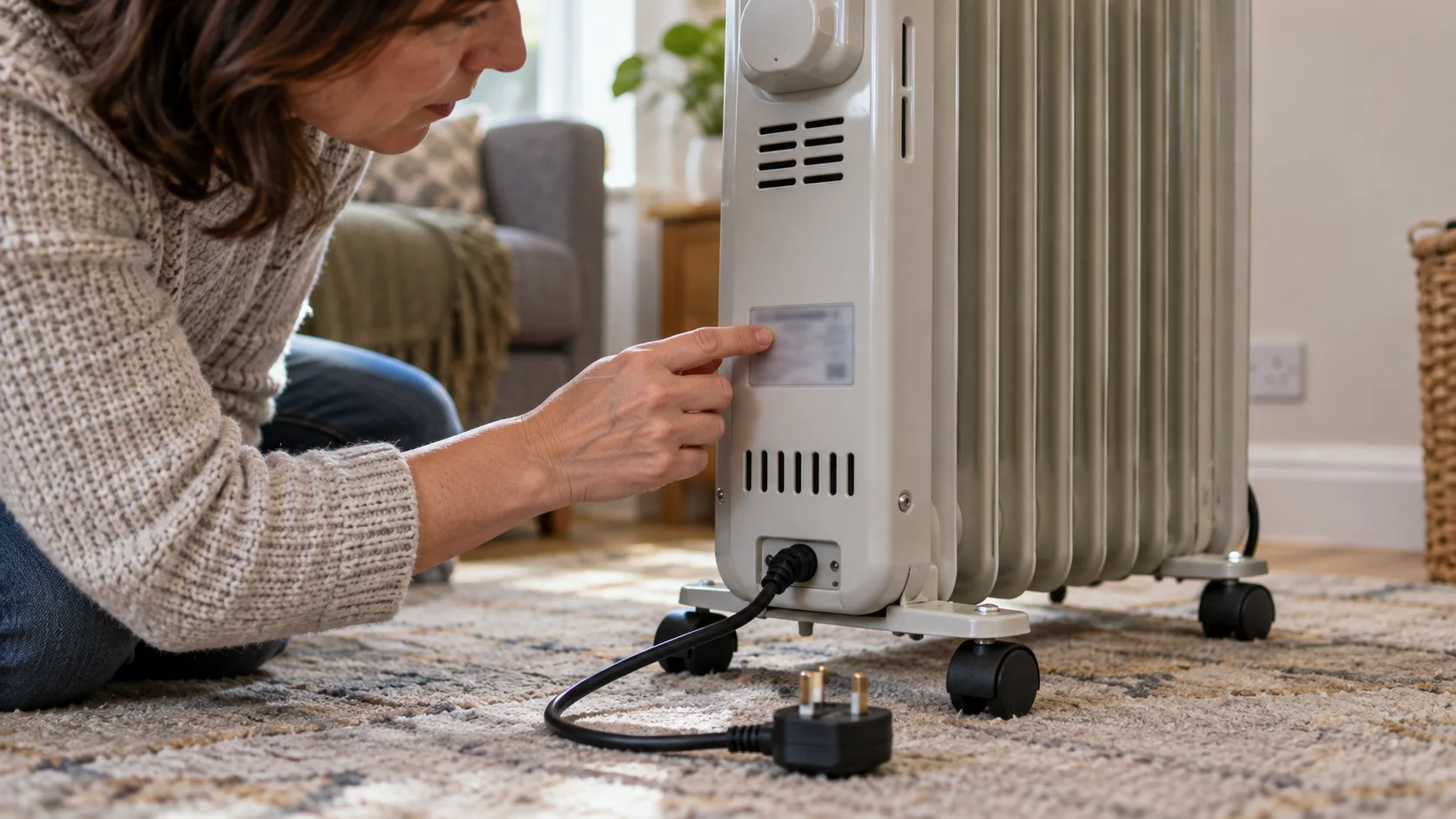
How Much Do Oil-Filled Radiators Cost to Run
21 October 2026
How Much Do Oil-Filled Radiators Cost to Run?
An oil-filled radiator’s maximum hourly cost is its power in kilowatts multiplied by the electricity unit rate on your bill. A 2,000-watt radiator uses 2 kilowatt-hours of electricity if its heating element stays on for a full hour. At an illustrative rate of 30p per kilowatt-hour, that would cost 60p. A working thermostat may switch the element off for part of the hour, so your actual cost can be lower.
There is no single UK running cost that fits every home. Check your heater’s wattage, the power setting you use and your own electricity rate. The oil inside the radiator is sealed; you pay for electricity, not replacement oil.
How do you calculate an oil-filled radiator’s running cost?
Use this formula:
Watts ÷ 1,000 × hours the element runs × your electricity price per kWh = running cost.
For example, a 1,500-watt heater is rated at 1.5 kilowatts. If its element stays on for two hours, it uses up to 3 kilowatt-hours. Multiply 3 by the unit rate shown on your electricity bill. If the thermostat switches the element off during that period, it will use less than the full-power calculation.
Use the electricity unit rate, usually shown in pence per kWh, rather than the total monthly direct debit. A direct debit also reflects other electricity use and may not match that month’s actual consumption.
What does each radiator size cost per hour?
The table uses an example rate of 30p per kWh to show the arithmetic. It is not a quoted UK tariff. Replace 30p with the rate on your own bill. These are maximum costs for an hour with the heating element continuously on.
Radiator power | Electricity used in one full-power hour | Cost at the example rate of 30p/kWh |
|---|---|---|
500W | 0.5 kWh | 15p |
1,000W | 1 kWh | 30p |
1,500W | 1.5 kWh | 45p |
2,000W | 2 kWh | 60p |
2,500W | 2.5 kWh | 75p |
A higher-wattage model costs more while its element is running at full power, but it also supplies more heat. Buying the lowest-wattage model does not guarantee a lower bill if it cannot warm the room and must run for longer.
How does the thermostat change the cost?
The thermostat responds to the temperature around the radiator. Once the selected temperature is reached, it can turn the heating element off. The warm oil and metal fins continue releasing stored heat, then the element switches on again as the radiator cools.
That stored warmth is not free energy. The electricity used earlier heated the oil. The benefit of the thermostat is that it can avoid drawing power continuously when the room is warm enough.
There is no reliable “typical percentage” of time that every radiator runs. A draughty room, a high thermostat setting or an open door can keep the element on longer. A smaller, better-insulated room may let it switch off more often. Our guide to keeping a poorly insulated house warm explains why the room can matter as much as the heater.
What might an oil-filled radiator cost over an evening or month?
Suppose you use a 2kW radiator for four hours each evening. At the example rate of 30p per kWh, the full-power upper estimate is 2 × 4 × 30p, or £2.40 per evening. Used in the same way for 30 evenings, that would be £72.
Those figures assume the element runs every minute. If it is actually on for half of each four-hour session, the electricity used by the heater would be half as much. Do not assume a half-time figure for your own room without measuring it. Thermostat cycling changes with the weather and your settings.
For a better estimate: Record the radiator’s power setting, how many hours you use it and the unit rate on your bill. If you have a suitable energy monitor or smart meter display, compare electricity use during a normal session with similar periods when the heater is off.
Does a lower power setting save money?
It reduces electricity use while the element is on. For example, a radiator operating at 1kW draws half the power it draws at 2kW. It also delivers heat more slowly and may need to stay on longer to warm the same room.
For an accurate calculation, use the wattage of the selected setting, not always the maximum wattage printed on the front of the heater. Check the manufacturer’s instructions if the switches are unclear.
Is an oil-filled radiator cheaper than a fan heater?
At the same wattage and running time, both use the same number of kilowatt-hours. A 2kW oil-filled radiator is not inherently cheaper per hour of full-power operation than a 2kW fan heater.
They feel different in use. A fan heater provides a quick stream of warm air. An oil-filled radiator heats more slowly, operates quietly and releases warmth after its element switches off. Which costs less for your task depends on the room, the time needed and how the controls are used.
Should you use one instead of central heating?
An oil-filled radiator can make sense when you need to warm one occupied room for a limited period. It does not follow that several portable radiators will cost less than running your main heating system. Compare the actual energy used, the rooms heated and the comfort you need.
If you rely on a portable heater because your fixed radiators are not warming properly, check the heating system rather than assuming it needs a bigger portable heater. Our guide to how central-heating radiators work explains what can affect heat reaching a room.
Using a portable heater because a fixed radiator is cold?
InstantCost’s heating calculator includes radiator and heating repair jobs. Select the work that matches the fault to review a local estimate.
Check Heating Repair Options
How can you keep running costs under control?
Use the thermostat to reach a comfortable temperature rather than leaving the heater at its highest setting.
Heat the room you are using and close its door where appropriate.
Stop unwanted draughts without blocking vents that provide necessary ventilation.
Choose a heater with enough output for the room instead of running an undersized model continuously.
Check your tariff’s unit rate, particularly if it changes by time of day.
Switch the heater off when you no longer need it.
How do you use an oil-filled radiator safely?
Keep the radiator clear of curtains and furniture, and never cover it or use it to dry clothes. Check the cable and plug for damage and follow the manufacturer’s instructions. The UK government’s portable-heater fire safety guidance also advises unplugging electric heaters when you go out or go to bed.
Frequently asked questions
Does an oil-filled radiator use electricity when the thermostat turns it off?
Its heating element stops drawing its rated power when the thermostat switches it off. Some models may still use a small amount for an indicator, timer or electronic controls. Check the model’s instructions if you need a precise figure.
Do you have to refill the oil?
No. In a normal oil-filled electric radiator, the oil is sealed inside and transfers heat from the electrical element to the metal body. If the radiator leaks oil, stop using it and follow the manufacturer’s advice.
Should you add the electricity standing charge to the calculation?
To estimate the extra cost of using the radiator in a home that already has an electricity supply, calculate the additional kWh it uses. The household’s standing charge is paid regardless of whether this particular heater runs.
Why is my actual cost different from the full-power estimate?
The thermostat may switch the element off, you may use a lower power setting, or your tariff may differ from the example. Start with the rate on your bill and the setting you actually use.
Need a lasting fix for unreliable home heating?
If portable heaters have become a substitute for a faulty heating system, describe the radiator or boiler problem in InstantCost’s heating calculator and request written repair quotes.