How Do Radiators Work
22 September 2026
How Do Radiators Work?
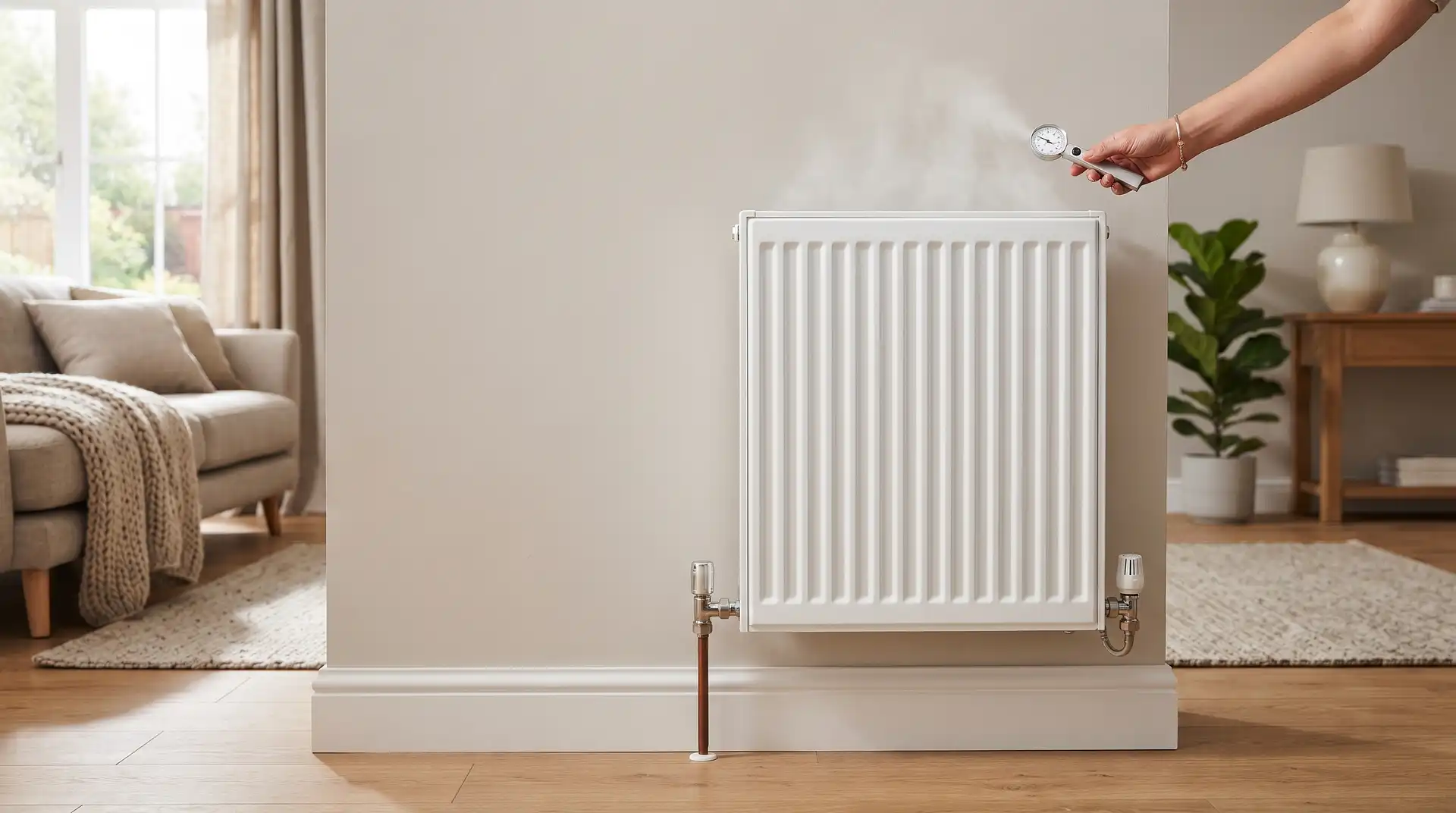
Radiators heat a room primarily through convection, the movement of warm air rising off the radiator's surface and circulating around the room, rather than through radiant heat in the way the name suggests. A radiator heats the air directly touching its surface, that warm air rises, cooler air is drawn in to replace it at the bottom, and this continuous cycle, not the radiator directly warming you like sunlight would, is what actually heats the room.
The "radiator" name is a genuine historical misnomer that's stuck around since the technology was first introduced, when radiant heat transfer was assumed to be the dominant mechanism. In reality, most modern panel radiators generate somewhere between 70 and 80 percent of their heat output through convection, with the remaining smaller portion coming from direct radiant heat off the metal surface itself.
How Hot Water Reaches the Radiator
Your boiler heats water and pumps it through a network of pipes to each radiator in the house. This hot water enters the radiator through one valve, typically the thermostatic radiator valve (TRV), circulates through the radiator's internal panels, and exits through the other valve, the lockshield, back into the system to return to the boiler for reheating, in a continuous loop for as long as the heating is calling for heat.
Why Radiators Have Panels and Fins
The internal design of a radiator, whether a single flat panel, a double panel, or a double panel with convector fins attached to the back, exists specifically to maximise surface area contact with the surrounding air. More surface area means more air can be heated by convection in the same amount of time, which is exactly why a double panel radiator with convector fins outputs considerably more heat than a single flat panel of the same physical size.
How the TRV Controls Room Temperature
The thermostatic radiator valve contains a temperature-sensitive element that expands as the room warms, gradually closing the valve and restricting water flow into the radiator once your chosen temperature is reached. As the room cools again, the element contracts, reopening the valve to let more hot water flow through. This is why a TRV set to a specific number doesn't turn the radiator fully on or off like a simple switch, it continuously modulates flow to maintain roughly that room temperature.
How the Lockshield Balances the System
The lockshield valve, on the opposite side of the radiator from the TRV, is set once during a process called balancing, restricting or allowing flow to ensure each radiator in the house receives an appropriate share of the boiler's total hot water output relative to its size and the room it heats. Without proper balancing, radiators closest to the boiler can end up hogging most of the flow, leaving those further away underheated even if their own TRVs are wide open.
Why Air in the System Causes Cold Spots
Air trapped inside a radiator collects at the top, since air is less dense than water, and this trapped air prevents hot water from reaching that upper section, creating the classic symptom of a radiator that's cold at the top but warm at the bottom. Bleeding a radiator releases this trapped air, allowing water to fill the full internal space and restoring even heat distribution across the whole surface.
A Note on Why Some Rooms Feel Warmer Than Others Despite Similar Radiators
Room temperature perception depends on more than just the radiator's output. Ceiling height, window size and glazing quality, insulation levels, and even furniture placement blocking convection airflow around a radiator all affect how warm a room actually feels, independent of whether the radiator itself is functioning correctly and outputting its full rated heat.
A Note on Radiators vs Underfloor Heating
Underfloor heating works on a genuinely different principle, heating the floor's large surface area to warm a room primarily through a more even mix of radiant heat and gentle convection, rather than the more concentrated convection currents a wall-mounted radiator produces. This is why underfloor heating often feels different, some describe it as more even or comfortable, even at a similar overall room temperature to a radiator-heated space.
When to Call a Professional
If a radiator isn't heating properly despite bleeding it and checking both valves are open, or if you suspect the whole system needs balancing rather than just one radiator, a heating engineer can properly diagnose whether the issue is a specific radiator fault, a wider circulation problem, or a system that's never been correctly balanced since installation.
Use InstantCost's heating system cost calculator to see what a system check, power flush, or radiator work would cost in your area. If a specific radiator isn't heating evenly, how to measure a radiator covers checking whether it's correctly sized for the room in the first place, which can also affect how warm a room feels even when the radiator is working perfectly.
Common Mistakes and What to Do Instead
Mistake: Assuming radiators heat rooms primarily through radiant heat. Most of a radiator's heat output comes from convection, warm air circulating around the room, not direct radiant heat like sunlight. Understanding this helps explain why blocking airflow around a radiator, with furniture or long curtains, reduces its effectiveness.
Mistake: Blocking convection airflow with furniture placed directly in front of a radiator. This restricts the warm air current a radiator relies on to actually heat the room, reducing its effective output even though the radiator itself is working fine. Leave clear space for air to rise and circulate around a radiator.
Mistake: Adjusting the lockshield valve, thinking it controls room temperature like the TRV. The lockshield is a system-balancing valve, not a day-to-day control, and adjusting it without understanding the wider balancing process can throw off heat distribution to other radiators in the house.
Mistake: Assuming a radiator that's cold at the top is broken rather than needing bleeding. This is almost always trapped air rather than a fault. Bleed the radiator first before assuming a more serious problem or calling out an engineer.
Mistake: Not considering room-specific factors when a radiator "isn't working" despite functioning correctly. Poor insulation, large single-glazed windows, or high ceilings can make a room feel underheated even with a correctly functioning, appropriately sized radiator. Consider these factors before assuming the radiator itself is at fault.
Mistake: Assuming all radiators in a system heat equally without proper balancing. Radiators closest to the boiler can dominate flow in an unbalanced system, leaving those further away underheated. A properly balanced system, set once through the lockshield valves, ensures more even heat distribution throughout the house.
What It Costs in the UK
Item or Service | Typical UK Cost (2026) |
|---|---|
DIY radiator bleeding | £0 (bleed key, £3–£8 if needed) |
Heating engineer system check | £60–£120 |
Full system power flush | £350–£650 |
Professional radiator balancing (whole house) | £100–£250 |
Double panel radiator with convector fins | £90–£220 |
Full heating system service | £70–£120 |
Figures based on InstantCost.co.uk's 2026 UK heating system pricing data and vary by region and system size.
Staying Safe
Always turn off the heating and allow radiators to cool before bleeding them or adjusting valves closely, since hot water under pressure can cause scalding if a valve or bleed point is opened while the system is actively running hot.
If you're checking system pressure or working near the boiler itself as part of understanding a heating issue, follow the manufacturer's specific guidance for your boiler model, and contact a Gas Safe registered engineer for anything beyond basic radiator maintenance like bleeding or checking valve positions.
General UK home heating safety guidance recommends allowing radiators to cool before bleeding or closely adjusting valves, and using a Gas Safe registered engineer for any boiler-related work or diagnosis beyond basic radiator maintenance.
Frequently Asked Questions
Do radiators actually radiate heat, or is that just the name? Radiators do produce some genuine radiant heat directly off their metal surface, but this typically accounts for only 20 to 30 percent of total output. The majority, 70 to 80 percent, comes from convection, warm air circulating around the room.
Why is my radiator hot at the bottom but cold at the top? This is almost always trapped air, which collects at the top of the radiator since it's less dense than water, blocking hot water from reaching that section. Bleeding the radiator releases the trapped air and restores even heating.
Does covering a radiator with furniture stop it working? It doesn't stop the radiator itself working, but it does restrict the convection airflow the radiator relies on to actually heat the room, reducing how effectively the heat reaches the wider space.
What's the difference between the TRV and lockshield valve? The TRV controls and modulates flow based on room temperature, letting you set how warm that specific room gets. The lockshield is set once during system balancing and controls how much of the boiler's total output that radiator receives relative to others in the house.
Why does my house have some rooms warmer than others with similar radiators? This often comes down to system balancing, insulation levels, window size, or ceiling height, rather than the radiators themselves being faulty. A properly balanced system, alongside addressing room-specific insulation issues, helps even this out.
Is underfloor heating more efficient than radiators? Underfloor heating works differently, using a larger surface area at a lower temperature to heat a room through a more even mix of radiant and convective heat. It's often perceived as more comfortable, though efficiency depends on several factors beyond just the heating method itself.