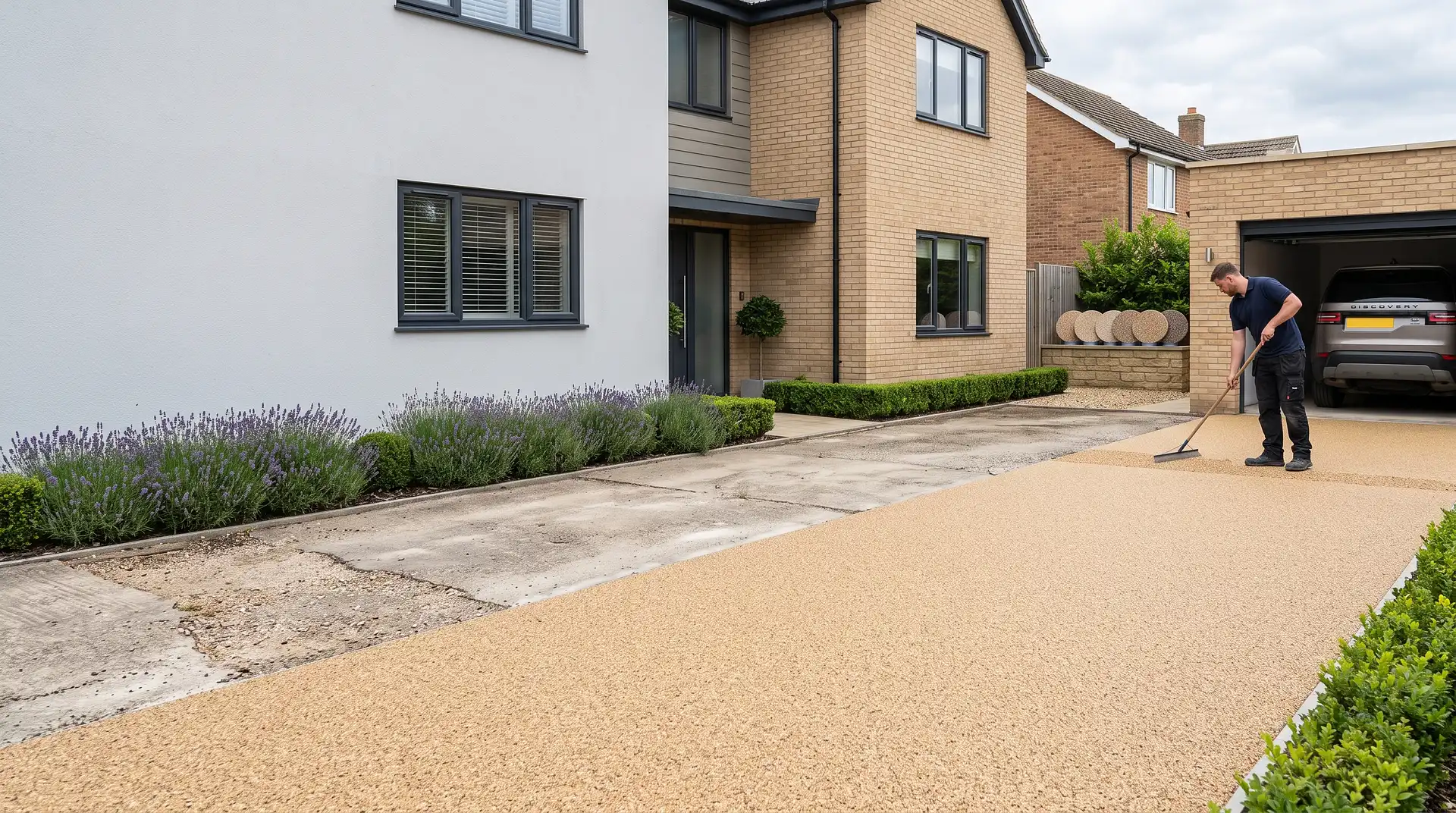
How Much Does a Resin Driveway Cost
6 August 2026
How Much Does a Resin Driveway Cost?
According to InstantCost.co.uk's 2026 UK driveway pricing data, resin bound driveways cost £130 per square metre supplied and fitted, including VAT and groundwork. For a typical double driveway of around 36m², that works out to roughly £4,700, placing resin at the premium end of the UK driveway market alongside Indian sandstone, and noticeably above block paving, concrete, tarmac, and gravel.
What That Actually Buys You
The £130/m² figure isn't just the resin surface itself. According to InstantCost's data, their pricing includes 20% VAT, excavation, sub-base preparation, and removal of the existing surface, which matters when comparing against quotes that price only the visible top layer and add groundwork separately. A meaningful share of any driveway's total cost sits in the groundwork rather than the surface material, on their example 36m² double driveway, groundwork and excavation accounted for £2,430 against £2,178 in materials, so a quote that seems low per m² is worth checking against what's actually included beneath the surface.
Cost by Driveway Size
Driveway Size | Approximate Area | Estimated Resin Cost |
|---|---|---|
1 car (single), 5m x 3m | 15m² | Around £1,950 |
2 cars (double), 6m x 6m | 36m² | Around £4,700 |
3 cars, 8m x 7m | 56m² | Around £7,280 |
XL / multi-car, 10m x 9m | 90m² | Around £11,700 |
These figures apply the confirmed £130/m² rate across InstantCost's own standard size presets. Actual quotes will vary with ground conditions, access, and region, but they give a realistic starting point for budgeting rather than a headline figure that ignores groundwork.
How Resin Compares to Other Materials
Material | Cost per m² | Lifespan | Permeable |
|---|---|---|---|
Gravel | £55 | 10 to 15 years | Yes |
Tarmac / Asphalt | £75 | 15 to 20 years | No |
Concrete | £85 | 25 to 30 years | No |
Block Paving | £110 | 20 to 30 years | Yes |
Resin Bound | £130 | 20 to 25 years | Yes |
Indian Sandstone | £160 | 25 or more years | No |
Resin sits second-most expensive of the six main UK driveway materials, above block paving and below Indian sandstone. Its 20 to 25 year lifespan is solid without being the longest available, block paving and Indian sandstone both typically outlast it, which is worth weighing against the upfront price difference if longevity is your primary concern rather than appearance or permeability.
The Planning Permission Advantage
This is genuinely one of resin's strongest practical arguments, and it's often underexplained. Since 2008, UK regulations require permeable surfaces, or drainage to a permeable area, for any new driveway over 5m² fronting the public highway. Resin bound is permeable, which means it doesn't require planning permission, alongside gravel and permeable block paving. Solid surfaces like tarmac, concrete, or standard sealed block paving require either drainage to a soakaway or border, or full planning permission from your local council.
In practical terms, this can make a resin driveway cheaper in total than its headline per-m² rate suggests when compared against an impermeable alternative that needs drainage installed. InstantCost's data prices a drainage or soakaway installation as a £850 optional extra, so a tarmac driveway at £75/m² plus £850 drainage on a 36m² double driveway comes to roughly £3,550, against resin's £4,700 with no drainage needed. The gap narrows considerably once that requirement is factored in, though resin still costs more overall in that particular comparison.
The Trade-Offs Worth Knowing
Resin's genuine advantages are its modern appearance, SUDS compliance without additional drainage work, and the fact that weeds don't grow through it the way they do between block paving joints. The main drawbacks are the higher upfront cost and the possibility of UV fade over time, meaning colour can shift slightly with prolonged sun exposure, more noticeable on some colour choices than others.
Installation is fast compared with other premium options, resin typically takes 1 to 2 days for an average double driveway, similar to tarmac, while block paving and Indian sandstone typically take 3 to 5 days. If minimising disruption matters, that's a real practical benefit alongside the surface itself.
Optional Extras to Budget For
According to InstantCost's driveway pricing, common extras add meaningfully to a total project cost: decorative edging or kerbing adds £380, a protective sealant adds £320, driveway lighting adds £650, driveway gates add £1,800, and an EV charger installation adds £1,100. Drainage or a soakaway, at £850, is the one extra resin genuinely doesn't need given its permeability, unlike the impermeable alternatives.
An EV charger is worth mentioning specifically, since installing one at the same time as laying a new driveway avoids disturbing a finished surface later. If you're weighing that up, the electrical side of the job has its own considerations beyond the driveway installation itself, and our related guide on the InstantCost blog covers how electrical work is certified under Part P regulations , which explains why any EV charger installation legally requires a qualified, registered electrician rather than being something a driveway contractor can simply include.
Common Mistakes and What to Do Instead
Mistake: comparing a resin quote against a tarmac quote without factoring in drainage. An impermeable surface over 5m² fronting a public highway needs drainage or planning permission, typically adding around £850. That changes the real comparison meaningfully.
Mistake: assuming a low per-m² quote covers groundwork. Excavation and sub-base preparation often account for more than the surface material itself. Always confirm whether a quote includes removal of the existing surface, excavation, and sub-base, or prices these separately.
Mistake: not asking about UV fade for your specific colour choice. Some resin colours are more prone to visible fade over time than others. Ask the installer directly about the specific aggregate and colour you're considering rather than assuming all resin behaves identically.
Mistake: skipping the sealant on the assumption it's optional cosmetics. At £320, a protective sealant is a relatively modest addition against the total project cost and can extend how well the surface holds its appearance, worth discussing with your installer rather than dismissing outright.
Mistake: not getting three quotes. Driveway pricing varies considerably between installers for the same specification, and this is a large enough project that comparing three written quotes genuinely matters rather than accepting the first reasonable-sounding figure.
Installation Timeline
Resin bound typically takes 1 to 2 days for an average double driveway, one of the quicker options alongside tarmac. On InstantCost's example 36m² double driveway, the estimated install time was 2.9 days including all groundwork, which gives a realistic sense of the full project duration rather than just the surfacing itself. Most UK driveway installs across all materials take 2 to 5 days in total.
What It Costs in the UK: Quick Reference
Item | Typical UK Cost (2026) |
|---|---|
Resin bound, per m² (supplied and fitted, inc. VAT) | £130 |
Single driveway, around 15m² | Around £1,950 |
Double driveway, around 36m² | Around £4,700 |
Three-car driveway, around 56m² | Around £7,280 |
Decorative edging or kerb | £380 |
Protective sealant | £320 |
Driveway lighting | £650 |
EV charger installation | £1,100 |
Driveway gates | £1,800 |
Drainage or soakaway (not needed for resin) | £850 |
These figures are based on InstantCost.co.uk's 2026 UK driveway pricing data, which includes VAT, excavation, sub-base preparation and removal of the existing surface. Always confirm with two to three local quotes before booking.
Staying Safe and Getting a Fair Quote
Ask any installer for a clear written breakdown covering excavation depth, sub-base specification, and whether removal and disposal of the existing surface is included, since these are where quotes most commonly differ despite looking similar on the headline figure. Confirm the installer's approach to permeability specifically, since resin's planning permission advantage only holds if it's genuinely installed as a permeable system with an appropriate sub-base beneath it.
If any EV charger installation is being considered as part of the project, that work must legally be carried out by a qualified electrician and certified appropriately, it isn't something a driveway contractor can complete without the relevant electrical qualifications.
Planning permission rules and permeability requirements can be updated and vary by local authority, so always check with your council before work starts, particularly for any driveway fronting a public highway.
FAQ
How much does a resin driveway cost in the UK? Resin bound costs £130 per square metre supplied and fitted including VAT and groundwork according to 2026 UK data, so a typical 36m² double driveway costs around £4,700.
Is resin more expensive than block paving? Yes, resin bound at £130/m² is more expensive than block paving at £110/m², though block paving typically lasts slightly longer at 20 to 30 years against resin's 20 to 25 years.
Do I need planning permission for a resin driveway? No. Resin bound is a permeable surface, which means it doesn't require planning permission even for driveways over 5m² fronting a public highway, unlike impermeable surfaces such as tarmac or concrete.
How long does a resin driveway last? Typically 20 to 25 years, which is longer than tarmac at 15 to 20 years and gravel at 10 to 15 years, but slightly shorter than block paving and Indian sandstone at 25 to 30 years or more.
How long does it take to install a resin driveway? Typically 1 to 2 days for the resin surfacing itself on an average double driveway, though total project time including groundwork is usually closer to 3 days.
What are the downsides of a resin driveway? The main drawbacks are the higher upfront cost compared with tarmac, concrete, or gravel, and the possibility of UV fade causing colour to shift slightly over time with prolonged sun exposure.