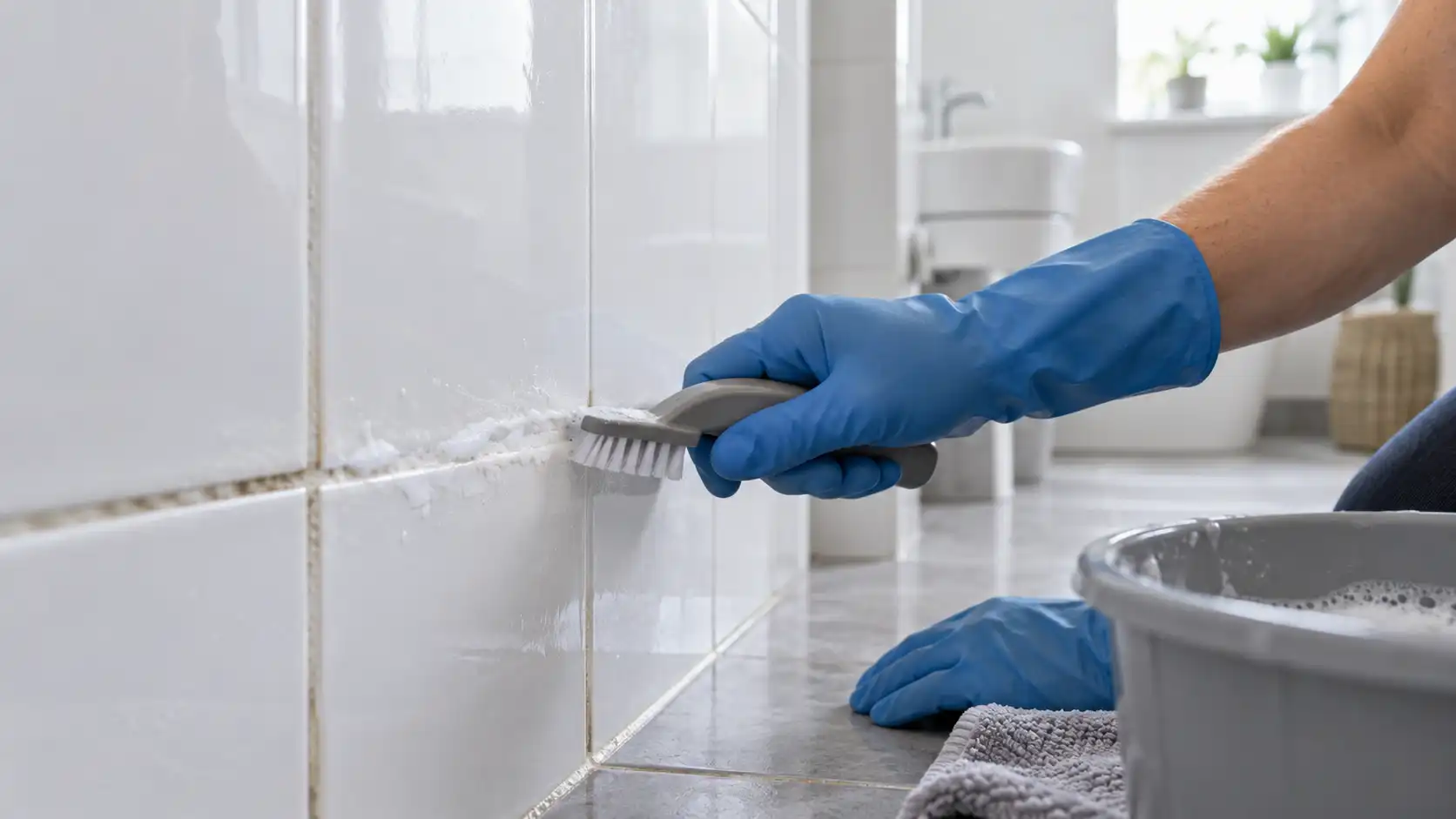
How to Clean Bathroom Grout
18 October 2026
How to Clean Bathroom Grout
To clean bathroom grout, remove loose dirt, apply a suitable grout cleaner, scrub gently with a narrow brush and rinse away the residue. Mould, soap scum, hard-water deposits and body oils can all darken grout, so the best method depends on the type of stain.
Quick answer: Ventilate the bathroom, wear gloves, apply a grout-safe cleaner, leave it for the stated contact time, brush along the grout lines and rinse thoroughly. Never mix bleach with other cleaning products.
Why does bathroom grout become dirty?
Soap and shampoo residue
Body oils and skin products
Hard-water minerals
Mould and mildew in damp areas
Dust and general floor dirt
Old sealer wearing away
Cracked grout allowing moisture behind tiles
Grout is porous, so it can hold moisture and staining more easily than glazed ceramic or porcelain tiles. Cleaning the tiles alone will not remove dirt that has settled into the grout joints.
What tools do you need to clean bathroom grout?
Rubber gloves and eye protection
Soft cloths or paper towels
Small grout brush or old soft toothbrush
Bucket of warm water
Grout-safe bathroom cleaner
Small plastic scraper for loose residue
Dry towel for finishing
A narrow brush works better than a large stiff brush because it keeps the cleaning action on the grout line and reduces scratching on the tile surface.
How do you clean bathroom grout step by step?
1. Ventilate the room
Open the window and run the extractor fan if available. Remove toiletries, mats and loose items from the area.
2. Remove loose dirt
Wipe the tiles and grout with a damp cloth. On floor grout, vacuum or sweep first so grit is not pushed into the joints during scrubbing.
3. Test the cleaner
Apply the product to a small hidden area. Check that it does not discolour the grout, damage the tile glaze or affect natural stone.
4. Apply the product
Use a grout-safe cleaner and follow the label instructions. Apply it in small sections rather than covering the entire bathroom at once.
5. Allow contact time
Leave the product on the grout for the recommended period. Do not allow it to dry on the tiles or grout.
6. Brush along the joints
Use controlled strokes along the grout lines. Avoid aggressive scrubbing that can remove sound grout or damage silicone seals at corners.
7. Rinse thoroughly
Wipe away the loosened dirt with clean water. Change the water regularly so you do not spread the residue back over the tiles.
8. Dry the surface
Use a clean towel to dry the grout and tile surface. Good drying reduces the moisture that mould needs to grow.
How do you remove mould from bathroom grout?
For small areas of surface mould, use a suitable mould remover or grout cleaner according to its label. Wear gloves and eye protection, ventilate the room and keep children and pets away during treatment.
Mould in grout often returns when the area stays damp. Improve extraction, wipe down wet surfaces and repair leaks or failed sealant. Cleaning alone will not solve a persistent moisture problem.
The GOV.UK damp and mould guidance recommends suitable protective equipment and careful handling when removing mould.
Never mix cleaning chemicals. Do not combine bleach with acids, vinegar, ammonia or another mould remover. Dangerous gases can form. Follow one product label at a time.
How do you clean white grout without damaging it?
Use a product designed for cement-based grout and test it first. Do not assume that a stronger cleaner will produce a better result. Excessive scrubbing or repeated harsh treatments can wear the surface and make it more absorbent.
Do not use abrasive powders or metal brushes on glazed tiles. If the grout remains permanently discoloured after careful cleaning, it may need recolouring, sealing or replacement.
How do you remove soap scum from shower grout?
Use warm water and a suitable bathroom cleaner to soften the residue. Work in small sections with a grout brush, then rinse the wall from top to bottom and dry it.
Keep shampoo bottles and soap off the floor where possible. A small shelf or wall-mounted basket can reduce residue on the lower grout lines.
How do you remove black marks from grout?
Black marks may be mould, embedded dirt or failed grout. Treat a small area with a compatible mould or grout product first. If the mark does not change, inspect the joint for cracking, softness or moisture behind the tile.
Black silicone sealant is different from grout. If mould has penetrated the silicone, cleaning may not restore it and replacement may be necessary.
Can you use bicarbonate of soda and vinegar on grout?
Home-made mixtures can be unreliable and vinegar is acidic. Acidic products may damage cement-based grout, natural stone and some sealants when used repeatedly. A product designed for the tile and grout type is easier to control.
Never mix vinegar with bleach or another cleaning chemical.
When should grout be replaced instead of cleaned?
Cleaning is unlikely to solve grout that is:
Cracked or falling out
Soft, powdery or permanently damp
Missing around a bath or shower
Stained through its full depth
Allowing water to reach the wall or floor behind the tiles
Remove damaged grout carefully, clean the joints and apply a compatible replacement product. Read how to regrout bathroom tiles for the preparation and application process.
How can you keep bathroom grout clean?
Run the extractor fan during bathing and afterwards.
Keep the bathroom door or window open after showering where practical.
Wipe excess water from shower walls and floors.
Clean small marks before they become embedded.
Repair leaking taps, trays, baths and pipes.
Keep silicone joints in good condition.
Use a suitable grout sealer if recommended for the product.
Do not paint over damp or mouldy grout without fixing the moisture source.
Planning wider bathroom tile work?
Review the related regrouting guide before deciding whether your grout needs cleaning or replacement.
Common bathroom grout-cleaning mistakes
Using a metal brush that damages tile and grout
Leaving chemical cleaner to dry on the surface
Scrubbing damaged grout instead of replacing it
Using strong acid on cement grout or natural stone
Mixing bleach with another cleaning product
Ignoring poor ventilation
Cleaning mould without gloves or eye protection
Rinsing dirty solution into areas that have already been cleaned
Frequently asked questions
What is the best way to clean bathroom grout?
Use a suitable grout cleaner, allow the recommended contact time, brush gently along the joints and rinse thoroughly. Drying the surface afterwards helps prevent new mould growth.
How do you clean black mould from grout?
Use a mould product labelled for bathroom surfaces, wear protective equipment and ventilate the room. If mould keeps returning, investigate leaks, condensation and ventilation.
Can bleach damage bathroom grout?
Repeated use of strong bleach can affect some grout, sealants and coloured surfaces. Follow the label, test first and never mix bleach with another chemical.
Can you clean grout with a toothbrush?
Yes. A soft or medium toothbrush can work for small areas, although a narrow grout brush may be more comfortable for a large bathroom.
Why does grout go black after cleaning?
Persistent moisture, mould behind the joint, failed sealant or staining through the grout can cause black marks to return. Cleaning without fixing the moisture source gives only temporary results.
Should you seal grout after cleaning?
Some cement-based grouts benefit from a compatible sealer after they are fully clean and dry. Check the grout and sealer instructions before applying it.
How often should bathroom grout be cleaned?
Clean visible dirt and soap residue regularly, then carry out deeper cleaning when staining appears. Bathrooms with poor ventilation may need more frequent attention.
Can mouldy grout be painted?
Do not paint over active mould or damp. Clean the area, identify the moisture source and replace damaged grout or sealant where necessary.
Need help with damaged grout?
Use the related bathroom tiling guidance to plan preparation, regrouting and finishing work.