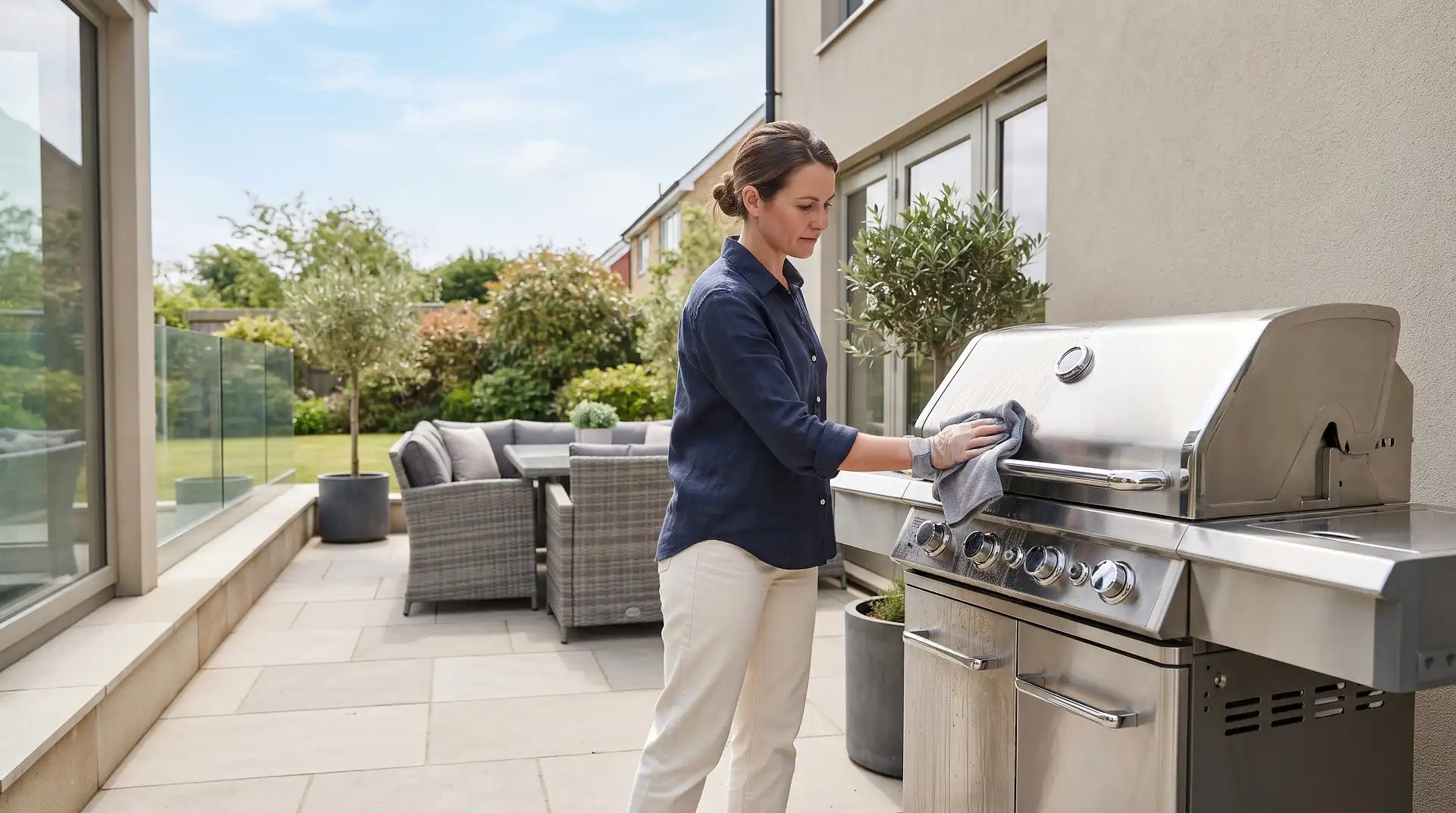
How to Clean Exterior Stainless Steel
20 September 2026
How to Clean Exterior Stainless Steel
Exterior stainless steel, railings, house numbers, letterboxes, outdoor kitchen fittings, and similar features, is cleaned with warm water and a mild detergent applied with a soft cloth, always wiped in the direction of the metal's grain rather than in circles, followed by a thorough rinse and dry to prevent water spotting. The counterintuitive part most people don't expect is that stainless steel left outdoors can still develop rust spots, not because the steel itself is failing, but because tiny particles of ordinary iron from tools, wire wool, or airborne pollution embed in the surface and rust there instead.
This is exactly why the wrong cleaning tool causes more problems than dirt ever would. Steel wool, wire brushes, or anything containing standard steel can leave microscopic iron particles behind that then rust on the stainless steel's surface, creating the very spotting problem cleaning was meant to prevent.
Step 1: Identify the Grain Direction
Stainless steel is manufactured with a visible or subtle brushed grain running in one direction. Look closely at the surface in good light to identify this direction before cleaning, since wiping across the grain rather than with it can create fine scratches that become more visible over time as dirt collects in them.
Step 2: Wash With Warm Water and Mild Detergent
Mix warm water with a small amount of washing-up liquid.
Apply with a soft cloth or sponge, wiping in long strokes following the grain direction rather than in circles.
Rinse thoroughly with clean water, removing all detergent residue before it has a chance to dry and leave marks.
Dry immediately with a clean, soft cloth, again following the grain, rather than allowing the surface to air dry, which can leave visible water spots, particularly with UK hard water.
Step 3: Treat Existing Rust Spots
Small rust spots caused by embedded iron particles, rather than actual corrosion of the stainless steel itself, can often be treated with a specific stainless steel cleaner or a paste of bicarbonate of soda applied gently with a soft cloth, again working with the grain. For more established spotting, a dedicated stainless steel rust remover product, widely available in UK hardware shops, is formulated specifically to lift this without damaging the surrounding surface.
Step 4: Apply a Protective Finish
Once clean and fully dry, a specific stainless steel polish or protective oil can help maintain the finish and make future cleaning easier, since it reduces how readily dirt, fingerprints, and water spots adhere to the surface. Apply sparingly with a soft cloth, again following the grain, and buff to a clean, non-greasy finish.
A Note on Salt Air and Coastal Properties
Stainless steel exposed to coastal salt air needs more frequent cleaning and rinsing than the same fittings inland, since salt deposits accelerate the surface pitting that eventually leads to visible spotting or dulling. Properties within a mile or two of the coast should generally rinse exterior stainless steel weekly rather than the monthly or occasional cleaning that suits most inland UK properties.
A Note on Fingerprints and Handled Surfaces
Letterboxes, door handles, and similar frequently touched stainless steel fittings show fingerprints and smudges more readily than less-handled features like railings. A quick wipe with a microfibre cloth between full cleans keeps these areas looking sharp without needing a full wash-and-dry cycle every time.
When to Call a Professional
For a significant amount of exterior stainless steel, extensive railings, a large steel-clad feature, or steel that's developed widespread rust spotting from years of incorrect cleaning with the wrong tools, a professional exterior cleaning company can assess whether the issue is surface-level and treatable or, in more severe cases, whether the steel's protective layer has been genuinely compromised.
Use InstantCost's house exterior cleaning cost calculator to see what professional exterior cleaning would cost for your property. If you're cleaning stainless steel alongside other exterior metalwork or fittings, how to clean exterior plastic trim covers a related but different material commonly found alongside steel fittings on modern properties.
Common Mistakes and What to Do Instead
Mistake: Using steel wool or a wire brush to clean stainless steel. This leaves microscopic iron particles embedded in the surface, which then rust and create exactly the spotting problem you're trying to avoid. Always use a soft cloth or sponge instead.
Mistake: Wiping across the grain rather than with it. This can create fine scratches that trap dirt and become more visible over time. Always identify the grain direction first and clean in long strokes along it.
Mistake: Allowing the surface to air dry rather than towel drying. Air drying, particularly with UK hard water, commonly leaves visible mineral spots on stainless steel. Always dry immediately with a clean, soft cloth after rinsing.
Mistake: Using abrasive cleaning powders or scouring pads. These can dull the surface finish and create fine scratches, particularly on a brushed or polished stainless steel finish. Stick to mild detergent and soft cloths for routine cleaning.
Mistake: Not cleaning coastal stainless steel frequently enough. Salt air accelerates surface pitting considerably faster than inland conditions, and infrequent cleaning allows this to progress further before it's addressed. Increase cleaning frequency significantly for coastal properties.
Mistake: Assuming all rust spotting means the steel itself is corroding. Most exterior rust spotting on stainless steel comes from embedded contaminant particles rather than the steel failing. Treat spots with an appropriate cleaner rather than assuming the fitting needs replacing.
What It Costs in the UK
Item or Service | Typical UK Cost (2026) |
|---|---|
Washing-up liquid | £1–£2 |
Stainless steel cleaner/polish | £6–£15 |
Stainless steel rust remover | £8–£18 |
Microfibre cloths (pack) | £5–£10 |
Professional exterior clean (includes metalwork) | £150–£400 |
Full exterior soft wash (whole property) | £200–£600 |
Figures based on InstantCost.co.uk's 2026 UK house exterior cleaning pricing data and vary by region, provider, and property size.
Staying Safe
Wear gloves when using stronger stainless steel cleaning products or rust removers, and ensure good ventilation if working in a confined outdoor space such as a side return or covered porch. Keep any chemical cleaning products away from children and pets while in use.
If cleaning stainless steel at height, railings on an upper balcony, for example, follow standard ladder or access safety practices, and never overreach or work in wet or icy conditions where footing could be compromised.
General UK household chemical safety guidance recommends wearing gloves with stronger metal cleaning products and rust removers, and ensuring good ventilation during use, particularly in enclosed outdoor spaces.
Frequently Asked Questions
Why does my outdoor stainless steel have rust spots if it's supposed to be rust-resistant? Most exterior rust spotting comes from tiny particles of ordinary iron, from tools, wire wool, or airborne pollution, embedding in the surface and rusting there, rather than the stainless steel itself corroding. Using the correct cleaning tools prevents this from happening in the first place.
Can I use a pressure washer on outdoor stainless steel? A gentle setting can work for general dirt removal, but always follow with a thorough dry to prevent water spotting, and avoid extremely high pressure directly on the surface, which can affect the finish over repeated use.
How often should I clean outdoor stainless steel fittings? Inland properties generally need cleaning every month or two depending on exposure, while coastal properties should clean and rinse weekly due to accelerated salt-related spotting and pitting.
Is vinegar safe to use on stainless steel? Diluted white vinegar can work for light cleaning and can help with mineral deposits, though a dedicated stainless steel cleaner is generally more effective and safer for the surface's long-term finish than repeated vinegar use.
What's the best way to remove fingerprints from a stainless steel letterbox or handle? A quick wipe with a microfibre cloth, and a small amount of stainless steel polish applied occasionally, keeps frequently touched fittings looking clean between full washes.
Can rust spots on stainless steel be permanently removed? Yes, in most cases, since the spotting is surface-level contamination rather than deep corrosion. A dedicated stainless steel rust remover or careful bicarbonate of soda treatment typically clears it fully.