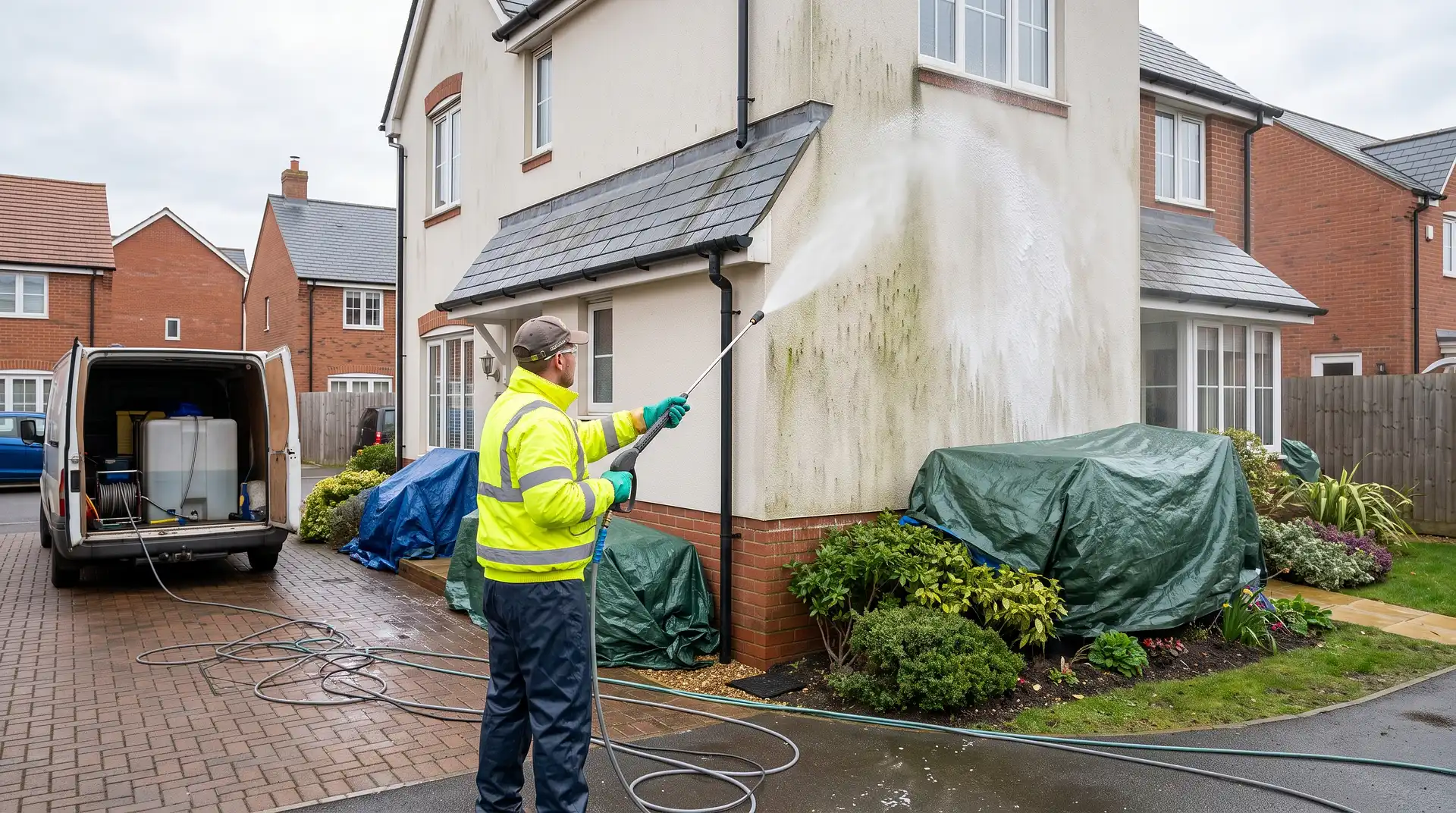
How to Clean Exterior Walls of a House
8 October 2026
How to Clean Exterior Walls of a House
The safest way to clean exterior house walls is to identify the wall material first, remove loose dirt with a soft brush, apply a suitable cleaning solution and rinse gently. Brick, render, stone, painted masonry and cladding need different treatment, so using the same pressure or chemical on every surface can cause permanent damage.
For most homes, low-pressure soft washing is safer than aggressive jet washing. It uses a suitable cleaning solution to loosen algae, moss, grime and organic growth, followed by a controlled rinse.
Quick answer: Check the wall material, protect windows and plants, dry-brush loose dirt, test a small hidden area, apply a suitable cleaner and rinse at low pressure. Avoid high-pressure washing on old brick, damaged render, loose paint and soft stone.
Identify the Exterior Wall Material
Recommended starting method for common exterior wall surfaces | ||
Wall material | Safer starting method | Main risk |
|---|---|---|
Modern brick | Soft brush, mild detergent or professional soft wash | Damaging mortar or driving water into joints |
Old or handmade brick | Low-pressure cleaning by an experienced professional | Eroding the brick face |
Render | Low-pressure soft wash and gentle rinse | Blowing off render or opening cracks |
Natural stone | Material-specific cleaner and low-pressure rinse | Etching, staining or salt damage |
Painted masonry | Soft brush and diluted cleaner | Removing or chalking the paint |
Cladding | Manufacturer-approved detergent and gentle wash | Damaging seals or surface coatings |
If you cannot identify the surface or see cracks, loose sections, flaking paint or damaged mortar, arrange a professional inspection before cleaning.
What You Need
Soft-bristled brush or long-handled cleaning brush
Garden hose with a gentle spray setting
Bucket and clean water
Surface-appropriate exterior cleaner
Protective gloves and eye protection
Plastic sheeting or covers for nearby items
Ladder alternatives such as a telescopic pole where possible
Clean water for rinsing plants and windows
Do not use a wire brush on brick, render or painted surfaces. Wire can scratch, remove the surface coating and leave rust marks.
How to Clean Exterior Walls Step by Step
1. Inspect the wall
Look for cracks, blown render, loose pointing, open joints, flaking paint, damp patches and damaged sealant around windows and doors. Cleaning can make existing defects worse if they are not repaired first.
2. Check the weather
Choose a dry, mild day with little wind. Avoid cleaning immediately before heavy rain, during frost or in strong sunlight that will dry chemicals before they have worked.
3. Protect the surrounding area
Move garden furniture, cover outdoor sockets and protect delicate plants. Close windows and doors. Wet nearby plants with clean water before and after using any cleaning solution.
4. Remove loose dirt
Dry-brush cobwebs, loose soil, leaves and surface moss before applying water. Start at the top of the wall and work down so debris does not fall onto areas you have already cleaned.
5. Test a hidden section
Apply the chosen cleaner to an inconspicuous section. Check the dried result for colour change, patchiness, surface softness, paint loss or white deposits before cleaning the full elevation.
6. Pre-wet the wall
Lightly wet the wall with clean water where the surface and product instructions allow it. This can reduce rapid absorption and make the cleaning result more even.
7. Apply the cleaning solution
Use the dilution and contact time stated on the product label. Work in small sections and do not allow the solution to dry on glass, metal, painted frames or plants.
8. Agitate gently
Use a soft brush or low-pressure cleaning equipment to loosen dirt. Let the cleaning product do most of the work rather than increasing pressure.
9. Rinse carefully
Rinse from the top down using a controlled, low-pressure flow. Keep the nozzle away from cracked mortar, vents, window seals and damaged render.
10. Inspect after drying
Exterior walls can look uneven while wet. Allow the surface to dry fully before deciding whether a second treatment is required.
How to Clean Brick Exterior Walls
Modern hard-fired brick may tolerate moderate cleaning, but older Victorian, Edwardian and handmade brick can be softer and more porous. High pressure can erode the face of the brick, damage mortar and force water into the wall.
Begin with dry brushing, then use a mild brick-safe cleaner and a soft brush. For historic or soft brick, use a contractor experienced with low-pressure cleaning rather than a standard driveway pressure-washing service.
Read our related guide to cleaning a brick house safely before selecting equipment.
How to Clean Rendered Walls
Render can contain fine cracks, weak patches and areas that have started to detach from the wall. High-pressure washing can open those defects or remove the surface.
Soft washing is usually a better starting method. Apply a suitable diluted treatment, allow the recommended dwell time and rinse gently. Persistent staining may need specialist render cleaning or repainting rather than repeated pressure washing.
How to Remove Algae, Moss and Lichen
Green algae, moss and lichen are common on shaded or damp elevations. Remove loose growth first, then apply a surface-appropriate biocidal treatment according to its label.
Do not allow chemical runoff to enter ponds, drains or neighbouring gardens. Avoid treating in windy weather, and rinse nearby plants thoroughly. If growth returns quickly, investigate blocked gutters, leaking downpipes, poor ventilation or persistent dampness.
Should You Pressure Wash Exterior Walls?
Pressure washing can be suitable for some modern, sound surfaces, but the wrong pressure or nozzle can cause damage. The risk is higher on old brick, soft stone, render, painted walls and deteriorated mortar.
If a pressure washer is used, start with the widest fan setting, keep the nozzle well away from the surface and use the lowest pressure that removes the dirt. Never aim directly at window seals, vents, electrical fittings or open joints.
How Much Does Exterior Wall Cleaning Cost in the UK?
InstantCost’s current 2026 exterior-cleaning data places professional exterior wall cleaning at approximately £200 to £600 per elevation for render or brick.
Indicative UK exterior cleaning prices in 2026 | |
Service | Typical price |
|---|---|
Exterior wall cleaning | £200 to £600 per elevation |
Driveway jet washing | £90 to £220 |
Patio jet washing | £70 to £180 |
Roof soft washing or cleaning | £350 to £750 |
Standard exterior window cleaning | £40 to £80 |
Access, wall height, contamination, scaffolding, cherry pickers, surface type and chemical treatment can change the final quote.
Estimate exterior wall cleaning costs
Compare current UK prices based on your wall surface, property size, access and postcode.
Calculate Exterior Cleaning Cost
When to Hire a Professional
Use a professional when the wall is high, historic, heavily stained, rendered, made from soft stone or difficult to access. Professional equipment can apply cleaning solutions at controlled pressure and reduce the risk of damage.
Ask for a written quotation that states the cleaning method, chemicals, access equipment, protection for windows and plants, waste handling and any repairs excluded from the price.
Exterior Wall Cleaning Safety
Wear gloves, eye protection and suitable footwear.
Keep children and pets away from wet surfaces and chemicals.
Do not work from an unstable ladder or wet roof.
Cover outdoor electrical points before washing.
Never mix cleaning chemicals.
Prevent chemical runoff from entering drains or watercourses.
Follow the product label and keep chemicals in their original containers.
For chemical handling and cleaning-work safety, follow the Health and Safety Executive cleaning guidance.
Common Exterior Wall Cleaning Mistakes
Using one pressure setting on every wall material
Pressure washing old brick or damaged render
Allowing cleaning chemicals to dry on the wall
Ignoring cracks, loose render or failed mortar
Cleaning without protecting windows and plants
Judging the result before the wall has dried
Using household bleach without checking runoff and surface compatibility
Frequently Asked Questions
What is the safest way to clean exterior house walls?
Identify the wall material, dry-brush loose dirt, test a suitable cleaner and use low-pressure rinsing. Soft washing is often safer than aggressive jet washing.
Can I pressure wash the outside of my house?
It depends on the surface. Modern sound brick may tolerate controlled pressure, but old brick, render, soft stone, painted walls and damaged mortar can be harmed.
How often should exterior walls be cleaned?
Many homes need cleaning every three to five years, although shaded, coastal and damp properties may need attention sooner. Regular gutter and downpipe maintenance can reduce staining.
How do I remove green algae from exterior walls?
Brush away loose growth, apply a suitable algae or biocide treatment according to its label and rinse carefully. Address shade, leaks and dampness if the growth returns.
Can vinegar clean exterior walls?
Vinegar is not suitable for every wall and can affect some stone, render, paint and metal surfaces. Use a product designed for the material or obtain professional advice.
How much does it cost to clean a full house exterior?
A single exterior wall elevation usually costs around £200 to £600. A full house costs more depending on the number of elevations, height, access and contamination.
Plan your exterior clean
Get a current UK estimate before requesting quotes from local exterior cleaning professionals.