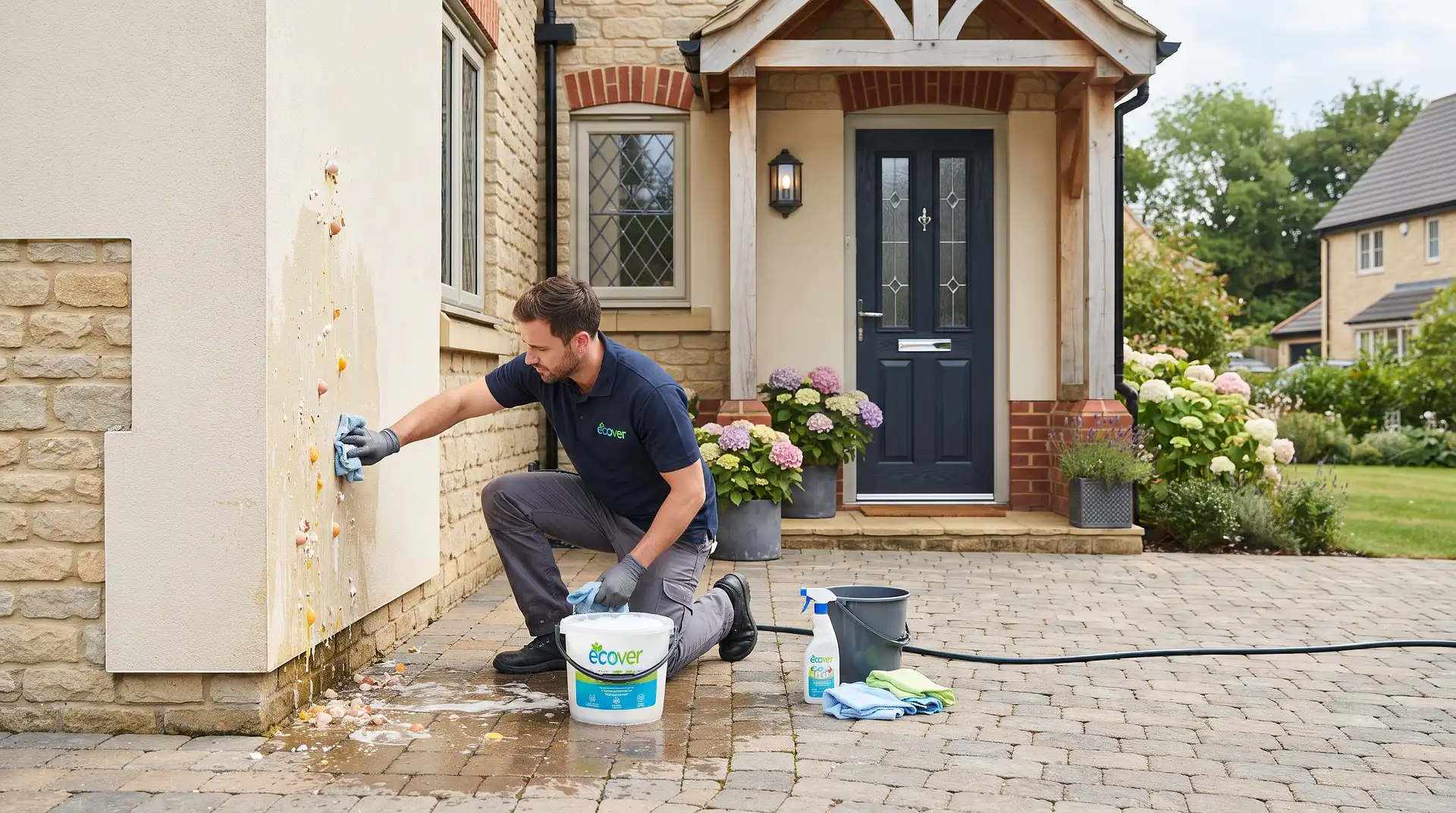
How to Clean Up an Egged House
20 September 2026
How to Clean Up an Egged House
Egg needs to come off a house exterior as quickly as possible, ideally within a few hours, since the sulfur compounds in egg white become increasingly corrosive to paint and render the longer they sit, especially once direct sunlight starts baking the egg onto the surface. A splash of egg cleaned up promptly is a minor annoyance. The same egg left for a day or two in warm weather can etch permanent marks into paintwork that no amount of cleaning afterward will fully remove.
Speed matters more here than with almost any other exterior mess, which is why the first thing to do isn't to gather cleaning supplies, it's to at least rinse the area with plain water immediately, even before you've worked out your full cleaning approach.
Step 1: Rinse Immediately With Cool Water
As soon as you discover egg on the house, rinse the area thoroughly with a hose on a gentle to moderate setting, using cool rather than warm water. Warm water can actually cook the egg protein onto the surface faster, similar to how heat firms up egg white in a pan, making it considerably harder to remove afterward. This initial rinse alone often removes the bulk of fresh egg before it has any chance to set.
Step 2: Assess How Long It's Been There
Fresh egg, discovered within an hour or two, usually comes off completely with rinsing and a mild detergent wash. Egg that's had several hours or overnight to sit, particularly in direct sun, may have already begun etching the paint surface, in which case full removal of the residue won't necessarily restore the paint's original appearance underneath, and this is worth knowing before you spend a long time trying to achieve a perfect result through cleaning alone.
Step 3: Wash With Warm Soapy Water
Once the bulk of the egg is rinsed away, wash the affected area with warm water and a mild dish soap, using a soft sponge or cloth rather than anything abrasive. Work gently rather than scrubbing hard, since aggressive scrubbing on a surface that may already be slightly softened or affected by the egg can cause more visible damage than the egg itself.
Step 4: Treat Stubborn, Partially Dried Residue
For egg that's begun to dry and isn't lifting with soap and water alone, a paste of bicarbonate of soda and water applied gently with a soft cloth can help lift dried residue without needing anything harsher. Leave it on for a few minutes before wiping away and rinsing thoroughly.
Step 5: Rinse Thoroughly and Check the Result
Once you've finished cleaning, rinse the whole area thoroughly with clean water to remove any soap or bicarbonate residue, then step back and assess the surface in good daylight. If a faint mark or dulled patch remains where the egg sat, particularly on painted surfaces, this may be early etching rather than remaining residue, and further scrubbing at this point generally won't improve it.
A Note on Different Surface Types
Painted surfaces are the most vulnerable to lasting damage from egg, since the sulfur compounds react with the paint itself over time. Render and pebbledash generally cope better given their more textured, less uniform surface, though egg can still work into texture and take more effort to fully rinse out. Brick and stone are the most resilient, typically cleaning up completely with rinsing and a mild wash even after several hours, since these materials aren't affected by the chemical reaction the way paint is.
A Note on UPVC Windows and Doors
UPVC generally tolerates egg well if cleaned reasonably promptly, without the same etching risk paint faces, though egg left to bake in direct sun for an extended period can still leave a residue that takes more effort to fully remove. A wipe with warm soapy water is usually sufficient even for egg that's had a few hours to sit on UPVC specifically.
When to Call a Professional
If the affected area is large, at height requiring proper access equipment, or if you're seeing signs of actual paint damage rather than just residue that needs cleaning, a professional exterior cleaning company can assess whether the surface needs more than cleaning, potentially touch-up painting or, in more severe cases, repainting an affected section entirely.
Use InstantCost's house exterior cleaning cost calculator to see what professional cleaning or a repaint would cost if egg has caused lasting damage. If the affected area needs repainting once cleaned, how to clean exterior paint covers the wider process of assessing and maintaining painted exterior surfaces.
Common Mistakes and What to Do Instead
Mistake: Using warm or hot water for the initial rinse. Heat can cook egg protein onto the surface, making it harder to remove rather than easier. Always start with a cool water rinse before moving to warm soapy water for the wash itself.
Mistake: Leaving it until the next day to deal with. Every hour egg sits, particularly in sunlight, increases the risk of lasting paint damage. Rinse it off as soon as you discover it, even if you don't have time for a full clean straight away.
Mistake: Scrubbing aggressively to remove stubborn residue. Hard scrubbing on a surface already potentially affected by the egg's chemical reaction can cause more visible damage than gentler cleaning would. Use a soft cloth or sponge and patience rather than force.
Mistake: Using a pressure washer at high setting on painted surfaces. This can strip or damage paint that's already been weakened by prolonged egg exposure. A gentle hose rinse combined with hand washing is safer for painted surfaces specifically.
Mistake: Assuming all residue can be fully cleaned away regardless of timing. If etching has already occurred, cleaning removes the egg but won't restore the paint's original appearance underneath. Recognise when you're dealing with residue removal versus underlying surface damage.
Mistake: Not checking for egg in less obvious spots. Splashes often reach further than the main visible mess, onto window ledges, door frames, or nearby brickwork. Check the wider area around the main mess rather than only cleaning the most obvious spot.
What It Costs in the UK
Item or Service | Typical UK Cost (2026) |
|---|---|
Washing-up liquid | £1–£2 |
Bicarbonate of soda | £1–£2 |
DIY cleaning (materials only) | £2–£5 |
Professional exterior spot clean | £60–£150 |
Full exterior soft wash (if wider cleaning needed) | £200–£600 |
Touch-up painting (small affected area) | £80–£200 |
Full repaint of affected wall section | £300–£800+ |
Figures based on InstantCost.co.uk's 2026 UK house exterior cleaning pricing data and vary by region, damage extent, and whether repainting is needed.
Staying Safe
Wear gloves when cleaning up egg, particularly if it's begun to smell or shows signs of mould developing, which can happen with egg left for an extended period in warm, damp conditions. Wash your hands thoroughly afterward regardless of whether gloves were worn.
If ladders are needed to reach an affected area at height, follow standard ladder safety practices, checking the ladder is on firm, level ground and having someone aware you're working at height. Avoid rushing the job under pressure to clean up quickly, since a fall from a ladder is a far more serious problem than egg residue left slightly longer than ideal.
General UK household safety guidance recommends wearing gloves when cleaning any organic residue that's been exposed to warm conditions for an extended period, given the potential for bacterial growth. Wash hands thoroughly after any cleaning task involving raw egg or similar organic material.
Frequently Asked Questions
How quickly does egg damage paint on a house? Damage risk increases the longer egg sits, particularly in direct sunlight, with noticeable etching potentially beginning within several hours to a day depending on temperature and paint type. Cleaning it off as soon as possible significantly reduces this risk.
Can I remove egg stains from painted walls if it's been there overnight? Often yes, for the residue itself, though if etching has already begun, cleaning may not fully restore the paint's original appearance underneath. The sooner it's addressed, the better the likely outcome.
Is it safe to pressure wash egg off my house? A gentle setting is generally fine for brick or render, but high pressure on painted surfaces risks stripping paint that may already be weakened by egg exposure. Hand washing with a soft cloth is safer for painted areas specifically.
Does egg damage brick and stone the same way it damages paint? No, brick and stone are considerably more resilient to egg's chemical effects than paint is, and generally clean up completely with rinsing and a mild wash even after several hours.
What should I use to clean dried egg off my house? Warm soapy water for general residue, and a bicarbonate of soda paste for more stubborn, partially dried patches, both applied gently with a soft cloth rather than aggressive scrubbing.
Will home insurance cover repainting if egg has damaged my house? This varies by policy and the extent of damage, and vandalism-related damage is sometimes covered under a standard buildings policy. Check your specific policy terms or contact your insurer if the damage is significant enough to need professional repainting.