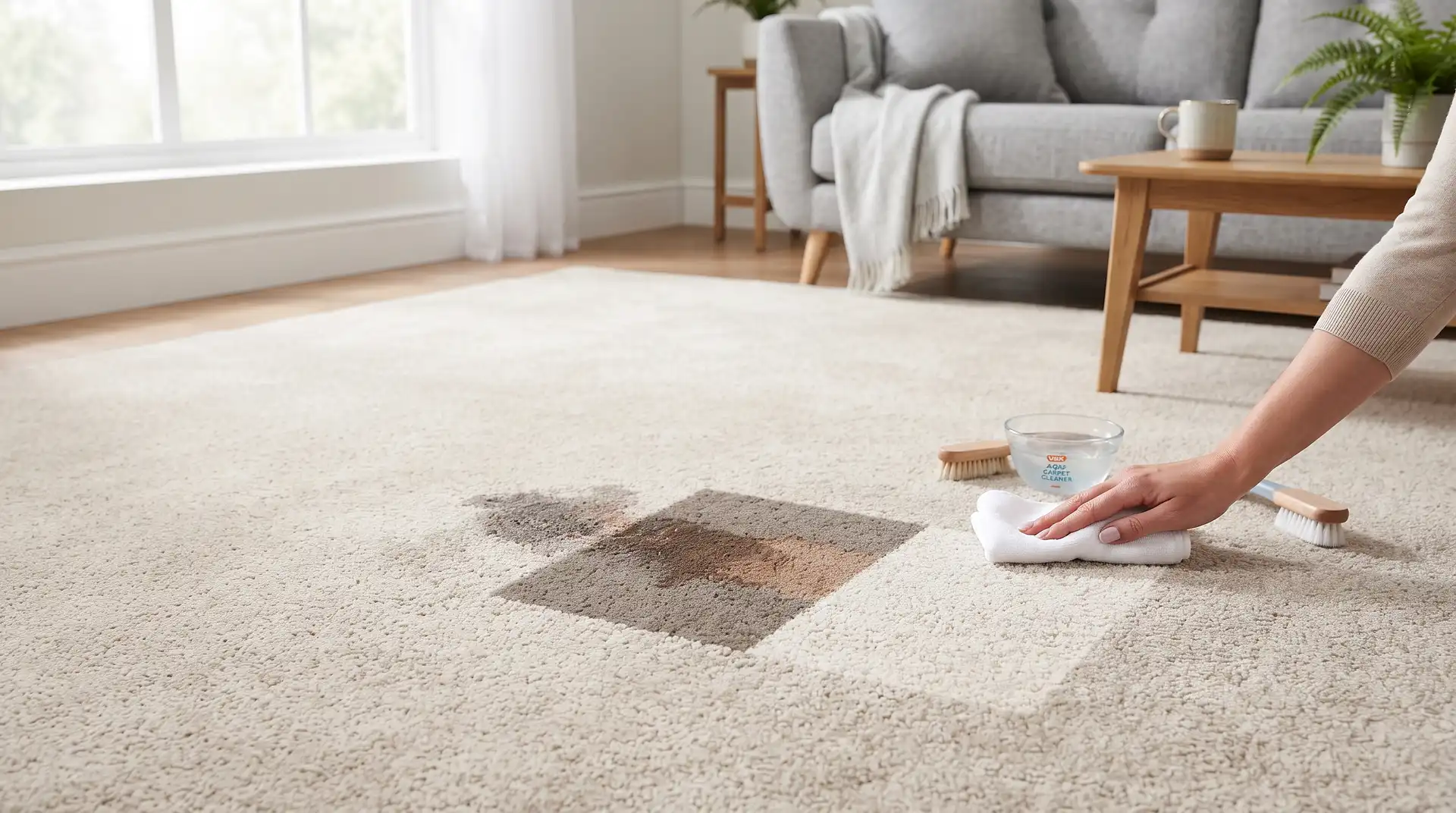
How to Get Foundation Out of Carpet
20 September 2026
How to Get Foundation Out of Carpet
Foundation comes out of carpet differently depending on its formula: powder foundation needs to be lifted dry before any liquid touches it, while liquid and cream foundations need a solvent-based pre-treatment to break down their oil and pigment content before washing with detergent. Treating every foundation spill the same way, reaching straight for water and soap regardless of formula, is the most common reason a stain smears wider or sets in rather than lifting cleanly.
Foundation's oil-based pigments and, in many formulas, silicone content, are what make it genuinely trickier than a simple food or drink spill. Water alone often just moves the pigment around the carpet fibres rather than actually lifting it, which is why the right first step depends entirely on which type of foundation you're dealing with.
Step 1: Identify the Formula Type
Check the product itself if you have it, since liquid, cream, and powder foundations each need a different first move. Liquid and cream foundations feel greasy or oily to the touch and typically leave a visible smear. Powder foundation sits more on the surface initially and can often be significantly reduced before it ever properly embeds into the fibres.
Step 2: For Powder Foundation, Remove Dry Material First
Gently scrape or vacuum away as much loose powder as possible before applying anything wet. Water or cleaning solution applied directly onto loose powder foundation can turn it into a paste that works its way deeper into the carpet pile rather than lifting it. Only move to a wet treatment once the bulk of the loose powder is removed.
Step 3: For Liquid or Cream Foundation, Blot First
Blot, don't rub, any wet or fresh liquid or cream foundation immediately with a clean cloth, working from the outer edge of the stain inward to avoid spreading it further across the carpet.
Step 4: Pre-Treat With a Solvent for Liquid and Cream Formulas
Apply a small amount of rubbing alcohol or a specific make-up remover to a clean cloth, and dab gently at the stain rather than pouring it directly onto the carpet. This breaks down the oil and silicone content in most liquid and cream foundations, loosening the pigment's grip on the carpet fibres before you move to washing with detergent. Always test on a hidden area of carpet first, since alcohol-based solvents can affect some carpet dyes.
Step 5: Wash With Washing-Up Liquid
Once the solvent has had a chance to work, apply a small amount of washing-up liquid diluted in warm water, working it gently into the stain with a clean cloth or soft brush, then blot away. Repeat this step two or three times for a stubborn stain, checking progress after each round.
Step 6: Rinse and Dry
Rinse the treated area with a cloth dampened in clean water to remove any remaining solvent or detergent residue, then blot dry with a clean towel. Avoid oversaturating the area, since excess moisture takes longer to dry and can spread any remaining pigment further if the carpet stays wet for an extended period.
A Note on Foundation That's Fully Dried
Dried foundation, particularly liquid or cream formulas that have set for a day or more, often needs to be gently rehydrated with a damp cloth before treatment, softening the dried residue enough for the solvent and detergent steps to actually reach and lift it, rather than working ineffectively against a hardened surface layer.
A Note on Silicone-Based Formulas
Many modern long-wear liquid foundations contain silicone, which is genuinely more water-resistant than older formulas and can resist a simple detergent wash on its own. If washing-up liquid alone isn't fully lifting a stubborn stain from a long-wear or silicone-based foundation, a slightly stronger solvent pre-treatment, or repeating the alcohol dab step before washing again, is usually needed rather than assuming the stain is permanent.
When to Call a Professional
If the stain covers a large area, has been there for an extended period, or doesn't respond to a few rounds of proper home treatment, a professional carpet cleaner has access to specific cosmetic and oil-based stain removers, along with hot-water extraction equipment, that reach and lift residue more effectively than home treatment alone.
Use InstantCost's carpet cleaning cost calculator to see what a professional stain treatment would cost in your area. If you're dealing with several different mark types across the carpet, how to remove marks from carpet covers a wider range of common stains and the right approach for each.
Common Mistakes and What to Do Instead
Mistake: Applying water directly onto loose powder foundation. This turns loose powder into a paste that embeds deeper into the fibres rather than lifting away. Remove as much dry powder as possible first with gentle scraping or vacuuming.
Mistake: Rubbing rather than blotting fresh liquid or cream foundation. Rubbing spreads the oil-based pigment further into the carpet and across a wider area. Always blot from the outer edge inward.
Mistake: Skipping the solvent pre-treatment step. Washing-up liquid alone often struggles to break down foundation's oil and silicone content on its own. A rubbing alcohol or make-up remover pre-treatment considerably improves results for liquid and cream formulas.
Mistake: Not testing solvent products on a hidden area first. Rubbing alcohol and some make-up removers can affect certain carpet dyes. Always test on an inconspicuous patch before treating a visible stain.
Mistake: Giving up after one treatment round. Stubborn or silicone-based foundation stains often need two or three repetitions of the solvent and detergent cycle to fully lift. Judge progress after each round rather than assuming the first attempt should fully clear it.
Mistake: Oversaturating the carpet during treatment. Excess liquid slows drying considerably and risks spreading any remaining pigment further. Dampen cloths rather than pouring solution directly onto the carpet.
What It Costs in the UK
Item or Service | Typical UK Cost (2026) |
|---|---|
Rubbing alcohol | £2–£4 |
Make-up remover (basic) | £3–£8 |
Washing-up liquid | £1–£2 |
Professional stain treatment (per stain) | £10–£25 |
Single room professional clean | £35–£55 |
Whole 3-bed house professional clean | £140–£240 |
Figures based on InstantCost.co.uk's 2026 UK carpet cleaning pricing data and vary by region, stain severity, and provider.
Staying Safe
Keep rubbing alcohol and make-up remover products away from children and pets while out during the cleaning process, and ventilate the room well, since alcohol-based solvents can have a strong smell in an enclosed space. Wash your hands after handling any solvent product, particularly if you have sensitive skin.
Never mix rubbing alcohol with bleach or other household chemicals, since combining certain cleaning products can produce harmful fumes. Stick to one product at a time during the treatment process rather than layering multiple cleaning agents together.
General UK household chemical safety guidance recommends never mixing cleaning products, particularly alcohol-based solvents with bleach, due to the risk of harmful fumes. Always ventilate the room during use and keep products away from children and pets.
Frequently Asked Questions
Does rubbing alcohol damage carpet? Generally not when used in moderation and properly tested first, but it can affect certain dyes on some carpet types. Always test on a hidden area before applying it to a visible stain.
Can I use make-up remover wipes instead of liquid make-up remover? Yes, wipes can work similarly for dabbing at a foundation stain, though check the specific wipe doesn't contain oils that could leave their own residue, and always test on a hidden area first.
Why won't my long-wear foundation stain come out with washing-up liquid alone? Long-wear and silicone-based foundations are formulated to resist water and general cleaning, which is exactly why they also resist a simple detergent wash on carpet. A solvent pre-treatment like rubbing alcohol is usually needed to break this resistance down first.
Is powder or liquid foundation harder to remove from carpet? Liquid and cream foundations are generally trickier due to their oil and pigment content binding more readily to carpet fibres, while powder foundation, if caught before it's ground into the pile, often lifts more easily with careful dry removal first.
How long does it take to remove a foundation stain from carpet? A fresh, promptly treated stain often clears within fifteen to twenty minutes across the solvent and detergent steps. An older, set-in, or silicone-based stain can take thirty minutes or more and several repetitions of the treatment cycle.
What if the foundation stain has been there for several days? Gently rehydrate the dried residue with a damp cloth first to soften it, then proceed with the same solvent and detergent treatment. Older stains generally need more patience and repetition than a stain treated immediately after the spill.