How to Spot Clean Carpet
8 October 2026
How to Spot Clean Carpet
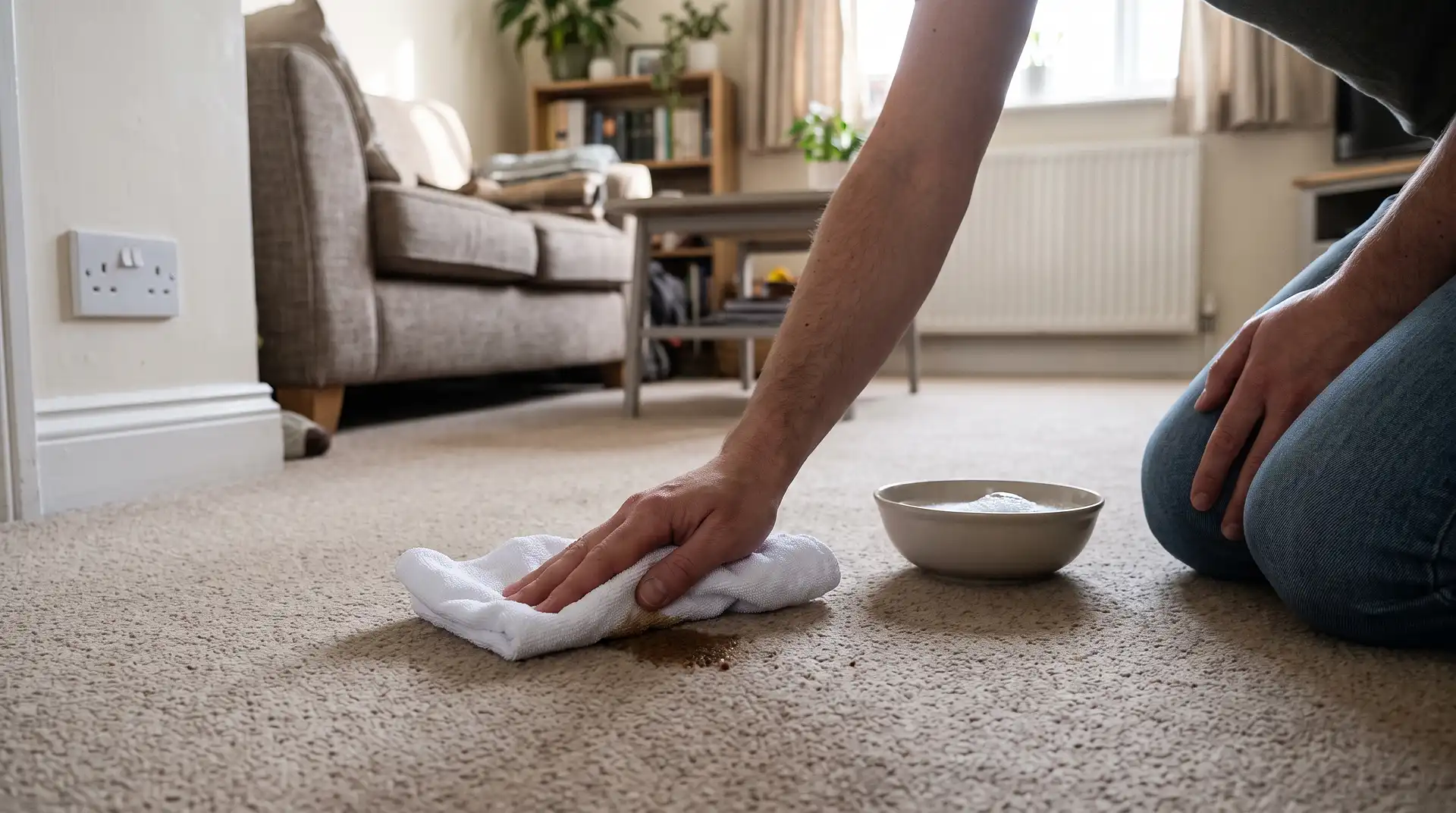
To spot clean carpet, remove any solid material, blot liquid from the outside towards the centre, apply a small amount of suitable cleaning solution and blot again until the mark lifts. Avoid rubbing, soaking the carpet or using a product before testing it on a hidden area.
The best method depends on the stain, carpet fibre and backing. A fresh spill is usually easier to treat than an old stain that has dried deep into the pile.
Quick answer: Blot the spill with a clean white cloth, work from the outside towards the centre, test a mild solution on a hidden patch and use only a small amount on the stain. Blot with clean water afterwards and dry the carpet quickly.
What You Need for Spot Cleaning
Clean white microfibre cloths or white towels
A spoon or blunt knife for solid residue
Lukewarm water
A small amount of clear washing-up liquid
A clean spray bottle or bowl
Kitchen roll for fresh liquid spills
A dry towel for final drying
A vacuum cleaner
White cloths are preferable because coloured towels can transfer dye to the carpet. Avoid rough brushes and abrasive sponges, which can damage fibres and leave a visible worn patch.
How to Spot Clean Carpet Step by Step
1. Check the carpet care instructions
Look for the carpet manufacturer’s care label or warranty information. Wool, viscose and other delicate fibres may require specialist treatment, and some carpet backings can be damaged by excessive moisture.
2. Remove loose debris
Lift solid dirt, food or mud with a spoon or blunt knife. Do not press the material deeper into the pile. Vacuum around the area once loose debris has been removed.
3. Blot fresh liquid
Place a clean white cloth or kitchen roll over the spill and press down gently. Lift the cloth straight up and repeat with a dry section until no more liquid transfers.
4. Work from the outside in
Start at the outer edge of the stain and work towards the centre. This reduces the chance of spreading the mark into a larger ring.
5. Test the cleaning solution
Mix a few drops of clear washing-up liquid with lukewarm water. Apply a small amount to a hidden section, such as under furniture or inside a cupboard. Wait for the area to dry and check for colour change, bleeding or texture damage.
6. Apply a small amount
Dampen a clean cloth rather than pouring solution directly onto the carpet. Dab the stain gently and avoid soaking the backing or underlay.
7. Blot and repeat
Use a fresh section of cloth each time. Continue with short blotting movements until the mark begins to lift. Patience is safer than scrubbing harder.
8. Rinse lightly
Use a separate cloth lightly dampened with clean water to remove soap residue. Do not flood the area because excess moisture can cause browning, odours or damage to the underlay.
9. Dry the carpet
Press a dry towel over the area, improve room ventilation and keep people off the patch until it is completely dry. A fan can help circulate air, but avoid directing intense heat from a heater or hairdryer onto the fibres.
10. Vacuum the dry pile
Once the carpet is fully dry, vacuum gently to restore the pile and remove any loosened residue.
How to Spot Clean Different Types of Stain
Tea and coffee
Blot the drink immediately. Use a small amount of mild soapy water, then rinse lightly with clean water and blot dry. Milk and sugar can leave sticky residue, so repeat the clean-water blot if needed. See our guide to removing tea stains from carpet.
Red wine
Blot without rubbing and avoid spreading the liquid. Use a suitable carpet stain product only after checking the label and testing the fibre. Old wine stains may require professional treatment.
Grease and oil
Lift excess oil with kitchen roll. Avoid adding water first because it can spread the oily mark. Use a carpet-safe degreasing product sparingly and follow its instructions.
Mud
Allow wet mud to dry, then vacuum or brush away the loose soil. Treat any remaining mark with a small amount of mild soapy water.
Pet urine
Blot fresh liquid quickly and use a carpet-safe enzyme product if the label confirms it is suitable. If urine has reached the underlay, surface spot cleaning may not remove the odour completely.
Ink
Ink can spread quickly. Blot carefully and avoid rubbing. Do not use nail varnish remover or strong solvent unless the carpet manufacturer confirms that it is safe for the specific fibre.
Chewing gum
Harden the gum with a wrapped ice pack, then lift it gently with a blunt edge. Avoid cutting the pile or pulling individual fibres.
What Not to Use on Carpet
Bleach or strong disinfectant
Boiling water or steam on an unapproved carpet
Hard scrubbing brushes
Large amounts of water
Undiluted washing-up liquid
Ammonia or mixed cleaning chemicals
Coloured cloths that may transfer dye
Solvents without a fibre compatibility test
Never mix bleach with other products. Read the label and ventilate the room when using any carpet cleaning chemical.
When Spot Cleaning Does Not Work
Call a professional carpet cleaner if the stain is large, old, spreading, strongly odorous or located on a valuable wool or delicate carpet. Professional cleaners can identify the fibre and use hot-water extraction or a specialist treatment where appropriate.
Spot cleaning is also unsuitable when the carpet is broadly dirty. Treating dozens of separate marks may leave visible clean patches, so a whole-room clean can produce a more even result.
Need professional stain treatment?
Compare current UK prices for individual stains, rooms and whole-house carpet cleaning.
How Much Does Professional Spot Cleaning Cost?
InstantCost’s 2026 UK carpet-cleaning data places individual stain treatment at approximately £10 to £25 per stain. A small room usually costs around £35 to £55, while a large room may cost approximately £55 to £90.
Indicative UK carpet cleaning prices in 2026 | |
Service | Typical price |
|---|---|
Individual stain treatment | £10 to £25 per stain |
Small room | £35 to £55 |
Large room | £55 to £90 |
Stairs and landing | £40 to £70 |
Whole three-bedroom house | £140 to £240 |
Stain protector treatment | £8 to £18 |
Prices vary by region, carpet condition, stain type, access and whether the cleaner charges a minimum visit fee.
Carpet Cleaning Safety Guidance
Keep children and pets away from wet carpet and cleaning products. Wear gloves if the product label recommends them, ventilate the room and keep chemicals in their original containers.
For chemical handling and safe use information, follow the Health and Safety Executive cleaning guidance.
Frequently Asked Questions
What is the best way to spot clean carpet?
Blot the stain with a clean white cloth, apply a small amount of tested carpet-safe solution and work from the outside towards the centre. Rinse lightly and dry the area thoroughly.
Can I use washing-up liquid to spot clean carpet?
A few drops of clear washing-up liquid diluted in lukewarm water may work for some fresh water-based stains. Test it first and remove all soap residue afterwards.
Should I rub a carpet stain?
No. Rubbing can spread the mark, damage the pile and force the stain deeper into the fibres. Blot with gentle pressure instead.
Why has my carpet stain come back after cleaning?
Wicking can bring residue back to the surface as the carpet dries. The stain may also have reached the backing or underlay. A deeper extraction clean may be needed.
Can I spot clean a wool carpet myself?
Use the manufacturer’s instructions and test any product carefully. Wool can be sensitive to excess moisture, heat and unsuitable chemicals, so professional treatment is safer for valuable carpets.
When should I book a whole carpet clean?
Book a whole-room or whole-house clean when stains are widespread, the carpet is generally dull or dirty, or spot treatments have left uneven patches.
Get a carpet cleaning estimate
Enter your room details, carpet condition and postcode to compare current UK prices.