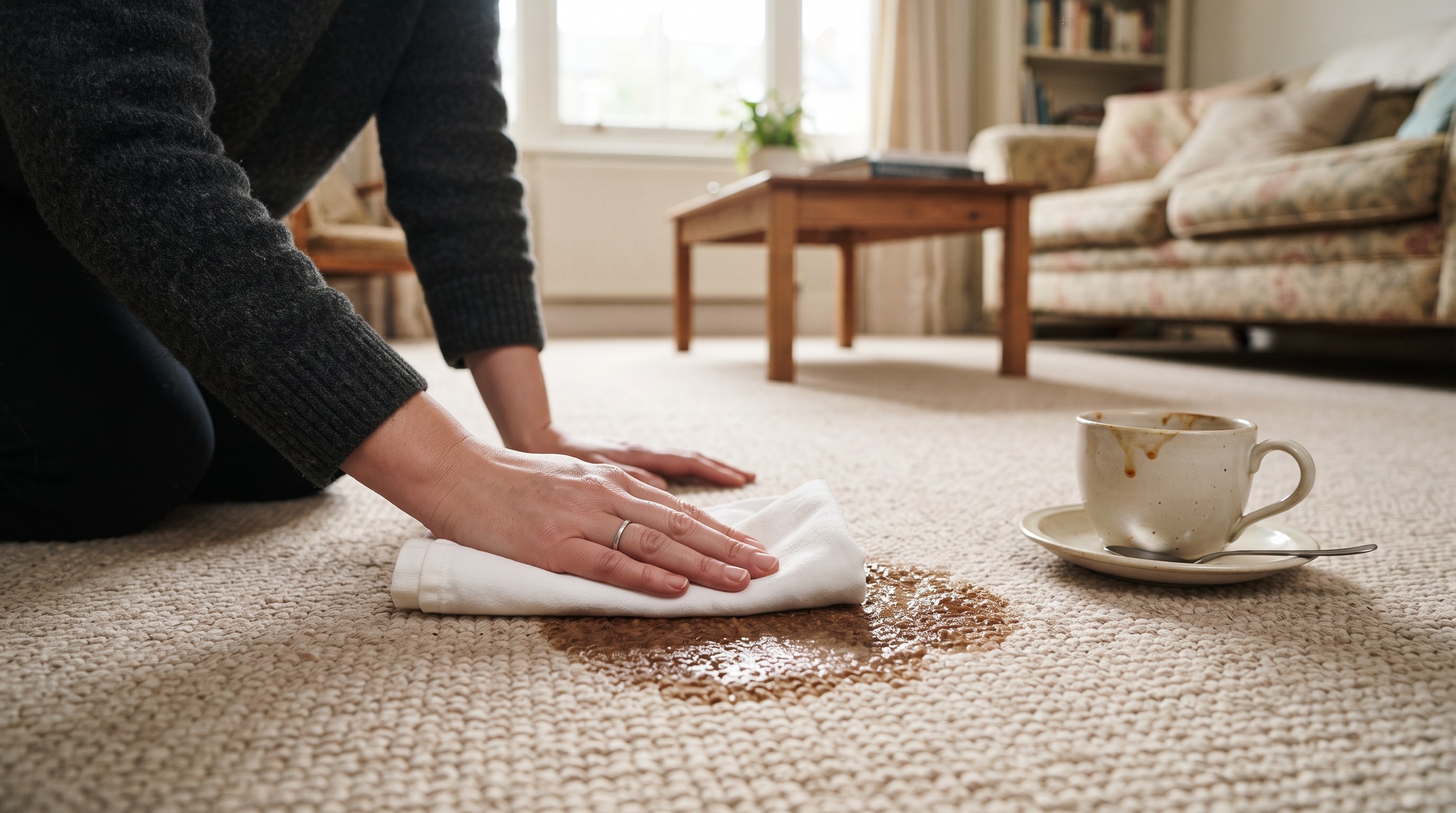
How to Get Tea Stains Out of Carpet
3 October 2026
To get a tea stain out of carpet, blot up as much liquid as possible, then treat the mark with a mild solution of washing-up liquid, white vinegar and lukewarm water. Work from the outside towards the centre, rinse lightly with clean water and blot the carpet until it is nearly dry.
Tea contains tannins that can leave a brown or yellow mark in carpet fibres. Milk, sugar and flavoured syrups make the stain more complicated because they leave additional protein, fat and sticky residue behind. Treating the spill quickly gives you the best chance of removing it completely.
Quick answer: Blot fresh tea with a clean white cloth. Mix one tablespoon of white vinegar and one tablespoon of clear washing-up liquid with approximately 500ml of lukewarm water. Test the solution on a hidden area, apply a small amount with a cloth and blot from the outside of the stain towards the centre. Rinse with a separate cloth dampened with plain water, then blot dry. Check the carpet care instructions before using this method on wool or natural fibres.
What You Will Need
Clean white cloths or plain white kitchen paper.
A bowl or clean container.
Lukewarm water.
Clear washing-up liquid without bleach.
White vinegar.
A dry towel.
A spoon or blunt scraper if sugar or tea leaves are present.
Use white cloths so you can see whether the tea is transferring out of the carpet. Coloured towels can transfer dye onto a pale carpet when they become wet.
How to Remove a Fresh Tea Stain
Step 1: Lift Any Solid Material
Remove the cup, tea bag, loose leaves, biscuit crumbs or any other material without pressing it into the carpet. Use a spoon or the edge of a piece of card where necessary.
Do not vacuum a wet spill. Liquid can damage a vacuum that is not designed to collect water.
Step 2: Blot Up the Tea
Place a clean, dry cloth over the spill and press down firmly. Lift the cloth straight up, move to a clean section and repeat.
Work from the outer edge towards the middle. Starting at the centre can push tea into a larger ring around the original spill.
Continue until little or no liquid transfers to the cloth. Do not scrub, twist or rub the carpet.
Step 3: Test the Cleaning Solution
Mix:
One tablespoon of white vinegar.
One tablespoon of clear washing-up liquid.
Approximately 500ml of lukewarm water.
Test a small amount on carpet hidden inside a cupboard or beneath furniture. Blot the test area with a white cloth and allow it to dry.
Stop if the carpet colour transfers, the pile becomes rough or the test area changes colour. Use a product approved by the carpet manufacturer or contact a professional instead.
Step 4: Apply the Solution Carefully
Dampen a clean cloth with the solution. Do not pour the mixture directly onto the carpet.
Blot the stain gently, beginning at the outside and moving towards the centre. As tea transfers onto the cloth, change to a clean section so you do not put it back into the carpet.
Apply small amounts and check the stain after each round. Flooding the area can spread tea into the underlay and create a larger watermark.
Step 5: Rinse the Treated Area
Dampen another clean cloth with plain water and blot the treated carpet. This removes vinegar and detergent residue.
The rinse is important because washing-up liquid left in the pile can feel sticky and attract fresh dirt.
Step 6: Blot and Dry
Press a folded dry towel over the area to absorb moisture. You can place a heavy, colourfast object on top of the towel for a short period to increase contact, but do not leave it unattended for hours.
Allow the carpet to air dry with good ventilation. Keep people and pets away until it is completely dry.
Do not judge the final colour while the carpet is wet. Damp fibres often look darker than the surrounding area.
How to Remove a Dried Tea Stain
A dried tea stain needs to be softened before treatment. Do not start by scrubbing it with a stiff brush.
Dampen a white cloth with lukewarm water.
Press it onto the stain for several minutes.
Blot the softened stain with a dry cloth.
Test and apply the vinegar and washing-up liquid solution.
Blot from the outside towards the centre.
Rinse lightly with plain water.
Blot dry and check the area once it has dried completely.
An old stain may need two or three careful treatment cycles. Allow the carpet to dry between attempts so you can see what remains and avoid oversaturating it.
If repeated treatment produces no further colour transfer, stop. Continuing to wet and scrub the area may damage the carpet without improving the stain.
How to Remove Milky Tea From Carpet
Milky tea contains tannins as well as milk proteins and fat. Removing the visible brown colour does not always remove the milk residue, which may later cause a sour smell.
Start with the same blotting and mild cleaning method. Rinse particularly carefully to remove sugar, milk and washing-up liquid.
If an odour remains after the carpet has dried, use a carpet-compatible enzyme cleaner that specifically states it can treat milk or protein residue. Follow the product instructions and test it on a hidden area first.
Do not use an enzyme product on wool unless it is specifically approved for that carpet. Wool is a protein-based fibre, and an unsuitable enzyme treatment may damage it.
If milky tea has soaked into the underlay, surface cleaning may not remove all of the residue. Professional extraction is normally the safer option.
What If the Tea Contained Sugar?
Sugar may leave the carpet feeling stiff or sticky even after the brown mark has disappeared. Sticky residue attracts soil, so the treated area can become dark again within a few days.
Blot the area several times with a cloth dampened in plain lukewarm water. Follow each rinse with a dry cloth so you remove the dissolved sugar instead of spreading it farther through the pile.
Do not pour water directly onto the carpet. Use only enough moisture to dissolve and lift the residue.
Can Bicarbonate of Soda Remove a Tea Stain?
Bicarbonate of soda may absorb moisture and mild odour, but it is not the most reliable treatment for the brown tannin colour. It can also be difficult to remove from deep or dense carpet if applied as a wet paste.
If the visible stain has gone but a faint odour remains, wait until the carpet is completely dry. Apply a light layer of bicarbonate of soda, keep children and pets away and vacuum it thoroughly after several hours.
Do not mix bicarbonate of soda and vinegar in the hope that the fizz will clean more effectively. The reaction largely neutralises the two ingredients and can leave additional residue in the carpet.
Can You Use a Carpet Stain Remover?
Yes, provided the product is suitable for your carpet fibre and identifies tea, coffee or tannin stains among its uses.
Follow these steps:
Read the complete label before use.
Test the product on a hidden area.
Use the stated amount.
Allow the correct contact time.
Blot instead of scrubbing.
Rinse if the instructions require it.
Do not combine it with the vinegar solution or another cleaner.
If you have already used one treatment, rinse and dry the carpet before considering another. Combining products can damage fibres and may create unsafe fumes.
Is the Tea Stain Still Visible?
Calculate the cost of professional stain removal or carpet cleaning using current UK regional prices.
Removing Tea From Different Carpet Types
Synthetic Carpet
Polypropylene and many other synthetic carpets are relatively resistant to water-based spills. The diluted vinegar and washing-up liquid method may be suitable, but you should still perform a hidden test.
Wool Carpet
Wool can suffer colour change, pile distortion and damage from unsuitable products. Blot the spill with plain white towels first, then use a WoolSafe-approved spot cleaner or follow the manufacturer's care guidance.
Do not scrub wool, apply strong alkali products or use an enzyme cleaner unless it is explicitly approved for wool.
Sisal, Jute and Other Plant Fibres
Natural plant-fibre carpets can develop permanent watermarks, shrinkage or colour changes when wet. Blot the spill immediately, use as little moisture as possible and contact a specialist cleaner.
Rugs
Check the rug's care label, fibre and construction. Handmade, wool, silk and colour-sensitive rugs should be treated by a specialist. Do not assume that a method suitable for fitted synthetic carpet is safe for a valuable rug.
Why Does a Tea Stain Come Back?
A tea stain that disappears while wet but returns during drying is usually caused by wicking. Liquid remaining deeper in the carpet or underlay travels back up the fibres as moisture evaporates.
To reduce wicking:
Use less cleaning solution.
Blot more thoroughly after rinsing.
Place a clean folded towel over the area while it finishes releasing moisture.
Improve airflow around the treated carpet.
Arrange professional extraction if tea has reached the underlay.
A darker ring can also be caused by detergent residue attracting dirt. A careful plain-water rinse may solve this if the original tea has already been removed.
When to Call a Professional Carpet Cleaner
Professional treatment is sensible when:
The stain is old and remains after careful home treatment.
A large mug or teapot soaked the carpet.
Tea reached the underlay.
The carpet is made from wool or natural fibre.
The affected carpet is pale, valuable or colour-sensitive.
The stain has already been treated with several products.
Milky tea has left a persistent sour smell.
A brown ring repeatedly returns after drying.
Tell the cleaner what was spilled and list every product already applied. This helps them choose a compatible professional treatment.
If you need help identifying or treating other marks, InstantCost's guide to removing different carpet stains covers mud, grease, blood, wine, ink and other common problems.
How Much Does Professional Tea-Stain Removal Cost?
These prices come from InstantCost's 2026 UK carpet-cleaning data. The final amount depends on the carpet material, stain size, age, location and whether underlay treatment is required.
Service | Typical UK cost | Suitable situation |
|---|---|---|
Dedicated carpet stain remover | £5 to £12 | Small DIY-treated stain on a compatible carpet |
Professional stain treatment | £10 to £25 per stain | Isolated tea mark requiring specialist treatment |
Single small room clean | £35 to £55 | Tea stain plus general carpet soiling |
Single large room clean | £55 to £90 | Large living or dining room |
Stairs and landing | £40 to £70 | Spill affecting steps or the landing |
Whole 3-bedroom house clean | £140 to £240 | Several carpets need professional extraction |
Stain-protector treatment | £8 to £18 | Added protection after cleaning |
A cleaner may apply a minimum call-out charge even when only one small stain needs treatment. Ask for a written total that includes stain treatment, cleaning, VAT and travel.
Safety Guidance
Keep children and pets away while treating the carpet and until it has dried. Wear gloves if you have sensitive skin and ventilate the room when using any cleaning product.
Never mix vinegar with bleach or a bleach-containing carpet product. Government guidance on sodium hypochlorite safety explains that mixing bleach with an acidic solution such as vinegar can release chlorine gas, which may cause coughing, throat irritation and breathing difficulties.
Use one treatment at a time and retain products in their original labelled containers. If products are accidentally mixed and you notice strong fumes, coughing or breathing difficulty, leave the area and seek urgent help.
Common Tea-Stain Removal Mistakes
Rubbing the Spill
Rubbing spreads tea through a wider area and can distort the carpet pile. Press and lift with a clean cloth instead.
Using Very Hot Water
Very hot water may make a tannin stain harder to remove and can affect some carpet fibres. Use lukewarm water unless the carpet manufacturer directs otherwise.
Pouring Cleaner Directly Onto the Carpet
This can oversaturate the pile and underlay. Apply the cleaner to a cloth so you can control the amount used.
Skipping the Hidden Test
A cleaner may lift the tea but also fade the carpet. Test every product, including homemade solutions, before treating the visible stain.
Forgetting to Rinse
Detergent residue attracts dirt and can create a new dark patch. Finish with a small amount of plain water and blot thoroughly.
Using Several Products Together
Combining stain removers can cause fibre damage, unexpected discolouration or hazardous fumes. Rinse and dry the carpet before changing methods.
Frequently Asked Questions
Does tea permanently stain carpet?
Fresh tea can usually be removed if it is blotted and treated promptly. Old tannin stains may be more difficult, particularly on pale wool carpet, and can sometimes leave a faint shadow.
Can washing-up liquid remove a tea stain?
A small amount of clear washing-up liquid diluted in water can help lift tea, milk and sugar residue. It must be rinsed out carefully so the carpet does not remain sticky.
Can I use white vinegar on a tea stain?
Diluted white vinegar may help treat the tannin colour on many synthetic carpets. Test it first and do not use it on wool, plant fibres or colour-sensitive carpet unless the manufacturer permits it.
How do I remove an old tea stain?
Soften it with a cloth dampened in lukewarm water, blot the released colour and then use a compatible stain treatment. Repeat carefully rather than saturating or scrubbing the area.
Why does the carpet smell after spilling milky tea?
Milk may have remained in the pile or reached the underlay. A compatible enzyme treatment can break down milk residue on suitable synthetic carpets, while deeper contamination may require professional extraction.
Can professional cleaning remove a dried tea stain?
Professional tannin treatment and hot-water extraction can remove or substantially improve many dried tea stains. Complete removal cannot be guaranteed where the tannins have altered the carpet dye or previous products have damaged the fibres.
Get a Local Carpet-Cleaning Estimate
See a postcode-adjusted UK price for stain treatment, individual rooms, stairs or whole-house carpet cleaning.