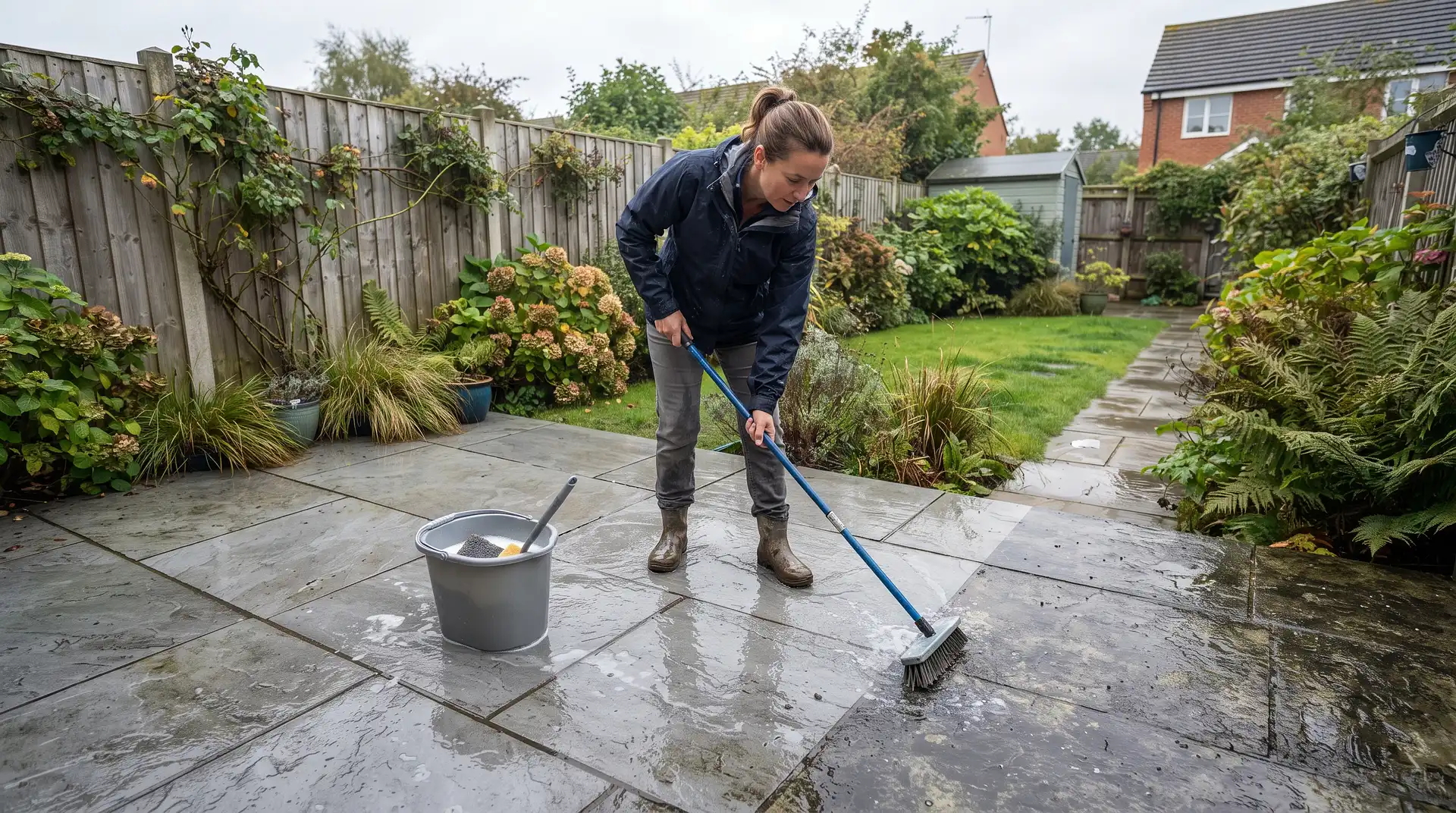
How to Clean Exterior Tiles Safely
3 October 2026
How to Clean Exterior Tiles
To clean exterior tiles, sweep away loose dirt, identify the tile material and wash a small test area with warm water and a pH-neutral cleaner. Scrub with a soft or medium nylon brush, then rinse with clean water before the solution dries. Use a compatible algae treatment for persistent green growth. Avoid strong acids, wire brushes and maximum pressure because they can damage tiles, grout and sealers.
Quick answer: Sweep the tiles, test a pH-neutral outdoor tile cleaner in a hidden corner, apply it in small sections and scrub with a nylon brush. Rinse thoroughly and leave the area to dry. Check the product is suitable for your exact tile material before treating algae, oil, rust or cement residue.
The safest cleaning method depends on what the tiles are made from. Porcelain can usually tolerate more cleaning than porous terracotta, while limestone and marble can be permanently marked by acidic products. Tiles that look like stone or concrete may actually be porcelain, so try to confirm the material from your receipt, packaging or installer before starting.
This guide covers exterior tiles on patios, paths, porches, steps and accessible ground-level walls. Roof tiles and tiled walls that require work from a ladder should be handled separately because they involve additional access and fall risks.
What You Need
A stiff outdoor broom
Two buckets
Warm water
A pH-neutral cleaner approved for the tile material
A soft or medium nylon scrubbing brush
A small grout brush
A garden hose or bucket of clean rinsing water
Protective gloves and any other equipment stated on the product label
A wet vacuum or floor squeegee where dirty water cannot drain safely
A wire brush may scratch glazed tiles, mark porcelain and wear away grout. It can also leave small metal particles that later produce rust-coloured marks. Use a non-metallic brush unless the tile manufacturer specifically recommends something different.
Identify the Exterior Tile Before Cleaning
Using the wrong product is one of the main causes of damaged outdoor tiles. Check the following guide before choosing a cleaning solution.
Tile material | Suitable starting method | Main risk |
|---|---|---|
Porcelain | Warm water, pH-neutral cleaner and a nylon brush | Damaging grout or leaving cleaner in the textured surface |
Exterior ceramic | Mild cleaner and a soft brush | Scratching the glaze or forcing water into cracked tiles |
Quarry tile | Quarry-tile-safe neutral cleaner and controlled scrubbing | Absorption, staining and damage to an existing sealer |
Terracotta | Minimal water and a cleaner approved for terracotta | Uneven absorption, fading and sealer damage |
Natural stone tile | A cleaner confirmed as safe for the exact stone | Acid etching, bleaching or surface erosion |
If you know the surface is porcelain, the dedicated guide on how to clean exterior porcelain tiles explains how to deal with its textured finish, grout lines and efflorescence in more detail.
How to Clean Outdoor Tiles Step by Step
1. Choose Suitable Weather
Clean the tiles on a mild, dry day. Strong sunshine can make cleaning solution dry before you rinse it, leaving streaks or residue. Heavy rain may dilute a treatment and move contaminated water into the garden or drains.
Check the cleaner’s instructions for the required temperature, drying time and rain-free period. Do not apply a treatment when frost is expected.
2. Clear and Sweep the Area
Move furniture, plant pots, toys and loose objects away. Sweep leaves, grit, soil and moss from the surface. Pay attention to corners, grout joints and the edges of steps.
Removing grit first prevents it from being dragged across the tile while you scrub. It also allows the cleaner to reach the staining underneath rather than soaking into a layer of loose debris.
3. Inspect the Tiles and Joints
Look for cracked tiles, hollow areas, loose edges, missing grout and damaged sealant. Cleaning will not repair these problems. A concentrated water jet can make them worse by entering gaps or lifting weak material.
White powder may be efflorescence rather than ordinary dirt. It is caused by mineral salts reaching the surface with moisture. Cleaning the visible deposit may improve its appearance, but repeated deposits can indicate continuing moisture movement through the installation.
4. Test the Cleaner
Read the product label and confirm that it is suitable for exterior use and the exact tile material. Test it in an inconspicuous corner using the stated dilution and contact time.
Allow the test area to dry fully. Check for a change in colour, loss of sheen, whitening, roughness or damage to the sealer. Do not continue if the finish changes.
5. Apply the Cleaning Solution
Work in small sections so the cleaner does not dry on the surface. Some products require the tiles to be dampened first, while others must be applied to a dry surface. Follow the label rather than assuming one method suits every cleaner.
Use the weakest effective dilution. Adding extra product does not necessarily improve the result and may make rinsing more difficult.
6. Scrub the Surface
Agitate the cleaner with a soft or medium nylon brush. Scrub textured tiles in more than one direction so the bristles reach dirt held in the surface pattern. Use a smaller brush along grout joints and around edges.
Give the product its stated contact time, but do not let it dry. Apply a little more solution if the section starts drying before the required time has passed.
7. Rinse Thoroughly
Rinse with clean water and remove the dirty liquid before it dries back onto the tiles. Work away from doors, air bricks and the house wall. Avoid sending water towards ponds, planted beds or surface-water drains.
On a balcony, enclosed courtyard or area without suitable drainage, collect the water with a wet vacuum or floor squeegee instead of flooding the surface.
8. Let the Tiles Dry
Allow the area to dry before deciding whether it needs another treatment. Tiles, grout and terracotta often appear darker while wet, which can make clean areas look stained.
A second gentle treatment is usually safer than one aggressive application. If the mark remains unchanged after the correct cleaner and method, identify the stain before trying another chemical.
Check Exterior Cleaning Costs
Compare current UK patio and exterior-cleaning price ranges before arranging professional help.
Calculate Exterior Cleaning Cost
How to Remove Common Marks from Exterior Tiles
Green Algae and Moss
Green growth is common in shaded UK gardens where the tiles remain damp. Brush away loose moss, then use an exterior algae treatment approved for the tile material. Observe the stated dilution, contact time and rinsing instructions.
Cleaning removes existing growth but does not solve the conditions that caused it. Trim vegetation where appropriate, clear blocked drainage and move pots occasionally so wet areas can dry. Do not make a slip-resistant tile unsafe by applying a sealer that is unsuitable for walking surfaces.
Black Spots and Lichen
Black spots and lichen can attach firmly to textured or porous surfaces. Start with a compatible specialist treatment and allow it the full stated contact time. Avoid attacking individual spots with a metal scraper because this can leave pale scratches or pits.
Older terracotta and natural stone may need professional assessment if the growth has entered the pores or the surface is already fragile.
Oil and Grease
Blot a fresh spill with absorbent material without spreading it. Apply a tile-compatible degreaser to the remaining mark and rinse as instructed. Do not use boiling water, as heat may spread grease further into a porous tile.
Deep oil stains in unsealed terracotta, quarry tile or natural stone may require a specialist poultice treatment rather than ordinary surface scrubbing.
Rust Marks
Rust can come from metal furniture, plant pots, tools or iron in fertiliser. Remove the source before treating the mark. Use a rust remover that specifically names the tile material on its label.
General acidic rust removers can etch limestone, marble, cement-based grout and some clay surfaces. A small test patch is essential.
White Deposits and Cement Residue
White deposits may be efflorescence, hard-water residue or material left from installation. These problems require different treatments, so do not automatically use acid.
Cement and grout residue removers may be appropriate for certain porcelain or ceramic tiles, but they can damage acid-sensitive stone, clay tiles and grout. If the installation is new, ask the tile supplier or installer which product is compatible with the complete system.
Can You Pressure Wash Exterior Tiles?
You can pressure wash some exterior tiles, but only after confirming that the tiles, grout, adhesive bed and sealer are in sound condition. Dense porcelain generally tolerates controlled pressure better than porous terracotta or fragile natural stone.
Start with the lowest useful setting and a wide fan spray. Keep the nozzle moving and maintain a sensible distance from the surface. Direct the water across the tiles rather than into grout lines, joints or exposed edges.
Stop if grout starts breaking away, the tile surface changes colour or water enters beneath a loose tile. Maximum pressure and narrow pencil jets can remove grout, strip sealer and produce visible cleaning lines.
Do not pressure wash from a ladder or aim the jet near electrical fittings, sockets, open doors or air vents. Ground-level wall tiles that cannot be reached safely should be cleaned by someone with suitable access equipment.
Should Exterior Tiles Be Sealed After Cleaning?
Porcelain tiles usually do not need routine sealing, although some polished or specialist finishes may have different manufacturer instructions. Porous terracotta, quarry tiles and certain natural stones may benefit from a compatible breathable sealer.
Do not apply sealer automatically. First check whether the tiles are already sealed and whether the existing product is still sound. Trapped moisture, cleaner residue or an incompatible coating can cause patchiness, whitening and poor adhesion.
The tiles and joints must be clean and sufficiently dry before sealing. Confirm the required drying period on the product label, especially after wet weather or deep cleaning.
Exterior Tile Cleaning Prices in the UK
InstantCost’s 2026 UK exterior-cleaning data gives the following guide prices:
Service | Typical UK price | Typical scope |
|---|---|---|
Patio jet washing | £70 to £180 | A patio measuring about 20 to 30 square metres |
Patio cleaning by area | £3 to £5 per square metre | Price before unusual access or specialist treatment |
Full exterior soft wash | £200 to £600 | Larger combined exterior-cleaning work |
The final price depends on the area, tile material, staining, access, regional labour rates and whether joints or sealers need attention. Porous or delicate tiles can cost more because the contractor may need specialist products and a slower low-pressure method.
Exterior Tile Cleaning Safety
Wet tiles can become extremely slippery, especially when algae and detergent are being loosened. Keep people and pets away from the work area, wear footwear with good grip and avoid walking backwards while using a hose or pressure washer.
Wear the protective equipment stated on the cleaner’s label. Never mix bleach, acids, patio cleaners or other chemicals. Mixing products can create dangerous fumes or violent reactions.
If an algae or mould treatment is a biocidal product, use only one intended for members of the public and follow its authorised label. The Health and Safety Executive guidance on using biocides explains safe use, storage and disposal. Products intended only for professional users should not be used as household treatments.
Protect ponds, pets, plants and neighbouring surfaces. Control runoff and follow the product’s disposal instructions. Store chemicals in their original labelled containers and keep them away from children.
Common Exterior Tile Cleaning Mistakes
Using vinegar on every tile: Vinegar is acidic and can etch limestone, marble, cement-based grout and other sensitive materials.
Applying neat bleach: It may discolour surfaces, damage nearby plants and create a safety risk if mixed with another cleaner.
Skipping the test patch: A product may change the tile colour or strip a sealer even when the main tile material appears compatible.
Using maximum pressure: Excessive pressure can erode grout, expose tile edges and drive water underneath loose areas.
Letting cleaner dry: Dried cleaner can leave residue, streaks and uneven colour.
Sealing damp tiles: Moisture trapped under the coating may cause cloudiness or poor adhesion.
Ignoring drainage: Standing water encourages algae to return and can make tiled areas slippery.
How Often Should Exterior Tiles Be Cleaned?
Sweep exterior tiles whenever leaves, grit or soil collect on them. A light wash in spring and again before winter is usually enough for an open, well-drained area.
Shaded patios, north-facing paths and tiles under trees may need more frequent attention. Deal with algae when it first appears rather than waiting for a thick slippery layer to form.
Regular sweeping and gentle washing are less likely to damage the installation than repeated aggressive pressure cleaning.
Frequently Asked Questions
What is the best cleaner for exterior tiles?
A pH-neutral cleaner approved for the exact tile material is the safest starting point. Persistent algae, oil, rust and cement residue need stain-specific products that also confirm compatibility with the tile and grout.
Can I use washing-up liquid on outdoor tiles?
A small amount of mild washing-up liquid may lift ordinary surface dirt from some sound porcelain or ceramic tiles. It must be rinsed thoroughly because residue can make the surface slippery. Use a dedicated compatible tile cleaner on porous, sealed or specialist materials.
Can I use vinegar to clean exterior tiles?
Do not use vinegar unless the tile and grout manufacturer confirms it is safe. Its acidity can damage limestone, marble, cement-based joints and some clay or sealed surfaces.
Will bleach remove algae from outdoor tiles?
Bleach may affect biological staining, but it is not suitable for every tile, grout or sealer. It can also damage plants and become dangerous when mixed with other chemicals. A labelled exterior algae treatment approved for the surface gives clearer application and safety instructions.
Can exterior tiles be cleaned without a pressure washer?
Yes. Sweeping, a compatible cleaner, a nylon brush and thorough rinsing can remove most general dirt and light algae. Manual cleaning also gives you more control around weak grout, cracked tiles and delicate finishes.
Why do my outdoor tiles turn green again?
Green algae returns when the area stays damp, shaded or poorly drained. Cleaning removes the visible growth, but improving airflow, clearing drainage and regularly moving pots can help the surface dry more quickly.
Find the Cost of Professional Tile Cleaning
Enter your service, surface and location to see a current exterior-cleaning estimate for your area.