How to Keep Your House Clean With Dogs
3 October 2026
Keeping a house clean with dogs is much easier when you stop mud, hair and moisture before they spread. Set up a paw-cleaning station by the entrance, brush your dog regularly, vacuum busy areas little and often, wash bedding every week and clean accidents as soon as they happen.
The aim is not to deep clean the entire house every day. A short prevention routine at the door and a few scheduled weekly jobs will control most of the mess.
Quick answer: Place an absorbent mat and washable towels beside the door your dog uses. Wipe and dry its paws after every wet walk, brush its coat outside, vacuum floors and furniture several times a week and wash dog bedding weekly. Use washable sofa covers and an enzyme cleaner for toilet accidents. Keep your dog away from cleaned surfaces until they are completely dry.
1. Create a Dog-Cleaning Station by the Door
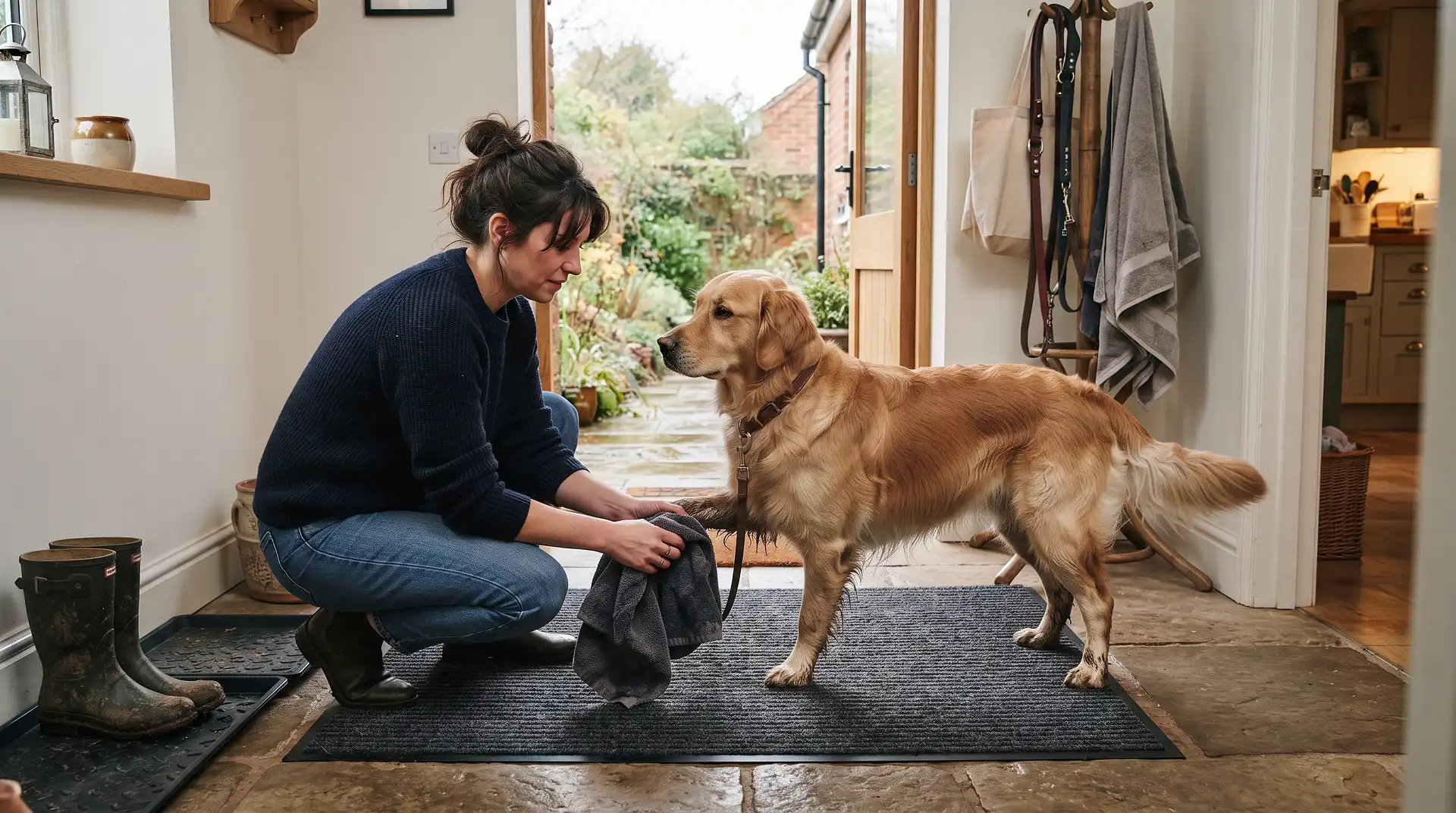
The most effective cleaning happens before the dog walks through the house. Choose the entrance used after walks and keep everything needed in one place.
A simple dog-cleaning station can include:
A coarse outdoor mat for removing loose soil.
An absorbent indoor mat for water and fine dirt.
Several washable dog towels.
A bowl or paw-cleaning cup for muddy days.
A soft brush for dried mud.
Pet-safe wipes for small marks when water is not available.
A lidded laundry basket for used towels.
Teach your dog to wait on the mat when it comes inside. Wipe each paw, including between the pads, and dry the lower legs and belly if they are wet. Reward calm behaviour so that the routine becomes part of every walk.
On very muddy days, rinse paws with lukewarm water before drying them. Do not use household cleaning spray, disinfectant or fragranced surface wipes on your dog's skin.
2. Let Mud Dry Before Brushing It Off
Trying to wipe thick mud from a dry coat can spread it further. If the dog is only lightly muddy and comfortable, contain it in the entrance area and allow the mud to dry before brushing it away.
If the coat is soaked or heavily covered in mud, rinse the affected areas with lukewarm water and dry the dog properly. Pay attention to long hair around the paws, legs and belly because it can hold moisture and grit.
Do not leave a wet dog lying on carpet or upholstery. Moisture transferred into cushions, rugs and underlay can create a persistent smell even after the visible surface feels dry.
3. Brush Your Dog Before Hair Reaches the Floor
Regular grooming removes loose hair at the source. Brush outdoors or in an easy-to-clean area whenever possible.
The right schedule depends on the breed and coat:
Short-haired dogs may need brushing once or twice a week.
Double-coated breeds may need more frequent brushing during shedding seasons.
Long-haired dogs need regular brushing to prevent knots and trapped dirt.
Dogs with skin problems should follow the grooming advice given by their vet.
Do not shave or over-bathe a dog simply to reduce cleaning. Some coats help regulate temperature and protect the skin. Use grooming products made for dogs and follow breed-specific advice where needed.
4. Vacuum Little and Often
Dog hair is easier to remove before it becomes pressed into carpet and upholstery. Vacuum the busiest areas several times a week instead of waiting for a large weekly build-up.
Concentrate on:
The route between the entrance and the dog's sleeping area.
Edges of rooms where hair collects.
Under sofas and beds.
Stairs and landings.
Fabric sofas and armchairs.
The dog's bed and surrounding floor.
Inside the car if the dog travels regularly.
Move the vacuum slowly over carpet. Several slower passes usually collect more embedded hair than moving quickly over the same area.
Clean the brush roll, empty the bin and check the filter regularly. A vacuum blocked with hair loses suction and can release an unpleasant smell when it runs.
5. Remove Dog Hair From Sofas
Start with the upholstery attachment on the vacuum. Work along seams, under cushions and around the front edge, where hair and dander collect.
For remaining hair, lightly dampen a clean rubber glove and pass it over the fabric. The hair should gather into small clumps that can be picked up or vacuumed. A reusable upholstery brush can achieve a similar result.
Always check the sofa care label before using water or a cleaning solution. Common codes include:
Care code | Meaning | Cleaning approach |
|---|---|---|
W | Water-based products may be suitable | Use a fabric-compatible water-based cleaner |
S | Solvent cleaning only | Do not use a water-based home mixture |
WS or SW | Water-based or solvent products may be suitable | Follow the manufacturer's instructions |
X | Vacuuming or professional cleaning only | Do not wet clean at home |
Test any treatment on a hidden section before cleaning a visible area.
6. Protect the Furniture
If your dog is allowed on the sofa, use a washable throw or fitted furniture cover. Choose one large enough to remain in place when the dog moves.
Keep a second cover ready while the first is being washed. This makes it easier to maintain the routine instead of leaving the sofa uncovered for several days.
Wash the cover according to its care label and remove loose hair before putting it into the washing machine. Large amounts of hair can collect in the machine filter and transfer to later loads.
If the dog has a favourite seat, covering that single area may be more practical than covering every piece of furniture.
7. Wash Dog Bedding Every Week
Dog beds collect hair, skin flakes, saliva, outdoor dirt and body oils. Washing the bedding regularly is one of the most effective ways to prevent a room from smelling of dog.
Before washing:
Take the bed or cover outside and shake off loose dirt.
Vacuum both sides to remove hair.
Check the label for washing and drying instructions.
Remove any foam insert that cannot be machine washed.
Treat visible marks with a suitable pet-safe product.
Dry the bedding completely before returning it to the dog. Damp filling can develop a musty smell and may support mould growth.
Wash blankets, crate mats, soft toys and washable collar covers on a regular rotation. Hard toys and food bowls should be cleaned separately according to their material and manufacturer instructions.
8. Clean Food and Water Areas Daily
Place food and water bowls on a washable mat. Wipe splashes and dropped food promptly so that they do not become sticky or attract pests.
Wash bowls daily using a method suitable for their material. Rinse them thoroughly so that no washing-up liquid or cleaning residue remains.
Check the wall and skirting board behind the bowls. Repeated water splashes can mark paint and create dampness where bowls remain in the same place for months.
Need Help Keeping a Pet Home Clean?
Compare current UK prices for regular domestic cleaning, deep cleaning and additional pet-hair removal.
Calculate My House Cleaning Cost
9. Deal With Toilet Accidents Immediately
Blot a fresh accident with clean towels. Press down and lift straight up instead of rubbing, which pushes liquid farther into carpet or upholstery.
Use an enzyme cleaner intended for pet accidents and compatible with the affected material. Enzymes break down the organic residue responsible for the smell. A fragranced spray may hide the odour temporarily without removing the source.
Follow the product's instructions for application and contact time. More liquid is not always better. Saturating a carpet can carry urine into the underlay and make drying more difficult.
Do not use a steam cleaner on an untreated urine mark. Heat may make the odour more difficult to remove. Treat the accident first and arrange professional extraction if it has reached the underlay.
Repeated accidents in the same place may indicate that some odour remains. They can also be linked to training, stress or a health problem. Contact your vet if a previously house-trained dog begins having unexplained accidents.
10. Control Dog Odour at Its Source
A clean dog should not need to be covered with fragrance. If the house smells strongly of dog, check the items that absorb moisture and body oils:
Dog bedding and blankets.
Fabric sofas and cushions.
Rugs and carpet.
Collars and harnesses.
Car upholstery.
Towels stored while damp.
The vacuum cleaner filter and brush roll.
Open windows for a short period to replace stale air, provided it is safe to do so. Ventilation helps, but it does not replace washing the material causing the smell.
A persistent strong smell from the dog's skin, ears or mouth can indicate a health problem. Arrange a veterinary check rather than repeatedly bathing or applying scented products.
11. Mop Hard Floors Safely
Vacuum or sweep before mopping so that loose hair does not form wet clumps. Use a cleaner suitable for the exact floor finish and follow its dilution instructions.
Keep the dog out of the room while cleaning. Allow the floor to dry fully before the dog returns so it cannot walk through the product and lick residue from its paws.
Take care with:
Unsealed wood, which can absorb excess water.
Laminate joints, which may swell when soaked.
Natural stone, which can be damaged by acidic cleaners.
Slippery polished floors, which may be difficult for older dogs.
Using too much water does not make a floor cleaner. A well-wrung microfibre mop is safer for many domestic surfaces than flooding the floor.
12. Keep Carpets Manageable
Place washable runners in entrances and busy routes. They collect much of the dirt before it reaches fitted carpet and are easier to wash or replace.
Vacuum carpets regularly and treat individual marks promptly. Arrange a professional carpet clean every 6 to 12 months where dogs use carpeted rooms heavily, or sooner if there are widespread stains or persistent odours.
After wet cleaning, keep pets away until the carpet is fully dry. Walking over damp carpet can transfer fresh soil and leave paw marks immediately after cleaning.
13. Reduce Dander and Dust
Dog dander consists of tiny skin particles that can settle on floors, furniture, bedding and curtains. Regular grooming, vacuuming and fabric washing help control it.
If someone in the home has allergies:
Use a vacuum with a well-maintained high-efficiency filter.
Keep the dog out of the affected person's bedroom.
Wash human and dog bedding regularly.
Vacuum upholstery, curtains and mattress edges.
Damp-dust hard surfaces instead of moving dust into the air.
Seek medical advice for persistent allergy symptoms.
Calling a breed hypoallergenic does not mean it produces no allergens. People may react to dander, saliva or urine as well as shed hair.
A Simple Cleaning Schedule for Dog Owners
Frequency | Cleaning jobs |
|---|---|
After every wet walk | Clean and dry paws, legs and belly; hang the towel to dry |
Daily | Wash bowls, clean food spills, remove visible hair and treat accidents |
Several times a week | Vacuum busy floors, sofa edges, stairs and the area around the dog bed |
Weekly | Wash bedding and throws, clean mats, mop hard floors and vacuum under furniture |
Monthly | Clean the vacuum filters, wash collars where permitted and inspect hidden areas for hair |
Every 6 to 12 months | Professionally clean heavily used carpets and upholstery where needed |
Increase the frequency during wet weather, seasonal shedding, puppy training or illness.
How Much Does Professional Cleaning Cost?
These prices come from InstantCost's current 2026 UK house and carpet cleaning data. Pet hair, heavy soiling and odour treatment may move a quotation towards the upper end of the range.
Cleaning service | Typical UK cost | Useful for |
|---|---|---|
Hourly domestic cleaning | £15 to £25 per hour | Regular vacuuming, mopping and general maintenance |
Regular clean for a 3-bedroom house | £70 to £120 per visit | Weekly or fortnightly household cleaning |
Pet-hair removal add-on | £15 to £40 | Extra vacuuming of furniture and hair-affected areas |
Deep clean for a 3-bedroom house | £180 to £320 | A one-off reset where dirt and hair have accumulated |
Professional carpet clean, small room | £35 to £55 | Carpet affected by hair, soil and light marks |
Whole 3-bedroom house carpet clean | £140 to £240 | Professional extraction across several rooms |
Individual pet-stain treatment | £10 to £25 per stain | Targeted treatment of an isolated accident |
Three-seater sofa clean | £55 to £95 | Embedded hair, general soil and dog odour |
Tell the cleaner that dogs live in the property and identify any urine, vomit or flea issue before accepting a quote. Ask whether stain treatment, deodorising, furniture moving and pet-hair removal are included.
Pet-Safe Cleaning Guidance
Natural does not automatically mean harmless, and a product described as pet-friendly still needs to be used according to its label. Some disinfectants, bleach products, polishes and essential oils can harm pets through swallowing, skin contact or licking contaminated paws.
The PDSA cleaning-product safety guidance recommends keeping pets outside the room during cleaning and allowing surfaces to dry before they return.
Follow these precautions:
Store products in their original labelled containers.
Keep bottles, pods and sprays inside a secured cupboard.
Follow all dilution and contact-time instructions.
Never mix different cleaning products.
Empty and rinse mop buckets immediately.
Close the toilet lid after using toilet-cleaning products.
Ventilate the room where the product instructions require it.
Rinse food bowls and dog-contact surfaces thoroughly.
If your dog licks, swallows or walks through a cleaning product, remove it from the area and contact a vet immediately. Keep the packaging so the vet can identify the ingredients. Do not make the dog vomit unless a veterinary professional specifically instructs you to do so.
Common Mistakes
Masking Odour With Air Freshener
Fragrance does not remove urine, damp bedding or body oils from fabric. Find and clean the source of the smell.
Using the Same Cloth for Bowls and Floors
Keep cloths and brushes used for feeding equipment separate from those used on floors, toilets and accident areas.
Rubbing Mud Into Carpet
Remove loose material first and blot wet marks. Rubbing can spread the dirt and press it deeper into the pile.
Letting Dog Towels Stay Damp
A damp towel stored in a basket quickly develops its own smell. Hang towels to dry before washing or placing them in a lidded basket.
Over-Bathing the Dog
Frequent bathing can irritate the skin and will not solve an odour caused by ears, teeth or a medical condition. Ask your vet or groomer about an appropriate bathing schedule.
Allowing the Dog Onto Wet Floors
The dog can collect cleaner on its paws and lick it off later. Keep the room closed until the floor is fully dry.
Frequently Asked Questions
How do I stop my house from smelling of dog?
Wash dog bedding and furniture covers weekly, dry the dog after wet walks, vacuum soft furnishings and clean collars, rugs and car upholstery. Persistent odour from the dog itself should be checked by a vet.
How often should I vacuum if I have a dog?
Vacuum busy areas several times a week and less-used rooms weekly. Homes with several dogs, heavy shedding or allergy concerns may need daily attention in the main living areas.
What is the best way to clean muddy dog paws?
Use lukewarm water or a damp washable cloth, clean between the pads and dry the paws thoroughly. Do not use household surface cleaner or disinfectant on the dog's skin.
How often should dog bedding be washed?
Weekly is a practical routine for most dog beds and blankets. Wash sooner if the bedding becomes wet, muddy, heavily covered in hair or affected by an accident.
Can I use bicarbonate of soda around dogs?
It can be used carefully for some household cleaning tasks, but the dog should not be allowed to eat, lick or walk through loose powder. Check the material's care instructions and vacuum away all residue before allowing the dog back.
When should I book professional carpet cleaning?
Consider professional cleaning when odour remains after home treatment, accidents have reached the underlay, several rooms are heavily soiled or DIY cleaning could damage a delicate carpet. Pet homes often benefit from professional cleaning every 6 to 12 months.
Refresh Pet-Affected Carpets and Sofas
Calculate a regional UK price for carpet, rug, upholstery and individual pet-stain treatment.