How Can a Plumber Find a Water Leak
20 October 2026
How Can a Plumber Find a Water Leak?
A plumber finds a water leak by working out which system is losing water, narrowing down the affected area, and then confirming the source. They usually begin with visible pipes, fittings and isolation checks. For a hidden leak, they may use pressure tests, a moisture meter, acoustic listening equipment, thermal imaging or tracer gas. The right method depends on whether the leak is in a supply pipe, heating circuit, waste pipe or bathroom fitting.
That first distinction matters. A damp ceiling does not prove that the pipe directly above it has failed. Water can travel along a joist before it appears through the plaster. Equally, a wet bathroom floor may come from a shower seal rather than a pipe inside the wall.
What does a plumber check first?
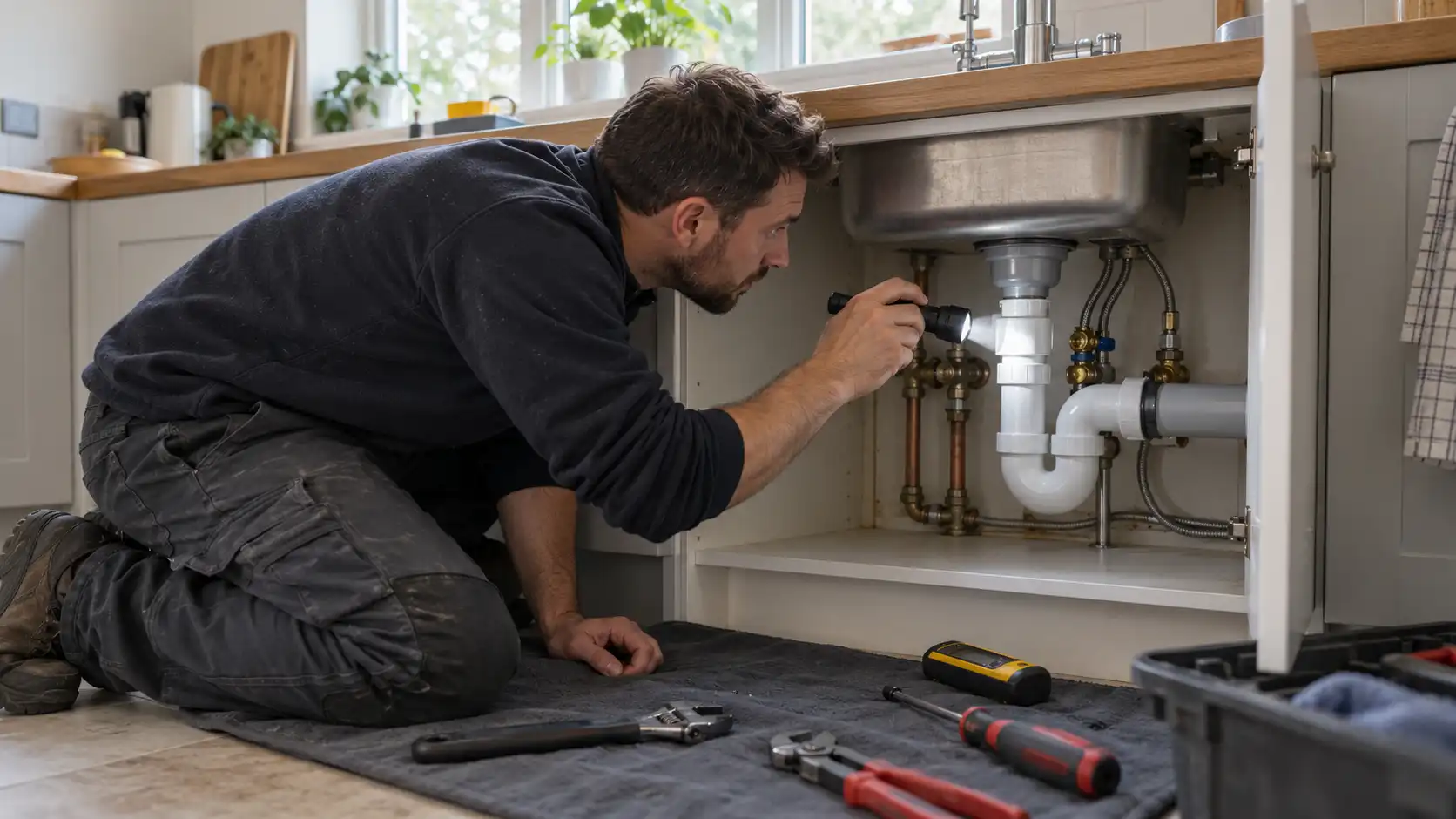
The plumber will ask when the damp appears and what was being used at the time. They will then inspect accessible places such as under sinks, behind toilets, around washing-machine connections, beside radiators and near the bath or shower. A dry tissue held beneath a fitting can help reveal a slow drip that is difficult to see.
They may also check the water meter while taps and water-using appliances are off. Unexplained movement can indicate that water is still flowing through the metered supply. The plumber can use isolation valves and the internal stop tap to narrow the search. A meter result is a clue, not a complete diagnosis: it will not identify a waste-pipe leak, and a sealed central-heating circuit needs different checks.
A useful clue to note before the visit: Does the damp grow while nobody uses water, only after a shower or bath, or when the heating runs? The timing often tells the plumber which system to test first.
How does a plumber tell which system is leaking?
Mains and hot-water supply pipes
These pipes can leak even when a tap is closed because parts of the system remain under pressure. The plumber may check the meter, isolate sections where possible, and test whether a particular pipe run holds pressure. They will also look for constantly refilling toilet cisterns and dripping taps before assuming the leak is hidden in a wall or floor.
Central-heating pipes and radiators
On a sealed heating system, repeated pressure loss when the system is cool can be a clue. It does not identify the location by itself. The plumber will inspect radiator valves, visible joints and boiler connections, then may isolate or test parts of the heating circuit. If water is visible around a radiator, see our guide to finding the source of a leaking radiator.
Waste pipes, baths and showers
A waste-pipe or shower leak may appear only when that fitting is used. The plumber can test one fixture at a time, watching the affected area between tests. They may check the bath trap, shower tray, sealant and pipe connections separately. This avoids opening a wall to repair a supply pipe when the real problem is water escaping around a shower enclosure.
Rainwater or condensation
If a patch grows mainly after rain, the source may be the roof, guttering or external wall. Condensation can also make a surface wet without a plumbing leak. A plumber can help rule out pipework, but another trade may be needed to repair the actual cause.
What tools do plumbers use to find hidden water leaks?
Moisture meters help map where a wall or floor is wettest. They show the spread of moisture, which may be some distance from the point where water escaped.
Pressure tests help establish whether an isolated pipe section is losing pressure. They can narrow the problem to a circuit, though they do not always pinpoint the failed joint.
Acoustic equipment listens for the sound of water escaping from a pressurised pipe. Results depend on the pipe material, water pressure, surroundings and background noise.
Thermal cameras show surface temperature differences. They do not see through a wall or directly detect water. A warm or cool pattern may help guide the search, but it needs checking against other evidence.
Tracer gas may be used by a specialist after preparing an isolated pipe section. A detector searches for gas escaping through the fault. This is specialist work, particularly useful when other tests have narrowed the circuit but not the position.
For a leak in an outside supply pipe or beneath the ground, read our separate guide to how plumbers find underground water leaks.
How does the plumber confirm the leak before opening a wall or floor?
A careful investigation brings the clues together. For example, an isolated pipe may fail a pressure test, while moisture readings and listening equipment point to the same short section. The plumber should explain what has been confirmed, what remains suspected, and why access is needed.
Sometimes a small inspection opening is still necessary. Detection tools reduce guesswork, but they cannot guarantee that every leak can be seen without lifting a board, removing a panel or opening part of a wall. Ask where the proposed opening will be, who will repair the surface afterwards, and whether the plumber will test the pipe again after the repair.
When should you call an emergency plumber?
Get urgent help if water is flowing quickly, spreading through a ceiling, reaching electrics, or cannot be controlled with an accessible isolation valve. If you can safely reach the internal stop tap, turn off the water. Do not touch wet electrical fittings or enter an area where electrical safety is uncertain. Oxford City Council’s water leak safety guidance advises treating fast-flowing water or water near electrics as an emergency and switching off the electricity at the fuse board when it is safe to do so.
For a slow leak that you can isolate, a scheduled visit may be suitable. If you are unsure how urgent the problem is, our guide to when an emergency plumber is needed can help you describe the situation when you call.
Need help with a suspected plumbing leak?
Use InstantCost’s plumbing calculator and select the leak repair option. Describe whether the water is active, where it appears, and what you have already isolated.
Check Leak Repair Options
What should you do before the plumber arrives?
Photograph the damp area and note when you first noticed it.
Write down whether the leak changes after using the shower, toilet, taps or heating.
Locate your internal stop tap, but do not force a seized valve.
If you have a water meter, record the reading when no water is being used.
Make accessible pipework and the affected room easy to inspect.
If you may claim on home insurance, check your policy and contact the insurer before agreeing to significant opening-up work. Trace and access terms vary.
Do not repeatedly refill a heating system that keeps losing pressure just to keep it running. Tell the plumber how often the pressure falls and whether the reading was taken when the system was cool.
What should a leak detection visit leave you with?
Ask for a clear explanation of the suspected or confirmed source, the tests used, and the next repair step. For a concealed leak, a useful written record includes photos, relevant readings, the proposed access point and any areas that still need investigation. A repair quote should say whether it includes finding the leak, repairing the pipe and making good the opened surface. These can be separate parts of the job.
Frequently asked questions
Can a plumber find a leak without breaking a wall?
Often, a plumber can narrow down a hidden leak using isolation, pressure testing and other non-invasive checks. A small opening may still be required to expose and repair the failed pipe or fitting.
Does a moving water meter prove there is a hidden pipe leak?
No. First rule out normal water use, a dripping tap and a toilet cistern that keeps refilling. Meter movement indicates water passing through the meter, but it does not show exactly where that water is going.
Why is the damp patch away from the leak?
Water can run along pipes, joists, plasterboard or flooring before it becomes visible. A plumber follows the moisture pattern and tests likely sources rather than assuming the first stain marks the failed pipe.
Who should investigate a leak that only appears after a shower?
A plumber can test the shower supply, waste connection, tray and enclosure in turn. If the plumbing is sound but water passes through damaged waterproofing or seals, the repair may also need a bathroom specialist.
Ready to arrange the next step?
Once you know what the leak is doing, use the plumbing page to review the relevant job and request local quotes. Include any test results or photos so the professional can understand the work before visiting.