How Can I Fix a Leaking Radiator
5 October 2026
How Can I Fix a Leaking Radiator?
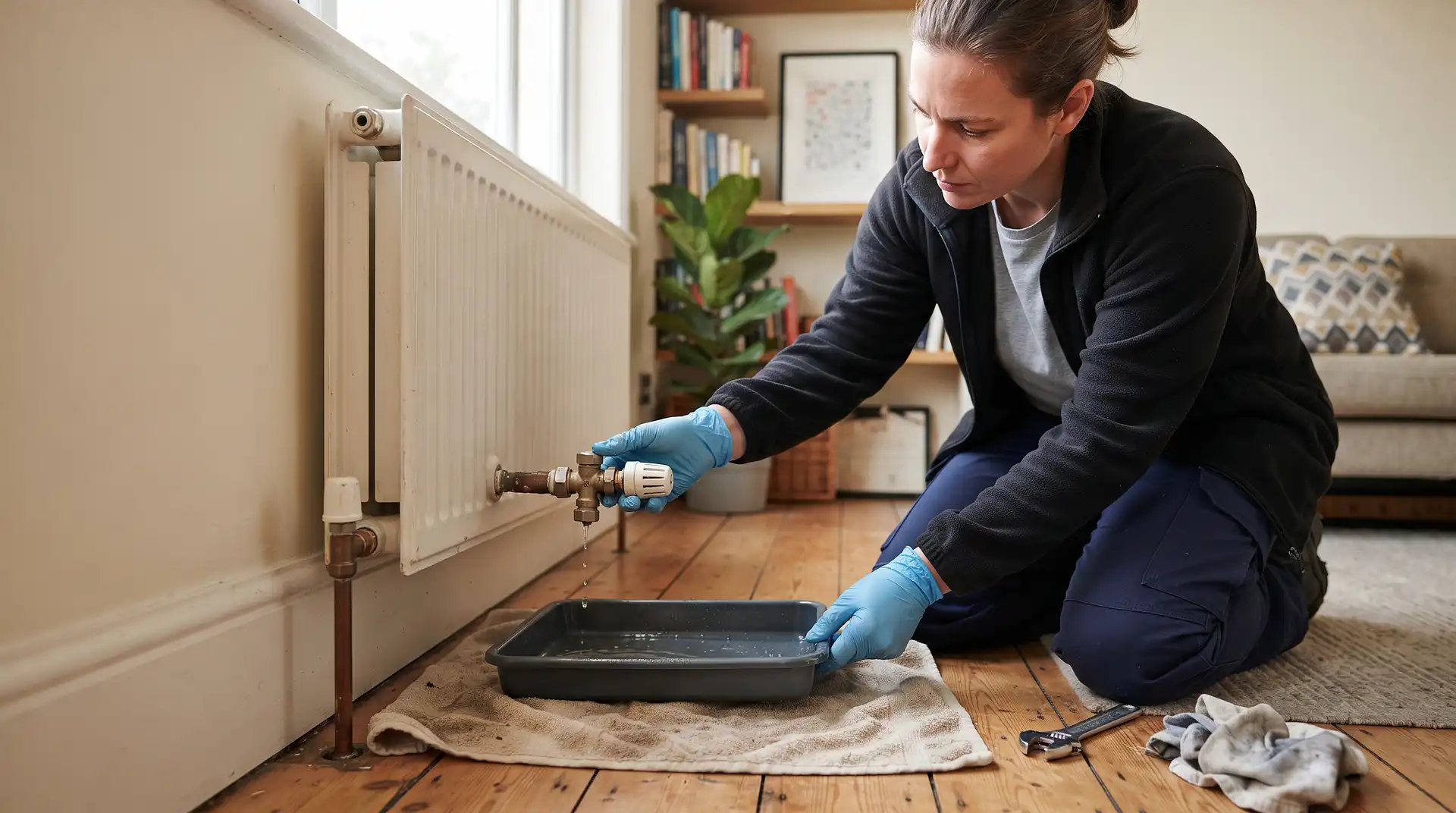
To fix a leaking radiator, switch off the heating, let the system cool and place a tray and towels beneath the leak. Close both radiator valves to isolate the radiator, then identify whether the water is coming from the bleed screw, valve, union connection, pipework or the radiator body. A slightly loose connection may only need careful tightening, but a corroded radiator, damaged valve or leaking pipe usually needs replacement by a plumber.
Quick answer: Turn off the heating and wait until the radiator is cold. Close the thermostatic radiator valve and lockshield valve, catch the water and dry the area so the leak source is clear. Tighten a minor connection only slightly with the correct spanner. If the leak continues, the radiator or valve may need draining and replacing. Check the boiler pressure after any repair and call a plumber if pressure keeps falling.
A leaking radiator should be dealt with promptly. Even a slow drip can damage flooring, skirting boards and plaster, while water escaping from a sealed central-heating system can eventually cause the boiler pressure to fall.
Do not confuse a leaking radiator with condensation or water spilled during cleaning. Dry the area completely, place a sheet of kitchen paper beneath each connection and check which section becomes wet first.
Find Where the Radiator Is Leaking
Leak From the Bleed Screw
The bleed screw is normally at the top of the radiator. If water appears around it, check that it is closed gently with a radiator key. Do not overtighten it because the small screw or its seal can be damaged.
If water continues to seep after the screw is closed, its washer, seat or thread may be damaged. A replacement bleed screw is usually a small repair, but the radiator must be cool and the system pressure controlled before it is removed.
Leak From the Thermostatic Radiator Valve
The thermostatic radiator valve, or TRV, is usually the valve with a numbered dial. Water may appear around the valve body, spindle or connection to the radiator.
Turn the TRV to its lowest or off position. This may stop water flowing into the radiator, but it will not always stop a leak from the valve body or pipe connection. Do not remove the valve while the system is pressurised.
Leak From the Lockshield Valve
The lockshield is usually on the opposite side and may have a plain plastic cap. A leak can develop around its spindle, compression nut or radiator connection.
Remove only the decorative cap if it comes off easily. Do not force a seized lockshield or use excessive pressure against the valve body. A damaged lockshield can release more water and may require the system to be drained.
Leak From the Union Nut
The union nut joins the radiator valve to the radiator tail. Water around this large nut may indicate a loose connection, damaged washer or a misaligned fitting.
The sealing washer sits inside the union connection. Adding PTFE tape to the visible threads normally will not repair a leaking union because the threads are not what creates the seal.
Leak From the Pipe Beneath the Valve
Water at the pipe below the valve may come from a compression fitting, soldered joint or damaged pipe. Closing the radiator valves may reduce the flow, but it may not isolate the pipe if the valve itself is faulty.
Keep towels and a container ready, turn off the heating and seek professional help if the leak continues or increases.
Leak From the Radiator Panel or Bottom Edge
A rusty patch, pinhole or split in the radiator body usually means the radiator has corroded internally. Tightening valves will not repair the metal.
Do not rely on external sealant or repair putty as a permanent solution. The radiator normally needs to be isolated, drained and replaced.
What to Do Immediately When a Radiator Leaks
Turn the central heating off at the controls.
Wait until the radiator and water are completely cool.
Place a shallow tray or bowl beneath the leak.
Put towels around the tray to protect the floor.
Close the thermostatic radiator valve.
Close the lockshield valve clockwise and note how many turns it takes.
Dry the radiator and connections.
Identify the exact point where water reappears.
Check the boiler pressure without opening the boiler casing.
Arrange a plumber if the leak does not stop or the valves will not close.
Closing both valves isolates the radiator from the rest of the heating circuit. It does not remove the water already inside the radiator, so water may continue to drip until the pressure settles or the radiator is drained.
How to Fix a Minor Radiator Connection Leak
A connection that is only slightly loose may sometimes be stopped without removing the radiator.
Turn off the heating and let the radiator cool.
Close both radiator valves.
Place a tray and towel under the connection.
Hold the valve body steady with one spanner.
Use a second spanner to tighten the union or compression nut by a very small amount.
Dry the connection completely.
Wait and check whether water reappears.
Run the heating later and inspect the joint again when the system is warm.
Use controlled pressure. A quarter turn can be enough. Forcing a nut can crack the valve, twist the pipe or damage the radiator tail.
If tightening does not stop the leak, the washer or fitting may need replacing. Do not keep tightening it in the hope that more force will solve the problem.
How to Fix a Leaking Radiator Bleed Screw
Turn the heating off and allow the radiator to cool. Use a radiator key to check that the bleed screw is closed. Tighten it gently until it stops, then dry the area and monitor it.
If the bleed screw still leaks, it may need a new seal or replacement. Replacing it can release system water, so the radiator pressure and isolation method must be understood first.
Do not use ordinary bathroom silicone, glue or excessive PTFE tape around a damaged bleed screw. These materials can make later servicing more difficult and may not withstand the heating system’s pressure and temperature.
How to Fix a Leaking Radiator Valve
A valve leaking from its spindle, body or pipe connection may need a replacement valve rather than simple tightening.
For a valve spindle leak, a plumber may be able to replace a small gland seal. If the valve body is cracked, badly corroded or seized, the valve normally has to be replaced.
Replacing a valve involves isolating the radiator, draining enough water, disconnecting the fitting, installing the new valve and restoring the system. The radiator must then be refilled, bled and checked for leaks.
Do not remove a valve while the radiator is hot or the system is pressurised. Several litres of water may escape quickly, and dirty heating water can permanently stain carpet and flooring.
Check the Cost of Radiator Repairs
Compare current UK heating and plumbing prices before arranging a valve repair or radiator replacement.
Calculate Plumbing and Heating Cost
What If the Radiator Body Is Corroded?
A radiator with a pinhole, split seam or rusted lower edge is usually beyond a reliable DIY repair. Isolate it to reduce further water loss and arrange a replacement.
Temporary external patches can fail when the radiator heats and cools. They may also hide continuing corrosion until the leak becomes much worse.
When choosing a replacement, check:
The physical width and height
The pipe-centre measurements
The radiator depth
The required heat output in watts or BTUs
The valve type and connection size
The bracket position
Whether the wall can support the new radiator
A radiator that fits the wall may still be too small to heat the room. Compare the output with the existing radiator or ask a heating engineer to calculate the requirement.
How to Drain a Leaking Radiator
Draining is necessary when a valve or radiator needs to be removed. It is different from simply isolating the radiator.
Switch the heating off and wait until the system is cold.
Close the TRV and lockshield valve fully.
Place a wide tray beneath the valve connection.
Open the bleed screw slightly to let air into the radiator.
Hold the valve body with one spanner.
Loosen the union nut slowly with another spanner.
Allow the water to drain in a controlled stream.
Close or contain the connection when the radiator is empty.
Lift the radiator only with help if it is large or heavy.
Refit the valve or cap the pipe correctly before refilling the system.
For the complete removal process, see InstantCost’s guide on how to remove a radiator without flooding the floor.
Radiator water often contains black sludge and rust particles. Protect carpet, laminate and painted walls before opening a connection.
Refill and Test the Heating System
After replacing a valve or radiator, reopen the valves slowly and allow water to enter. Bleed the radiator until air stops escaping and water appears, then close the bleed screw gently.
Check the boiler pressure after bleeding. A small pressure drop can be normal because air and a little water have left the system. Follow the boiler manual before topping up the pressure.
Run the heating and inspect every joint:
The bleed screw
The valve-to-radiator union
The valve-to-pipe connection
The opposite valve
The radiator brackets and lower edge
Check again after the system has completed a full heating cycle. A joint that appears dry when cold can begin to seep as the metal expands.
Why Does My Boiler Pressure Keep Dropping After a Radiator Leak?
Pressure may fall after a radiator has leaked because water has escaped from the sealed heating circuit. One top-up after a repair can be normal.
Pressure that falls again within days suggests an ongoing leak, a faulty pressure-relief valve, an expansion-vessel problem or another issue elsewhere in the system.
Do not keep topping up the boiler without finding the cause. Frequent fresh water entering the system can contribute to corrosion and sludge.
Radiator Leak Repair Costs in the UK
InstantCost’s current 2026 UK plumbing and heating figures provide these guide prices:
Work required | Typical UK cost |
|---|---|
Heating engineer call-out and diagnosis | £80 to £150 |
Standard plumber or heating engineer rate | £40 to £80 per hour |
Leak detection and repair | £150 to £400 |
Radiator installation | £200 to £450 per radiator |
Radiator removal only | £50 to £100 |
Pressure-relief valve replacement | £100 to £200 |
The final amount depends on the valve type, radiator size, access, corrosion, parts and location. Ask whether the quote includes draining, refilling, disposal, replacement valves and VAT.
When to Call a Plumber
Arrange professional help when:
The leak continues after the valves are closed
A radiator valve is seized or badly corroded
The leak is from the radiator panel itself
The pipe below the valve is leaking
The boiler pressure keeps falling
You cannot identify the correct valve
The radiator is large, cast iron or difficult to lift
The system is unfamiliar or heavily pressurised
You need to drain the whole heating system
A Gas Safe registered engineer is required for work on gas boiler components. A standard radiator valve repair does not normally involve the gas side of the boiler, but do not open the boiler casing or interfere with gas pipework while investigating the leak.
Radiator Leak Safety
Always let the heating system cool before touching a leaking radiator or valve. Hot central-heating water can scald, and a sudden release of water can cause burns and property damage.
Keep electrical appliances, extension leads and sockets away from spilled water. If water has reached electrical equipment, do not touch it. Isolate the supply only if you can do so safely and obtain professional assistance.
Wear gloves when handling dirty heating water and wash your hands afterwards. Remove wet towels promptly to prevent slips and protect flooring from prolonged moisture.
Never remove the boiler casing or work on gas controls yourself. If you smell gas, leave the property, avoid electrical switches and naked flames, and call the National Gas Emergency Service on 0800 111 999 in Great Britain. Use a registered engineer for gas-related boiler work and verify their qualifications through the Gas Safe Register engineer-checking service.
Common Radiator Leak Repair Mistakes
Closing Only One Valve
Closing the TRV alone does not fully isolate the radiator. Close both the TRV and lockshield before loosening a connection.
Using One Spanner
Turning the whole valve assembly can twist pipework or crack the valve. Hold the valve body steady with one spanner while turning the nut with another.
Adding PTFE Tape to a Union Nut
Union connections normally seal with an internal washer or mating faces. Tape on the visible threads may not solve the leak and can prevent the joint from seating correctly.
Tightening Until the Leak Stops
Excessive force can damage old brass fittings, radiator tails and compression olives. Tighten in small increments and stop if the fitting resists.
Repairing a Corroded Radiator With Sealant
External sealant is not a reliable long-term repair for a rusted radiator panel. Replace the radiator or ask a professional to assess it.
Forgetting the Boiler Pressure
Draining and bleeding a radiator can lower sealed-system pressure. Check the gauge after the repair and follow the boiler manual.
Skipping the Final Leak Check
Inspect the repaired joint when the system is cold and again after a complete heating cycle. Some leaks appear only after the metal warms and expands.
Frequently Asked Questions
Can I fix a leaking radiator myself?
You may be able to stop a minor leak from a slightly loose connection after isolating and cooling the radiator. Valve replacement, pipe leaks and corrosion usually require draining and should be handled by a competent plumber.
Will turning off the radiator stop the leak?
Closing both valves can isolate the radiator and reduce water flow, but it may not stop a leak from the valve body, pipe or pressurised connection. Keep a container underneath and arrange repair if water continues.
Why is my radiator leaking from the bottom?
A bottom leak may come from the valve connection, union nut, pipe joint or corrosion in the radiator panel. Dry the area carefully and identify the first point where water appears before choosing a repair.
Can I use PTFE tape on a leaking radiator valve?
PTFE tape may be suitable for certain threaded joints, but it will not normally repair a union connection sealed by a washer. Using the wrong product can make the joint more difficult to repair. Ask a plumber if the sealing arrangement is unclear.
How much water can leak from a radiator?
A radiator can hold several litres of water. A small drip may seem harmless, but a failed valve or connection can release water quickly once the system is hot or pressurised.
Do I need to bleed a radiator after fixing a leak?
You may need to bleed it if air entered while the radiator was drained or disconnected. Check the boiler pressure afterwards and inspect every connection for leaks.
Get a Current Radiator Repair Estimate
Compare local plumbing and heating costs for radiator repairs, replacement and leak diagnosis.