How Much to Have an EV Charger Installed
7 October 2026
How Much Does It Cost to Have an EV Charger Installed?
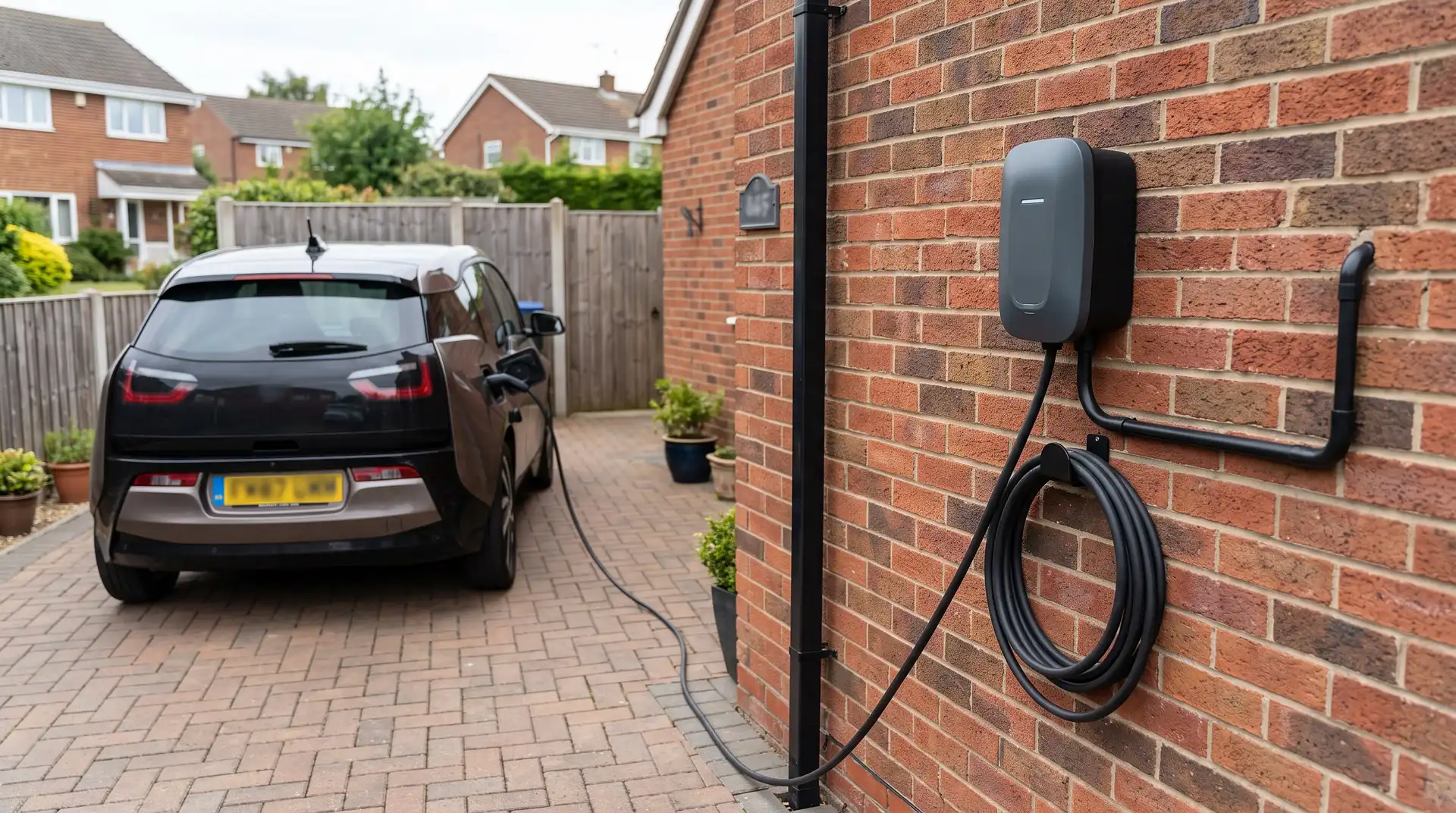
Having a home EV charger installed in the UK typically costs between £800 and £1,500 supplied and fitted in 2026. A standard 7kW charger with a short cable run usually costs around £900 to £1,400.
The final price depends on the charger, cable distance, consumer unit, property type, parking location, wall access, trenching and any electrical upgrades required.
Quick answer: A standard 7kW home EV charger costs about £900 to £1,400 installed. A long cable route can raise the cost to £1,200 to £1,800, while a 22kW charger usually costs £1,400 to £2,200 and needs a suitable three-phase electricity supply.
EV Charger Installation Costs in the UK
Typical 2026 UK supplied and fitted EV charger prices | ||
Installation type | Typical cost | What it usually includes |
|---|---|---|
7kW standard installation | £900 to £1,400 | Charger, cable run under 10m, isolator and labour |
7kW long cable run | £1,200 to £1,800 | Longer cabling, external routing or trenching |
22kW charger | £1,400 to £2,200 | Three-phase supply and higher-capacity equipment |
Consumer unit upgrade | £450 to £900 | Replacement or upgrade where the existing board cannot support the circuit |
Installation without off-street parking | £1,500 to £2,500 | Possible cable channel, protection and council permission |
InstantCost’s current EV charger calculator gives a typical 2026 UK range of £800 to £1,500 for installation overall. Regional prices are often higher in London and lower in some parts of northern England, Scotland and Wales.
What Is Included in a Standard EV Charger Installation?
A standard installation normally includes:
The wall-mounted 7kW charger
A dedicated circuit from the consumer unit
Up to approximately 10 metres of cable
Protective devices and an isolator switch
Wall mounting and electrical connections
Testing and commissioning
Basic demonstration of the charger and app
Required electrical notification by the installer
Ask for a written quotation that states the charger model, cable length, protection, certification, installation position and any exclusions.
What Makes EV Charger Installation More Expensive?
Long cable runs
If the consumer unit is far from the parking space, the installer may need extra cable, protective conduit, external clipping or underground ducting. InstantCost’s guide allows approximately £100 to £350 for a long cable run over 10 metres.
Trenching and digging
A detached garage, driveway post or remote parking space may require a trench. Groundworks and reinstatement can add approximately £300 to £1,200, depending on distance and surface type.
Consumer unit work
The existing consumer unit must have enough capacity and suitable protection for the EV circuit. An upgrade may add approximately £350 to £800 in the calculator, while broader consumer unit replacement work can reach £450 to £900.
Charger mounting position
A wall-mounted charger is usually cheaper than a pedestal or post. A mounting post typically adds around £150 to £400, excluding extensive groundworks or cable trenching.
Parking away from the property
If the car is parked on the road or across a pavement, a standard wallbox installation may not be possible. A protected cable channel, council approval or an on-street charging scheme may be required.
Estimate your EV charger installation
Enter your postcode, parking type, cable distance and charger speed to see a current UK estimate.
How Much Does a 7kW Home Charger Cost?
A 7kW charger is the usual choice for a home because it works with the electrical supply found at most UK properties. A standard installation normally costs £900 to £1,400.
A 7kW charger can add roughly 25 to 30 miles of driving range per hour, depending on the vehicle. For many drivers, charging overnight is enough for normal daily travel.
How Much Does a 22kW Charger Cost?
A 22kW charger usually costs approximately £1,400 to £2,200 installed. However, most UK homes do not have a three-phase electricity supply, which is normally needed for the full 22kW output.
Installing a 22kW unit may require a supply assessment, larger cables, additional protection or a three-phase connection. It may not charge an ordinary home EV faster than the vehicle’s onboard charger allows.
Do You Need a Consumer Unit Upgrade?
Not always. The installer will check the age, capacity, spare ways, earthing arrangement and protective devices in the existing consumer unit.
An upgrade may be required if the board is outdated, already heavily loaded, lacks suitable residual-current protection or cannot safely support a dedicated EV circuit. Ask the installer to explain why an upgrade is needed and what equipment is included.
Can You Install an EV Charger Without a Driveway?
Sometimes, but the options are more restricted. A cable must not create a trip hazard, obstruct the pavement or be exposed to vehicle damage. Some councils permit protected cable channels, while others provide on-street charging points.
Installations without off-street parking can cost approximately £1,500 to £2,500 because of cable protection, permission and additional civil work.
How Long Does EV Charger Installation Take?
A straightforward installation usually takes half a day to one full day. More time may be needed for trenching, a consumer unit upgrade, a detached garage, a long cable route or a three-phase supply assessment.
The installer should test the circuit, demonstrate the charger, provide certificates and explain any app, scheduling or load-management settings before leaving.
UK Safety and Notification Requirements
Use an approved electrician or EV charger installer who can design, install and test the dedicated circuit. The work must include suitable protection, correct earthing and safe cable routing.
Electric vehicle chargepoints installed at homes may qualify for support through the government’s EV chargepoint grant guidance, subject to eligibility and current scheme rules. Check the latest conditions before relying on a grant in your budget.
The installer should provide electrical certification and complete any required notification. Read our guide to notifying the DNO about an EV charger if the installation affects the electricity supply or requires a network assessment.
How to Reduce the Installation Cost
Choose a wall position close to the consumer unit where practical.
Use a standard 7kW charger unless you have a clear reason for 22kW.
Compare the charger, cable length and protection included in each quote.
Ask whether the charger price includes VAT and commissioning.
Complete any driveway trenching at the same time as other groundworks.
Obtain two or three written quotes from qualified installers.
Do not choose an installer based only on the lowest headline price. A quote that excludes cable protection, consumer unit work or certification may cost more when the work is completed.
Questions to Ask an EV Charger Installer
Is the quoted price supplied and fitted?
How many metres of cable are included?
Will the cable be clipped, buried or run through ducting?
Does the existing consumer unit need upgrading?
What protective devices are included?
Will the installation be tested and certified?
Will you handle any DNO notification?
Is the charger compatible with solar panels or a home battery?
What warranty applies to the charger and installation?
Frequently Asked Questions
How much does it cost to install an EV charger at home?
A standard 7kW home EV charger usually costs £900 to £1,400 supplied and fitted. The overall UK guide range is approximately £800 to £1,500, while more complex installations can cost considerably more.
Is a 7kW charger enough for most homes?
Yes. A 7kW charger suits most home users and can add roughly 25 to 30 miles of range per hour. It normally provides useful overnight charging without the extra requirements of a 22kW system.
Does an EV charger increase my electricity bill?
The charger itself does not create a separate standing charge, but charging the vehicle uses electricity. A smart charger and an off-peak tariff may reduce the cost of each charging session.
Can I use a three-pin plug instead of installing a charger?
A three-pin socket can be used for occasional emergency charging if the vehicle and cable manufacturer allow it, but it is slower and is not designed as the normal solution for sustained high-load charging. A dedicated wallbox is safer and more practical for regular use.
Can an EV charger work with solar panels?
Yes. Some smart chargers can use surplus solar generation, although the exact behaviour depends on the charger, inverter, battery and energy-management system. Read the product specifications before choosing a model.
Can renters apply for an EV charger grant?
Some renters and flat owners may qualify for current government support, but eligibility rules change. Check the latest official grant conditions before ordering the installation.
Ready to compare EV charger prices?
Check your likely installation cost and request quotes based on your property and parking arrangement.