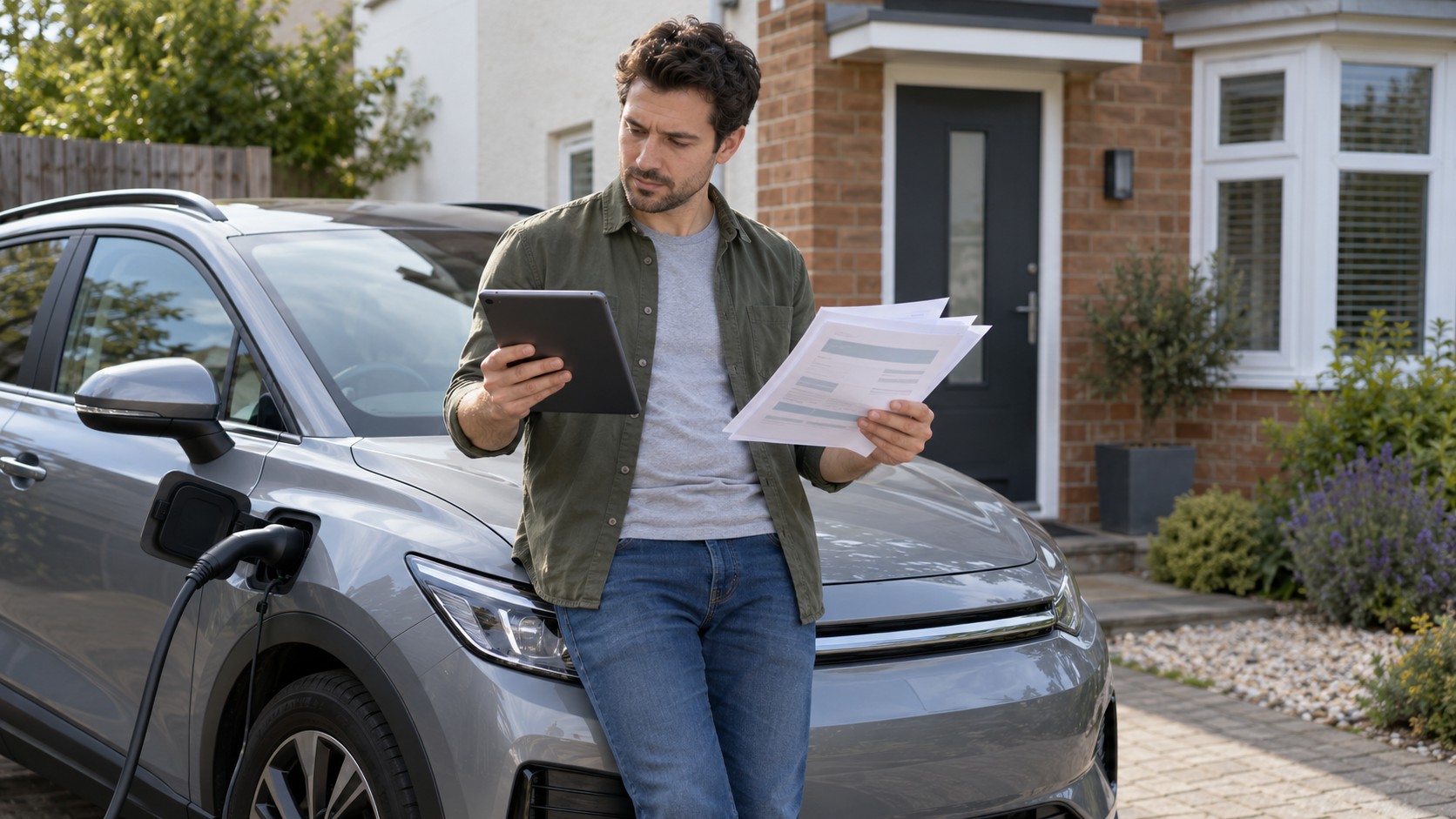
How to Apply for an EV Charger Grant
16 October 2026
How to Apply for an EV Charger Grant in the UK
To apply for an EV charger grant, first identify the scheme that matches your situation, check the current eligibility rules and use an authorised installer. The application route is different for renters, flat owners, landlords, workplaces and education organisations.
Quick answer: Most household applicants need an OZEV-authorised installer, a suitable EV and an eligible chargepoint. Renters and flat owners normally submit an online application with an installer quote and property permissions before work starts. Workplace applications use a separate GOV.UK service.
Which EV charger grant applies to you?
Your situation | Likely route |
|---|---|
Renting a house or flat | Electric vehicle chargepoint grant for renters and flat owners. |
Owning a flat | Electric vehicle chargepoint grant for renters and flat owners. |
Landlord installing at a rented property | Landlord-specific chargepoint grant route. |
Business, charity or public-sector workplace | Workplace electric vehicle chargepoint grant. |
State-funded education organisation | Separate education chargepoint grant guidance. |
Owner-occupier with a private driveway | Check the current GOV.UK guidance because the household grant route may not apply to every property type. |
Use the official GOV.UK electric vehicle chargepoint grant guidance to select the correct scheme before paying a deposit or booking installation.
How do renters and flat owners apply for an EV charger grant?
1. Check the vehicle and charger requirements
Before applying, check that your vehicle appears on the government’s approved vehicle list and that the proposed charger appears on the eligible chargepoint list. The grant does not automatically cover every EV or charger model.
2. Find an OZEV-authorised installer
Contact an authorised installer and explain that you want to apply for the chargepoint grant. Ask the installer to confirm that the property, charger and installation route meet the current scheme conditions.
Use the official GOV.UK authorised EV chargepoint installer search rather than relying only on an installer’s own marketing claims.
3. Obtain a dated quotation
The quote should identify the chargepoint, installation work, cable route, consumer-unit changes and any additional permissions or access requirements. Keep the quote because it forms part of the application evidence.
4. Obtain property permissions
Renters normally need written permission from their landlord. Leaseholders or flat owners may need permission from a freeholder, managing agent or property manager. Listed buildings may also require local-authority permission.
5. Submit the online application
Complete the online application through the government service for renters and flat owners. Upload the requested documents and check every name, address and vehicle detail before submitting.
6. Wait for approval before installation
Do not ask the installer to begin until the grant application has been approved if the scheme rules require approval in advance. GOV.UK states that the applicant and installer are notified after approval.
Who may qualify for the household EV charger grant?
Eligibility depends on the current scheme rules, but the household route is designed for eligible renters and flat owners who need help installing a chargepoint at their property.
You may need to show:
That you live at the property where the charger will be installed
That you rent or own a qualifying flat or property
That your EV is on the approved vehicle list
That the charger is an eligible model
That an OZEV-authorised installer will complete the work
That you have the required landlord, freeholder or property permissions
Rules can change, so do not rely on an old article, social-media post or installer leaflet as proof of eligibility.
What documents do you need for an EV charger grant application?
GOV.UK says household applicants may need to provide:
A dated installer quotation
Written permission from the landlord, freeholder or property manager
Local-authority permission where relevant, such as for a listed building
A utility bill showing your name and installation address
A tenancy agreement if you rent the property
The government may request additional information or audit the application. Keep copies of all documents, emails, quotes and approval notices until the installation and grant claim are complete.
Do not install first and assume the grant can be claimed later. Some schemes require approval before work starts. Ask the authorised installer to confirm the correct sequence in writing.
How do businesses apply for a workplace EV charger grant?
Businesses, charities and public-sector organisations use a separate workplace application service. The organisation must be based in England, Wales, Scotland or Northern Ireland and meet the current scheme conditions.
The GOV.UK workplace route requires organisation information, including a company registration number or VAT identification number. The current scheme provides support towards eligible workplace sockets, subject to its limits and rules.
Check that the organisation and site meet the workplace eligibility requirements.
Collect the company registration or VAT information.
Plan the number and location of sockets.
Confirm the electrical capacity and parking arrangements.
Submit the workplace application through GOV.UK.
Use an installer who can complete the required installation and evidence.
Apply through the official GOV.UK workplace chargepoint grant service.
How do you choose an authorised EV charger installer?
Check the installer’s authorisation before signing a contract. Ask for the installer number, the proposed charger model and written confirmation that the installation can be claimed under the relevant scheme.
Also check:
Whether the installer will submit or support the grant application
Whether the quote includes consumer-unit work and cable protection
Whether the installer will notify the distribution network operator where required
What certification and handover documents you will receive
What happens if the grant application is rejected
Whether the charger warranty is separate from the installation warranty
Never choose an installer solely because an advert says “free charger”. Check the grant scheme, ownership terms and total contract cost.
Planning an EV charger installation?
Review current UK installation factors before comparing an installer’s quotation.
Check EV charger installation guidance
What happens after you apply?
For the renters and flat owners route, OZEV reviews the application and informs you and the installer of the decision. The installer can begin once approval has been given and the scheme conditions are satisfied.
After installation, the installer normally claims the grant. The government may contact you to confirm that the claim is accurate or arrange an audit.
Keep the following after completion:
Final invoice
Installation certificate
Charger model and serial number
Warranty information
Photographs or commissioning records supplied by the installer
Grant approval and claim emails
What EV charger grant mistakes should you avoid?
Applying through the wrong grant route
Using an installer who is not currently authorised
Choosing a charger that is not on the eligible list
Starting work before approval when approval is required
Submitting an old or undated quotation
Using a different address on the quote and application
Failing to obtain landlord or freeholder permission
Assuming the grant covers every electrical upgrade
Ignoring DNO notification or approval requirements
Paying a deposit before confirming the grant terms
Does the EV charger grant cover all installation costs?
Usually, the grant contributes towards eligible chargepoint purchase and installation costs under the specific scheme. It may not cover every additional item, such as a long cable route, consumer-unit replacement, trenching, remedial building work, parking alterations or complex DNO requirements.
Ask the installer to separate grant-eligible work from non-eligible extras so you understand your remaining contribution before accepting the quote.
For related information, read how much it costs to have an EV charger installed and how to notify the DNO about an EV charger.
Frequently asked questions
Can I apply for an EV charger grant myself?
Some household applicants complete the online application themselves, while the installer provides the quote and installation evidence. Workplace routes also use an online government service.
Do I need an authorised installer?
Yes, the relevant government schemes require an authorised installer or an installer meeting the scheme’s current conditions. Check the official GOV.UK installer list before booking.
Can renters apply for an EV charger grant?
Eligible renters may apply through the household chargepoint grant route, but they normally need written permission from their landlord and proof of the installation address.
Can flat owners apply for an EV charger grant?
Eligible flat owners may apply, subject to the current scheme rules and property permissions. A freeholder or property manager may need to approve the cable route and parking arrangement.
Do I apply before or after the EV charger is installed?
Check the scheme instructions carefully. The renters and flat owners route requires approval before the installer starts, so do not assume retrospective applications will be accepted.
What if my grant application is rejected?
Ask the government service or installer which eligibility condition was not met. Do not begin work under a different assumption until you have confirmed whether a corrected application is allowed.
Can a landlord apply for an EV charger grant?
Landlords use a separate grant route from renters and flat owners. Check the landlord guidance on GOV.UK and confirm who owns the charger and who is responsible for maintenance.
Does the grant cover a home battery or solar panels?
The EV chargepoint grant is for eligible chargepoint purchase and installation work. Solar panels, batteries and other energy improvements normally require separate funding or private finance.
Ready to compare installation options?
Use the InstantCost EV charger guide before requesting quotes from authorised installers.