How to Balance Radiators UK
21 October 2026
How to Balance Radiators in the UK
To balance conventional radiators, let the heating cool, open the thermostatic radiator valves, then run the heating from a cold start and note which radiators warm first. Once the system has cooled again, slightly close the lockshield valves on radiators that heat much sooner than the others. Test again and adjust in small steps until heat reaches the rooms more evenly.
Balancing changes how heating water is shared between radiators. It does not mean making every radiator feel exactly the same temperature. The aim is to stop some rooms taking most of the flow while other rooms struggle to warm up.
Do your radiators need balancing?
Balancing is most likely to help when several radiators heat properly on their own, but some rooms warm much earlier than others whenever the heating starts. Check the pattern before moving a valve. A cold patch within one radiator can point to a different fault.
What you notice | What to check first |
|---|---|
Some complete radiators heat quickly while others warm much later | Balancing may help. |
A radiator is cold at the top but warmer below | Trapped air may need bleeding before you assess the balance. |
A radiator is hot at the top but has a persistently cold lower section | Sludge or a flow problem may need investigation. Balancing alone may not fix it. |
One radiator stays completely cold | Check its control valve and whether the heating is running. A stuck valve or another fault may be responsible. |
The radiator gets hot but its room stays cold | Look at heat loss, insulation and radiator size rather than assuming it needs more flow. |
Our guide to how radiators work explains why air, sludge and restricted circulation can produce different cold spots.
Which radiator valve do you adjust?
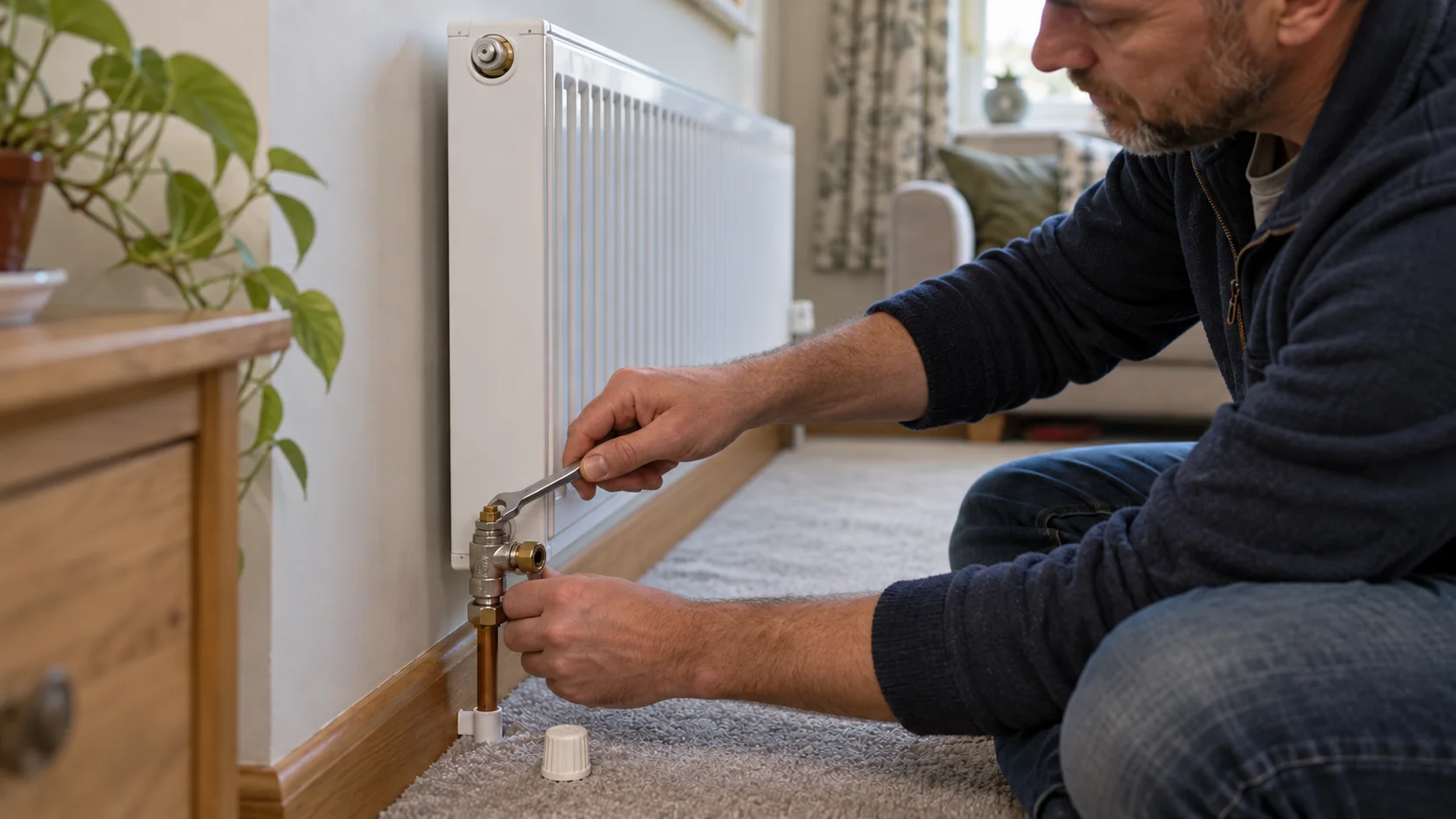
On a conventional two-pipe system, the numbered thermostatic radiator valve, or TRV, controls the room temperature. The valve at the other end usually has a plain plastic cap. This is commonly the lockshield valve used for balancing. Turning its spindle clockwise normally restricts flow; turning it anticlockwise opens it.
Do not assume the TRV is always fitted to the incoming pipe. Radiator pipework varies. What matters for this basic method is identifying the control valve and the lockshield, not guessing which side is nearest the boiler. See our guide to TRVs and lockshield valves if you are unsure which is which.
Check the valve type first: Some modern preset or pressure-independent valves are balanced at the TRV body, and their lockshield should be left open. If your valve has numbered preset positions or you have a heat pump, communal heating or an unusual pipe layout, follow the system instructions or ask a heating engineer.
What do you need to balance radiators?
A small adjustable spanner or the correct tool for your lockshield.
A notebook or phone to record which radiators warm first and every adjustment you make.
Enough time for the heating to cool and for at least one repeat test.
Optional clip-on pipe thermometers if you understand the temperature target specified for your system.
Take a photograph of each valve before adjusting it. Record changes as “one-eighth turn clockwise” or “one-quarter turn anticlockwise” so you can return to the starting position if the result gets worse. Do not loosen the pipe connection or remove the metal valve body.
How do you balance radiators step by step?
Check for another fault first. If a radiator is cold at the top, deal with trapped air before testing the balance. If you bleed a radiator on a sealed system, check the boiler pressure afterward using its instructions. Do not use balancing to hide a leak, a seized valve or a boiler fault.
Turn the heating off and let the radiators cool. A cold start makes the warm-up order easier to judge and avoids handling hot valve parts.
Temporarily open the radiator controls. Turn the TRVs or manual control valves fully open for the test, then make sure the room thermostat is calling for heat. Leave the lockshields at their current positions for this first check so you can see how the system is behaving now.
Turn the heating on and note the order. Walk through the rooms and record which radiators begin warming quickly and which lag behind. Check the radiator body, not just one hot pipe. The nearest radiator by walking distance is not necessarily the first one supplied by the pipework.
Turn the heating off and allow it to cool again. Remove the plain cap from the lockshield on a fast-warming radiator. Photograph the starting position before touching the spindle.
Restrict the fast radiator a little. Turn its lockshield clockwise by about one-eighth of a turn. A small change is easier to assess and reverse. Do not force a stiff valve or close it completely.
Run another heating test. See whether the slow radiators now warm sooner without making the adjusted room uncomfortably cold. If needed, make another small change and test again. Changing one radiator can affect the others, so avoid adjusting every valve at once.
Restore your normal TRV settings. Once the rooms warm more evenly, return each TRV to its usual setting and put the lockshield caps back on.
If a slow radiator remains cold after you have reduced flow through the fast ones, do not keep closing other radiators in the hope of forcing heat through it. The slow radiator may have a stuck valve, trapped air, a blockage or another fault.
How can you tell whether the balance has improved?
Start the heating from cold on another day and compare the same rooms. The slow room should begin warming more reliably, while the previously fast rooms should still reach a comfortable temperature. Your aim is a better whole-house result, not identical radiator surfaces or an exact matching warm-up time.
A simple record helps: write down the room, its original warm-up order, the lockshield change and what happened on the next test. If a change makes the result worse, return that valve to the position you recorded.
Can you balance radiators without a thermometer?
Yes. A cold-start comparison and small, recorded lockshield changes can help a homeowner improve an obvious imbalance. This is a practical comfort check rather than a formal commissioning test.
A heating engineer may measure the temperature of the flow and return pipes with contact thermometers after the system has settled. There is no single temperature difference that applies to every boiler, radiator and heat pump system. The target depends on the system design and manufacturer’s instructions, so do not keep turning valves to force every radiator to a figure found in a generic guide.
When should a heating engineer balance the system?
Ask a professional if several rooms remain cold, the lockshields are seized or leaking, the system has preset valves, or you have a heat pump, communal heating or pipework you cannot identify. Professional balancing is also sensible after substantial changes to radiators, pipework, pumps or the heat source.
An engineer can distinguish poor flow from an undersized radiator, sludge, a stuck TRV or a control problem. They can also check any minimum-flow or bypass requirements without leaving the heating system restricted.
Still have rooms that heat unevenly?
InstantCost’s heating calculator includes radiator bleed and balance work. Choose the job that matches your system and describe which rooms warm first and last.
Check Radiator Balancing Options
How do you balance radiators safely?
Let radiators and exposed pipes cool before handling valves. Do not force a seized spindle, loosen a pipe union, change pump or bypass settings, or shut every radiator while the boiler is running. If the problem turns out to involve work on a gas boiler rather than its radiator valves, use an appropriately qualified engineer. The Health and Safety Executive explains how to check an engineer’s Gas Safe registration before gas work begins.
Frequently asked questions
Do you turn the TRV or lockshield to balance a radiator?
On a conventional two-pipe system, you normally adjust the lockshield. Open TRVs temporarily during the test, then return them to their usual room settings afterward. Some preset valve systems use a different method, so identify the valve before adjusting it.
Should every radiator be fully open?
No. Opening the controls helps you test from a cold start, but leaving every lockshield fully open can let some radiators take more than their share of the flow. The final positions should suit the system, and normal TRV settings should be restored after testing.
Can you balance radiators with a combi boiler?
Yes, the radiator-side method can apply to a conventional two-pipe system heated by a combi boiler. Work only on the appropriate radiator valves. Do not open the boiler casing or alter its internal settings as part of DIY balancing.
How often should radiators be balanced?
There is no need to reset them automatically every year. Recheck the balance if rooms begin heating unevenly or after changes to radiators, valves, pipework, pumps or the heating system.
Will balancing lower my heating bill?
It may help the system heat rooms more evenly and avoid overheating some rooms while others stay cold. A bill saving is not guaranteed. Thermostat settings, insulation, boiler performance and how long you heat the home also affect energy use.
Need a professional to check the whole heating system?
Use InstantCost’s heating service page to describe the uneven heating and request written quotes. Include any valve changes you have already tried.