How Do Radiator Valves Work
15 October 2026
How Do Radiator Valves Work?
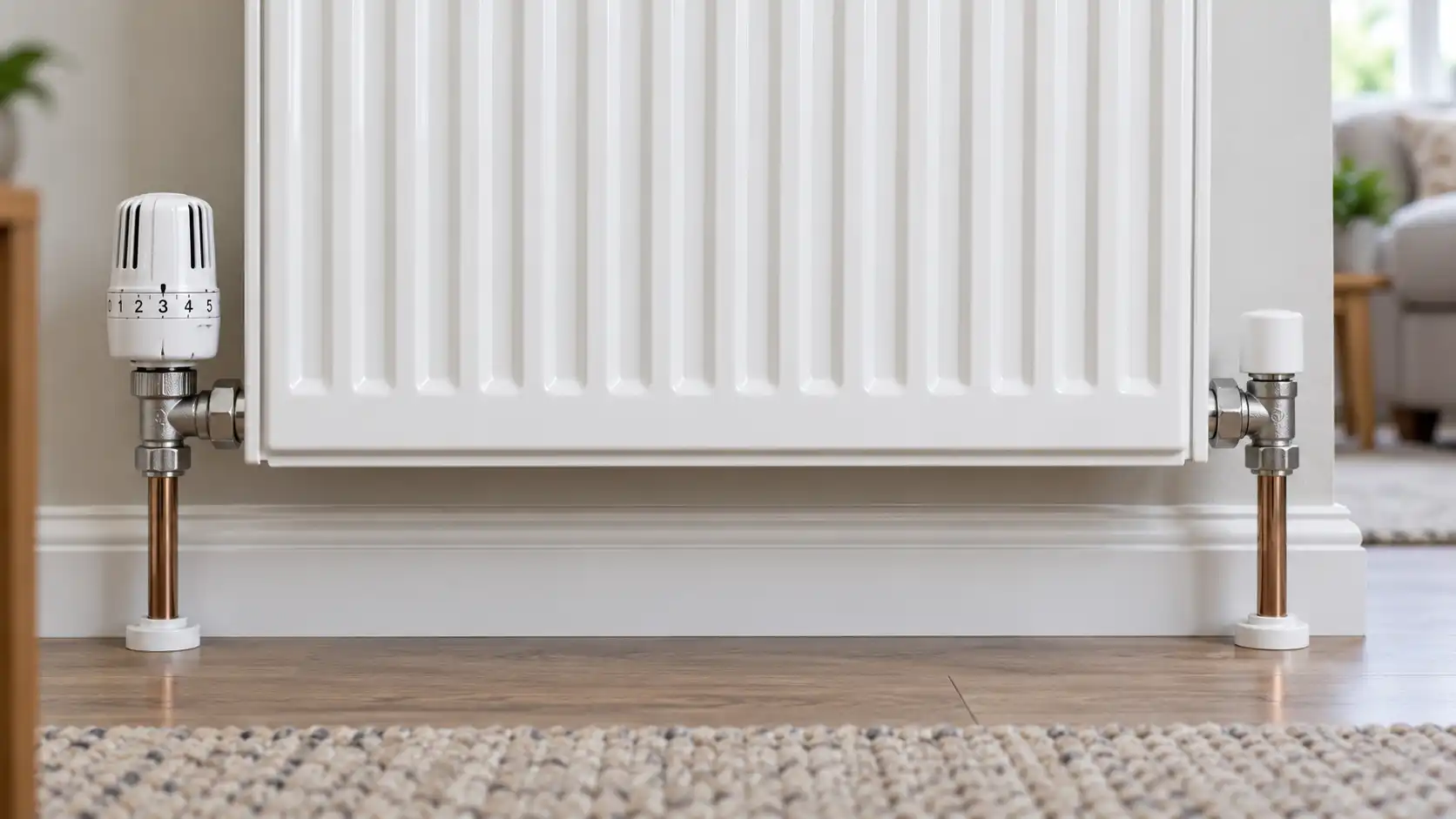
Radiator valves control how much hot water enters each radiator. A thermostatic radiator valve changes the flow automatically as the room warms, while a manual valve stays at the position you set. The smaller valve on the opposite side is usually a lockshield valve, which balances flow through the heating system.
Quick answer: Turn a thermostatic radiator valve clockwise to reduce heat and anticlockwise to increase it. The numbers are temperature settings, not exact radiator temperatures. A lockshield valve is normally adjusted during system balancing and should not be changed casually.
What are the different radiator valves?
Valve type | What it does | How you normally adjust it |
|---|---|---|
Thermostatic radiator valve (TRV) | Automatically regulates hot-water flow to maintain a room temperature. | Turn the numbered head by hand. |
Manual wheelhead valve | Controls flow but does not sense room temperature. | Turn the wheel open or closed. |
Lockshield valve | Restricts flow to balance the radiators across the system. | Usually adjusted with a spanner after removing the cap. |
Decorative or angled valve | Describes the shape and connection direction rather than a different control method. | Depends on whether the head is manual or thermostatic. |
Most radiators have one control valve on each side. The two valves perform different jobs, even when they look similar.
How does a thermostatic radiator valve work?
A thermostatic radiator valve contains a temperature-sensitive capsule. As the room becomes warmer, the capsule expands and pushes a small pin into the valve body. This reduces the flow of hot water through the radiator.
When the room cools, the capsule contracts and allows more hot water into the radiator. The valve continuously adjusts the flow rather than simply switching the radiator on or off.
A TRV senses the air around its head. It should not be covered by curtains, furniture or radiator covers because trapped warm air can make it shut too early.
What do the numbers on a TRV mean?
Setting | Typical use |
|---|---|
0 | Valve closed, although the radiator may still feel slightly warm from residual heat. |
Snowflake or frost symbol | Low setting that helps protect the room from freezing. |
1 | Cool room, often suitable for a hallway or little-used space. |
2 | Cool to moderate background heat. |
3 | Comfortable general living-space setting on many valves. |
4 to 5 | Warmer setting; the room may take longer to reach it. |
These numbers are approximate because each valve, room and installation is different. Setting a TRV to 5 does not heat the radiator faster than setting 3. It simply allows the room to reach a higher temperature before the valve restricts flow.
How does a manual radiator valve work?
A manual valve directly changes the opening in the pipe connection. Turning it anticlockwise normally allows more hot water into the radiator. Turning it clockwise reduces the flow or closes the valve.
A manual valve does not measure room temperature. If the room becomes warmer from sunlight, cooking or another heat source, the valve will remain in the position you selected until you adjust it yourself.
Manual valves are useful where you want simple control, but TRVs generally provide more automatic room-by-room regulation.
What does a lockshield valve do?
A lockshield valve controls the balance of water flowing through the radiator. It is usually found on the opposite side from the TRV or manual wheelhead valve and is covered by a small cap.
During balancing, a heating professional adjusts each lockshield so that radiators heat at an even rate. Radiators nearest the boiler may need more restriction, while those further away may need greater flow.
Do not adjust lockshields casually: Turning one can upset the balance of the whole heating system. If radiators heat unevenly, ask a heating professional to check the system rather than opening every lockshield fully.
How should you set radiator valves?
Use lower TRV settings in rooms that need less heat and a comfortable middle setting in rooms used regularly. Keep doors closed where practical so heat does not escape into cooler areas unnecessarily.
Living room: start around a medium setting and adjust for comfort.
Bedroom: use a lower setting if you prefer a cooler room.
Hallway: use a low background setting.
Spare room: use a low setting, but avoid turning it fully off during freezing weather.
Bathroom: use a comfortable setting and keep the valve clear of towels.
Do not use a TRV as a replacement for the main room thermostat. The thermostat controls when the boiler and heating system operate, while radiator valves regulate individual rooms.
How do radiator valves and a room thermostat work together?
The programmer or smart heating control sets the heating schedule. The room thermostat tells the boiler when the main controlled room has reached its target temperature. TRVs then limit heat in individual rooms.
In the room containing the main thermostat, the radiator TRV is often left fully open or set high enough not to interfere with the thermostat. Otherwise, the TRV can shut the radiator before the thermostat reaches its target.
What are common radiator valve problems?
Radiator stays cold
Check that the TRV or manual valve is open and that the heating is running. If only one radiator is cold, the TRV pin may be stuck. If several radiators are cold, the problem may involve the boiler, pump, thermostat or system pressure.
Radiator is hot at the top but cold at the bottom
This can indicate sludge or restricted flow. A heating professional may need to inspect the system and recommend cleaning or balancing.
Radiator is cold at the top but warm at the bottom
Air may be trapped inside the radiator. Bleeding releases the air, but check the boiler pressure afterwards because sealed systems can lose pressure when radiators are bled.
Read how radiators work for more information about circulation, heat output and common heating faults.
TRV is stuck
Turn the heating off and allow the radiator to cool. Remove only the thermostatic head if the manufacturer’s instructions allow it. The small metal pin in the valve body should move gently and spring back. Do not force it, pull it out or loosen the valve body.
Valve is leaking
Turn the valve down if possible and place a cloth beneath the joint. Do not dismantle a pressurised heating connection. A leaking valve may need a new seal, gland or complete replacement.
TRV makes clicking or knocking noises
Some light movement noise is normal as the valve opens and closes. Persistent banging, whistling or water noise may indicate excessive pump pressure, trapped air, poor balancing or a valve problem.
Need a radiator valve replaced?
Check the InstantCost guide before arranging a valve repair or heating visit.
Radiator valve safety
Turn the heating off before touching a hot radiator or valve.
Do not loosen compression nuts on a live, pressurised system.
Do not remove a radiator without isolating both valves and draining it correctly.
Check the boiler pressure after bleeding or draining radiators.
Use a qualified heating professional for valve replacement if you are unsure.
Never interfere with gas controls or open the boiler casing.
If a valve replacement involves draining and refilling a sealed central heating system, the system may need checking for leaks and correct pressure afterwards.
Can radiator valves save energy?
TRVs can reduce wasted heat by allowing different rooms to operate at different temperatures. They cannot make a poorly insulated home efficient on their own, and they should not be used to restrict every radiator while the boiler is running at full output.
Use sensible room temperatures, keep valves clear and arrange professional balancing if some rooms overheat while others stay cold. The BEAMA TRV factsheet explains how thermostatic valves help regulate room temperature.
Frequently asked questions
Which way do I turn a radiator valve to make it hotter?
On most manual and thermostatic valves, turn anticlockwise to open the valve and allow more hot water into the radiator. A higher TRV number usually means a warmer target room temperature.
Should both radiator valves be fully open?
The control valve may be opened for normal operation, but the lockshield is usually adjusted during system balancing. Do not open every lockshield fully without checking the system.
Why is my radiator cold when the valve is on?
Check that the heating is running, the valve is not stuck and the boiler has normal pressure. Air, sludge, a pump fault or poor system balancing can also restrict heating.
Should the radiator valve be on the flow or return side?
Many modern valves are bi-directional, but some are directional. Follow the arrow on the valve body and the manufacturer’s instructions. A professional should confirm the correct orientation when replacing a valve.
Can you turn off one radiator?
Yes. Turn its TRV or manual valve down, but leave the lockshield alone unless you understand how it affects system balancing. In cold weather, avoid leaving rooms completely unheated if pipes could freeze.
Do radiator valves control the boiler?
No. They control flow through individual radiators. The main thermostat and heating programmer control when the boiler and central heating operate.
Why is my radiator valve stuck on number 3?
The thermostatic head or internal pin may be stuck. Do not force the head or remove the valve body. If gentle adjustment does not work, arrange a valve inspection.
Do I need a plumber to replace a radiator valve?
Replacing a valve often requires isolating, draining and refilling part of the heating system. Use a qualified heating professional if you are not confident or if the system is sealed.
Planning heating repairs?
Compare related radiator and boiler guidance before booking a professional.