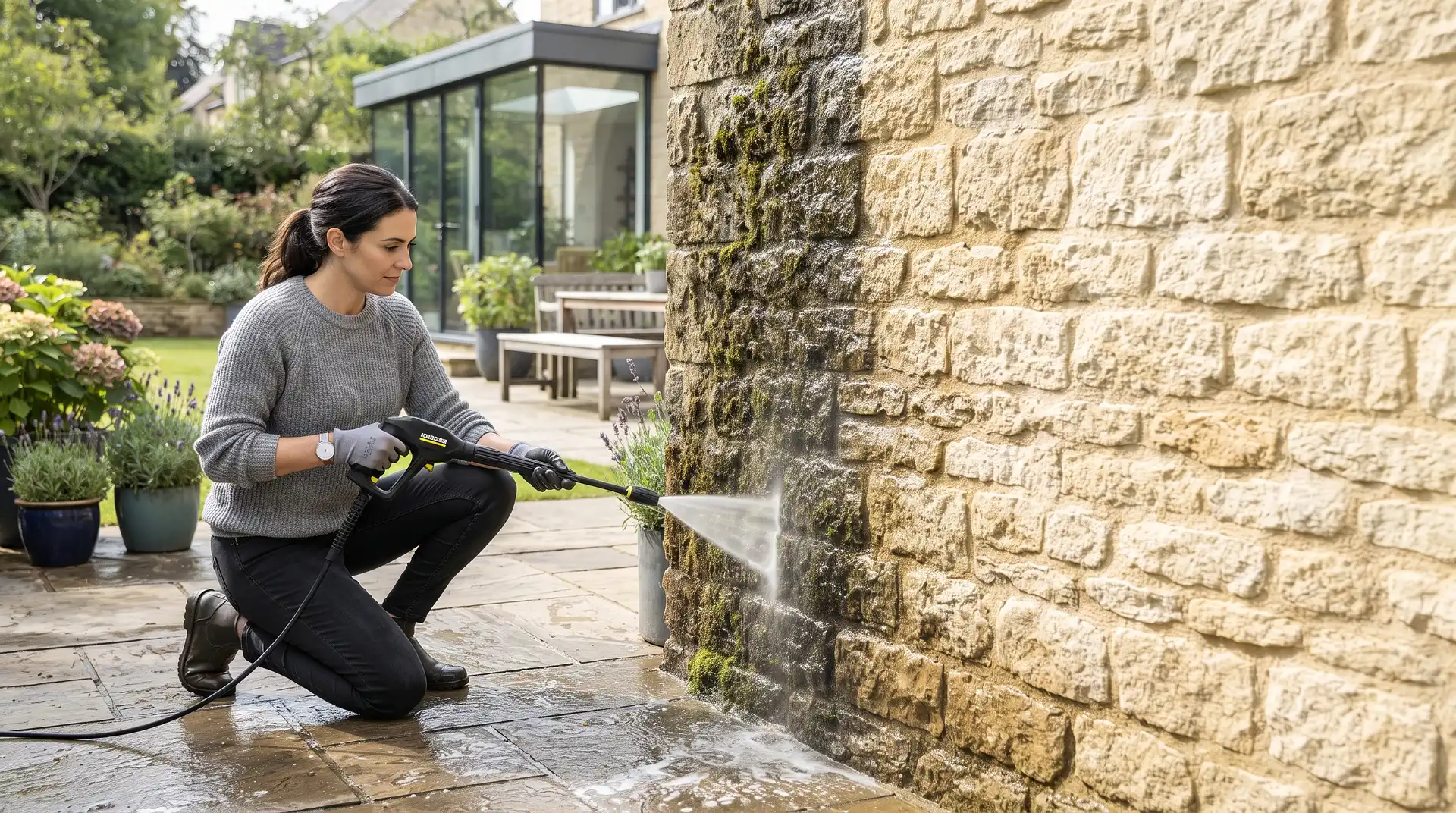
How to Clean Exterior Stone Safely
25 September 2026
How to Clean Exterior Stone
Clean sound exterior stone by removing loose dirt with a soft brush, testing a small area and washing gently with clean water. If water alone is not enough, use a cleaner specifically suitable for the stone and finish. Follow its dilution and rinsing instructions, then let the surface dry before judging the result.
Before starting, check whether you are cleaning limestone, sandstone, granite or another material. The condition of the stone and mortar matters as much as the stone type. Flaking surfaces, loose joints and persistent damp patches need assessment before cleaning, because even a gentle wash can worsen existing damage.
Check the Stone and Its Condition First
Look for the stone name on installation paperwork or ask the original supplier. For an older wall, a stonemason may need to identify it. Avoid using vinegar or another acid as a home identification test, since the test itself can mark sensitive stone.
Inspect the surface in daylight. Check for loose grains, thin layers peeling away, cracked pointing and gaps around windows or coping stones. If the wall is shedding material, stop and arrange an assessment.
What to consider before cleaning different exterior stones | ||
Stone or surface | Main concern | Starting approach |
|---|---|---|
Limestone | Acid-sensitive surface and possible weathering | Clean water, followed by a limestone-compatible cleaner if needed |
Sandstone | Variable strength, absorbency and mineral content | Gentle brushing and a small cleaning trial |
Granite | Finish, existing treatments and weaker surrounding joints | A suitable stone cleaner and controlled rinsing |
Slate | Layering, surface finish and existing sealers | Supplier-approved care without aggressive scraping |
Unknown or historic stone | Uncertain response to water, chemicals and abrasion | Specialist identification before treatment |
Stone-effect porcelain is a different material. If your paving is porcelain rather than natural stone, use our guide to cleaning exterior porcelain tiles.
Identify What You Are Trying to Remove
A green film, a rusty streak and a white powdery deposit need different treatment. Choosing a cleaner only because the stone looks dirty can leave the original problem untouched or create another mark.
Common marks on exterior stone | ||
Appearance | Possible cause | Useful next step |
|---|---|---|
Loose dust, mud or leaf debris | Ordinary surface soiling | Brush gently and trial a water clean |
Green film in a shaded area | Algae or other biological growth | Check moisture sources and product suitability |
White powder | Possible salt deposits | Avoid adding water immediately; investigate recurring deposits |
Orange or brown streaks | Rust, mineral staining or another source | Identify the source before choosing a stain remover |
Dark patches or a black crust | Pollution, biological growth or another deposit | Get an assessment if a gentle trial does not help |
Colour alone is not a reliable diagnosis. Check what sits above the mark, whether it changes after rain and whether similar staining appears elsewhere on the building.
How to Clean Exterior Stone Step by Step
1. Choose suitable weather and clear the area
Choose mild conditions within the cleaner’s stated temperature range. Avoid frost, strong wind and hot surfaces that could make a rinse-off product dry too quickly. Check the forecast if the treatment needs a rain-free period.
Move furniture and pots away. Plan where wash water will go before starting, especially near ponds, planted borders and drains. Keep a clear route around wet paving and steps.
2. Remove loose dirt carefully
Use a soft, non-metallic brush to lift loose dirt and leaves from sound stone. Collect the debris instead of washing it into joints or drainage channels.
Do not scrape firmly attached lichen or crusts from a fragile surface. If brushing releases stone grains or flakes, stop. That is a sign to reassess the material rather than use a harder brush.
3. Test the gentlest suitable method
Choose a small, discreet area that represents the rest of the surface. Start with clean water where wet cleaning is appropriate. If this does not remove ordinary grime, trial a cleaner labelled for the exact stone and finish.
Follow the specified dilution. A pH-neutral label is useful information, but it does not replace checking compatibility with the stone, sealer and jointing material.
Let the trial area dry fully. Look for uneven colour, roughness, a pale outline or changes to the joints before treating a larger section.
4. Work in manageable sections
Apply the chosen cleaner according to its instructions, including any requirement to pre-wet the surface. Use gentle brush pressure and the stated contact time. Do not let a rinse-off cleaner dry on the stone.
On a wall, plan the sequence so dirty water does not leave streaks across untreated areas. A product may specify its own application direction. Avoid washing above openings or damaged joints where water could enter the building.
5. Rinse without forcing water into the surface
Where rinsing is required, use a controlled flow of clean water. Avoid prolonged soaking and direct jets into mortar joints. Follow the disposal instructions for the cleaning product rather than assuming the diluted wash water is suitable for a drain.
If you are cleaning with a bucket and cloth or brush, change dirty water regularly. Otherwise, you may simply spread the removed grime over the next section.
6. Allow drying time and inspect the result
Wet stone often looks darker than dry stone. Wait until the trial and surrounding material have dried before deciding whether another treatment is worthwhile.
Look for damage as well as improvement. New roughness, loosened pointing or a sharply lighter patch are reasons to stop. A little remaining weathering may be preferable to removing part of the original surface.
A Note on Algae, Moss and Black Spots
Recurring green growth often points to conditions that keep the stone damp. Check overflowing gutters, dripping pipes, dense planting and places where water collects. Cleaning lasts longer when the moisture source is addressed.
If a chemical treatment is needed, choose one labelled for the growth, stone and intended use. A product suitable for concrete is not automatically suitable for limestone or sandstone. Follow its instructions on application, waiting time and whether rinsing is required.
Do not assume every black spot is lichen. Persistent dark marks and pollution crusts on older walls need proper identification before you increase chemical strength or brushing pressure.
When to Call a Professional
Use a stone-cleaning specialist for flaking masonry, loose pointing, heavy staining, paint removal or work above comfortable ground-level reach. Ask for a small cleaning trial and a clear explanation of the proposed method.
For listed or historic buildings, contact the local conservation officer before starting. Cleaning that alters protected fabric or character may need consent. The requirements depend on the property, proposed work and UK nation.
When requesting a quote, provide photographs, the approximate area, access details and the stone type if known. Ask whether the price includes protection of nearby surfaces, management of wash water and any necessary access equipment.
Estimate Your Exterior Cleaning Cost
Common Mistakes and What to Do Instead
Mistake: using brick acid on natural stone. Check the stone and product compatibility first. Acid can damage sensitive materials, and some sandstone can develop discolouration after unsuitable treatment.
Mistake: choosing pressure by stone name alone. The finish, weathering, joints and installation also matter. There is no single pressure setting that is safe for every sandstone wall or granite patio.
Mistake: treating every dark mark as algae. Identify the deposit before buying a stronger treatment. Pollution, rust and biological growth need different approaches.
Mistake: using a wire brush. Use an appropriate non-metallic brush on sound stone. Stop if the surface starts shedding material.
Mistake: washing loose mortar joints. Have damaged pointing assessed before cleaning. Water can worsen an existing defect or enter behind the face of the wall.
Mistake: sealing immediately after cleaning. Sealing is not an automatic finishing step. Confirm that the stone needs it and that the product suits the construction, moisture conditions and existing finish.
Mistake: trying to make old stone look newly installed. Agree a realistic result. Historic tooling, natural variation and weathering should not be removed simply to create an even colour.
What It Costs in the UK
InstantCost’s exterior-cleaning service page publishes the following general prices. It does not provide a separate fixed range for cleaning natural-stone walls or restoring weathered stone.
Published InstantCost exterior-cleaning guide prices for 2026 | ||
Service | Published price | Scope and limitation |
|---|---|---|
Patio jet washing | £70 to £180 | General guide for a 20 to 30 m² patio; not a specialist stone-restoration quote |
Patio jet washing by area | £3 to £5 per m² | General rate; suitability and minimum booking charges need checking |
Exterior wall cleaning | £200 to £600 per elevation | The published range explicitly covers render or brick, not natural stone |
Specialist natural-stone cleaning | No separate range published | Request a quote based on stone condition, area, treatment and access |
Source: InstantCost’s house exterior-cleaning service page, fetched directly on 25 September 2026. The page labels its pricing as updated in August 2026. These are published guide ranges, not a personalised calculator result. A service described as jet washing is not a recommendation to pressure wash your stone.
Compare the proposed cleaning method as well as the total price. A quote should explain which surfaces will be treated, what result is expected and whether repairs or access equipment are charged separately.
Staying Safe
Wear secure footwear and the gloves, eye protection or other equipment required by the cleaner’s label. Keep children and pets away during treatment and for the stated period afterwards. Wet stone and loosened growth can make steps and paths slippery.
If using an algae treatment or another biocide, follow the HSE guidance on using biocides safely. Members of the public should use products intended for non-professional users, follow the label and keep products in their original containers. Storage in the original container is a legal requirement identified in that guidance.
Protect ponds and nearby planting according to the product instructions. Do not mix cleaners or dispose of leftover treatment into drains. If disposal instructions are unclear, ask the supplier or your local authority.
Work from stable ground. Leave high walls and awkward areas to someone with suitable access equipment. Avoid using a pressure washer from a ladder.
This guide covers routine care of sound, accessible stone. Product instructions, site conditions and any conservation requirements determine whether a method is appropriate.
Frequently Asked Questions
What is the best cleaner for exterior stone?
The best choice depends on the stone, finish and deposit. Start with clean water for ordinary dirt on sound stone. If that is insufficient, choose a product specifically suitable for the material and test it first. Rust, oil and biological growth may need different treatments.
Can you pressure wash exterior stone?
Some sound paving can tolerate controlled pressure washing under supplier guidance, but that does not make it suitable for every stone wall or patio. Weathered surfaces and weak joints are especially vulnerable. Start with a gentler method and get professional advice where the stone or pointing is damaged.
Can you use vinegar on natural stone?
Avoid vinegar as a general natural-stone cleaner. Its acidity can etch limestone and other sensitive stones, and an unsuitable treatment may alter colour or finish. Do not use it to identify the stone either. Ask the supplier for a compatible cleaner and trial it discreetly.
How do you remove green algae from exterior stone?
Check why the area stays damp, then trial gentle cleaning on sound stone. If a treatment is needed, select one labelled for the material and intended use. Follow its waiting and rinsing instructions rather than assuming every algae cleaner works immediately or needs washing off.
Should exterior stone be sealed after cleaning?
Not automatically. Some installations may benefit from a suitable sealer, while others need to remain untreated or require specialist advice. Check the stone, existing coatings and moisture conditions first. Historic walls and persistent damp should be assessed before applying any product intended to reduce water absorption.
How often should you clean exterior stone?
Clean according to condition rather than a fixed schedule. Remove loose leaves and address spills promptly, then inspect shaded or damp areas for growth. Repeated aggressive cleaning can cause unnecessary wear. Persistent staining beneath a gutter or pipe is a reason to repair the water source.
The Real Test
Let your trial patch dry completely, then compare its colour, texture and joints with the untouched stone beside it. If dirt has reduced without surface loss, you have a useful starting method. If grains come away or a pale outline remains, stop before extending the treatment.