How to Use a Plumber’s Snake
20 October 2026
How to Use a Plumber’s Snake
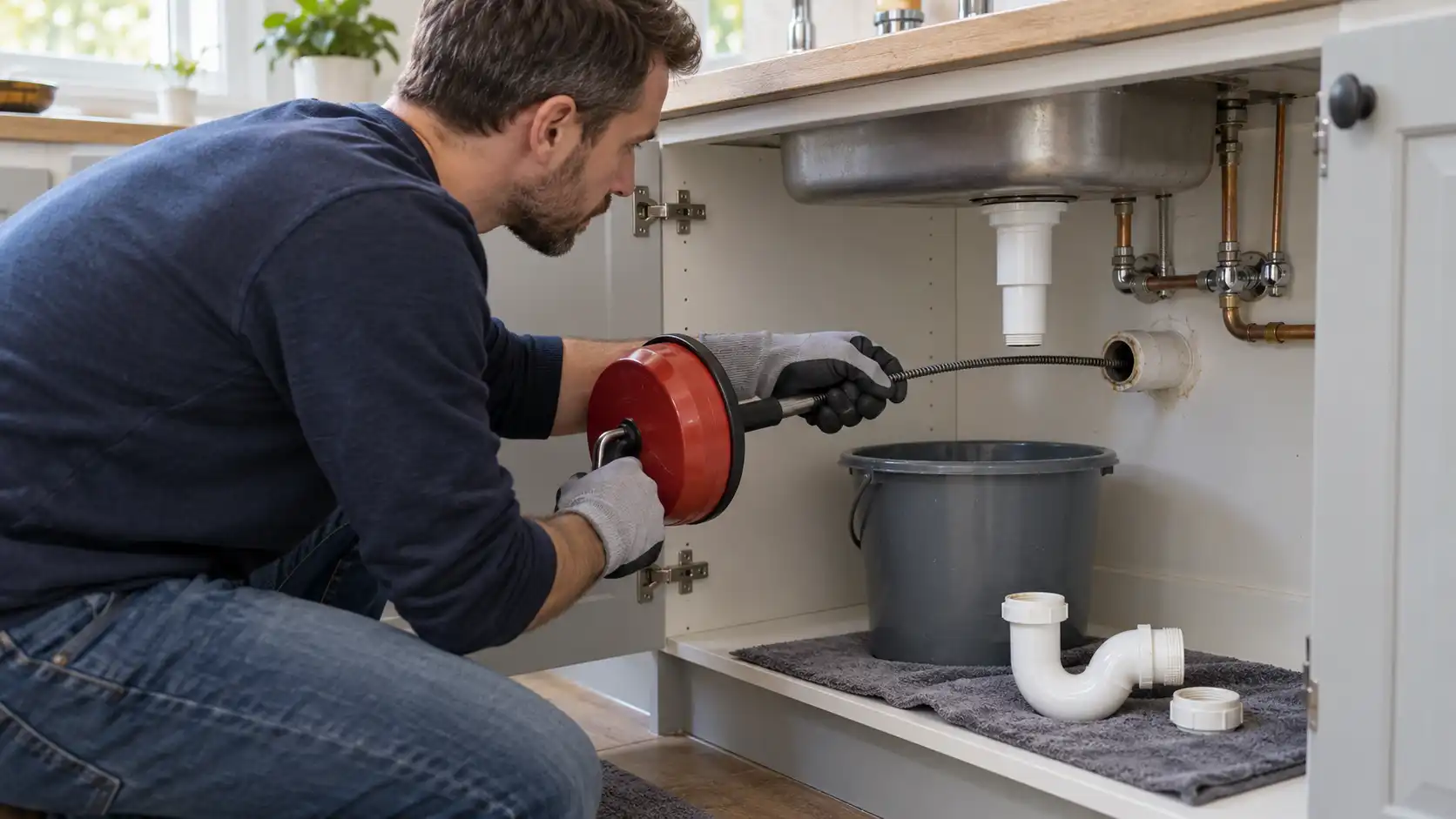
To use a hand-operated plumber’s snake, feed a short length of cable into the drain, lock it if your tool has a cable clamp, then turn the handle while applying gentle forward pressure. When you meet resistance, keep the cable controlled and work it slowly. Withdraw it carefully, remove any debris and test the drain with water.
A plumber’s snake is also called a drain snake or hand auger. It can reach a local blockage that a plunger cannot shift. The tool must suit the fixture: a standard sink snake is not the right tool to put through a toilet pan.
When should you use a drain snake?
Use a hand snake when one sink, bath or shower remains slow after you have removed visible debris and tried a suitable plunger. It is most useful for reachable hair, soap and food debris in a waste pipe.
Check the simple parts first. Hair may be caught around a basin plug, and food waste may be sitting in the U-bend directly under a kitchen sink. Removing an accessible trap and cleaning it can be quicker than trying to push a cable through its tight bend. Our guide to unblocking a kitchen sink covers those first checks.
If several fixtures back up together, sewage appears in another outlet, or water rises rapidly, stop using the affected drains and arrange professional help. A short household snake may not reach the cause.
Which type of plumber’s snake do you need?
Plastic hair-removal strip: Useful for hair close to a bath, shower or basin plughole. It is not designed to clear a blockage deep in a pipe.
Manual hand snake or drum auger: A flexible cable with a hand crank for a suitable sink, bath or shower waste pipe.
Toilet auger: A separate tool with a protective curved guide for reaching into a toilet without exposing a bare cable against the ceramic.
Powered drain machine: Intended for more demanding work. Incorrect use can kink a cable or damage pipework, so leave difficult or deeper blockages to a drainage professional.
Check the tool maker’s stated pipe compatibility and operating instructions. Do not treat drain rods for a larger outside drain as interchangeable with a flexible hand snake for a small indoor waste pipe.
What do you need before starting?
The correct hand snake for the drain
Close-fitting gloves suitable for handling the tool
Eye protection
A bucket and old towels
A bag or container for removed debris
Good light around the drain and pipework
Inspect the cable before use. Do not use one that is kinked, badly rusted or frayed. Keep loose clothing, jewellery and long hair away from the crank and cable.
How do you use a plumber’s snake on a sink?
Clear the opening. Remove the plug or strainer and lift out debris you can reach without a tool. Scoop out excess standing water to reduce splashes.
Check the trap. If it is accessible and no chemical cleaner is present, put a bucket below the U-bend. Remove and inspect the trap. Refit it if it contained the blockage. If it is clear, the pipe leading away from it may offer a straighter entry for the snake.
Feed in a short section. Put the cable tip into the open waste pipe or suitable plughole. Keep the exposed length short so it does not buckle outside the pipe.
Secure and turn the cable. If the auger has a thumbscrew or clamp, lock the cable as instructed by its maker. Turn the handle in the stated direction while applying light forward pressure. Release and feed more cable in short sections as needed.
Work through resistance gently. Stop pushing and turn the handle. Ease the cable back slightly, then try advancing again. Resistance can be a bend or fitting; it does not prove you have reached the blockage.
Withdraw slowly. Pull the cable back under control. Put any hair or debris it retrieves into a bag, not back into the sink.
Reassemble and test. Refit the trap with its washers correctly seated. Run a little water first and check the joints with a dry tissue. Then run more water to check that it drains freely.
Never wrap a cloth around a rotating cable. Stop turning the tool before wiping or cleaning the cable.
How can you tell a pipe bend from a blockage?
You cannot identify every obstruction by feel alone. If the cable stops after only a short distance, first check whether you have reached the trap bend. Withdraw it a little, change the entry angle gently and try again. If it repeatedly stops hard at the same point, do not force it.
A blockage may bring hair or other material back on the tip. A cable that comes out clean and passes easily through the same point, while the sink remains slow, may have passed through or beside the material without clearing the pipe. This is a clue, not a diagnosis.
How do you use a drain snake on a shower or bath?
Start by removing the cover and lifting out visible hair. Check whether your waste fitting allows a hand snake to pass without damage. Some bath layouts are accessed through the overflow rather than the floor outlet, so follow the fixture and tool instructions.
Feed the cable slowly and keep it controlled at the opening. Do not prise against a decorative drain cover or push a large cable into a small plastic trap. If access is poor, the trap leaks, or the cable will not pass a bend easily, stop.
Can you use a plumber’s snake in a toilet?
Use a toilet auger, which has a protective guide shaped for the pan. A bare hand snake can scratch the ceramic and may be difficult to control through the toilet’s bends.
Try a toilet flange plunger first. If you need an auger, place its protected guide into the outlet and operate it according to its instructions. Stop if you suspect a hard object or the tool jams. InstantCost’s guide to unblocking a toilet without a plumber explains the earlier steps and warning signs.
When should you stop and call a plumber?
Stop if the cable kinks or jams, you meet firm resistance that will not ease, a fitting starts to leak, or the blockage returns soon after water begins flowing. Also arrange help if several drains are affected or you suspect a damaged pipe or a solid object.
Tell the plumber which fixtures are affected, whether the trap was clear, how far the cable travelled, what came back on the tip and whether any drain cleaner has been used. Those details help them choose a suitable access point and decide whether the drain needs inspection or a different clearing method.
Still dealing with a blocked drain? InstantCost’s plumbing calculator includes blockage clearance. Describe the affected fixture and whether other drains are backing up.
Check Drain Unblocking Costs
What should you do if the snake goes through but the drain is still slow?
Test the drain with a small amount of water, then a normal flow. If it still empties slowly, clean and inspect the trap again. Check whether another connected sink or appliance also drains slowly.
A snake can make a narrow path through soft build-up without removing all of it. Repeatedly driving the cable farther is unlikely to solve that problem and can increase the chance of damage. A plumber may need to inspect the line and choose a more suitable clearing method.
What mistakes should you avoid?
Using a bare sink snake through a toilet pan
Assuming every bend or hard stop is the blockage
Pushing so much cable out of the drum that it coils or kinks outside the pipe
Forcing a cable through a fragile trap or against a fixed obstruction
Using a drill to turn a hand auger unless the tool is specifically designed for it
Snaking a drain that may still contain chemical cleaner
Testing a blocked toilet by flushing repeatedly and risking an overflow
Failing to check trap joints for leaks after reassembly
How do you use a drain snake safely?
Wear gloves and eye protection, keep children and pets away from the work area, and handle wastewater as contaminated. If a chemical drain unblocker has been poured into the blocked drain, do not plunge, open the trap or snake it while the chemical may still be present. Tell the plumber what product was used. Some drain cleaners contain sodium hydroxide, which can injure skin and eyes; see the UK Health Security Agency’s safety information.
How do you clean a plumber’s snake after use?
With the tool stopped, remove trapped debris from the tip. Wash the cable as its manufacturer directs, dry it thoroughly and wind it back into the drum. Clean the work area and wash your hands. Check the cable for new bends or damage before storing it.
Frequently asked questions
Do you push or turn a plumber’s snake?
Do both gently. Feed a short section into the pipe, turn the handle in the direction specified by the tool maker, and apply only enough pressure to let the cable advance. Do not ram it against resistance.
Why will my drain snake not go around the bend?
The cable may be meeting the trap or entering at a poor angle. Pull it back slightly and try again gently. For an accessible sink, cleaning the U-bend and entering the pipe beyond it may provide a straighter route.
How do you know the blockage has cleared?
Remove the cable and debris, reassemble any pipework and check for leaks. Test with a little water, then normal tap flow. If the drain slows again quickly, the blockage may not have been fully removed.
Can a plumber’s snake damage plastic pipes?
Yes, particularly if the wrong cable is forced against a bend, fitting or already damaged pipe. Use a tool compatible with the pipe and stop when you meet hard resistance.
Need a professional to clear it? You can request local plumbing quotes through InstantCost’s plumbing service page after entering the job details. Mention any chemical cleaner already used.