How Thick Is a Resin Driveway
28 September 2026
How Thick Is a Resin Driveway?
A resin-bound driveway surface is normally installed at a depth of approximately 18mm for ordinary cars and light domestic vehicles. Paths and patios are commonly laid at around 15mm, while driveways exposed to heavier or more frequent traffic may need a surface depth of 20mm to 24mm.
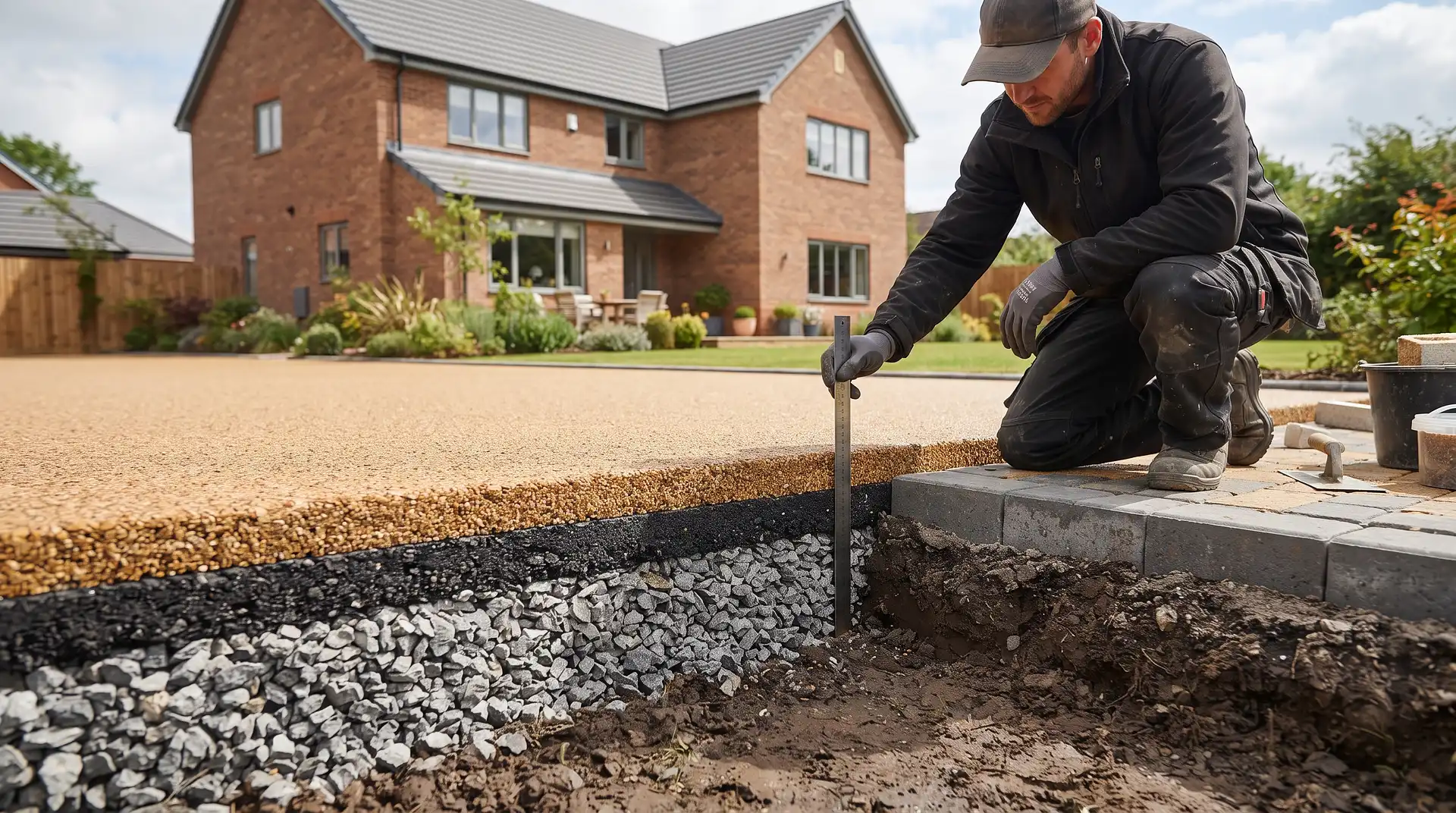
The 18mm measurement applies only to the decorative resin and aggregate surface. A new driveway also needs a strong base underneath it. When the asphalt base, compacted stone sub-base and any capping layer are included, the complete driveway construction can be more than 200mm deep.
The correct specification depends on the aggregate size, vehicle loading, soil condition, drainage design and the resin manufacturer's instructions. A thicker resin layer cannot compensate for a weak or poorly compacted base.
Resin Driveway Thickness at a Glance
Area or use | Typical resin surface depth | Important consideration |
|---|---|---|
Garden path | Around 15mm | Pedestrian traffic only |
Patio | Around 15mm | Furniture and foot traffic |
Domestic driveway | Around 18mm | Cars and light domestic vehicles |
Frequently used or heavier-vehicle area | Often 20mm to 24mm | Must follow a project-specific specification |
Commercial parking area | Project-specific | Traffic frequency and vehicle weight must be assessed |
These measurements are common UK specifications rather than a universal rule. The approved installation depth for a particular product must come from its technical data and the site's loading assessment.
What Does the 18mm Measurement Include?
The top layer of a resin-bound driveway is made by mixing washed, kiln-dried stone aggregate with polyurethane resin. The complete mixture is spread over the prepared base and finished with a hand trowel.
The 18mm measurement covers this finished mixture of resin and aggregate. It does not include the asphalt, concrete or compacted stone underneath.
Using 5mm or 6mm aggregate at around 18mm deep is common for domestic driveways. A smaller aggregate may be used in a thinner approved system, but the installer should follow the manufacturer's specification rather than reducing the depth simply to use less material.
How Deep Is the Complete Driveway?
A resin driveway is a layered construction. A typical new permeable domestic driveway may include:
An 18mm resin-bound surface
Approximately 50mm to 80mm of suitable open-graded asphalt
Approximately 150mm to 200mm of compacted permeable stone sub-base
A geotextile membrane where required
An additional capping layer if the natural ground is weak
This can produce a complete construction depth of more than 200mm. Some sites require a substantially deeper build-up because of weak clay, made ground, drainage requirements or regular use by heavy vehicles.
The sub-base must be designed for the site. Quoting one fixed total depth for every property would be misleading because the condition and strength of the ground can vary significantly.
Typical Resin Driveway Layer Build-Up
Layer | Typical depth | Purpose |
|---|---|---|
Resin-bound surface | Around 18mm | Provides the decorative, hard-wearing surface |
Open-graded asphalt base | Approximately 50mm to 80mm | Supports the resin while allowing drainage |
Compacted stone sub-base | Approximately 150mm to 200mm | Distributes vehicle loads into the ground |
Capping layer | As required | Improves weak or unstable ground |
Geotextile membrane | Material layer rather than a structural depth | Helps separate the sub-base from the soil |
This is an example of a full permeable installation. The installer should adjust the specification for the soil, drainage and expected traffic.
Can Resin Be Laid Over an Existing Driveway?
Resin can sometimes be installed over existing tarmac or concrete. The old surface must be stable, clean, dry and free from movement or serious cracks.
If the existing base is suitable, the project may need only minor preparation, edge adjustments and the new resin surface. The resin will still normally be laid at its specified surface depth, commonly around 18mm for a driveway.
An overlay should not be used to hide a failing base. Cracks, movement and sunken areas beneath the resin can eventually appear in the finished surface.
Existing tarmac
A sound tarmac base is often suitable because it provides a stable surface with some flexibility. For a fully permeable installation, the tarmac must also be open graded so water can pass through it.
Existing concrete
Concrete can provide a strong base if it is sound and correctly prepared. However, ordinary concrete is not permeable. The completed driveway will need suitable falls and drainage unless the existing concrete is designed as a porous system.
Block paving
Applying resin directly over block paving is usually risky because individual blocks can move. Movement at the joints can cause lines, cracking or separation in the resin surface.
Calculate Your Resin Driveway Cost
Why Resin Thickness Matters
Vehicle weight
The resin surface must distribute the force created by parked and moving vehicles. A surface that is too thin is more likely to wear through, crack or separate in repeated wheel paths.
Aggregate coverage
The depth must be suitable for the stone size. If the layer is too thin, aggregate may not be properly held within the resin matrix.
Compaction and finishing
The installer needs enough material to compact and trowel the surface evenly. Thin areas can appear where the base is uneven or the mix is spread too far.
Drainage performance
A resin-bound surface contains connected gaps that allow water to pass through. The correct aggregate grading, resin content and installation depth help maintain this structure.
Expected lifespan
InstantCost's guide to how long resin driveways last explains that a properly installed surface commonly lasts 20 to 25 years. Insufficient surface depth and a weak base can reduce that lifespan considerably.
Is a Thicker Resin Layer Always Better?
No. Adding more resin-bound material does not automatically produce a stronger driveway. The surface, base and sub-base must work together.
An unnecessarily thick surface can increase material costs without solving movement or drainage problems underneath. A correctly specified 18mm surface over a strong base can perform better than a much thicker layer installed over unstable ground.
The resin-to-aggregate ratio must also remain correct. Increasing the amount of stone without using the specified resin quantity can create a dry, weak mixture that sheds aggregate.
Resin Bound and Resin Bonded Are Different
Resin bound and resin bonded surfaces are often confused, but they use different installation methods.
With resin bound surfacing, stone and resin are mixed together before application. The finished layer is relatively deep and can be permeable when installed over a suitable porous base.
With resin bonded surfacing, resin is spread over a solid base and loose stone is scattered onto it. The resulting layer is much thinner and normally impermeable. It looks more like loose gravel but does not have the same smooth, porous structure as a resin-bound driveway.
Ask a contractor to confirm in writing whether the quotation is for resin bound or resin bonded surfacing. A low quotation may relate to a different system rather than the same driveway at a better price.
How to Check the Proposed Thickness
Before accepting a quotation, ask the installer for:
The resin manufacturer's name and product
The aggregate size and blend
The finished resin surface depth
The asphalt or concrete base specification
The sub-base material and compacted depth
The expected vehicle loading
The drainage method
The resin type and UV stability
The warranty for materials and workmanship
The quotation should describe each layer rather than using a vague phrase such as “full preparation included”. This makes it easier to compare contractors and identify where a cheaper specification has reduced the excavation or sub-base depth.
How Installers Control the Finished Depth
Professional installers calculate the required quantity of mixed resin and aggregate from the driveway area and specified depth. They use fixed edges, depth markers and careful trowelling to keep the surface consistent.
The mixture has a limited working time. It must be mixed in consistent batches and spread without long delays. Variations in mixing or coverage can cause visible joins, colour changes and weak areas.
The weather also matters. Rain, excessive moisture, very low temperatures and extreme heat can affect curing. Installation should follow the product's stated temperature and weather limits.
Signs a Resin Driveway May Be Too Thin
The base becomes visible through worn wheel tracks
Loose aggregate appears soon after installation
The surface has obvious shallow patches
Cracks follow imperfections in the base
Regular turning areas wear faster than the rest
The resin separates or lifts from the base
The surface sounds hollow in localised areas
These symptoms do not always prove that the resin is too thin. Incorrect mixing, poor priming, base movement and water beneath the surface can produce similar failures. A resin specialist should inspect the complete construction before recommending a repair.
How Much Does a Resin Driveway Cost?
InstantCost's 2026 driveway data places a resin-bound driveway at approximately £130 per square metre, supplied and fitted. A typical 36m² double driveway costs around £4,680 before optional additions.
Item | Typical InstantCost figure |
|---|---|
Resin-bound driveway | £130 per m² |
Typical 36m² double driveway | Approximately £4,680 |
Drainage or soakaway | Approximately £850 extra |
Decorative edging or kerb | Approximately £380 extra |
Protective sealant | Approximately £320 extra |
Localised delamination repair | £300 to £800 |
The calculator price includes typical groundwork, but your actual excavation and sub-base requirements depend on the existing surface and ground condition. Ask whether the contractor has priced a new full-depth construction or an overlay.
Planning and Drainage Requirements
A correctly constructed resin-bound system can allow rainwater to drain through its surface and base. However, the resin alone does not make the complete driveway permeable. Every layer underneath must also allow water to pass through or direct it to an approved drainage area.
Government guidance on permeable front-garden surfacing explains that planning permission is generally not required when a new or replacement driveway uses permeable surfacing or directs water to a permeable area.
For an impermeable front driveway larger than 5m² that does not direct water to a permeable area, planning permission may be required. Check the current position with your local planning authority before work starts.
Common Resin Driveway Thickness Mistakes
Measuring only the top surface
An 18mm resin layer tells you nothing about the strength of the construction below it. Ask for the base and sub-base depths as well.
Applying resin over a moving surface
A decorative resin layer cannot stabilise loose blocks, cracked concrete or a sinking sub-base. Movement underneath will eventually affect the surface.
Choosing the lowest quote without comparing specifications
A lower price may result from shallower excavation, less sub-base material or thinner resin coverage. Compare the layer depths, materials and warranty.
Assuming extra thickness solves poor drainage
Water needs a continuous route through or away from the driveway. A thicker surface does not correct an impermeable or waterlogged base.
Confusing resin bound with resin bonded
The two systems have different thicknesses, finishes and drainage characteristics. Confirm which system is being quoted.
Ignoring aggregate size
The surface depth must suit the aggregate grading. A depth that is acceptable for one approved mix may be unsuitable for another.
Allowing vehicles onto the surface too soon
Driving on resin before it has fully cured can mark or weaken the surface. Follow the installer's written curing time rather than judging it only by touch.
Resin Installation Safety Guide
Uncured resin products can irritate or sensitise the skin and respiratory system. Installers should follow the product safety data, use appropriate gloves and eye protection, and avoid direct skin contact.
The work area should be kept clear of children, pets and vehicles while mixing, laying and curing take place. Resin mixers, compactors, excavators and cutting equipment create additional risks that require trained operators and proper protective equipment.
Do not walk or drive on the new surface until the installer confirms that it has cured. Keep the driveway cordoned off and follow the product-specific curing time, particularly during cool or damp weather.
Frequently Asked Questions
Is 15mm thick enough for a resin driveway?
Some approved systems use a 15mm surface, but approximately 18mm is a more common domestic-driveway specification for normal cars and light vehicles. The correct depth depends on the aggregate size, manufacturer and base design.
How thick should resin be for cars?
A domestic resin-bound surface is commonly around 18mm thick for cars and light vehicles. Heavier or more frequent traffic may require 20mm to 24mm or another project-specific specification.
How deep should the sub-base be?
A domestic permeable driveway may use approximately 150mm to 200mm of compacted stone sub-base. Weak soil or heavier loading can require a deeper sub-base or an additional capping layer.
Can resin be laid directly over concrete?
It can sometimes be laid over sound, stable concrete after correct preparation and priming. Ordinary concrete is impermeable, so the completed driveway needs suitable falls and drainage rather than relying on water passing through the base.
Can resin be laid directly over tarmac?
Yes, if the tarmac is sound, stable, clean and suitable for the chosen system. A fully permeable resin installation requires an open-graded base that allows water to continue draining through it.
What happens if a resin driveway is too thin?
A surface that is too thin may wear quickly in wheel tracks, expose the base, shed aggregate or crack. The risk increases where vehicles turn regularly or the supporting base is uneven.
The Thickness to Ask for in Your Quote
For a normal domestic driveway, around 18mm is a sensible benchmark for the resin-bound surface. The more important question is what sits underneath it.
Ask the installer to state the resin depth, aggregate size, asphalt-base depth and compacted sub-base depth in writing. The quotation should also explain drainage, expected vehicle loading and the warranty. A properly designed base with the correct resin depth is what gives the driveway its strength and useful life.