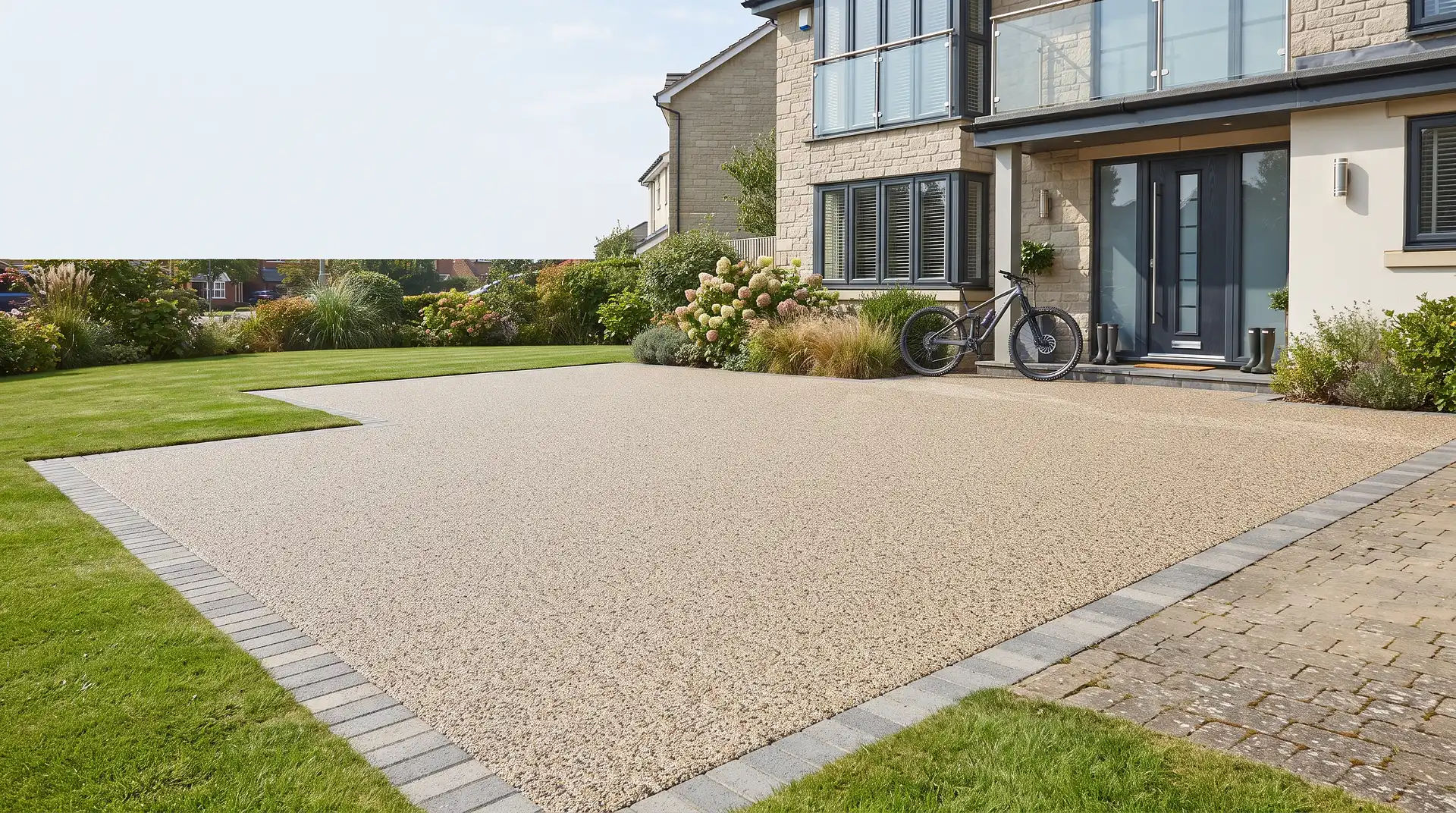
How Long Do Resin Driveways Last
23 September 2026
How Long Do Resin Driveways Last?
A properly installed resin bound driveway lasts 20 to 25 years in the UK, according to InstantCost.co.uk's 2026 UK pricing data, sitting between block paving's 20 to 30 years and tarmac's shorter 15 to 20 year lifespan. That headline figure genuinely depends on installation quality and resin type more than almost any other driveway material, since resin's biggest failure mode, delamination, where the resin-and-aggregate surface separates from its base, comes down almost entirely to how well the job was done rather than simple age-related wear.
This is worth understanding before you commission a resin driveway, since two identical-looking resin surfaces installed by different contractors can have meaningfully different real-world lifespans, in a way that's less true of a material like block paving, where individual block replacement makes poor original installation easier to correct piecemeal later.
What Determines Resin's Actual Lifespan
Installation Quality and Base Preparation
Resin bound surfacing is laid over an existing sound base, tarmac, concrete, or a properly compacted sub-base, rather than being a standalone structural material itself. If that base isn't properly prepared, adequately compacted, free of cracks, and correctly primed before the resin is applied, the resin layer can delaminate, lifting or separating from the base, well before its expected lifespan regardless of the resin product's own quality.
Resin Type and UV Stability
UV-stable resin, using an aliphatic rather than aromatic resin formulation, resists yellowing and discolouration from sunlight exposure considerably better over the driveway's lifetime. A cheaper aromatic resin can visibly yellow within a few years, particularly in south-facing, sun-exposed driveways, which affects appearance well before any structural failure of the surface itself.
Aggregate Quality and Depth
The stone aggregate mixed with the resin, and the depth at which it's applied, affects both appearance and durability. A resin surface applied too thinly is more prone to wear through to the base beneath in high-traffic areas, particularly where vehicles regularly turn or the same wheel path is used repeatedly.
Drainage and Sub-Base Condition
Resin bound surfacing is permeable, allowing water to drain through, but this only works properly if the sub-base beneath is genuinely capable of handling that drainage. A sub-base that becomes waterlogged or compromised over time can undermine the resin surface from below, even if the resin itself remains in good condition.
Common Ways a Resin Driveway Fails Before Its Expected Lifespan
Delamination
The most serious failure mode, where the resin and aggregate layer separates from the base beneath, usually traces back to inadequate base preparation or priming during installation rather than the resin product itself being at fault. This typically shows as a section lifting, cracking along a specific line, or an area that feels loose or hollow underfoot.
UV Discolouration
Using a non-UV-stable resin, or a resin applied in insufficient thickness to properly protect the aggregate's natural colour, can result in visible yellowing within just a few years, well before any structural issue develops, particularly on south or west-facing driveways receiving the most direct sun exposure.
Surface Wear in High-Traffic Zones
Areas where a car regularly turns, or where the same wheel path is used every day, can show more visible wear over time than the rest of the driveway, particularly if the original resin depth was on the thinner end of the acceptable range for that specific installation.
A Note on Resealing and Maintenance
Unlike block paving, which needs periodic re-sanding, or gravel, which needs topping up, a well-installed resin driveway needs comparatively little routine maintenance beyond regular cleaning and occasional weed treatment in any early growth around the edges. Some installers offer an optional resealing service after 10 to 15 years to refresh the surface's appearance and add another layer of UV protection, though this isn't strictly necessary for structural integrity if the original installation was sound.
A Note on Choosing an Installer to Maximise Lifespan
Given how much resin's real-world lifespan depends on installation quality specifically, checking an installer's experience with resin bound systems specifically, rather than general driveway installation experience, and asking about their base preparation process and which resin brand and type they use, matters more here than with almost any other driveway material. Ask specifically whether they use a UV-stable aliphatic resin and what warranty they offer on both materials and workmanship.
When to Call a Professional
If you notice any sign of delamination, a lifting edge, a hollow-sounding section, or a crack running through the resin surface, contact a professional resin specialist promptly rather than waiting, since these issues typically worsen with continued vehicle traffic and weather exposure rather than resolving on their own.
Use InstantCost's driveway cost calculator to compare resin against other materials for your specific driveway size. If you're deciding between resin and other permeable options, how much to pave a driveway compares resin against block paving in detail.
Common Mistakes and What to Do Instead
Mistake: Choosing the cheapest resin quote without checking installer experience. Since lifespan depends so heavily on installation quality, a cheaper quote from an inexperienced installer can result in premature delamination that costs far more to fix than the initial saving. Prioritise proven resin-specific experience over price alone.
Mistake: Not asking whether the resin is UV-stable. A cheaper, non-UV-stable resin can visibly yellow within a few years, particularly on sun-exposed driveways. Confirm specifically that an aliphatic, UV-stable resin is being used before committing to a quote.
Mistake: Ignoring early signs of delamination. A small lifting edge or hollow-sounding section left unaddressed typically worsens over time as water and continued traffic exploit the weakness. Address any sign of this promptly rather than waiting for it to become a larger, more expensive repair.
Mistake: Assuming resin needs the same maintenance as block paving or gravel. Resin generally needs less routine maintenance than these alternatives, so applying block paving's re-sanding schedule or gravel's topping-up routine to a resin surface isn't necessary and doesn't reflect how the material actually behaves.
Mistake: Not checking the sub-base condition before installation. Resin's permeability depends on a sub-base genuinely capable of handling drainage. Laying resin over a compromised or inadequate sub-base undermines the surface's long-term performance regardless of the resin's own quality.
Mistake: Skipping a written warranty on both materials and workmanship. Given how much installation quality affects resin's lifespan specifically, a proper warranty covering both the resin material and the installer's workmanship is worth insisting on before work begins.
What It Costs in the UK
Item or Service | Typical UK Figure (2026) |
|---|---|
Resin bound driveway, per m² | £130 |
Typical double driveway (36m²), resin | £4,680 |
Expected lifespan, properly installed | 20–25 years |
Optional resealing (after 10–15 years) | £500–£1,200 |
Delamination repair (localised area) | £300–£800 |
Full resurfacing (if base issue is widespread) | £2,500–£5,000+ |
Figures based on InstantCost.co.uk's 2026 UK driveway pricing data and vary by region, resin type, and installer.
Staying Safe
If you're inspecting a resin driveway for signs of delamination or wear, be aware that a hollow or lifting section can be a trip hazard, particularly if it's not immediately visually obvious. Mark or cordon off any area you suspect is compromised until it's been properly assessed and repaired.
When choosing an installer, verify they carry appropriate insurance and check reviews specifically related to resin bound driveway work, given how much this specific material's success depends on installer expertise rather than general driveway installation experience alone.
Since 2008, UK planning regulations recognise resin bound surfacing as a permeable material, meaning it generally doesn't require planning permission for driveways over 5m² fronting a public highway, unlike solid, non-permeable surfaces. Verify current requirements with your local council before proceeding.
Frequently Asked Questions
Does resin driveway lifespan really depend that much on the installer? Yes, more than most other driveway materials. Resin's most serious failure mode, delamination, stems almost entirely from base preparation quality rather than the resin product itself, making installer expertise a genuinely significant factor in real-world lifespan.
How do I know if my resin driveway is UV-stable? Ask your installer directly whether they're using an aliphatic resin, which is UV-stable and resists yellowing, rather than a cheaper aromatic resin, which can discolour within a few years of sun exposure.
What does resin driveway delamination look like? It typically appears as a lifting edge, a section that sounds hollow when walked or driven over, or a crack running through the surface, usually tracing back to inadequate base preparation during the original installation.
Do resin driveways need resealing? Not strictly for structural reasons if the original installation was sound, though some installers offer optional resealing after 10 to 15 years to refresh appearance and add further UV protection.
Is resin more durable than block paving? Resin's typical lifespan, 20 to 25 years, sits slightly below block paving's 20 to 30 years, though resin needs less routine maintenance in the form of re-sanding or weed treatment between joints, since it has no traditional joints in the same way.
Can a resin driveway be repaired if part of it fails? Yes, localised delamination or damage can often be repaired without redoing the entire driveway, though matching the repair seamlessly to existing, potentially UV-faded surrounding resin can be more visually challenging than a like-for-like block paving repair.