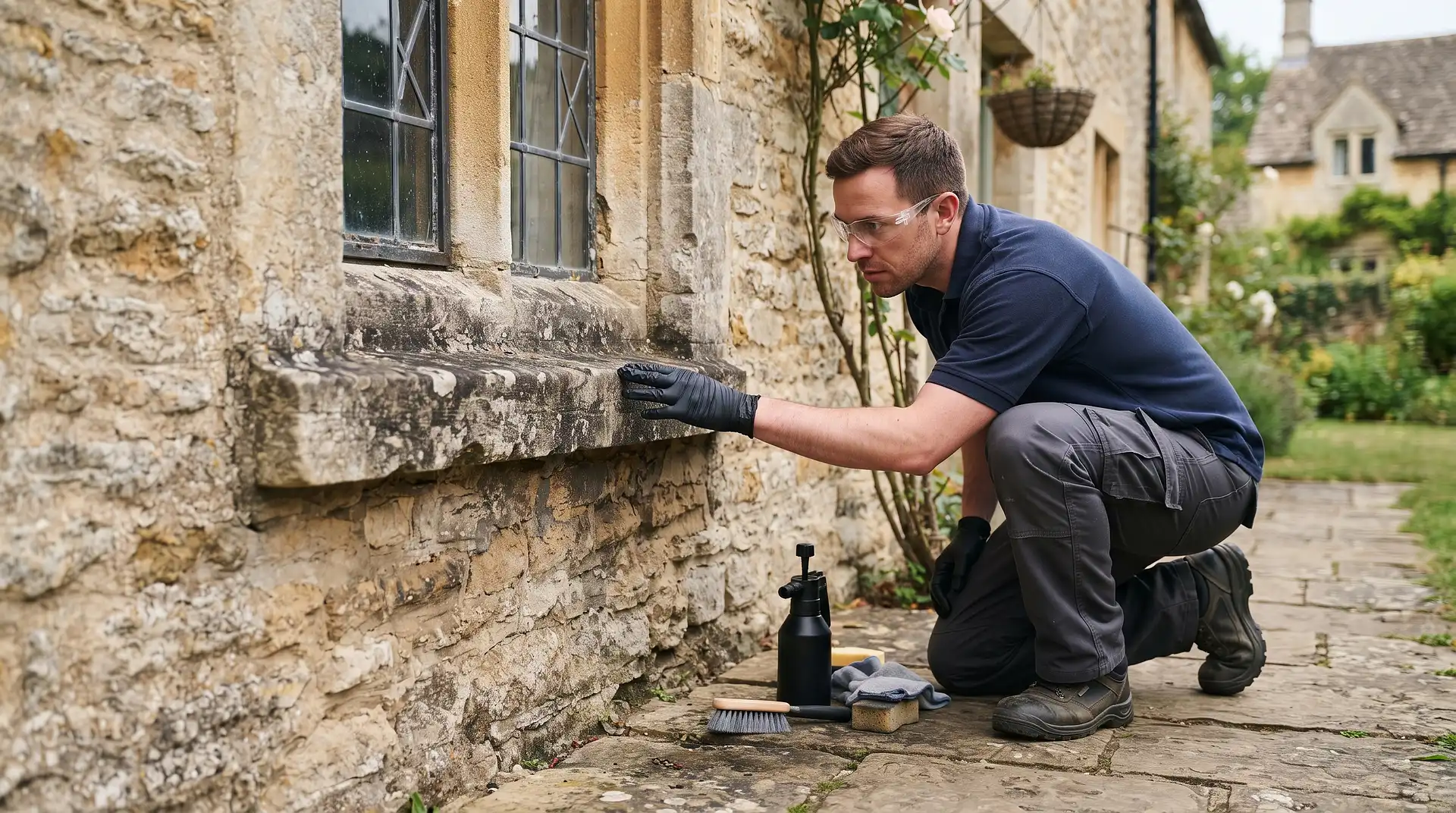
How to Clean Exterior Stone Window Sills Safely
29 September 2026
Exterior stone window sills can usually be cleaned with clean water, a stone-safe cleaner and a soft nylon brush. Start with the gentlest method, work on a small test area and rinse using a controlled flow of water.
Avoid reaching immediately for bleach, vinegar, brick acid or a pressure washer. These methods can discolour stone, damage mortar joints and strip the surface from softer materials such as limestone and sandstone.
Quick answer: Remove loose dirt with a soft brush, pre-wet the sill with clean water and apply a pH-neutral cleaner that is suitable for the stone. Scrub gently with a nylon brush, rinse thoroughly and allow the sill to dry before deciding whether it needs another treatment.
Check What the Window Sill Is Made From
The correct cleaning method depends on the material. Exterior window sills may be made from natural stone, cast stone, concrete or painted masonry. They can look similar after years of weathering, so do not assume that every pale sill is limestone.
Sill material | Main concern | Safest starting method |
|---|---|---|
Limestone | Acids can etch and permanently lighten the surface | Clean water and a limestone-compatible pH-neutral cleaner |
Sandstone | Porous surface can shed grains under aggressive scrubbing | Soft brushing, controlled water and a sandstone-safe cleaner |
Granite | Polished finishes, sealers and nearby joints can still be damaged | Mild stone cleaner with a soft cloth or nylon brush |
Cast stone | High pressure can expose aggregate and leave a rough patch | Gentle hand washing with a compatible masonry cleaner |
Concrete | Cracks and weathered surfaces may absorb water | Mild detergent and controlled rinsing |
Painted masonry | Scrubbing and chemicals can lift weak or flaking paint | Warm water, mild detergent and a soft sponge |
If you cannot identify the material, check property records or ask a stonemason. Treat unknown or historic stone as sensitive until it has been correctly identified.
Inspect the Sill Before Cleaning
Cleaning cannot repair damaged stone. Inspect the sill in daylight and look for:
Cracks through the stone or cast sill
Loose grains or pieces flaking from the surface
Failed joints around the window frame
Open gaps between the sill and surrounding masonry
Loose, bubbling or peeling paint
Persistent damp patches beneath the window
Rust marks coming from metal fixings
Water collecting instead of draining from the sill
If the surface releases grains when touched with a soft brush, stop cleaning. Stronger brushing will remove part of the stone rather than just the dirt.
Check the cause of the dirt: Repeated black or green staining may be caused by a leaking gutter, failed seal, poor drainage or water dripping from the window above. Cleaning the sill without fixing the water source means the staining will return.
What You Will Need
A soft hand brush for loose dirt
A soft or medium nylon cleaning brush
Two buckets
Clean water
A pH-neutral cleaner approved for the stone
A soft sponge or microfibre cloth
Protective gloves
Eye protection if required by the product label
Old towels or protective sheeting
A garden hose with a gentle spray setting, if accessible
Do not use a wire brush, steel wool, metal scraper or abrasive sanding pad on bare natural stone. These tools can scratch the surface and leave metal particles that later create rust marks.
How to Clean Exterior Stone Window Sills Step by Step
1. Choose suitable weather
Choose a mild, dry day. Avoid cleaning in frost, strong wind or direct hot sunlight. Heat can cause cleaning solution to dry on the stone before it has been rinsed away.
Check the cleaner's instructions for any required rain-free period and suitable working temperature.
2. Protect the window and surrounding wall
Close the window and check that its seals are intact. Place towels or protective sheeting below the sill to catch dirty water.
Move plant pots, furniture and decorations away from the working area. Cover sensitive plants if the cleaning product requires it, while making sure they are not left covered for longer than necessary.
3. Remove loose dirt
Brush leaves, cobwebs, dust and loose dirt from the sill with a soft, non-metallic brush. Pay attention to the joint where the window frame meets the stone.
Do not scrape firmly attached lichen from soft stone. Dry scraping can remove the weathered surface and leave a pale scar.
4. Test a hidden area
Test the proposed method on a small corner. Start with clean water. If water is not enough, test a stone-compatible cleaner at the dilution stated on its label.
Allow the test patch to dry completely. Wet stone normally looks darker, so judging it while wet can hide colour changes and surface damage.
5. Pre-wet the sill
Lightly wet bare stone with clean water unless the cleaner specifically says it should be applied to a dry surface. Pre-wetting can reduce the amount of cleaner absorbed by porous stone.
Do not flood the joint beneath the window frame or direct water into cracks.
6. Apply the cleaner
Apply the cleaner according to its instructions. Work on one sill at a time so the product does not dry before rinsing.
Do not make the solution stronger than directed. A stronger mixture does not always clean better and can increase the risk of bleaching, staining or damaging the surface.
7. Brush gently
Agitate the cleaner with a soft nylon brush using light, overlapping strokes. Give the cleaner time to loosen the dirt instead of relying on heavy pressure.
Pay particular attention to corners and the groove beneath the front edge of the sill. Avoid damaging any sealant around the window frame.
8. Rinse thoroughly
Rinse using clean water and a gentle hose spray, sponge or clean cloth. Remove all cleaner residue because dried residue can leave streaks or attract more dirt.
Control the runoff so it does not leave dirty lines across render, brickwork or painted walls below the sill.
9. Let the stone dry
Allow the sill to dry naturally before judging the result. Porous stone can remain visibly darker for several hours after washing.
If a second treatment is necessary, repeat the same gentle method after the surface has dried. Do not immediately move to a stronger chemical or more aggressive brush.
Best result: Aim for an evenly clean sill rather than trying to make old stone look completely new. Removing every natural mark can also remove part of the original surface.
How to Remove Green Algae and Moss
Green staining usually develops where the sill remains damp or shaded. Start with the normal cleaning method and a soft brush.
If growth remains, use an exterior algae treatment or biocide that is specifically labelled as suitable for the stone. Check whether the product must be rinsed away or left to work over time.
Do not assume that a patio or driveway cleaner is suitable for a window sill. Some products are intended for harder paving and may discolour vertical masonry, painted walls or metal window components.
How to Remove Black Stains
Black marks may be biological growth, pollution, dirty rainwater or staining from a failed joint. The colour alone does not confirm the cause.
Begin with a pH-neutral stone cleaner. If the mark remains, avoid repeatedly scrubbing the same spot. A specialist may need to determine whether the stain is organic, mineral-based or embedded in the stone.
Black crusts on an older or historic building should be assessed before cleaning. The crust may be attached to a weakened surface, and aggressive removal can take the stone with it.
How to Remove Bird Mess
Wear gloves and soften dried bird mess with clean water. Lift it with a plastic scraper held almost flat to the sill, taking care not to scratch the surface.
Wash the area with a compatible cleaner and rinse it thoroughly. Do not brush dried waste into the air.
How to Treat White Powdery Deposits
A white powder may be efflorescence, which forms when moisture carries soluble salts to the surface.
Let the deposit dry and remove it gently with a dry soft brush. Washing it immediately can dissolve the salts and move them back into the stone.
Recurring deposits indicate an ongoing moisture source. Check the window seal, pointing, sill joints and drainage before applying any coating or sealer.
How to Remove Rust Marks
Rust requires a specialist stone-compatible stain remover. General household rust removers can be acidic and may damage limestone, sandstone or cast stone.
Identify and repair the source first. Common causes include corroding window fixings, metal railings, tools left on the sill or exposed reinforcement within a damaged cast sill.
Deep rust coming from inside cast stone or concrete needs professional assessment. Cleaning the visible stain will not stop corrosion beneath the surface.
Can You Use Vinegar on Stone Window Sills?
Do not use vinegar as a general natural-stone cleaner. Vinegar is acidic and can react with calcium-based materials such as limestone and marble.
The reaction can leave a dull, pale or rough patch that cannot be removed by normal cleaning. Lemon juice and acidic bathroom descalers create a similar risk.
Can You Use Bleach?
Bleach should not be the first choice for an unknown stone sill. It can affect colour, nearby paint, metal fittings, plants and some sealants.
If a stone supplier or product manufacturer permits a bleach-based treatment, follow the stated dilution, contact time, protective equipment and rinsing instructions. Never mix bleach with acids, ammonia or another cleaning chemical.
Can You Pressure Wash Stone Window Sills?
High-pressure washing is unsuitable for many exterior stone window sills. The concentrated jet can:
Strip the surface from sandstone or weathered limestone
Expose aggregate in cast stone
Open mortar joints
Force water behind the window frame
Damage seals and nearby paint
Leave obvious lines across the stone
A normal domestic pressure washer can produce more force than delicate stonework can tolerate. Use a controlled low-pressure rinse instead.
For more detail about caring for different masonry materials, read our guide on how to clean exterior stone safely.
Need Professional Exterior Cleaning?
Check typical UK costs for window, wall and complete exterior cleaning.
Calculate Your Exterior Cleaning Cost
Should You Seal the Stone After Cleaning?
Stone window sills do not automatically need sealing. Some materials benefit from a compatible breathable treatment, while others perform better when left untreated.
Do not seal a sill that is still damp or affected by unexplained moisture. A sealer can trap moisture, change the stone's colour or make later repairs more difficult.
If the sill was previously sealed, use a product compatible with the existing treatment. Test it on a hidden section because some sealers darken stone or create an unwanted sheen.
How Much Does Professional Cleaning Cost?
InstantCost does not publish a separate national price for cleaning only stone window sills. Cleaners normally include the sills within a wider window or exterior cleaning quotation.
Service | InstantCost 2026 price range | What affects the price? |
|---|---|---|
Exterior windows on a standard house | £40 to £80 | Number of windows, access and whether frames and sills are included |
Exterior windows on a large house | £80 to £150 | Property height, window count and access equipment |
Professional exterior wall cleaning | £200 to £600 per elevation | Surface type, area, staining, access and cleaning method |
Ask the contractor to confirm that stone sill cleaning is included. A specialist restoration service may cost more where the sills are historic, badly stained or deteriorating.
When Should You Call a Professional?
Professional help is sensible when:
The sill is above ground-floor level
You cannot reach it safely from the ground
The stone is historic or part of a listed building
The surface is crumbling, flaking or deeply cracked
There are severe black crusts or rust stains
Previous cleaning has caused discolouration
Paint needs to be removed from natural stone
Water is entering around the window
You do not know what material the sill is made from
Choose a cleaner who can explain how the method will be adjusted for the stone. A promise to pressure wash every surface in the same way is not suitable for delicate window sills.
Safety Guidance
Work safely
Clean only from stable ground or a suitable working platform. Do not hold a bucket, brush or hose while balancing on a ladder. Upper-storey window sills should be left to a professional with appropriate access equipment.
Wear the gloves, eye protection and other protective equipment required by the cleaner's label. Keep children and pets away until the area has been rinsed and is dry.
If you use an algae treatment or another biocide, follow the Health and Safety Executive guidance on using biocides. Keep products in their original containers, follow the label and dispose of any remaining treatment correctly.
Do not mix cleaning products. Protect plants and ponds from spray and runoff, and do not pour leftover treatment into a surface-water drain.
How Often Should Stone Window Sills Be Cleaned?
Inspect exterior sills once or twice a year. Remove leaves, bird mess and loose dirt before they hold moisture against the stone.
A gentle annual clean is normally better than waiting for heavy growth and then using an aggressive method. Sills beneath trees, leaking gutters or shaded elevations may need attention more frequently.
Frequently Asked Questions
What is the best cleaner for stone window sills?
Use a pH-neutral cleaner specifically labelled for the stone and its finish. Start with clean water because ordinary dirt may not require a chemical treatment.
Can I use washing-up liquid?
A small amount of mild washing-up liquid may remove ordinary dirt from sound concrete or some unsealed stone. Test it first and rinse thoroughly so no detergent residue remains.
How do I clean sandstone window sills?
Remove loose dirt with a soft brush, pre-wet the surface and use a cleaner approved for sandstone. Brush gently and rinse at low pressure. Stop if the surface releases grains.
How do I clean limestone window sills?
Use clean water and a limestone-compatible pH-neutral cleaner. Avoid vinegar, lemon juice, brick acid and acidic limescale removers because they can etch limestone.
Can I use a wire brush on cast stone?
No. A wire brush can scratch the surface, expose aggregate and leave metal fragments that later rust. Use a nylon brush instead.
Why do my stone sills turn green again?
Recurring algae normally means the sill remains damp. Check for shade, leaking gutters, failed seals, poor drainage and vegetation close to the window.
Clean Stone Window Sills Without Causing Damage
The safest method is also the simplest. Identify the material, inspect its condition and begin with clean water. Use a compatible cleaner only when necessary, brush gently and rinse without forcing water into the stone or window joints.
If the sill is deteriorating, heavily stained or difficult to reach, arrange professional cleaning instead of increasing the chemical strength or water pressure.
Compare Exterior Cleaning Costs
Get a UK price estimate based on your property, surface and cleaning requirements.