How to Clean a Radiator Inside and Out
30 September 2026
To clean a radiator, switch off the heating and wait until the metal is completely cold. Vacuum the outside, use a flexible radiator brush between the internal panels and wipe the painted surface with a well-wrung microfibre cloth and mild soapy water. If the radiator is cold at the bottom, surface cleaning will not solve the problem because sludge may be trapped inside the water channels.
Quick answer: Turn the heating off, let the radiator cool and place a towel underneath it. Vacuum loose dust, pass a flexible radiator brush between the panels, clean behind the radiator with a long duster and wipe the exterior with warm water containing a small amount of washing-up liquid. Dry the surface before turning the heating back on. Do not pour water through the radiator or use bleach, abrasives or dripping cloths.
Does cleaning a radiator make a difference?
Dust collects on the top grille, between the internal convector fins and behind the radiator. This can restrict the natural movement of warm air and produce a dusty smell when the heating is first switched on after summer.
Cleaning will not transform the output of a faulty heating system, but it can improve airflow around a heavily obstructed radiator. It also removes pet hair, cobwebs and household dust that would otherwise circulate into the room.
Surface cleaning is different from cleaning sludge out of the radiator. External dust affects airflow around the metal. Internal sludge restricts the movement of heating water through the radiator.
What you need to clean a radiator
A vacuum cleaner with a brush or crevice attachment
A long, flexible radiator brush
Two clean microfibre cloths
A bucket of warm water
A small amount of washing-up liquid
An old towel or dust sheet
A long-handled duster for the wall and skirting board
A cool-setting hairdryer, if required
A purpose-made radiator brush is useful because it can pass through the narrow space between panel radiators without bending the delicate convector fins.
How to clean a radiator step by step
1. Switch off the heating
Turn the central heating off and wait until the radiator is completely cold. Cleaning a hot radiator creates a burn risk and causes damp marks to dry before they can be wiped away properly.
If the radiator has an electric heating element, switch it off at its dedicated wall control and follow the manufacturer’s isolation instructions. Keep water away from electrical controls, cables and connections.
2. Clear the space around the radiator
Move furniture, curtains and decorative items away from the radiator. Place an old towel or dust sheet underneath to catch dust and protect the flooring.
If the radiator sits above carpet, push the towel against the skirting board. Fine grey dust often falls from the internal fins as soon as cleaning begins.
3. Vacuum loose surface dust
Use the vacuum cleaner’s brush attachment across the front, sides and top of the radiator. Change to a crevice attachment for the narrow space underneath and behind it.
Start at the top and work downwards. Vacuuming first prevents loose dust from turning into grey smears when you use a damp cloth.
4. Remove the top grille if it lifts off easily
Many modern panel radiators have a removable top grille and side panels. The exact arrangement varies between manufacturers.
Only remove a cover that is designed to unclip without force. Check the radiator instructions if the fixing is not obvious. Do not bend, prise or pull a panel that appears permanently attached.
Vacuum the removed grille and wipe it separately. Put it somewhere safe where it will not be bent or scratched.
5. Clean between the radiator panels
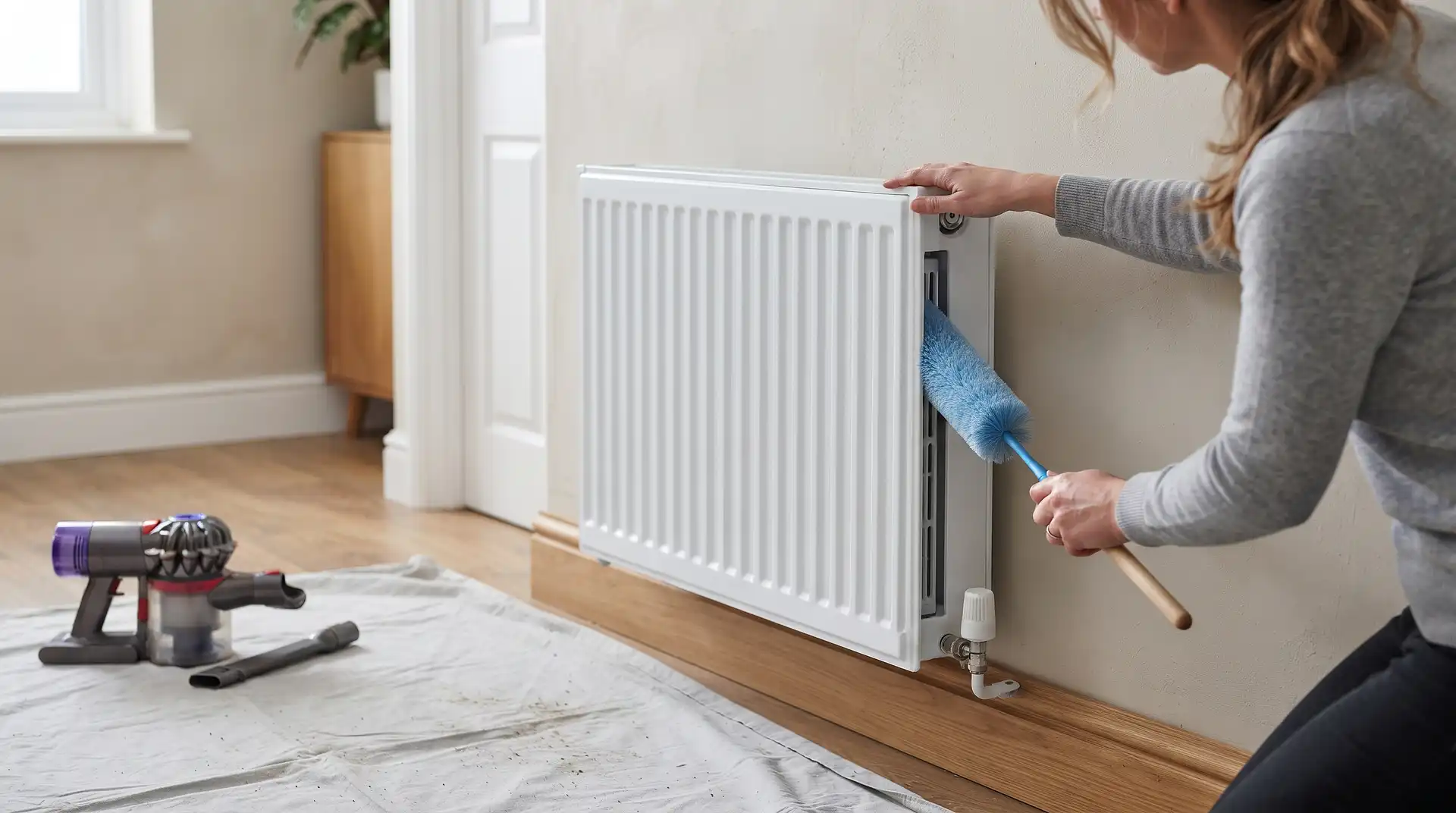
Insert a flexible radiator brush through the top opening and move it gently down between the panels. Work across the entire width of the radiator.
Keep the vacuum nozzle close to the bottom opening so it collects dust as it falls. Avoid pushing the brush aggressively against the thin metal fins because bent fins can restrict airflow.
If the top grille cannot be removed, pass a thin radiator brush through the existing slots. A clean microfibre cloth secured firmly around a flexible duster can also work, provided it cannot come loose inside the radiator.
6. Use cool air for difficult dust
A hairdryer on its cool setting can dislodge dust that the brush cannot reach. Point the air down through the top while holding a vacuum nozzle near the floor.
Do not use hot air. Keep the hairdryer away from damp cloths and do not use this method near exposed electrical radiator controls.
Cool air moves dust rather than capturing it, so use it only after placing a towel underneath and closing nearby doors. Vacuum the floor and surrounding area afterwards.
7. Clean behind the radiator
Pass a long-handled duster or flat microfibre cleaning tool behind the radiator. Work carefully around the brackets and pipes.
Vacuum the skirting board and floor below the radiator. These areas can hold a surprising amount of dust because normal vacuum attachments rarely reach them.
8. Wipe the exterior
Add a few drops of washing-up liquid to a bucket of warm water. Dip a microfibre cloth into the solution and wring it thoroughly. The cloth should be damp, not dripping.
Wipe the radiator from top to bottom, including:
the front panel;
the top grille;
the side panels;
accessible pipework;
the outside of the radiator valves.
Use gentle pressure around thermostatic radiator valves and lockshield valves. Cleaning does not require you to turn or remove them.
9. Remove stubborn marks carefully
For greasy fingerprints or cooking residue, hold the damp soapy cloth against the mark for a few seconds before wiping. Repeat rather than scrubbing aggressively.
Abrasive pads, scouring powder, bleach, ammonia and strong solvent cleaners can dull, scratch or discolour the radiator’s painted finish. They may also encourage corrosion if the coating is damaged.
10. Dry and reassemble the radiator
Use a clean dry cloth to remove any remaining moisture. Refit the grille and side panels in their original positions, making sure they sit securely.
Remove the dust sheet and vacuum the surrounding floor. Turn the heating back on only when the radiator and nearby electrical controls are dry.
Check Radiator and Heating Costs
Compare current UK prices for radiator repairs, system cleaning and heating work.
How to clean different types of radiator
Panel radiators
Panel radiators commonly have narrow convector fins between one or two flat panels. Vacuum the top grille before passing a flexible brush between the panels. Avoid bending the fins.
Column radiators
Column radiators have larger gaps that are easier to access. Vacuum between each column, then use a damp microfibre cloth wrapped around a narrow cleaning tool.
Work from the top down and clean around the joins where dust gathers. Dry the metal carefully, especially on older cast-iron models with worn paint.
Chrome towel radiators
Remove towels and allow the rail to cool. Dust between every bar before wiping it with a soft damp cloth.
Avoid abrasive cleaners and hard water deposits drying on the chrome. Dry and buff the surface with a separate microfibre cloth to reduce streaks.
Electric radiators
Switch off the radiator at its control and isolate its electricity supply according to the manufacturer’s instructions. Let it cool before vacuuming.
Use only a dry or lightly damp cloth unless the manufacturer says otherwise. Never allow cleaning liquid to run into the control panel, cable entry or heating element.
Cast-iron radiators
Use a soft brush and vacuum to clean between the deep columns. A narrow, well-wrung cloth can remove surface marks, but older paint may be fragile.
Stop if the coating begins to flake. Very old painted radiators may require specialist preparation before sanding or repainting because historic paint layers can contain hazardous substances.
How often should radiators be cleaned?
Vacuum accessible radiator surfaces during normal room cleaning. A more thorough clean between the panels is useful two or three times a year.
The best times for a deep clean are:
before using the heating regularly in autumn;
after decorating or building work;
when you notice a dusty smell;
when pet hair is collecting inside the panels;
when someone in the household is sensitive to dust.
Homes with pets, open fires or frequent renovation work may need more regular radiator cleaning.
How do you know if the inside contains sludge?
Dust cleaning deals with the air side of the radiator. If the metal has cold patches while the heating is running, the problem may be inside the water circuit.
What you notice | Likely cause | Likely solution |
|---|---|---|
Cold at the top | Trapped air | Bleed the radiator and check boiler pressure afterwards |
Cold at the bottom | Sludge or magnetite deposits | Flush the affected radiator or heating system |
One radiator remains cooler than the others | Stuck valve, poor balancing or restricted flow | Check the valves and have the system balanced |
Several radiators have cold lower sections | Wider system contamination | Professional system cleaning may be required |
Radiator is hot but the room remains cold | Insufficient heat output, obstruction or heat loss | Check airflow, curtains, furniture and radiator size |
Can you flush one radiator yourself?
A competent DIYer can remove and flush an individual radiator, but this is a plumbing job rather than routine cleaning. It involves isolating both valves, draining the radiator, disconnecting it and carrying it outside.
Once outside, clean water can be passed through the radiator in both directions until the discharge runs clear. The radiator must then be refitted, the valves reopened, the air released and the boiler pressure checked.
Heating water often contains black sludge that can permanently stain carpets and flooring. Radiators can also remain surprisingly heavy after draining because water stays trapped inside.
If you plan to attempt this work, follow InstantCost’s full guide on how to remove a radiator without flooding the floor.
Call a plumber if the valves are seized, corroded or leaking, or if you are unfamiliar with refilling a sealed central-heating system.
When does the whole heating system need cleaning?
Flushing one radiator can help when only that unit has a cold lower section. A wider system clean may be more appropriate when several radiators are affected or when the drained water contains substantial black debris.
Possible signs include:
several radiators remaining cold at the bottom;
frequent boiler or pump noise;
dirty water when radiators are bled;
slow heating throughout the property;
repeated valve or circulation problems;
a magnetic filter filling with debris quickly.
A heating engineer may recommend a chemical clean, mains flush or power flush after inspecting the system. A power flush is not automatically necessary for every cold radiator, so ask the engineer to explain the evidence for it.
How much does radiator cleaning cost?
Cleaning dust from the outside of a radiator costs little or nothing if you already own a vacuum and microfibre cloth. Internal cleaning costs depend on whether one radiator can be removed and flushed or the whole system requires professional treatment.
Cleaning or repair | Typical InstantCost UK price |
|---|---|
DIY surface cleaning | Usually £0 using existing cleaning equipment |
Plumber call-out to inspect a radiator or valve | £80 to £150 |
Professional radiator removal | £50 to £100 before additional flushing or repairs |
Heating-system power flush | £350 to £650 |
Like-for-like radiator replacement | £150 to £350 supplied and fitted |
These figures are based on InstantCost’s 2026 UK heating-system pricing data. Regional labour rates, system size, radiator condition and access can affect the final quotation.
Common radiator cleaning mistakes
Cleaning while the radiator is hot: Switch off the heating and wait until the metal is completely cold.
Using a wet cloth before vacuuming: This turns loose dust into difficult grey streaks.
Pouring water through the top grille: Water can damage flooring, walls, valves and electrical components.
Using bleach or abrasive products: Strong products can damage the painted or plated finish.
Bending the convector fins: Use a flexible brush gently instead of forcing a thick cleaning tool through narrow gaps.
Turning the lockshield valve while cleaning: This can disturb the heating system’s balance.
Assuming dust causes every cold patch: A radiator that is cold at the bottom may contain internal sludge.
Removing a radiator without protecting the floor: Dirty heating water can cause permanent stains.
Radiator cleaning safety
Stay safe: Turn off the heating and wait for the radiator to cool before cleaning. Keep water away from electric heating controls, do not force seized valves and never remove a boiler casing while investigating a heating problem.
If a problem involves the boiler, gas connection, combustion system or a recurring pressure fault, find and verify an engineer through the official Gas Safe Register.
Frequently asked questions
What is the best way to clean inside a radiator?
Turn the heating off, allow the radiator to cool and vacuum loose dust. Pass a flexible radiator brush down between the panels while holding the vacuum near the bottom to collect falling debris.
Can I pour water down the inside of a radiator?
No. Pouring water through an installed radiator can damage the wall, floor, valves and nearby electrical components. Use a dry brush and vacuum for the internal fins, followed by a damp cloth on accessible painted surfaces.
Can I use a hairdryer to clean a radiator?
You can use a hairdryer on its cool setting to dislodge inaccessible dust. Place a towel underneath and use a vacuum to capture the debris. Do not use hot air or operate it near water and electric radiator controls.
Why is my radiator cold at the bottom after cleaning?
External cleaning cannot remove deposits inside the water channels. A radiator that stays cold at the bottom may contain sludge and could need individual flushing or wider system cleaning.
Can I clean a radiator with vinegar?
Mild soapy water is usually safer for painted radiators. Vinegar is acidic and can affect some painted, plated or specialist finishes. Follow the radiator manufacturer’s care instructions before using anything other than mild detergent.
How often should I clean behind my radiators?
Deep-clean behind and between radiators two or three times a year. Clean more often if you have pets, allergies, renovation dust or a noticeable dusty smell when the heating operates.
Keep the outside clean and investigate internal cold spots
Regular vacuuming and a flexible radiator brush will handle most household dust. Use only a well-wrung cloth on the exterior and dry the surface before restarting the heating.
If the radiator remains cold at the bottom, heats slowly or releases heavily discoloured water, arrange an inspection rather than repeatedly cleaning the outside.
Estimate Radiator and System-Cleaning Costs
Check UK prices for radiator repairs, power flushing and wider heating work.