How Much Does a 2 Car Driveway Cost Per m²
6 October 2026
How Much Does a 2 Car Driveway Cost Per m²?
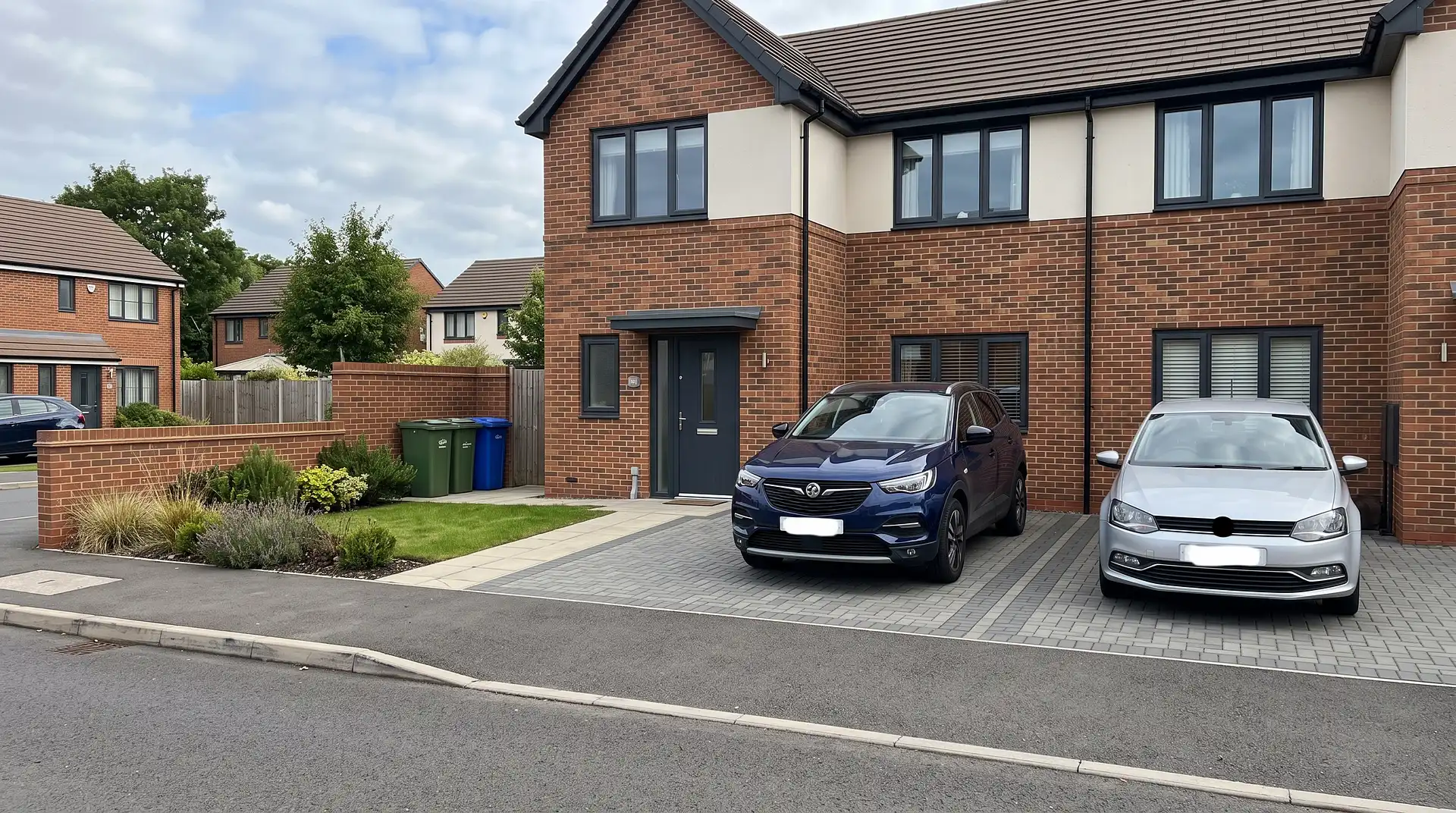
A typical two-car driveway in the UK measures around 6 metres by 6 metres, giving an area of approximately 36m². Based on InstantCost’s current 2026 UK driveway calculator, the total supplied and fitted cost is usually between £2,500 and £6,500, depending on the material, ground conditions, drainage and location.
On a simple per-square-metre basis, prices range from approximately £55 per m² for gravel to £160 per m² for Indian sandstone. A typical double driveway costs about £5,530 at the mid estimate when groundwork and VAT are included.
Quick answer: A 36m² two-car driveway costs approximately £1,980 for gravel, £2,700 for tarmac, £3,060 for concrete, £3,960 for block paving, £4,680 for resin bound or £5,760 for Indian sandstone. These are guide prices and the final quote depends on preparation, access, drainage and the condition of the existing surface.
Typical Two-Car Driveway Size
Many double driveways are approximately 6m wide by 6m deep, which equals 36m². This usually provides enough space for two cars parked side by side, although the best size depends on vehicle dimensions, doors, turning space, paths and bin storage.
Driveway size | Total area | Typical use |
|---|---|---|
5m x 5m | 25m² | Compact two-car parking |
6m x 6m | 36m² | Typical double driveway |
6m x 7m | 42m² | Two cars with extra access space |
7m x 7m | 49m² | Large double driveway with turning room |
Two-Car Driveway Cost Per m² by Material
The table below uses InstantCost’s current UK supplied and fitted guide prices. It assumes a 36m² driveway and includes typical VAT and groundwork in the calculator estimate.
Driveway material | Approximate price per m² | Estimated cost for 36m² | Typical lifespan |
|---|---|---|---|
Gravel | £55 | £1,980 | 10 to 15 years |
Tarmac or asphalt | £75 | £2,700 | 15 to 20 years |
Concrete | £85 | £3,060 | 25 to 30 years |
Block paving | £110 | £3,960 | 20 to 30 years |
Resin bound | £130 | £4,680 | 20 to 25 years |
Indian sandstone | £160 | £5,760 | 25 years or more |
These figures are useful for comparing materials, but they are not guaranteed quotations. A sloping site, poor soil, restricted access or a requirement for drainage can increase the final amount.
What Is Included in a Double Driveway Price?
A supplied and fitted driveway quote may include several separate parts of the work:
Removal of the existing driveway or garden surface
Excavation and disposal of soil or old paving
Sub-base materials and compaction
Drainage channels, soakaways or falls
Edging, kerbs or retaining restraints
Driveway surface material
Labour, equipment and site preparation
VAT
Ask the installer to list each item in the quotation. Two quotes may show the same price per square metre but use different sub-base depths or exclude excavation and drainage.
How Groundwork Changes the Cost
Groundwork is often the largest variable in a driveway project. If the existing surface is sound and the new material can be installed over it, preparation may be limited. If the area contains soft soil, tree roots, old concrete or standing water, more work will be needed.
Common extra groundwork costs
Removing and disposing of old concrete or tarmac
Excavating clay or unstable soil
Replacing a failed sub-base
Installing a drainage channel or soakaway
Repairing a damaged kerb or entrance
Building retaining edges on a sloping site
Improving access where plant cannot reach the driveway
Get the base and drainage inspected before choosing a surface. A low material price will not save money if the driveway later sinks, cracks or holds water.
Which Two-Car Driveway Is Cheapest?
Gravel is normally the cheapest option at about £55 per m². It is quick to install and can be permeable, but stones may move onto the road and the surface may need topping up.
Tarmac is another relatively affordable option at about £75 per m². It creates a smooth surface but may soften in extreme heat and is not normally permeable without a suitable drainage design.
Concrete costs more than tarmac but can last longer when properly installed. Block paving offers a decorative finish and individual blocks can be replaced, although weeds and re-sanding may be part of ongoing maintenance.
Resin bound and Indian sandstone are premium options. Resin gives a smooth modern finish and can be permeable, while sandstone provides a natural appearance with a higher installation cost.
Calculate your two-car driveway cost
Enter your driveway size, material, location and optional extras to get a current UK estimate.
Drainage and Planning Permission
In England, a new front driveway larger than 5m² may need planning permission if it uses an impermeable surface and rainwater cannot drain to a permeable area. Permeable options include gravel, resin bound and suitable permeable block paving.
Read the GOV.UK guidance on permeable front garden surfacing and contact your local authority if you are unsure. Additional permissions may apply to listed buildings, conservation areas, dropped kerbs or access from a classified road.
How to Reduce the Cost of a Two-Car Driveway
Choose a simple rectangular layout.
Keep the existing base if it is structurally sound.
Compare at least two or three written quotes.
Choose gravel if the lowest initial price is the priority.
Use standard colours and finishes.
Complete drainage and edging in the same project.
Schedule work when contractors have better availability.
Check whether waste removal and VAT are included.
Do not reduce the sub-base depth simply to lower the price. Poor groundwork is one of the most common reasons a driveway needs expensive repairs.
Questions to Ask a Driveway Installer
What is the total area in square metres?
What depth will the sub-base and surface be?
How will rainwater drain?
Is excavation and waste disposal included?
Are edging and kerbs included?
Does the quote include VAT?
How long will the work take?
How long must vehicles stay off the surface?
What guarantee is provided?
Frequently Asked Questions
How big is a two-car driveway in square metres?
A typical two-car driveway is around 36m², based on dimensions of approximately 6m by 6m. Some properties use 25m² for compact parking, while larger driveways may be 42m² or more.
What is the average cost of a 36m² driveway?
InstantCost’s 2026 guide estimate ranges from about £1,980 for gravel to £5,760 for Indian sandstone. A mid-range block paved driveway is approximately £3,960, while resin bound is around £4,680.
Is gravel cheaper than tarmac for a double driveway?
Yes. Gravel is approximately £55 per m² compared with about £75 per m² for tarmac. The total price can change if gravel needs extra edging, a deeper sub-base or extensive drainage.
Does a double driveway need planning permission?
It may. The answer depends on permeability, drainage, location and local restrictions. Check with your local planning authority before starting work.
What is the most durable driveway material?
Concrete, block paving, resin bound and Indian sandstone can all last for many years when installed over a suitable base. The most durable choice depends on drainage, ground conditions, traffic and maintenance.
Can I get a driveway cost per m² without a site visit?
A calculator can provide a useful budget estimate, but a site visit is needed for a firm quotation. The contractor must inspect the existing surface, access, levels, drainage and ground conditions.
Plan your driveway budget today
Compare current UK prices for a two-car driveway by entering your exact dimensions.